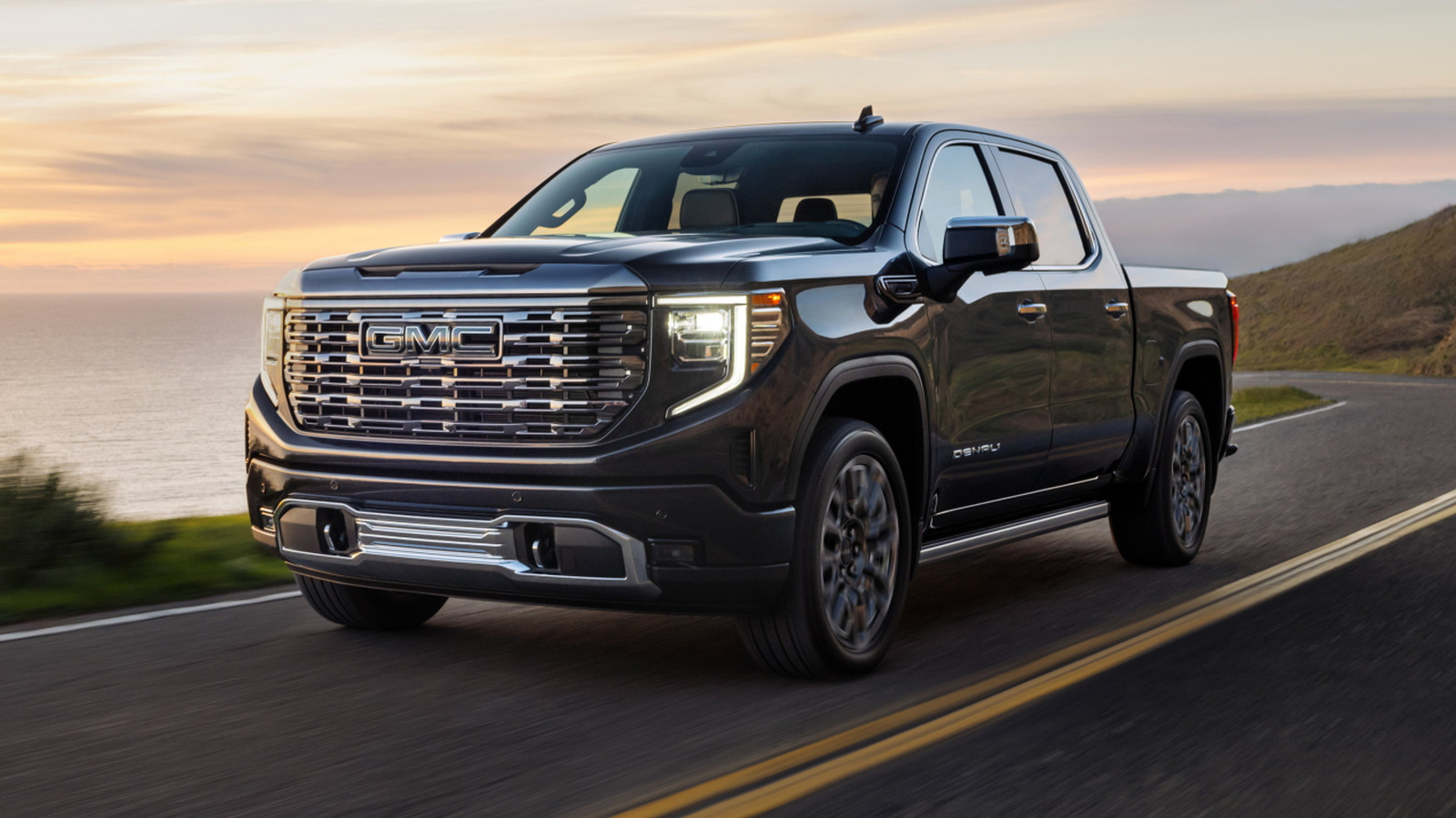

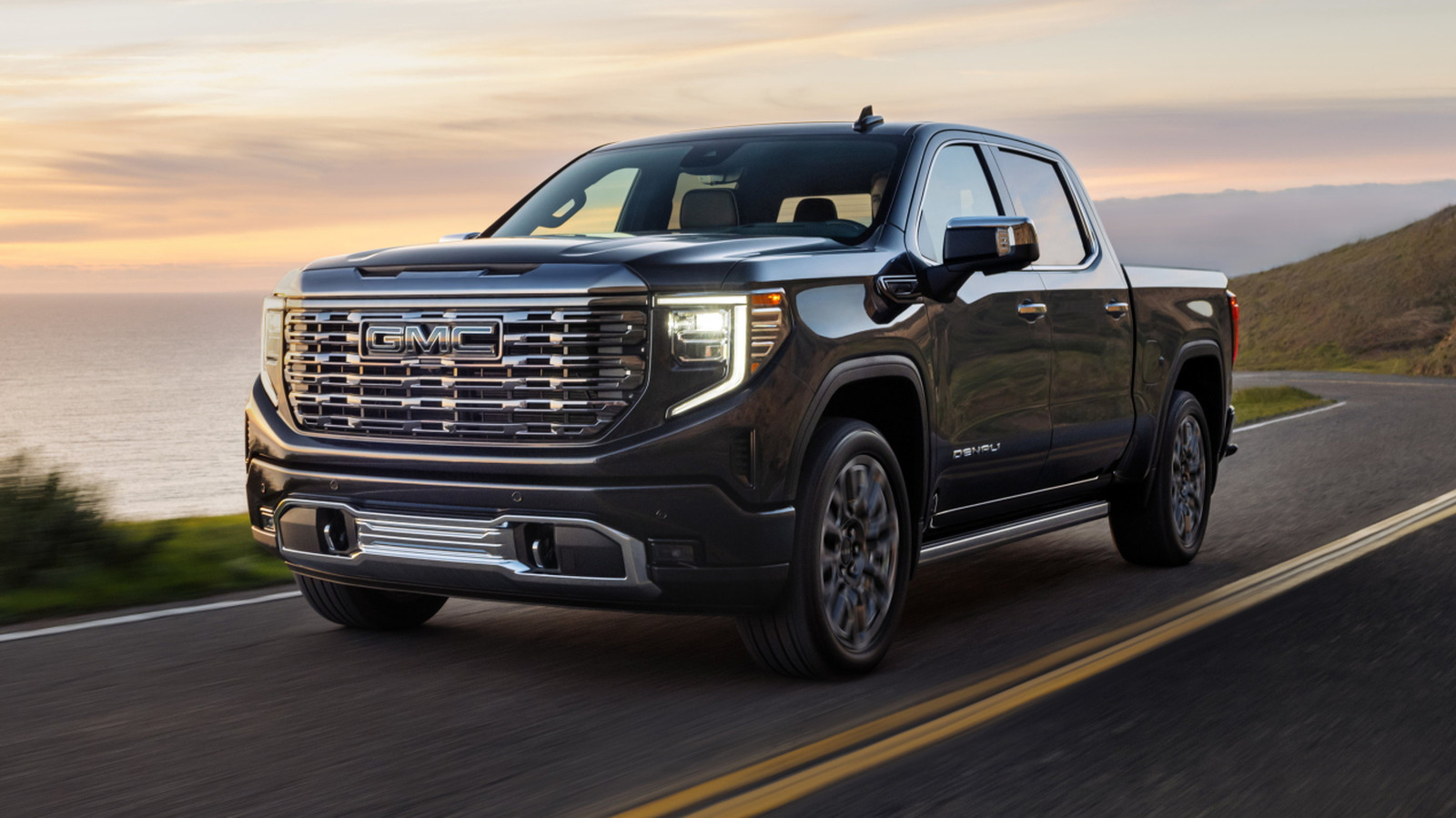
Trucks tend to hold their value well compared to passenger cars, but inevitably some hold their value better than others. While Toyota’s Tacoma and Tundra trucks depreciate slower than virtually any other truck on the market, brand loyalty and practicality considerations mean that most existing GM truck owners won’t be looking to switch to a Japanese brand. Instead, they’ll most likely be considering a truck from either Chevy or GMC, with the Silverado and Sierra respectively being each brand’s signature nameplates.
The Silverado and the Sierra are virtually identical under the hood, and they’re even built in the same factory. It therefore shouldn’t come as a surprise that their depreciation rates are very similar. Across every variant, the Sierra is forecast to hold slightly more of its value over the long run, although estimates of exactly how much extra value it might hold vary between sources.
Starting with the 1500 variants of both trucks, CarEdge says that the Silverado and Sierra will depreciate an identical 43% after five years on the road. After ten years, the GMC will hold around 1% more of its initial value, according to its data. Meanwhile, iSeeCars is slightly more positive about the predicted resale value of each truck, forecasting that the Silverado will lose 39.3% of its value while the Sierra will lose only 38.2% after five years.
A similar picture emerges with HD and EV models
Sierra also comes out on top for the 2500HD and 3500HD variants, with CarEdge forecasting that a Silverado will shed 31% of its initial value after half a decade, around 1% more than an equivalent Sierra.
It predicts the 3500HD trucks will lose an even smaller percentage of their value but again places the Sierra ahead in percentage terms. Estimates from iSeeCars tell the same story, giving high value retention estimates to the 2500HD and 3500HD variants of both models, but placing the GMC marginally ahead of its Chevy sibling by a couple percentage points.
Meanwhile, it’s notoriously difficult to predict the depreciation rates of EVs, because battery technology is still developing very fast and pricing structures for some models change regularly. Still, the 2026 GMC Sierra EV is forecast to hold onto a higher percentage of its value over an equivalent Chevrolet. According to iSeeCars, the GMC will lose 54.1% of its value over five years, while the Silverado EV will lose 56.2%.
Strangely, CarEdge suggests that the electric GMC will retain almost 20% more of its value than the Chevy over the same five years. It’s possible that this anomaly has been caused by GMC dropping the base price of the Sierra EV by $28,000 for the 2026 model year, which may have artificially deflated its average new MSRP and made its depreciation appear temporarily less severe than in reality.
GMC trucks cost more but hold value better
It’s impossible to predict what further price changes Chevy and GMC might make to their EV truck lineups over the next few years, so it’s worth taking any predictions about their future valuations with a few extra grains of salt. Both the Sierra EV and the Silverado EV are likely to suffer much higher levels of depreciation than their ICE cousins, regardless of the brand they’re sold by.
Leaving aside the turbulent EV market, the pattern for combustion-engine Sierras and Silverados is clear: GMC’s trucks retain a slightly higher percentage of their value than Chevy’s trucks as they age. But GMC buyers tend to pay more on average for their trucks in the first place.
To take an example, the cheapest new 2026 Silverado 1500 is a regular cab, standard bed model and starts from $39,695 (including a $2,795 destination fee) without incentives, while the cheapest 2026 Sierra 1500 starts from $41,095. At the other end of the range, a Silverado 1500 High Country with a crew cab costs at least $69,595, while an equivalent Sierra 1500 Denali retails for $73,190. Step up to a Sierra 1500 Denali Ultimate, and you’ll be paying at least $86,190. That’s a big investment by any metric.

Stephan is the sports journalist for the Maple Grove Report.