What Is The Average Lifespan Of An Air Compressor?


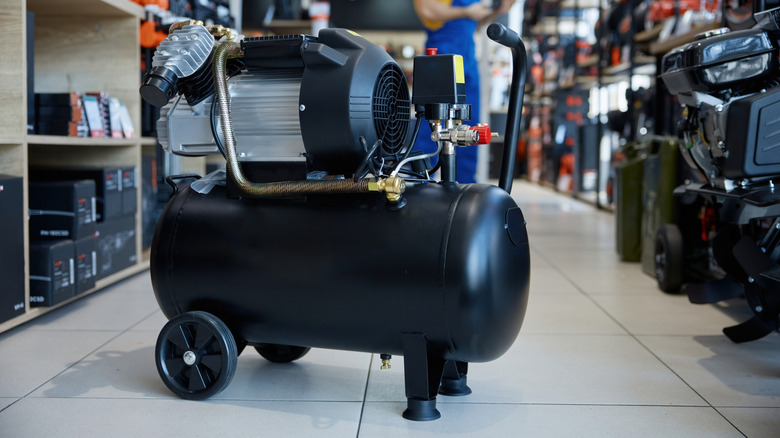
A reliable and affordable air compressor can be a valuable piece of equipment at home or on the jobsite. But when it comes to longevity, its actual lifespan can vary significantly depending on the type. In general, most air compressors can last anywhere from five to twenty years. For example, centrifugal air compressors tend to last the longest at more than 250,000 operating hours, or about 28 years.

At the other end of the scale are reciprocating air compressors, which generally last about 50,000 hours, or around six years. In between are rotary screw air compressors that can top 100,000 hours, or more than 10 years. There are also oil-free rotary screw compressors that are typically rated for around 70,000 hours, or eight years. But it’s worth noting that not every unit will meet or exceed these lifespans. The actual service life of each specific air compressor type can vary. The brand of air compressor also matters, as build quality and overall performance can impact longevity.

Getting the most life out of an air compressor

An air compressor’s lifespan can either increase or decrease based in part on how it’s used. It begins with how often and how hard the unit runs, as frequent operation can lead to a shorter overall lifespan. The environment also plays a part, as air compressors exposed to constant moisture and heat can sustain damage to the internal components. Using the right size compressor for your air tools is important as well, to reduce the risk of unnecessary strain on the unit.

Routine maintenance is another major factor and, for oil-lubricated models, includes checking the compressor’s oil levels, then topping off as needed. The tank should be drained to eliminate any built-up moisture, and the air filters require regular inspection as well. Inspecting the filters regularly will ensure that any debris or dust does not interrupt the airflow. That’s why running the compressor in a well-ventilated area is also important, whether it’s being used indoors or outdoors.

Being aware of the unit’s behavior definitely plays a role. Random vibrations and weird noises are generally not normal and could point to mechanical problems happening inside the system. Air and oil leaks are also red flags that something serious may be happening, which could spell trouble down the road. Components like belts, safety valves, and fittings may need inspection, testing, or adjustment to keep the compressor going. Leaving these parts unchecked could lead to poor performance and reduced lifespan.


Source link

Leave a Reply

Subscribe to Our Newsletter

Get our latest articles delivered straight to your inbox. No spam, we promise.

Recent Reviews


Researchers in South Korea developed a wearable system that uses seven smart rings to read finger and hand motions to translate American Sign Language and International Sign Language into text. The purpose is to make communicating easier between those who sign and nonsigners without needing a separate human interpreter. 

AI Atlas

According to the study, published Friday in the journal Science Advances, the system reliably recognized 100 ASL and ISL words during testing. It also performed well with users the system had not seen before, and it didn’t require recalibration for each person. Because the system detects words in sequence, it can produce sentence-level translations without extra training on grammar. 

ASL and ISL are the everyday languages of more than 72 million deaf and hard-of-hearing people. However, most hearing people do not know any words in these languages or have a very basic understanding. That gap makes certain tasks, like ordering at a restaurant or asking for help, much more difficult. 

A graphic shows two illustrated people talking in sign language, ASL and ISL. The graphic also shows the different components of the ring as well as pictures of hands modeling the rings.

A concept of how the rings work in the real world. 

American Association for the Advancement of Science (AAAS)

Existing sign language translator prototypes often rely on bulky gloves that can distract from or block natural hand movement or feel uncomfortable for the wearer, which limits real word adaption. Camera-based technologies can work well in controlled environments but are often limited to those places where a camera can be set up with a clear line of sight, the researchers wrote. 

To solve these problems, the researchers designed sensing rings for each finger that can capture precise motion and finger position while letting the hands move naturally. The rings can detect both signs that involve movement, like the words for “dance,” “fly” and “sun,” and signs that are held still, like “I” and “you.”

“These advances suggest that [the device could enable] barrier-free public translation systems for unseen users and unrestricted daily assistive interfaces,” the authors wrote in the study. 

The authors are affiliated with Yonsei University, Hankuk University of Foreign Studies and the Korea Institute of Science and Technology, among others. While the technology is still experimental, the authors wrote that the technology has the potential to ease communication difficulties. The underlying idea could also help improve controls for other systems, like virtual or augmented reality.

“Beyond sign language translation, the ring-type, wireless, and modular architecture of (wirelessly connected, ring-type sign language translators) may also be extended to other gesture-driven applications such as virtual or augmented reality control, touchless device interfaces, or rehabilitation monitoring systems where fine-grained hand movement tracking is essential,” they wrote.


Source link