Fewer Drivers In This State Are Wearing Seatbelts


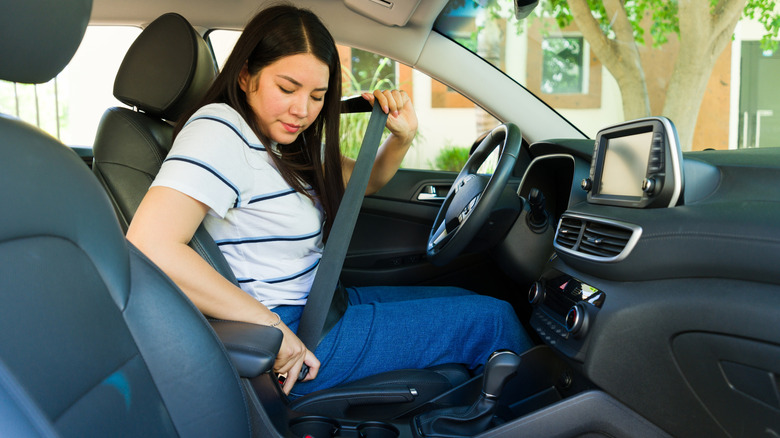
For many drivers, staying safe behind the wheel begins with putting on the seatbelt. While adult drivers New Hampshire don’t actually have a seatbelt law, the rest do, and it must be used at all times. But drivers in Utah are clicking their seatbelts far less often. Now, state officials are responding with a major awareness campaign aimed at changing that.

The move includes the use of new billboards, a TV commercial, and a heightened presence of law enforcement from agencies across the state. Thirty-seven Utah police departments are adding 335 additional shifts between May 18 and May 31. These shifts will be used to enforce the seatbelt law, targeting those drivers who aren’t buckled up. Under state law, all vehicle occupants must wear seatbelts and tickets will be handed out to offenders as needed by law enforcement.

According to the Utah Department of Public Safety, seatbelt compliance in the state fell to 89.6% in 2025, which was a drop from the previous two years. The issue has only gotten worse so far in 2026, with 16 fatal crashes involving unbuckled occupants resulting in 19 deaths. Data also shows that women are buckling up more than men, but only at a rate of 6.5% higher.

A closer look at seat belt use in Utah
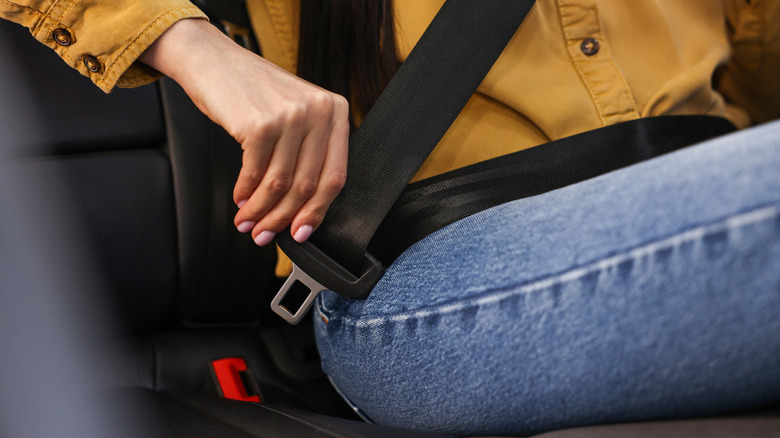
According to the FY 2027 Statewide Problem Identification published by the Utah Highway Safety Office, unbuckled occupants accounted for 28% of all vehicle occupant deaths in crashes between 2020 and 2024. During that same period, the state reported 1,483 traffic fatalities overall, with 49% being drivers and 18% being passengers. Of those unrestrained vehicle deaths, 69% are male, with rural areas accounting for 55% of unbuckled vehicle deaths.

The state’s campaign to address the issue is presented on the Utah Department of Public Safety. Official messaging reinforces that buckling up is a simple move that can have a major impact in the event of a crash. Along with safety reminders, the site features educational materials, including several YouTube videos and playlists. All of the content helps to emphasize the importance of wearing vehicle seatbelts, which are actually inspired by racing technology.

There does not appear to be a definite reason why some drivers in Utah aren’t buckling up. However, the NHTSA points to seat belt use as often being influenced by behavior and perception. For example, many drivers still believe they are safe on short trips or trips they’ve made before.


Source link

Leave a Reply

Subscribe to Our Newsletter

Get our latest articles delivered straight to your inbox. No spam, we promise.

Recent Reviews


Researchers in South Korea developed a wearable system that uses seven smart rings to read finger and hand motions to translate American Sign Language and International Sign Language into text. The purpose is to make communicating easier between those who sign and nonsigners without needing a separate human interpreter. 

AI Atlas

According to the study, published Friday in the journal Science Advances, the system reliably recognized 100 ASL and ISL words during testing. It also performed well with users the system had not seen before, and it didn’t require recalibration for each person. Because the system detects words in sequence, it can produce sentence-level translations without extra training on grammar. 

ASL and ISL are the everyday languages of more than 72 million deaf and hard-of-hearing people. However, most hearing people do not know any words in these languages or have a very basic understanding. That gap makes certain tasks, like ordering at a restaurant or asking for help, much more difficult. 

A graphic shows two illustrated people talking in sign language, ASL and ISL. The graphic also shows the different components of the ring as well as pictures of hands modeling the rings.

A concept of how the rings work in the real world. 

American Association for the Advancement of Science (AAAS)

Existing sign language translator prototypes often rely on bulky gloves that can distract from or block natural hand movement or feel uncomfortable for the wearer, which limits real word adaption. Camera-based technologies can work well in controlled environments but are often limited to those places where a camera can be set up with a clear line of sight, the researchers wrote. 

To solve these problems, the researchers designed sensing rings for each finger that can capture precise motion and finger position while letting the hands move naturally. The rings can detect both signs that involve movement, like the words for “dance,” “fly” and “sun,” and signs that are held still, like “I” and “you.”

“These advances suggest that [the device could enable] barrier-free public translation systems for unseen users and unrestricted daily assistive interfaces,” the authors wrote in the study. 

The authors are affiliated with Yonsei University, Hankuk University of Foreign Studies and the Korea Institute of Science and Technology, among others. While the technology is still experimental, the authors wrote that the technology has the potential to ease communication difficulties. The underlying idea could also help improve controls for other systems, like virtual or augmented reality.

“Beyond sign language translation, the ring-type, wireless, and modular architecture of (wirelessly connected, ring-type sign language translators) may also be extended to other gesture-driven applications such as virtual or augmented reality control, touchless device interfaces, or rehabilitation monitoring systems where fine-grained hand movement tracking is essential,” they wrote.


Source link