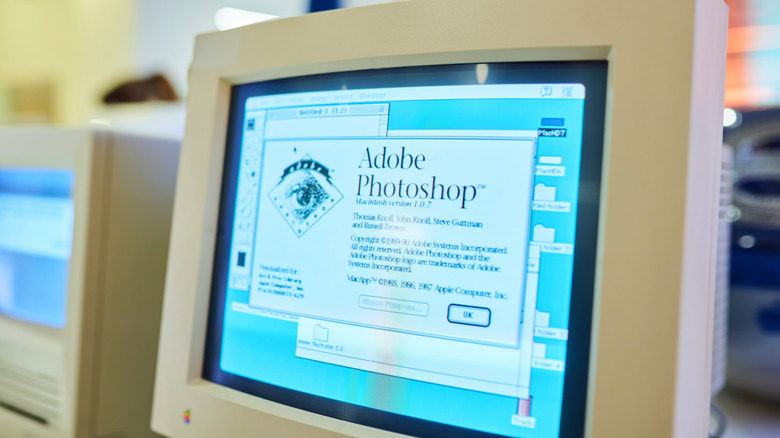

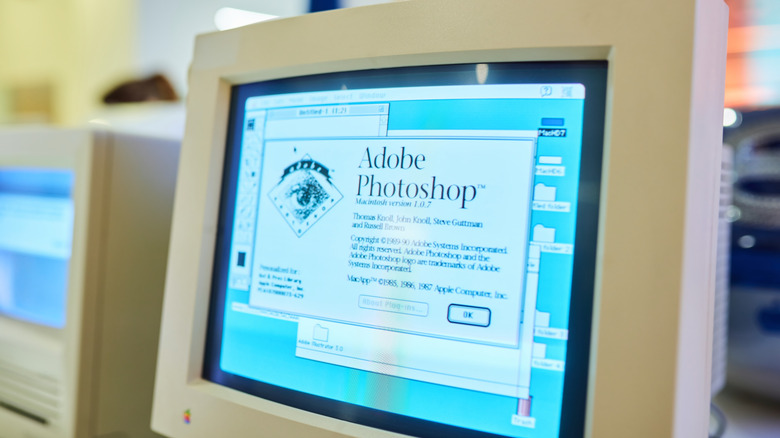
Photoshop has long been an established verb in the English language, with even the Merriam-Webster dictionary cementing its place in common vernacular. But once upon a time, there wasn’t any Photoshopping anything –- no swapping faces, no meme creation, and certainly no baked-in generative AI image generators to do it for us (or to argue about). That’s because Photoshop didn’t exist. Not yet, anyway. It may come as a surprise, but Adobe didn’t create Photoshop – an ’80s college kid by the name of Thomas Knoll did, with some help from his brother, John.
You’d be forgiven for thinking that Adobe created Photoshop, as the multinational software giant has become synonymous with many of the de facto creative tools used across multiple industries. Before Adobe was selling costly subscriptions and cloud-based storage plans, it existed as a more humble entity, known as Adobe Systems. In those formative years, Adobe was already laying the foundation to becoming the most dominant name in creative software, and meeting Thomas and John Knoll would be pivotal.
A PhD student decided to write a computer program instead of papers
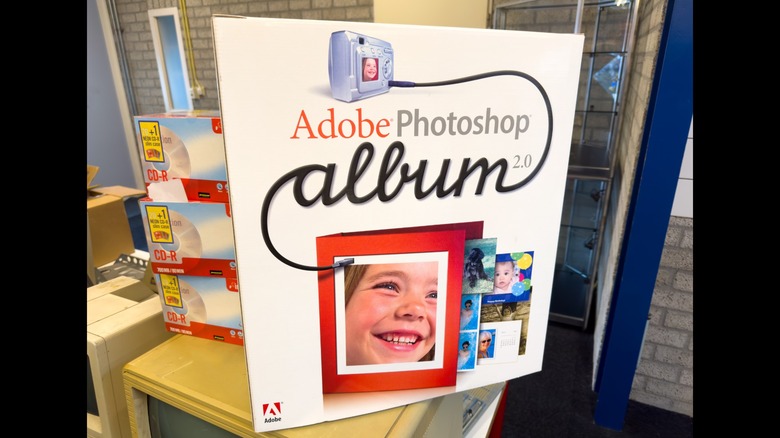
In the late 1980s, personal computers were becoming more common and ultimately paving the way for digital photo editing. Digital scanners had technically been around since 1957, but users had little to no way of manipulating or adjusting the images being scanned. This wasn’t what served as the catalyst for Photoshop, instead it was born out of an attempt to improve early robotics.
Thomas Knoll was a PhD student at the University of Michigan when he initially wrote an algorithm that would find edges of an object within an image, aiming to help robotic arms find and sort items. This algorithm –- which still exists in Photoshop today as the Find Edge filter (and may be something you didn’t realize Photoshop could do) –- is partly how Photoshop began life. Thomas was also unhappy that his Apple Mac Plus couldn’t display greyscale images with its monochrome monitor –- another reason he began writing his own tools. His brother, John, was a motion control camera operator for Industrial Light & Magic. It was around this time that John became interested in Thomas’ work, approaching him to create some image tools for a Macintosh computer.
Thomas would go on to write several disparate tools for basic image editing, eventually merging them into one application, aptly titled “Display.” The Display software grew into a more capable tool, as the Knoll brothers iterated on it. Thomas took care of the programming, turning John’s ideas and feedback into features. Soon, the brothers realized that there was nothing else in the market that could rival what Display could do, so they began looking into selling it commercially, just as the nascent desktop publishing market was emerging.
From Barneyscan to Adobe, Photoshop 1.0 was born
Adobe had just been founded a few years earlier, and was marketing its PostScript programming language, which enabled the early laser printers of the time to interface with Macintosh computers to print screen layouts. Adobe had also just entered the software market with Adobe Illustrator, which was initially designed for Apple’s Macintosh machines. Paired with PageMaker, created by the Aldus Corporation (which Adobe would later go on to buy), this would end up making Apple’s Macintosh machines of the ’80s some of the most influential tech of the time.
The Knolls had been shopping around the Display software, now called Photoshop after briefly being called ImagePro, but interest was low –- even Adobe was initially reluctant to invest in it. Things would soon change after they demoed the product to a California-based scanner manufacturer, Barneyscan, among the first companies in the late ’80s to introduce a high-end 24-bit color film scanner. Barneyscan recognized that its users weren’t able to do much with an expensive scanner when there was no way to manipulate –- or even display, in some cases –- the scanned film. A deal was struck with the Knoll brothers that saw the very first incarnation of a commercially distributed Photoshop, which would be called Barneyscan XP.
The Barneyscan XP software would be bundled and distributed with Barneyscan scanners, and was even reconfigured to only work with the scanners. This deal was rather short-lived, as Adobe came around and saw the potential of adding image editing software to its growing list of software. Adobe and the Knoll brothers reached a deal in late 1988, and Adobe Photoshop 1.0 entered the market in 1990. Adobe Photoshop has since become a household name, and when Photoshop can even be used on your mobile phone, it’s easy to take its ubiquity for granted.

Stephan is the sports journalist for the Maple Grove Report.