
Follow ZDNET: Add us as a preferred source on Google.
ZDNET’s key takeaways
- Dell Tech World 2026 focused on how businesses can execute on AI.
- Requirements for sovereign AI become increasingly important as agents are adopted.
- One key pressure is the increased costs of using cloud-based LLMs.
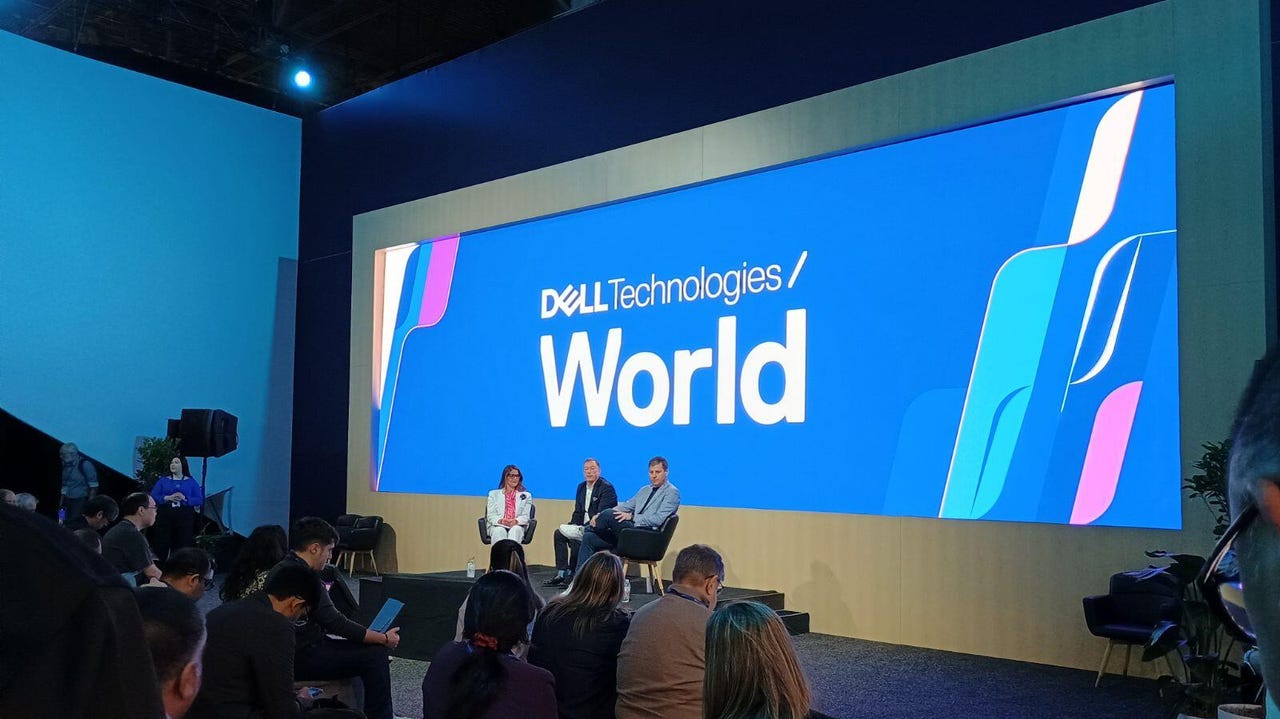
Nearly every technology conference today has a focus on artificial intelligence, and this week’s Dell Technologies World was no exception. But what stood out was the focus on how businesses can actually execute on AI, especially by building more AI capabilities into their infrastructure.
Also: Why business architects are poised to lead the corporate AI revolution
Top trends at Dell Tech World 2026 that are pushing businesses to increase their on-premises AI capabilities include increasing demand for data and AI sovereignty, the need for tighter governance, especially for agents, and more direct control over these critical systems.
‘Intelligence is becoming infrastructure’
In the opening keynote, Dell chairman and CEO Michael Dell said the company is working to move AI closer to the data and infrastructure. “Abundant intelligence is here,” Michael Dell told attendees. “Intelligence is becoming infrastructure.”
Enterprises are realizing that piloting AI through a public cloud API is simple, but moving that pilot into large-scale production requires internal, dedicated server and compute resources. Without on-premises or hybrid architecture, enterprises face hurdles around data capacity and latency, especially as businesses move from traditional AI to agentic systems.
However, a top pressure is definitely the increased costs of using cloud-based LLMs. In his keynote, Dell discussed the concept of “tokenomics,” and Dell Technologies vice chairman and COO Jeff Clarke — during his Day 2 keynote — said that token usage for AI has risen by 320-fold and that, by 2030, global token consumption is predicted to grow 3,400%.
Also: Moving from AI pilots to business-wide value requires a superhighway – how to ramp up
One of the main ways that businesses can work to reduce these costs, and something that Dell’s portfolio is designed to serve, is by moving more AI workloads from the cloud to on-prem compute. During the conference, Dell speakers outlined multiple ways AI compute can be utilized internally, from local workstations to huge data center racks to edge devices, all of which can greatly reduce the cost of tokens for a business.
Along with costs, we are also seeing the move to more internal compute resources being driven by trends in AI and data sovereignty. Research from Aberdeen shows that companies across the globe and all business sectors are putting a high value on keeping data and AI training out of the cloud and protected in company data centers.
Growing requirements for sovereign AI
At Dell Technologies World, several Dell speakers discussed the growing requirements for sovereign AI and how Dell can help customers meet these needs, including the introduction of the new Dell AI Data Platform.
Requirements for sovereign AI become even more important as businesses begin to adopt agents and agentic systems. With agents, not only do costs around tokens see significant growth (one case study at the show stated that a company exceeded an entire year’s token budget by March once agents entered the equation), but the need for strict security, governance, and control becomes vital to prevent unintended consequences.
Also: Cloud attacks are getting faster and deadlier – 4 ways to secure your business
“When an agent takes an action on your behalf, you need to know what it did, why it did it, and how to undo it if it got it wrong,” Jeff Clarke said in his keynote.
Announcements from Dell designed to help businesses address these concerns included Dell Deskside Agentic AI, which is a development offering that includes workstations, Nvidia NemoClaw software, and Dell services. They also announced support for Nvidia OpenShell, a sandboxed environment for building agents and enforcing corporate governance and privacy policies.
Conflicting advice: Move fast versus go slow
Many of these announcements, sessions, and discussions at Dell Technologies World highlighted one of the main balancing acts of today’s AI infrastructures. There were often seemingly conflicting statements, with talk about helping businesses “move fast” and “not be left behind” contrasting with practical sessions that highlighted going slow, ensuring security and governance, and starting small with AI and agents.
Also: 96% of IT pros use AI now: Their top 7 agentic applications and biggest implementation roadblocks
Also, many of the software offerings touted as solutions to AI and agent hurdles are still in beta or even alpha, and often state that they should not be used in production. This means that companies that want to stay secure and meet compliance requirements need to weigh whether these software tools are mature and secure enough to meet their requirements.
But for businesses looking for more measured and practical discussions about AI and agentic systems, Dell Technologies World 2026 offered many sessions, product offerings, and demonstrations of tools and solutions to help them take practical steps toward building an AI enterprise.