
We may receive a commission on purchases made from links.
Washing machines are among the most important appliances in our home, especially because they’re responsible for removing dust, dirt, and potential bacteria that cling to our clothes. In fact, Wonderklean cautions that dirty washing machines can also lead to a slew of health issues, ranging from respiratory problems to skin problems and allergies. And if you don’t take the time to address limescale buildup, Taps UK notes it can also jack up your electricity bill.
Common signs that your machine may already need a deep clean include foul or musty smells, whether it’s your clothes post-wash or the filter. However, it’s often a better idea to prevent this buildup before it starts. While there’s no hard-and-fast rule for precisely when it needs to be cleaned, appliance care brand Affresh recommends cleaning your washing machine once a month, or about 30 cycles, which larger households will reach much sooner. Washing machine company Whirlpool also notes that if you’ve recently done a wash with a lot of clothes bleeding, it may also be time to do a clean-up. In some cases, issues that may require specialized cleaning include mold, limescale, or residual detergent, which can be due to both how you wash your clothes and the type of water in your area.
Regular cleaning is one way to get the most out of your washing machine’s expected lifespan. So, if you’ve decided it’s time to make your appliance feel brand new again, here are some ways to do it, as well as methods to fix more specific problems.
How to clean your washing machine
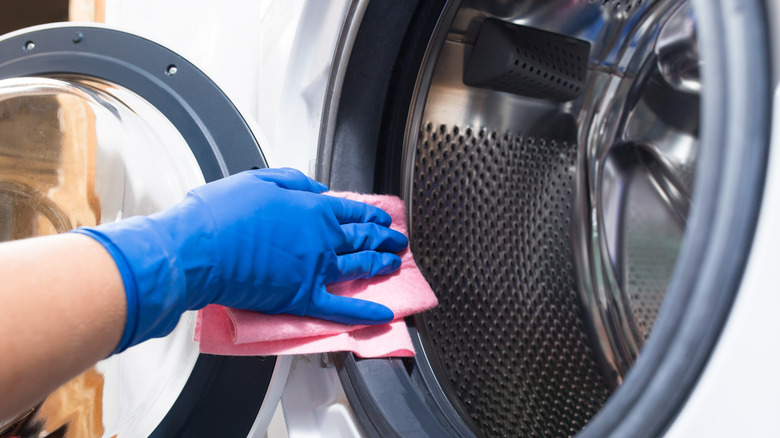
Before we proceed, it’s best to check your appliance manufacturer’s care guide, which may include specific care instructions for your machine. To care for its products, Whirlpool recommends first adding washing machine tablets to an empty tub, then running a hot-water cycle, followed by a rinse-and-spin cycle. When your tub is air-drying, it says to remove the detergent dispenser drawer if your washing machine model allows it. Next, you can opt to either wipe down the drawer surface with an all-purpose cleaner or soak it in hot water.
There are also differences when cleaning front-load or top-load washing machines. For top-load washing machines, the agitator will need special attention. If the cap is not removable, Whirlpool says you should wipe it with a cloth and a mild soap. But if your model lets you remove the cap, it also says you can use a scrub brush to remove buildup.
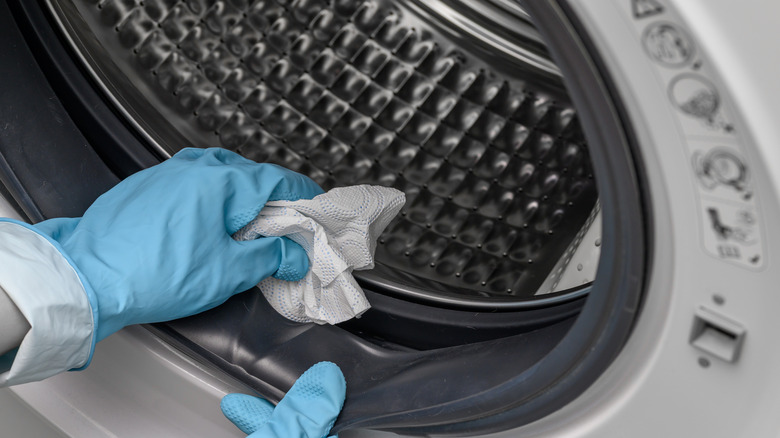
Whether you own a top-loading or front-loading washing machine, a quick wipe-down of the door with machine-cleaning wipes can help remove any stray detergent or dust. Electrolux adds that using too much enzyme-based detergent and washing at too low a temperature also leads to deposits on seals. For front-loading washing machines, machine cleaning wipes help ensure there is no hidden mold in the seals. You can also use a damp cloth and mild soap to keep the rest of the exterior sparkling.
Removing limescale, mold, and residual detergent from your washing machine
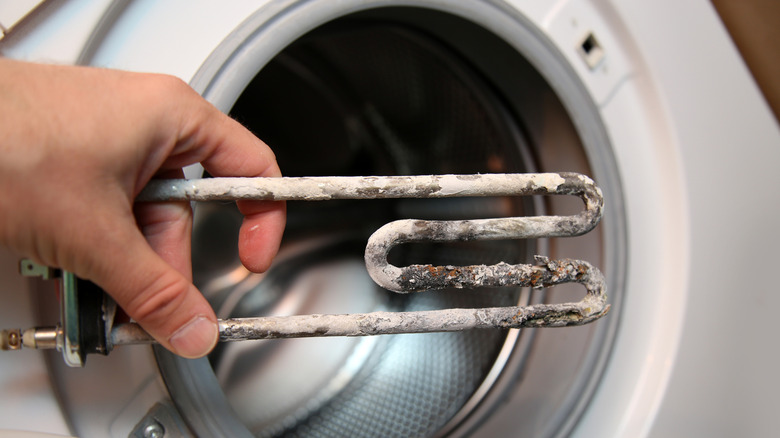
Unlike your dryer, your washing machine is at a lower risk of causing a house fire, but it does have its own set of concerns, such as limescale, mold, or residual detergent. For people who live in areas with hard water, calcium and magnesium can lead to limescale. Other appliances that limescale is known to cause issues with include your coffee machine and water heater. HG says you can address limescale buildup with a descaler solution, natural vinegar, soda, or dishwasher tablet.
Wonderklean notes that the detergent dispenser, drain hose, and washing machine door are the parts of a washing machine that are most at risk of bacterial and mold growth. To address this, Samsung recommends running a spin-only cycle with an empty tub first. Next, it says to use liquid chlorine bleach, pour it into the dedicated bleach dispenser, and run a Self Clean cycle. Depending on your model, the run time can be up to 4 hours, but it’s important to wipe the inside of the tub afterward. Once that’s done, Samsung says it’s best to run another Rinse+Spin cycle and repeat the process until you no longer see any mold. Once you’re satisfied, you’ll want to leave both the door and detergent door open to let it dry.
Regularly cleaning your washing machines helps you spot warning signs before they break down. If the mold doesn’t go away after deep cleaning, Electrolux says it should be repaired by a professional technician.

Stephan is the sports journalist for the Maple Grove Report.