Singapore Airlines Expands European Network, Launches Madrid Flights in October 2026


Singapore Airlines (SIA) plans to gradually increase the number of weekly flights connecting Singapore with major European destinations, including Manchester, Milan, Munich, and London Gatwick, in the upcoming months. This expansion aims to meet the robust passenger demand on these routes and improve overall connectivity through its hub in Singapore, offering travelers more convenient and flexible travel options.

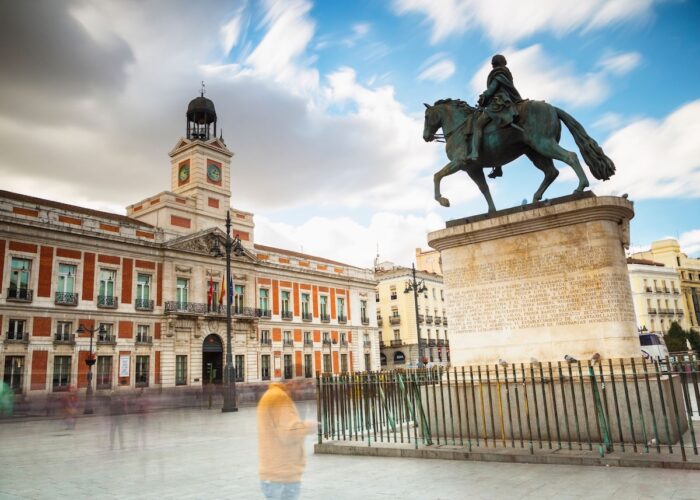
Puerto del Sol Madrid

Puerto del Sol Madrid

The airline plans to start five flights a week to Madrid via Barcelona from October 26, 2026, pending regulatory approval. It will also modify its existing twice-weekly Singapore-Barcelona routes, SQ388 and SQ387, to include Madrid. This will make Madrid SIA’s 15th European destination and its second in Spain.

Almudena Cathedral
Almudena Cathedral

Mr Dai Haoyu, Senior Vice President Marketing Planning, Singapore Airlines, said: “Europe is an important market for Singapore Airlines, and these adjustments reflect our commitment to it. We are seeing strong demand for travel to Europe, and increasing frequencies to key destinations such as Manchester, Milan, Munich, and London Gatwick in response. Madrid is also an increasingly popular tourist destination, as well as a financial and business hub. These new services will give our customers more choice and greater value when planning their travel.”

La Sagrada Familia in Barcelona

Starting 13 July 2026, SIA’s Singapore-Manchester flights, SQ302 and SQ301, will operate daily instead of five times a week. Additionally, from 25 October 2026, SIA’s Singapore-London Gatwick flights, SQ314 and SQ313, will also run daily, increasing service frequency. This means SIA will offer two daily flights to Manchester and a total of six flights daily to London, including four to London Heathrow.

Starting 25 October 2026, the Airline will operate its Singapore-Milan flights, SQ356 and SQ355, daily, up from four times a week. The three-times weekly Singapore-Milan-Barcelona routes, SQ378 and SQ377, will be discontinued from 27 October 2026, coinciding with the introduction of the new Singapore-Barcelona-Madrid service.

Park Guell Barcelona

Starting from 26 October 2026, SIA will introduce a new Singapore-Munich route with three weekly flights, SQ340 and SQ339, increasing its total to 10 weekly services to the German city. All flights are subject to regulatory approvals, and aircraft deployment could vary due to operational reasons.

The first flight to Madrid, SQ388, is set to leave Singapore at 2330hrs (local time) on October 26, 2026, arriving in Barcelona at 0640hrs (local time) on October 2026, 2026. It will then depart Barcelona at 0740hrs (local time) and arrive in Madrid at 0850hrs (local time) on the same day.

The return flight, SQ387, is scheduled to leave Madrid at 10:00 a.m. local time on 27 October 2026, arrive in Barcelona at 11:15 a.m., depart Barcelona at 12:35 p.m. the same day, and arrive in Singapore at 8:25 a.m. local time the following day.

Puerta de Alcala Madrid
Puerta de Alcalá Madrid

SIA will deploy its Airbus A350-900 long-haul model with 253 seats (including 42 in Business Class, 24 in Premium Economy, and 187 in Economy) on the Singapore-Barcelona-Madrid route.

Madrid, Spain’s capital, is famous for its lively culture, renowned museums, and landmarks such as the Royal Palace of Madrid. It serves as a key business and financial center for both the region and South America.

Tickets for the new Madrid service will be available starting June 2026 through SIA’s distribution channels. Tickets for the additional services to Manchester, Milan, Munich, and London Gatwick will be released gradually. More details are available in Annex A.

Metropolis Building (Edificio Metro?polis) and Gran Vi?a
Metropolis Building (Edificio Metropolis) and Gran Via

SINGAPORE AIRLINES’ UPCOMING NETWORK ADJUSTMENTS

BARCELONA AND MADRID, SPAIN
SIA will restructure its current twice-weekly Singapore-Barcelona services to five-times weekly Singapore-Barcelona-Madrid services.

26 October 2026 – 27 March 2027
SQ388 Singapore -Barcelona Mondays, Wednesdays, Thursdays, Fridays, Sundays 2330hrs – 0640hrs (+1) Airbus A350-900LH
SQ388 Barcelona -Madrid Mondays, Tuesdays, Thursdays, Fridays, Saturdays 0740hrs – 0850hrs
SQ387 Madrid -Barcelona Mondays, Tuesdays, Thursdays, Fridays, Saturdays 1000hrs – 1115hrs
SQ387 Barcelona -Singapore Mondays, Tuesdays, Thursdays, Fridays, Saturdays 1235hrs – 0825hrs (+1)

LONDON GATWICK, THE UNITED KINGDOM

SIA will step up its second London Gatwick tranche to a daily operation during the Northern Winter 2026 operating season. This will complement SIA’s existing daily services, SQ312 and SQ309, to London Gatwick, and SIA’s four daily services to London Heathrow, bringing SIA’s total London services to up to six times daily.

25 October 2026 – 27 March 2027
SQ314 Singapore -London (Gatwick) Daily 0230hrs – 0900hrs Airbus A350-900LH
SQ313 London (Gatwick) -Singapore Daily 1300hrs – 1000hrs (+1)

 MANCHESTER, THE UNITED KINGDOM

SIA will increase its Singapore-Manchester services from five times weekly to daily.

13 July 2026 – 27 March 2027
SQ302 Singapore -Manchester Daily 0210hrs – 0835hrs Airbus A350-900LH
SQ301 Manchester -Singapore Daily 1005hrs – 0715hrs (+1)

MILAN, ITALY

SIA will increase its Singapore-Milan services from four times weekly to daily.

25 October 2026 – 27 March 2027
SQ356 Singapore – Milan Daily 0005hrs – 0650hrs Airbus A350-900LH
SQ355 Milan – Singapore Daily 1235hrs – 0730hrs (+1)

MUNICH, GERMANY

SIA will launch a new three-times weekly service between Singapore and Munich. This will complement SIA’s existing services to Munich, SQ328 and SQ327, bringing the total to 10 weekly services.

26 October 2026 – 27 March 2027
SQ340 Singapore -Munich Mondays, Wednesdays, Fridays 1255hrs – 1910hrs Airbus A350-900LH
SQ339 Munich -Singapore Mondays, Wednesdays, Fridays 2030hrs – 1515hrs (+1)

*All times local

Please follow #TeamOutofTown on Facebook, Twitter, Instagram, and Pinterest for more travel ideas.

Read: Top 15 Best Things to do in Munich, Germany


Source link

Leave a Reply

Subscribe to Our Newsletter

Get our latest articles delivered straight to your inbox. No spam, we promise.

Recent Reviews


There are places in the world where everything feels accounted for. The roads are smooth, the signs are clear, and the experience has been carefully arranged long before you arrive. Adventure exists, technically, but only within boundaries that make it predictable. Nothing unexpected happens. Nothing pushes back.

And then there are places that still feel wild.

Not reckless. Not uncomfortable. Just untamed enough that you feel like a guest rather than a consumer. Places where the land doesn’t bend to human schedules, where weather sets the tone for the day, and where nature isn’t something you observe from a distance — it’s something you move through, adapt to, and occasionally surrender to. Traveling somewhere that still feels wild changes you in quiet, persistent ways. It slows your thinking. Sharpens your senses. Reminds you how small you are — and how good that can feel.

Alaska is the clearest example we know. But the feeling itself, the pull toward the wild, extends far beyond one place on the map.

The Absence of Predictability Is the Point

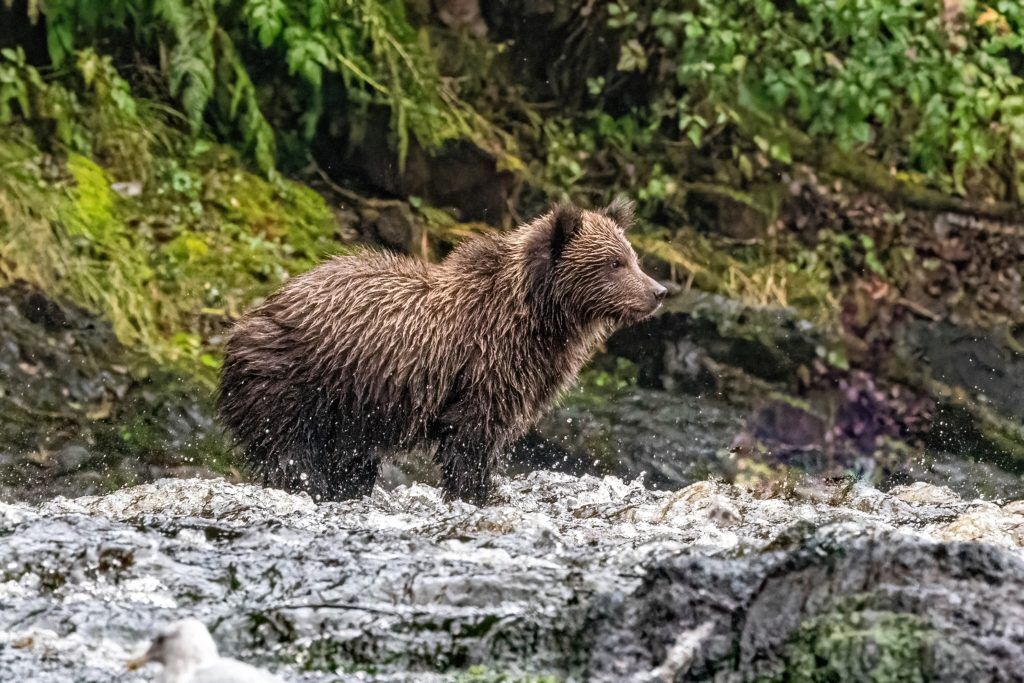
Baby bear Pavlovs Bay Alaska
Photo Credit: Jenn Coleman.

When you travel somewhere wild, certainty disappears almost immediately. Plans turn into loose outlines. Timelines soften. The assumption that you’re fully in control starts to fade — and that’s exactly where the experience opens up.

In Alaska, weather doesn’t politely cooperate. Flights wait. Boats adjust for tides. Trails change overnight. Wildlife appears on its own terms, not when you’re ready with a camera in hand. At first, this unsettles people. We’re trained to optimize travel, to squeeze value from every hour, to move efficiently from one highlight to the next.

Wild places resist that mindset. They force you to slow down and pay attention instead.

Instead of rushing, you find yourself watching clouds crawl across a mountain range or listening for the distant crack of shifting ice. You wait because someone has spotted a bear across the river, and suddenly waiting doesn’t feel like lost time — it feels like the entire point. In wild places, patience isn’t a virtue. It’s a requirement.

Nature Isn’t a Backdrop — It’s the Main Character

Endless Adventures Await-Moose - Alaska Glacier Lodge Palmer Alaska
Photo Credit: Jenn Coleman.

In many destinations, nature plays a supporting role. It’s something you admire between meals and museum visits, a scenic pause before moving on to the next activity.

In wild places, nature is the storyline.

In Alaska, the scale alone recalibrates your perspective. Mountains don’t rise politely in the distance; they loom. Glaciers don’t shimmer passively; they groan, fracture, and move. Rivers aren’t decorative — they’re powerful, cold, and very much alive. Wildlife isn’t something you visit. It’s something you encounter, often unexpectedly, and always on its own terms.

That reality changes how you move through the world. You speak more quietly. You scan the horizon. You learn to read the land not just for beauty, but for meaning — wind direction, cloud movement, water levels. You stop expecting nature to perform for you and start allowing it to lead.

Comfort Looks Different in the Wild

View from my room Homer Inn and Spa
Photo Credit: Jenn Coleman.

Traveling somewhere wild doesn’t mean giving up comfort, but it does redefine what comfort actually means. Luxury here isn’t about excess or polish. It’s about warmth after cold. Shelter after exposure. A solid meal after a long day outside.

Some of our most memorable places to stay in Alaska weren’t remarkable because of opulence, but because of where they were. Remote enough that silence felt complete. Close enough to the land that stepping outside meant being fully immersed — weather, wildlife, and all. Comfort in wild places is practical and intentional, and because of that, it feels deeply satisfying.

You notice and appreciate the basics more. Dry socks. Hot coffee. A sturdy roof during a storm. These aren’t assumed; they’re earned. And because you’re more present, they land differently. They feel grounding in a way that polished luxury sometimes doesn’t.

Your Senses Wake Up

Matanuska Glacier, Alaska
Photo Credit: Deposit Photos.

One of the quieter gifts of wild travel is how it reactivates your senses. In daily life, we filter relentlessly just to get through the day — noise, movement, light, information. Wild places strip that filter away.

You smell rain before it arrives. You hear ice shifting miles off. You notice how light changes minute by minute. In Alaska, even the air feels sharper, cleaner, alive. You become aware of your body in space — where you step, how fast you move, what’s happening around you.

This heightened awareness isn’t stressful. It’s calming. It pulls you into the present without effort or instruction. It’s mindfulness without the app, presence without performance.

You Remember What Adventure Actually Means

Hatcher Pass - Gold Cord Lake Trail Alaska
Photo Credit: Jenn Coleman.

Somewhere along the way, adventure became a marketing word. But real adventure, especially in wild places, isn’t about adrenaline or bragging rights. It’s about curiosity, humility, and uncertainty.

Adventure means not knowing exactly how the day will unfold. It means trusting guides and locals. It means adapting instead of controlling. In Alaska, that might look like hiking through mist, unsure if the clouds will lift. Kayaking through ice-dotted water where seals surface nearby. Boarding a small plane knowing weather could change everything.

And when things don’t go according to plan, that doesn’t diminish the experience — it becomes the story. Wild places remind you that the goal isn’t perfection. It’s participation.

Time Feels Different Out Here

Yllas Ski Resort Finland
Photo Credit: Jenn Coleman.

Wild destinations stretch time in ways that are hard to explain until you experience them. Days feel full without feeling rushed. Hours pass unnoticed when you’re fully engaged. Evenings arrive gently, not abruptly.

Without constant stimulation or packed schedules, your nervous system settles. You sleep more deeply. Wake earlier. Feel less urgency to check your phone. In Alaska, the light itself reshapes time, lingering late into the evening in summer, quietly reminding you that clocks are human inventions, not natural laws.

That shift doesn’t disappear when you leave. You return home more aware of how often urgency is manufactured — and more protective of your time because of it.

You Feel Like You’ve Earned the Experience

Kayaking Glacier Bay Alaska
Photo Credit: Jenn Coleman.

There’s a quiet satisfaction that comes from traveling somewhere that isn’t effortless. Wild places often require extra steps — small planes, ferries, long drives, patience. But effort creates investment.

When you arrive, you don’t feel like you stumbled into the experience. You chose it. And that choice creates respect — for the land, for the people who live there, and for the experience itself. In Alaska, simply reaching some destinations comes with stories before the stay even begins.

Wild travel doesn’t hand itself to you. It asks something in return.

Why We’re Drawn to the Wild Now More Than Ever

Waterfall Cove Alaska
Photo Credit: Jenn Coleman.

The pull toward wild places isn’t accidental. After years of constant connectivity, crowded destinations, and carefully curated experiences, many travelers are craving something real. Something grounding. Something that doesn’t ask them to perform.

Wild places offer perspective. They remind us that the world is bigger than our inboxes, that discomfort isn’t dangerous, and that awe still exists — no explanation required. Alaska sits at the heart of this longing, but it isn’t alone. You feel it in remote coastlines, high deserts, northern forests, and far-flung mountain towns around the world.

What unites them isn’t geography. It’s restraint. These places haven’t been overly softened or simplified. They still ask you to meet them where they are.

What You Take Home From a Wild Place

Hikers hiking, enjoying the view of Famous Patagonia Mount Fitz
Photo Credit: Deposit Photos.

You don’t return with just photos. You come back quieter, more observant, and more comfortable with uncertainty. You gain a clearer sense of what you actually need — and what you don’t.

Traveling somewhere that still feels wild recalibrates your sense of scale and self. It reminds you that not everything needs improvement, explanation, or monetization. Some things are powerful simply because they exist.

And once you’ve felt that — once you’ve stood somewhere that didn’t care whether you were there or not — it changes how you travel going forward. You start seeking places that ask something of you. Places that feel alive. Places that leave room for surprise.

Because wildness, in the end, isn’t something you conquer.

It’s something you experience — and carry with you long after you’ve left.

Hi! We are Jenn and Ed Coleman aka Coleman Concierge. In a nutshell, we are a Huntsville-based Gen X couple sharing our stories of amazing adventures through activity-driven transformational and experiential travel.


Source link