
4 Unknown Florida Getaways To Escape The Summer Beach Crowds


Share The Article

Florida’s usual summer hotspots only have so many pickleball courts, parking spaces, and open patches of sand to go around.

But finding paradise shores without being close enough to smell what your fellow beachgoers had for breakfast is easier than you might think.
Lake Worth coastline in Florida

Believe it or not, according to local experts at Southern Living, there are still hidden gems to discover across the Sunshine State.

Some are sandwiched between household names, while others can be a trek to reach, but ultimately worth the adventure to find your inner Zen.

If you’re like the rest of us here at Travel Off Path, who prefer to find a quiet spot overlooking the sea, then these 4 Florida getaways are perfect for escaping the summer beach crowds.

PLUS: We’ve built an interactive quiz for you at the end of this article to find your perfect match!

Plant Your Flag in Flagler Beach
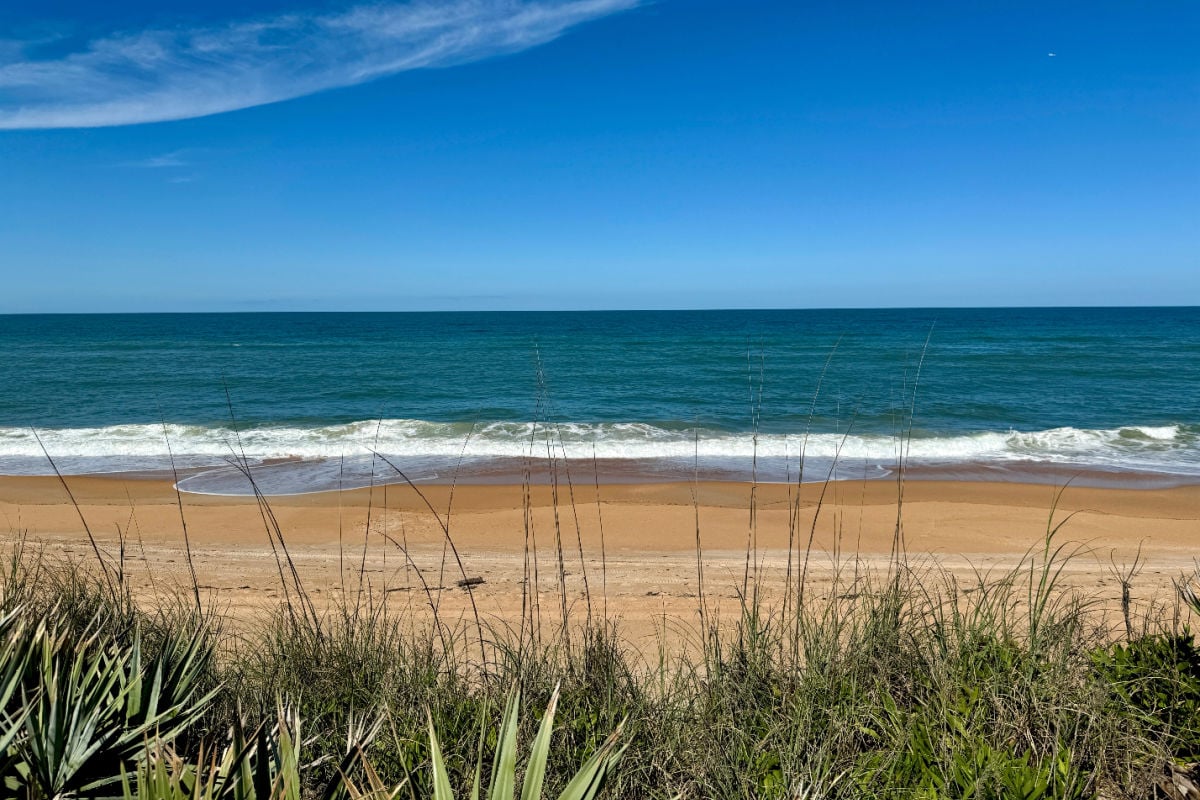
Crowd-free beach of Flagler Beach, FL

Be sure to double-check Travel Alerts and Safety Levels before your trip.

If you thought every swath of Florida’s Atlantic side was taken up with beach loungers and seniors living out their golden years (hopefully not in a Speedo), Flagler Beach is the antidote.

This small town is a little scruffy in the best way. Without the razzle, dazzle and well, I’m out of more “Z” words, so call me frazzled, this resort-less beach getaway is more about blending in like a local than making corporate pockets richer.

Feeling much less manufactured than other Florida hotspots, you get cinnamon-colored sand, mom ‘n pop restaurants, oceanfront A1A views, and a classic pier that doesn’t feel overly cheesy like a bad Italian restaurant (although, it’s temporarily closed).

Cinnamon sand of Flagler Beach

The waters are vibrant, calling you to surf or swim, and the beaches are more spacious than the household names hordes of vacationers seek out each year.

It’s hard not to enjoy this “Old Florida” charmer.

Lake Worth Beach Is Worth Your While

Sandwiched between the bustle of South Florida staples of Palm Beach, Fort Lauderdale, and Miami lies Lake Worth Beach.

You might be thinking to yourself, “wait a minute — a lake on the coast?”, and that’s a valid question.

Turquoise waters of  Lake Worth, Florida

Lying inland, the town does boast a scenic lagoon, but we all know what Floridians say: if there’s a body of water, then there’s a gator lurking.

I don’t know about you, but I’ll take my chances with stingrays and grouchy retirees on the coast.

Lake Worth is arguably the region’s top hidden gem, as most flock to the aforementioned trio, carrying far more weight in the travel sphere.

As Southern Living puts it, “the sand itself is enough of a draw”, also adding there’s “a strong sense of place, and locals and visitors alike love the way it feels here”.

Lake Worth Beach, FL pier
Patrick Messier / Shutterstock.com

There’s a unique buzz across town with eye-catching murals and quirky shops you have to visit while here, but the real enticement is the coast in general, offering fewer crowds and the same gorgeous shores South Florida is renowned for.

Don’t Pass Up Pass-a-Grille

Let me guess — you just read that heading twice.

Yes, oddly-named Pass-a-Grille is a real place, located on the far end of more notable St. Pete Beach.

The name may sound like something you’d say at Paul Wall’s jewelry store, but this map-dot oasis not only offers what feels like undiscovered beaches, but locally-owned boutiques, outdoor markets, home-cookin’ restaurants as well.

Aerial view of Pass-a-Grille, FL

This tiny town is one of Florida’s most authentic hideaways, especially along the Gulf, where it’s chock-full of award-winning vacation spots like Clearwater and Siesta Key, for example.

With no towering hotels and only cozy cottages to rent, this is one of the South’s ultimate hideouts to beat the crowds and take in an epic sunset without the unwanted soundtrack of ooh’s and ahh’s or that one guy who always seems to have a Bluetooth speaker on blast.

Carrabelle: An Off-Grid Wonder

Finishing today’s Florida tour, all that’s left is the Panhandle.

Home to popular stomping grounds like Panama City and Destin, there’s also a long stretch of coastline known as the Forgotten Coast that lives up to its name.

Fiery sky over beach in Carrabelle, FL

Even with Spring Break long over by now, summer madness is right around the corner for those same beach towns, but not in the ‘Forgotten’ zone, with such places like Mexico Beach and Port St. Joe.

One name you never seem to hear is Carrabelle, unknown to many but equally beautiful as popular locales.

Boasting powdery sand and a calm Gulfside, this quaint fishing village has ample parking for all-day beach outings from the time you grab your morning coffee and go for a breezy stroll to the time you plop down in your beach chair to watch a fiery evening sunset.

It’s truly one of Florida’s calmest coastal towns to for a relaxing vacation.


Now take this quiz to find your perfect match!

Question 1 of 3

What’s your ideal coastal region?


Question 2 of 3

What kind of town vibe are you looking for?


Final Question

What’s your perfect beach day?


🏄

Flagler Beach

The “Old Florida” Charmer

Why: You wanted the Atlantic coast with a laid-back, “Old Florida” vibe!

Pro Tip: Enjoy the vibrant waves and cinnamon-colored sand. This unpretentious, resort-less getaway is perfect for blending in like a local and dining at mom ‘n pop restaurants.

🎨

Lake Worth Beach

The Artsy Coastal Lagoon

Why: You wanted the Atlantic coast but prefer a slightly quirky, vibrant atmosphere nestled between big cities!

Pro Tip: Sandwiched between Palm Beach and Miami, this hidden gem boasts gorgeous shores, eye-catching murals, and unique boutiques away from the massive crowds.

🌅

Pass-a-Grille

The Cozy Gulf Hideout

Why: You wanted the Lower Gulf Coast! This map-dot oasis offers the perfect mix of cozy cottages and epic, crowd-free sunsets.

Pro Tip: Located at the end of St. Pete Beach, this authentic hideaway features no towering hotels—just locally-owned boutiques, outdoor markets, and pristine shores.

🎣

Carrabelle

The Off-Grid Wonder

Why: You wanted the Panhandle! Escape the madness of Destin and Panama City by heading straight for the “Forgotten Coast.”

Pro Tip: This quaint fishing village is one of Florida’s calmest coastal towns. Enjoy powdery sand, ample parking, and an incredibly quiet, relaxing atmosphere.


Source link

Leave a Reply

Subscribe to Our Newsletter

Get our latest articles delivered straight to your inbox. No spam, we promise.

Recent Reviews


Digital Evidence Has Reshaped Criminal Defense – and the Defense Bar Is Still Catching Up

A decade ago, a felony case file might have run to a few hundred pages of police reports, witness statements, and lab results. Today, that same case can include a full cell phone extraction, hours of body-worn camera footage, surveillance video from multiple cameras, social media exports, license-plate-reader hits, and digital forensic reports running thousands of pages. The substantive law has not changed nearly as fast as the evidence it operates on.

For criminal defense practitioners, the shift is not just about volume. It is about how cases are investigated, how discovery is reviewed, how plea calculations are made, and how trials are tried. A defense lawyer who treats digital evidence as an afterthought — to be skimmed close to trial, with the cell phone dump opened only if something obvious surfaces — is no longer providing competent representation in most serious cases.

The Volume Problem

Modern law enforcement investigations generate digital evidence at a scale that traditional defense workflows were never designed to handle.

A single cell phone extraction using forensic tools commonly used by prosecutors can produce a report tens of thousands of pages long. Multiply that across co-defendants. Add cloud account data subpoenaed from providers. Add body-cam footage from every responding officer, often running an hour or more per officer per incident. Add interview recordings, surveillance video, ALPR records, and any wiretap or pen register data.

The defense lawyer’s obligation is to review all of it — or at least to review it competently enough to identify what matters. Doing that without a workflow is impossible. Cases get lost not because the exonerating evidence was hidden, but because it was buried in the third week of message history nobody had time to read.

The practical response involves a combination of technology and process: e-discovery review platforms scaled for criminal cases, paralegal-level review with defined search protocols, and clear allocation of which categories of evidence the attorney personally reviews versus which are screened first. Firms that handle digital-evidence-heavy cases without that infrastructure tend to discover, late in the process, that something important was missed.

Authentication and Chain of Custody Have Become Central

Volume is half the problem. The other half is that digital evidence is harder to authenticate than the physical evidence it has displaced.

A surveillance video recovered from a business has to be tied to a specific camera, on a specific system, with verified timestamps, with continuous custody from the moment of seizure to the moment of presentation. A cell phone extraction has to be tied to a specific device, performed using a documented forensic process, with hash values demonstrating that the data has not been altered. A social media export has to be authenticated either through the provider’s certification or through circumstantial evidence connecting the account to the defendant.

Each of these chains has potential breaks. Cameras get the wrong time. Forensic extractions get performed with outdated software. Social media accounts get used by people other than the registered user. Defense counsel who understands the technical underpinnings of how evidence was collected can identify gaps that opposing counsel may have assumed were settled.

Federal procedure in particular has evolved around these issues. Practitioners working in federal court should be familiar with the Federal Rules of Evidence governing authentication and the best-evidence rule, both of which apply to electronic records in ways that often surprise lawyers more accustomed to paper-era practice.

Discovery Obligations and the Brady Problem

The growth of digital evidence has also complicated the prosecution’s obligations under Brady and its progeny, which require disclosure of material exculpatory and impeachment evidence to the defense.

When the relevant evidence universe was a few hundred pages, prosecutors could reasonably review the file and identify Brady material. When the universe is a hundred thousand pages of cell phone data and dozens of hours of video, identifying what is exculpatory becomes a much harder problem — and not always a problem prosecutors solve well. Defense counsel cannot rely on the prosecution to flag what the defense will find useful. The defense has to find it themselves, which loops back to the volume problem.

Courts have been inconsistent in how they handle Brady obligations in the digital age. Some jurisdictions require prosecutors to provide searchable, organized productions; others permit document dumps that effectively shift the search burden to the defense. The practical implication is that defense lawyers in serious cases must budget significantly more time for discovery review than would have been required even a few years ago, and must do so on schedules that prosecutors and courts often have not adjusted to reflect the new reality.

How Digital Evidence Changes Plea Negotiations

Plea negotiations have always been driven by each side’s assessment of trial risk. Digital evidence has changed both sides of that calculation.

For the prosecution, video and digital records often appear to lock in factual elements that previously turned on witness credibility. A clear video of an alleged assault, or a series of incriminating messages, can shift a case from a battle of testimony into a battle of interpretation. Prosecutors evaluating cases with strong digital evidence often offer less, because they perceive their trial position as stronger.

For the defense, the same evidence frequently contains nuance that changes how a jury would actually receive it. Body-cam footage that the prosecution thinks is damning often shows context that supports the defense theory. Cell phone messages read in full rather than excerpted often tell a different story. The defense lawyer who has actually watched the video and read the messages — rather than relying on the prosecution’s characterization — is often in a meaningfully stronger negotiating position than the case file would initially suggest.

This is part of why pretrial preparation has become more decisive. The cases that resolve favorably are usually the cases where the defense did the digital evidence work early enough to see what was actually there, rather than what the police reports said was there. Resources from the California Courts and the State Bar of California outline the procedural framework within which this work has to happen, but the framework alone does not produce results — sustained attention to the evidence does.

What Effective Defense Looks Like Now

Competent criminal defense in 2026 looks different than it did even five years ago. The lawyers who get the best outcomes for clients tend to share a few characteristics: they take digital evidence seriously from intake forward, they have the infrastructure to review it at scale, they understand the technical questions well enough to challenge authentication where appropriate, and they treat plea calculations as something to be made after the evidence has been examined rather than after the police reports have been read.

For people facing serious charges in California, the practical implication is that the choice of counsel matters more, not less, in the digital evidence era. A firm like Angelo Reyes Law, built around trial-ready preparation rather than volume-driven plea processing, reflects what effective representation tends to look like in cases where the evidence record is large and where the difference between a good and a poor outcome turns on what defense counsel actually finds in the file.

The volume of evidence will keep growing. Defense practice has to keep up.


Source link


