
As industry demands constantly evolve, manufacturers become more limited in what they can actually include in their cars mechanically. As has always been the case, most buyers want cars that are easy and comfortable to drive, which in 2026 often means having an automatic transmission in the car instead of a manual. Automatics have become so sophisticated that they’re standard for almost every segment now, making it a no-brainer. But for us who prefer the connection shifting gears manually gives you, it’s a shame to see the availability dwindle by the year.
Luckily, though, some brands still recognize the demand, though the cars that include a manual option are far more niche than they once were. As the driving experience is often the main reason why we still want manuals, it’s the performance cars that offer them. While ultra-exclusive hypercars like the Hennessey Venom F5 and Koenigsegg CC850 help keep the manual alive, they’re slightly out of reach for most of us. The following 14 brand-new cars are much more within most people’s performance car budget, all being worthy of considering if you want something brand-new with a manual transmission.
2026 Hyundai Elantra N
Hyundai’s main priority isn’t exactly on performance, but there are still a couple of trims and variants of the brand’s affordable, ultra-efficient cars if you want a more interesting experience behind the wheel. In 2026, the Elantra is the second-cheapest nameplate in the lineup, starting at just $22,625 (with a $1,975 destination charge). It’s relatively low MSRP for the base trim allows even the top-spec model to come in well below the average price for a new car in 2026, with the Elantra N offering a few notable highlights to earn its $35,100 price tag.
As mentioned, manual transmissions aren’t often used for cars that focus on efficiency. Hyundai capitalizes on this, which makes the SlashGear Editor’s Choice Elantra N the only car in the fleet to offer a manual transmission as standard. The six-speed is connected to a small but punchy 2.0L inline-four, producing 276 horsepower and 289 pound-feet of torque. This is quite a bit less than others on this list, but other standard features, such as the N Corner Carving Differential (Hyundai’s name for the limited-slip diff) and the N Grin Control System that allows you to alter the engine and suspension, work to make the car feel more alive even at lower speeds.
2026 Toyota GR Corolla
Compared to the likes of Hyundai, Toyota also strives to achieve the maximum efficiency ratings for a lot of its cars. However, the Japanese giant has a little more experience within the performance scene, to say the least. With decades of experience in motorsport, Toyota is no stranger to bringing over that cutting-edge technology from various series over to its road cars, with those under the GR banner being the main ones to get that treatment today. On the rally side of things, the GR Corolla is one of the most powerful hatchbacks you can buy in America at the moment, coupled with exceptional handling.
During our review of the 2025 model, there wasn’t much we disliked about the car, and none of that was to do with the actual driving experience. Under the hood sits a turbocharged 1.3L inline three-cylinder producing a solid 300 horsepower and 295 pound-feet of torque. For the transmission, the six-speed manual is the more affordable, starting at $40,120 (with a $1,295 destination charge). GR-tuned all-wheel drive comes with every version of the car and offers three torque settings depending on the surface you’re driving on. Front and rear limited-slip differentials also come courtesy of Torsen, alongside GR-tuned suspension and power steering.
2026 Acura Integra Type-S
Instead of offering a large number of different models, Acura does its best to cover as much ground as possible with its limited lineup of just four vehicles. With the modern iteration of the NSX being axed in 2022, the Integra is the closest thing to a performance car that the luxury division currently has on sale. While lower trim levels focus more on the luxury elements, the top-spec Type-S almost feels like a different car compared to the others.
The major difference between the Type-S and the rest of the 2026 Integra lineup is the turbocharged 2.0L inline-four. Producing 320 horsepower and 310 pound-feet of torque, it’s a big step-up from the 1.5L engine that comes with the base model and the A-Spec trims, which delivers 200 horsepower and 192 pound-feet of torque. However, for the available manual transmission, you can go for the A-Spec with the technology package instead of the Type-S. But if you want the most powerful and competitive Acura sedan you can buy, the Type-S will be able to compete with Europe’s best much more comfortably. Pricing starts at $53,900 (with a $1,295 destination charge), making it notably more expensive than the lower trims. You do also get things like Brembo brakes, dual-axis front suspension, and the active exhaust valve, though, for some extra theatrics.
2026 Toyota GR Supra
One of the cars that cemented Toyota’s place at the top of the ’90s sports car segment was the Supra. Still one of Japan’s biggest icons from the Golden Age, the nameplate was brought back for a fifth generation, although that’s also set to leave the lineup after 2026. However, if you still want Toyota’s ultimate on-road performance car, that year’s model can still be bought brand new at time of writing. Similar to the GR Corolla, the Supra has two different transmissions available, with the six-speed manual being the one to offer an almost nostalgic experience behind the wheel.
Each trim of the 2026 GR Supra can come with the manual, with the same turbocharged 3.0L inline-six also being used in all of them. You get 368 horsepower and 382 pound-feet of torque, which puts the sports car in a very competitive position against its main rivals like the Porsche 718 and Nissan Z. Alongside visual and technological differences, though, the higher trims come with performance enhancements elsewhere. The MkV Final Edition gets tweaked suspension and upsized brake calipers and rotors. However, the differences aren’t huge, meaning the difference in price isn’t as large between the trims compared to others here. The 3.0 with the manual starts at $58,300, the Premium at $61,450, and the top-spec MkV Final Edition at $69,350.
2026 BMW Z4
The Z4 tends to go under the radar a little more than other performance cars in BMW’s lineup, which isn’t much of a surprise considering it’s a two-door roadster sitting next to the more usable 2, 3, and 5 Series models. If that’s the aesthetic you’re looking for, though, the Z4 makes a very strong case for itself. Being one of the more expensive BMWs available at the moment, there’s no shortage of comfort and convenience throughout its relatively small cabin. Under the shell, though, BMW follows suit with offering a more analog feel, but through the latest tech available.
To get the most out of the Z4, the top-spec M40i has the most features available both as standard and as options. The biggest upgrade is the 3.0L six-cylinder power plant under the hood, producing 382 horsepower and 369 pound-feet of torque and slightly edging out cars such as the GR Supra. Also, if you want the six-speed manual transmission, the M40i is the only model that has it. The roadster comes in at $68,400, up from the $56,100 that the sDrive30i sits at.
2026 Nissan Z
Another two-door sports car that we’ve briefly mentioned already is the Nissan Z. The latest iteration of the vehicle is at the more affordable end of the segment, but one of the main areas in which it sets itself apart from the competition is with its engine. While it doesn’t exactly blow everything else out of the water, the twin-turbocharged V6 produces 400 horsepower and 350 pound-feet of torque in the first three trim levels.
The top-spec Nismo trim that we reviewed back in 2024 does offer more oomph, tuned up to produce 420 horsepower and 385 pound-feet of torque. However, you don’t get the six-speed manual transmission, making the Sport, Performance, and Heritage Edition trims the ones to represent the Z badge on this list. For the Nismo, a nine-speed automatic is used instead. Luckily, if the manual is more of a priority than increased power, the base Sport trim starts at $42,970, notably down from the Nismo’s $67,570. You do lose out on the Nismo brakes and fine-tuned suspension, but going for one of the two intermediate trims with Akebono brakes and standard limited-slip differentials can help close the gap.
2026 Lotus Emira V6 SE
While many automakers on this list focus on other priorities, Lotus is a performance brand through and through, as it has always been. The British icon has put the driving experience at the forefront of most of its cars for decades, optimizing the weight and aerodynamics in particular rather than just pure power. Lotus has never had a massive lineup of cars in production, which is also the case today. Only four new models can be bought, one of which is the flagship Emira.
The strong focus on the dynamics of the car is very much a feature of the Emira, with one of the four available trims featuring a six-speed manual transmission as standard. This is the V6 SE, which, along with its gearbox, also has an engine exclusive to the trim. The supercharged 3.5L V6 delivers 406 horsepower and 310 pound-feet of torque. The engine actually puts out a little less torque compared to the Turbo SE’s inline-four, but it’s still powerful enough to get the SE to 60 MPH in 4.3 seconds. It’s also one of the more expensive cars on this list, sitting at $112,900 for the specific trim.
2026 Cadillac CT4-V Blackwing
The smaller of the two sedans currently built by Cadillac, the CT4-V Blackwing is essentially the extreme trim level of the more powerful version of the base model. To ensure the car earns the Blackwing badge, Cadillac approaches the mechanics of the car quite differently, with a bespoke engine and transmission to truly make it feel like a big step up from the standard V-Series model. The aero enhancements may catch your eye first, but what’s under the hood is what makes the car so impactful in the compact segment.
Starting with the engine, the 2026 CT4-V Blackwing comes with a twin-turbocharged 3.6L V6, producing 472 horsepower and 445 pound-feet of torque. That’s 147 horsepower more than the CT4-V’s inline-four, and Cadillac chooses to pair it with a six-speed manual for maximum levels of engagement. The price also isn’t much different from the standard CT4-V, which starts at $50,600. To get the Blackwing, you’ll have to spend at least $63,600 (with a $1,795 destination charge), which is still a solid price point for offering full-size levels of performance.
2026 BMW M2, M3 & M4
This next entry is a little different from the rest of the cars here, mainly because we’re covering three different vehicles together. To streamline manufacturing, BMW decides to use the same engine across three of its top-tier sports models: the M2, M3, and M4. While each of the nameplates competes in a different segment, they all benefit from the same twin-turbocharged 3.0L inline-six. Starting with the M2, the maximum output for the compact sports car sits at an ultra-competitive 473 horsepower, with no Competition trims bumping up the horsepower. The $69,000 MSRP puts it above others in the segment, but it more than earns the rather dramatic step-up in price.
For the larger M3 and M4 models, in order to get the six-speed manual transmission that also comes standard with the M2, you can’t go for anything other than the base trims. This means that the manual-equipped 2026 M2, M3, and M4 all offer the same output. For the latter two cars, the Competition and xDrive Competition trims reach 503 and 523 horsepower respectively, but you can only have the eight-speed Steptronic transmission.
2026 Ford Mustang Dark Horse
While other muscle car nameplates born in the Golden Age of “there’s no replacement for displacement” have either been discontinued or evolved significantly over the years, the Mustang has remained in production since its introduction in 1964. The pony car has always sat on the border of the muscle and sports scene, which is even more so the case with the latest generation. The seventh-gen model is frequently referred to as a sports car, and in the case of the top-spec Dark Horse, it has the performance metrics to trump plenty of its European rivals in the segment.
Motivated by the highest-output 5.0L Coyote V8, the 2026 Mustang produces a very healthy 500 horsepower and 418 pound-feet of torque. As standard, the engine is connected to a 10-speed automatic transmission, but for an extra $300, you can select the six-speed manual instead. The GT trim also has this transmission as standard, producing a lower but still very competitive 480 horsepower from its own V8. But as the Dark Horse pushes out a little more, we’ve given that trim the credit here. In the case of the new Dark Horse SC, you can only get a seven-speed DCT with that.
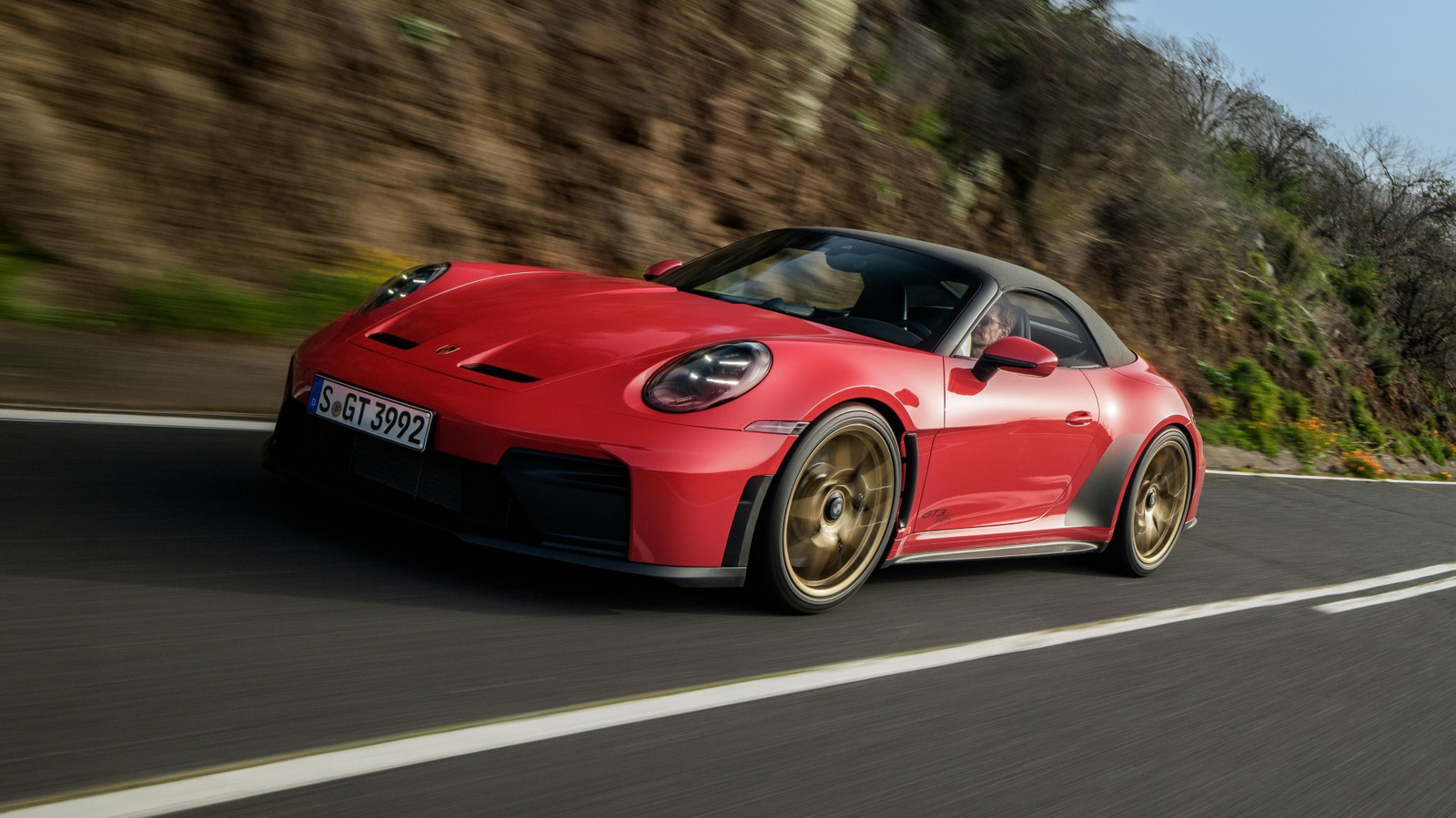
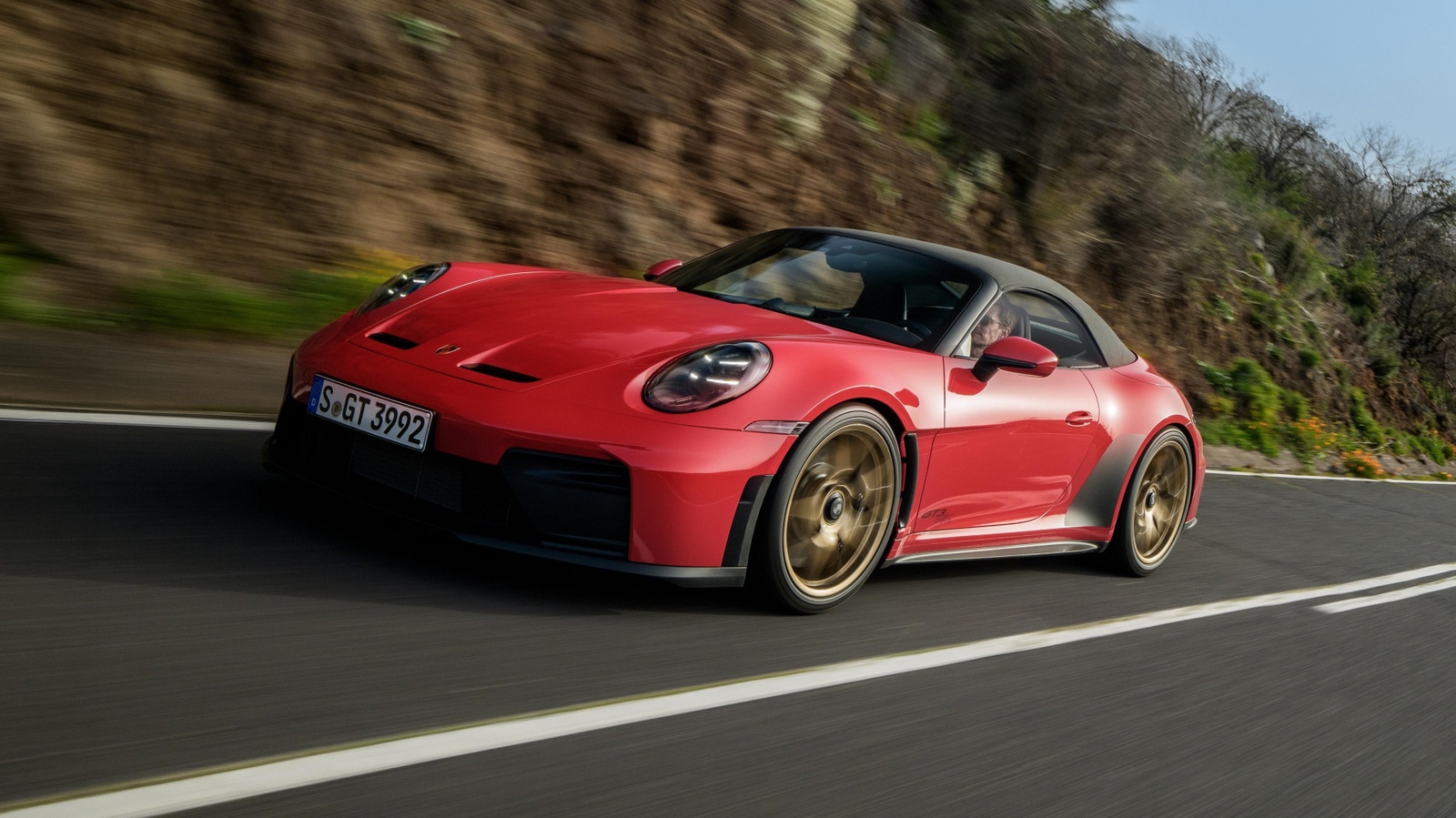
2026 Porsche 911 GT3 And GT3 S/C
Much like the Mustang has carried Ford for over 50 years, the 911 has likewise been Porsche’s flagship sports car for decades. The rear-engine icon has always been where the German automaker displays its latest and most sophisticated technology aimed at extracting every second of performance, a philosophy that hasn’t really changed since 1963. In 2026, the different trims and variations of the 911 has never been greater, stretching from the base Carrera up to the GT3 RS.
Just below the latter, though, sits the slightly more tame GT3. While it has the same engine as the RS, it draws back the output to 502 horsepower and removes the huge wing and splitters. Aimed at road driving instead of the track, Porsche also put a six-speed manual transmission in the car. The manufacturer is one of the very few brands to keep the stick shift alive at this level of performance, reinforcing the 911’s reputation for being the truest sports car for the driver on the market. While deliveries haven’t started yet as of this writing, the now-ready to order convertible GT3 S/C is also set to have the same manual transmission, expanding the availability past the standard GT3 and the Carerra T. On the outside, it draws more inspiration from the GT3 RS and the S/T, but is still very much designed to be the ultimate grand touring version of the 911 with the first-ever retractable roof for the specific model.
2026 Cadillac CT5-V Blackwing
As has been the case for a little while now on the U.S. market, the Cadillac CT5-V Blackwing is one of the most powerful sedans you can buy overall, being undefeated in terms of power when it comes to gas-only engines. The big brother of the CT4-V Blackwing, the mid-size sedan also comes with its own exclusive engine: A supercharged 6.2L V8 producing a massive 668 horsepower and 659 pound-feet of torque. Do note that these figures are when filling the tank with premium gasoline.
While other sedans with anywhere close to the power of the CT5-V Blackwing will often use an automatic, Cadillac still puts a six-speed manual into its flagship sedan to keep it as raw as possible. The standard CT5 and CT5-V models come with the automatic transmission instead. As expected, the 2026 CT5-V Blackwing costs a bit more than the CT4 alternative, priced at $98,900 (with a $1,795 destination charge). But if you want a pure V8-powered, manual sedan, the CT5-V Blackwing is truly in its own category at the moment.

Stephan is the sports journalist for the Maple Grove Report.