
Follow ZDNET: Add us as a preferred source on Google.
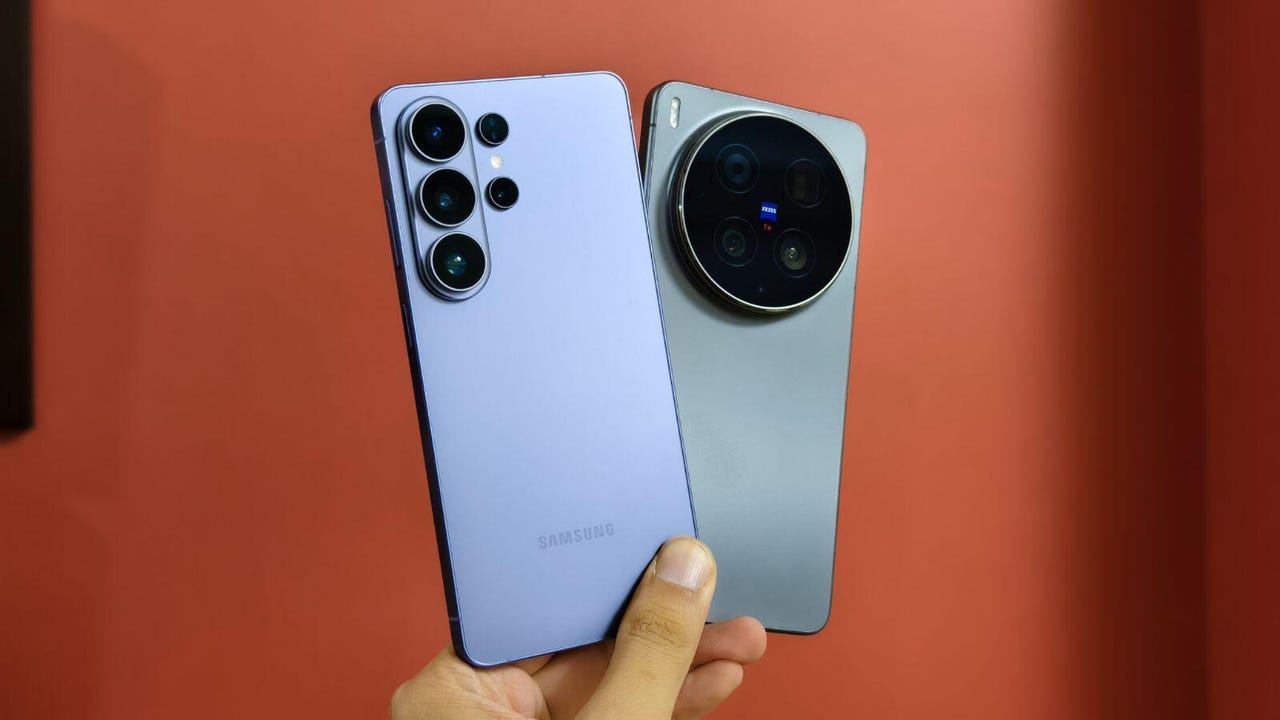
The Samsung Galaxy S26 Ultra is one of the best phones you can buy right now. However, outside the US, it is facing tough competition from Chinese ultra phones, the latest being Vivo’s X300 Ultra.
It takes on the Samsung phone with a camera system that’s packed with not one or two, but three massive sensors. I was curious how it’d compare to the Galaxy S26 Ultra, so I took the two phones on a photowalk. While I expected Vivo to perform better, Samsung surprised me in a few areas.
Before I dive into the results from both devices, here’s an overview of how their specs compare.
By the numbers
| Samsung Galaxy S26 Ultra | Vivo X300 Ultra | |
| Main camera | 200MP (OIS, PDAF), 1/1.3″ sensor with f/1.4 aperture and 23mm focal length | 200MP (OIS, Laser autofocus, PDAF), 1/1.12″ sensor with f/1.9 aperture and 35mm focal length |
| Telephoto Cameras | 1. 50MP (Periscope tele, OIS, PDAF), 1/2.52″ sensor with f/2.9 aperture and 5x optical zoom 2. 10MP (Telephoto, OIS, PDAF), 1/3.94″ sensor, with f/2.4 aperture and 3x optical zoom |
200MP (Periscope tele, OIS, PDAF), 1/1.4″ sensor with f/2.7 aperture telemacro capabilities and 3.7x optical zoom |
| Ultrawide camera | 50 MP (Ultra-wide, PDAF), 1/2.5″ sensor with f/1.9 aperture | 50 MP (OIS, PDAF), 1/1.28″ sensor with f/2.0 aperture |
Main camera results
Starting with the main camera, Vivo changed its focal length to 35mm this year, so you get optical quality instead of relying on 1.5x digital zoom. Comparably, most other modern phones, like the Samsung Galaxy S26 Ultra, have a smaller 23mm equivalent focal length on the main sensor. Fortunately, you can always set 35mm as the default on the Vivo, if you prefer it.
Also: I compared the 100x zoom cameras on Samsung, Google, and Motorola phones – this model won
I find myself zooming in at 1.2x and 1.5x for my day-to-day shots, so I loved shooting on the Vivo X300 Ultra. However, there were times when I missed having 23mm by default (on the Vivo phone, you can use the ultrawide-angle lens and zoom in to shoot at 23mm).
Overall, I don’t think one is objectively better because it depends on what you’re shooting, but I enjoyed shooting with Vivo more.
1x shot on the Samsung Galaxy S26 Ultra
Prakhar Khanna/ZDNET.
1x on the Vivo X300 Ultra
Prakhar Khanna/ZDNET
I took this photo as an example because of the layers in this frame and the added purple patch with those flowers. On both of these Ultra phones, you get to choose a tone (warm or cool) when you set up the device.
Once set up, the difference in look comes down to the sensor and processing. On the above shots in 1x, the X300 Ultra gave me more depth — thanks to a bigger sensor — whereas the Galaxy S26 Ultra shot suffered from oversharpening.
1.5x on the Samsung Galaxy S26 Ultra
Prakhar Khanna/ZDNET
1x on the Vivo X300 Ultra
I wanted to demonstrate the difference in 35mm-equivalent optical and digital quality. In the above frame, I didn’t need further compression of the background, so I relied on the main camera.
Also: I tested Motorola’s $1,500 Razr Ultra, and it’s so close to being my dream flip phone
The 1x on the Vivo X300 Ultra gave me the perfect frame, whereas to achieve the same on Samsung, I had to go to 1.5x digital zoom, which captured fewer details and produced a noisier photo (see the reds of the yet-to-bloom flower). The bigger sensor also allowed Vivo to add a natural bokeh to this shot.
Samsung Galaxy S26 Ultra 1x shot
Prakhar Khanna/ZDNET
Coming back to my earlier point about not picking a focal length objectively over the other one: I’d want to have Galaxy S26 Ultra’s 23mm over Vivo’s 35mm in this case because of the background. I like the Samsung framing better because it can keep the arc in the background at the same position as in the Vivo shot.
While it got my skin tone right, the Galaxy phone struggled with colors of the sky and ground. It looks rather gloomy. Vivo, on the other hand, lacks details in the sky but has better clarity and rich details, at least on my face.
1x on the Galaxy S26 Ultra
Prakhar Khanna/ZDNET
All of my photos here are tap-and-shoot — without manually adjusting the exposure or other settings. The Vivo X300 Ultra gave me more contrast, character, and details in its 1x shot, as compared to the Galaxy S26 Ultra, which looks overexposed and lacks the same amount of detail.
Samsung Galaxy S26 Ultra night shot in 1x
Prakhar Khanna/ZDNET
Night mode shot in 1x from the Vivo X300 Ultra
Prakhar Khanna/ZDNET
In night mode, I prefer Samsung’s saturated colors over Vivo’s look. You can get more saturation on the Vivo X300 Ultra by adjusting the filter (I was using Natural, but Textured would give you a more dramatic look) but Samsung has more contrast, which I especially love on the signboard.
Telephoto and ultrawide
5x portrait shot on the Samsung Galaxy S26 Ultra
Prakhar Khanna/ZDNET
85mm portrait shot on the Vivo X300 Ultra
Prakhar Khanna/ZDNET
Portraits shot on the tele sensor have a more natural bokeh on the X300 Ultra. It also managed to retain a close-to-real-life look (and got the correct color tone of my eyes), while the Galaxy S26 Ultra went for a warmer look.
Also: Samsung vs. Motorola: I’ve tested dozens of phones from both brands – here’s my choice
For the pixel-peepers, Vivo retained more details on my beard, whereas, again, Samsung oversharpened certain areas. However, Samsung handled the highlights on my white T-shirt better.
Samsung Galaxy S26 Ultra portrait shot in sunlight
Prakhar Khanna/ZDNET
Vivo X300 Ultra portrait shot in sunlight
Prakhar Khanna/ZDNET
The photos above were taken at sunset. In these portrait shots, Samsung handled the sunlight on my face more comfortably. While it lacks the detail in the shadows, the Galaxy S26 Ultra gave me a more natural-looking sunset portrait. I noted this in my Galaxy Z Fold 7 review too; Samsung takes great portraits under the setting sun and beats Vivo here.
Telemacro shot on the Galaxy S26 Ultra
Prakhar Khanna/ZDNET
Telemacro shot on the Vivo X300 Ultra
Prakhar Khanna/ZDNET
Vivo easily wins in telemacro shots. This was a tricky subject because the small flower kept moving in the slightest breeze. I had to struggle getting it in focus with the Galaxy S26 Ultra. In comparison, the Vivo X300 Ultra focused on it with a single tap and even captured those white threads in the picture.
Also: I camera tested the latest Google, Samsung, and Honor phones while flying – this model won the most
I zoomed in further to 10x and Vivo gave me this:
10x zoom macro shot on the Vivo X300 Ultra
Prakhar Khanna/ZDNET
I don’t have a Galaxy S26 Ultra shot to compare because it couldn’t focus at 10x digital zoom.
Ultrawide shot on the Samsung Galaxy S26 Ultra
Prakhar Khanna/ZDNET
Ultrawide shot on the Vivo X300 Ultra
Prakhar Khanna/ZDNET
Both phones have a good ultrawide camera. The colors remain consistent throughout the lenses on both Samsung and Vivo, but the latter offers richer details, yet again. However, I like the Galaxy S26 Ultra’s shot better in this case because Vivo overexposed the sky.
Writer’s choice
Both the Samsung Galaxy S26 Ultra and the Vivo X300 Ultra have their strengths, weaknesses, and unique capabilities, but the latter will better satisfy photographers.
Samsung might be enough for most people (it has a friendlier user interface, for example), but I preferred the X300 Ultra. The Vivo gives you more character, allows for easy color profile switching, and the big sensors capture greater detail.
Also: How I turned my old Android phone into a Wi-Fi extender – and fixed dead spots at home
The fun part extends to video recording as well. Vivo offers a film mode that mimics the look of a movie with a single tap. Moreover, if you’re into Fujifilm or Ricoh recipes, you can create an equivalent of those looks and share them among friends with a QR code. I haven’t seen any other phone manufacturer making these things so simple.
I’ve used all the Ultra phones launched this year and would pick the Vivo X300 Ultra for its cameras. In my opinion, it is the best camera phone of 2026.