
Follow ZDNET: Add us as a preferred source on Google.
ZDNET’s key takeaways
- Firefox is still alive and kicking.
- Today’s world demands privacy and user choice.
- Firefox would be an improvement over many users’ default browsers.
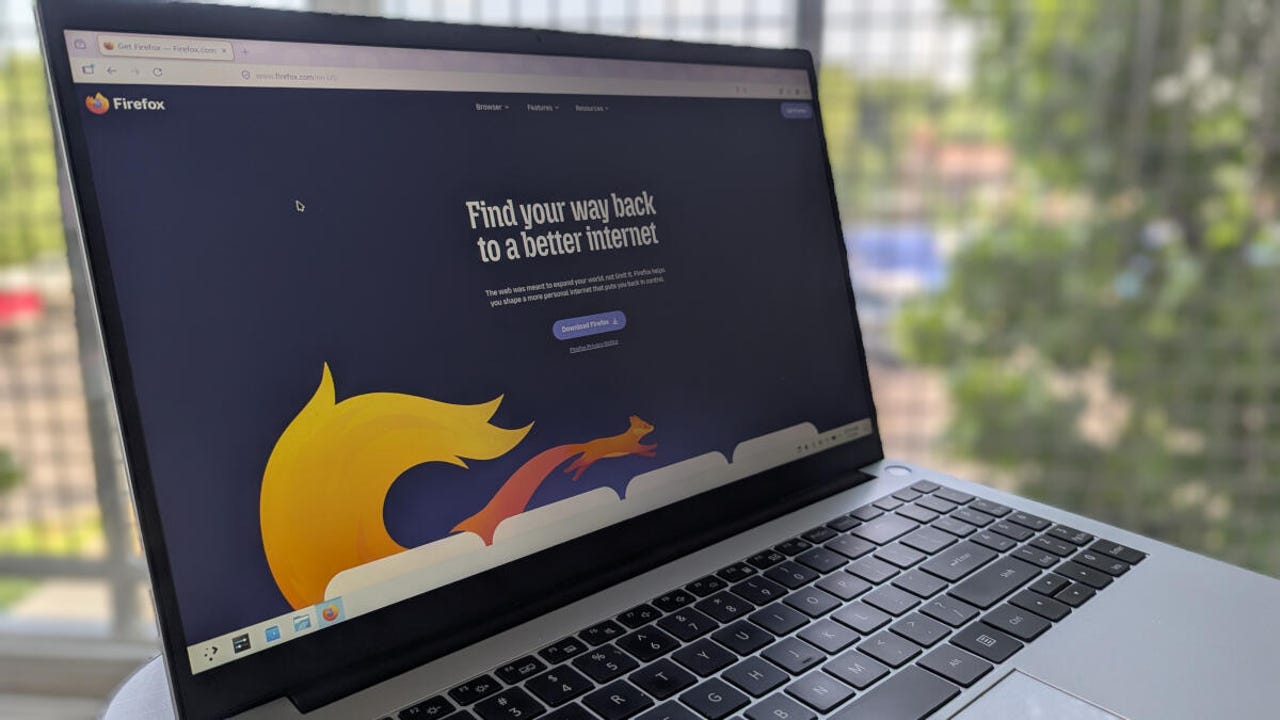
I’ve used Firefox, on and off, since it first came into being. It’s fast, customizable, bloat-free, serious about privacy and security, regularly updated, and its developers listen to users. With a brief exception back in 2010, I’ve always been happy with the browser.
The company behind the browser is a different story. It’s worth noting that in July, 2025, I announced that I was deleting Firefox for good. That decision was based on my distaste for some of Mozilla’s actions over the years. Time does heal all wounds, however, and I found myself heading back to the open-source browser. Although I might disagree with some of Mozilla’s decisions, Firefox is still one of the best open-source browsers on the market. And given my penchant for Linux and open source, it’s hard to stay away from the browser that ships by default with most Linux distributions.
Also: Firefox just fixed my biggest annoyance with web browsers – and others should copy ASAP
That said, for many users, switching browsers is akin to changing religions or going from Coke to Pepsi. Chrome/Edge/Safari have been the defaults for years, and they are preinstalled on their respective operating systems (Chrome on Android, Edge on Windows, Safari on iOS/MacOS).
Why would you change? Isn’t Chrome “good enough”?
Well, that’s kind of the issue. Chrome is “good enough.” But is “good enough” truly good enough anymore? I would argue that it’s not, and I’m going to back up that claim with a few reasons why I believe Firefox makes sense in today’s world.
1. Firefox isn’t developed by a major company with a vested interest
Mozilla is the company behind Firefox. Although the Mozilla Foundation is a non-profit organization, its subsidiary, the Mozilla Corporation, is a for-profit business. However, unlike Google and Chrome, Mozilla doesn’t have a vested interest in promoting related services. From my perspective, Google wants to keep users within its ecosystem, which means google.com, Google Workspaces, Android, etc. To that end, the company will do whatever it can to make that a reality.
Also: The permissions behind your AI Chrome extensions deserve a closer look – they may be spying on you
On the other hand, Mozilla doesn’t have a search engine to lock users into. Firefox doesn’t care which search engine you use, what operating system you use it on, or what productivity suite you prefer. That means Firefox isn’t going to do anything nefarious to keep me from doing what I need to do and how I need to do it.
Although Mozilla wants Firefox to become the biggest player in the browser game again, they aren’t going to do it by any means necessary.
2. Better transparency through open source
Firefox is open source. That means you can view the source code used to build the browser. You could even build your own browser, based on Firefox. But what this ultimately allows is for anyone to view the browser’s source code and see what’s going on under the hood. That’s transparency.
Also: This one iPhone setting immediately stops all apps from tracking you – turn it off today
Yes, it takes a certain skill set to understand what’s happening in the code, but those with those skills are free to dive in. Try doing that with Chrome, Safari, or Edge. You won’t get far. Sure, you can view the Chromium code (which is what Chrome and Edge are based on), but you won’t see the proprietary bits that Google and Microsoft add to it.
For me, that obfuscation leads to mistrust. I’d much rather use a web browser that’s open and honest about what it’s doing under the hood.
3. Improved privacy
I’m not saying that Firefox is the most privacy-focused browser on the market, as that title belongs to either Brave or Tor Browser. However, Firefox is certainly more private than Chrome, Edge, or Safari.
Also: The best secure browsers for privacy: Expert tested
Firefox’s built-in tracker blocking does a great job of preventing data collection. That doesn’t mean, however, that Firefox collects nothing. It collects limited technical and interaction data, such as performance metrics, feature usage, and IP-derived location. That data is used only to improve the browser and personalize sponsored content. It is important to understand that the data collected is anonymized and not sold to advertisers.
While Google does not sell your personal data to third parties, it doesn’t need to, because it owns the world’s largest advertising network.
4. No deep integrations
With Chrome, Edge, and Safari, you know that you’re getting deep integrations with proprietary tools that work together to create a cohesive whole. Chrome integrates with Gemini, Docs, and Meet, syncs your account, bookmarks, and passwords, and acts as a centralized hub for data used for targeted advertising. Targeted ads are a major driver for Google, as they generate revenue.
Also: I found a free Google Maps alternative that doesn’t track my location (or kill my phone battery)
Firefox, on the other hand, takes a minimalist approach to integrations. Yes, you can sync your Firefox account across devices, but Firefox is not deeply integrated with any particular ecosystem: not Google Drive, not iCloud, and not OneDrive.
5. AI is opt-in, not opt-out
AI’s exponential growth over the past few years has made it a part of everything. Open Chrome and you’ll find Gemini. Open Edge and you’ll find Copilot. Open Safari and you’ll find Apple Intelligence.
You can bet those browsers will continue to lean heavily into AI. To compound that issue, AI is an opt-out feature in Chrome, Edge, and Safari. On the other hand, Firefox takes an opt-in approach. By default, Firefox does not have AI turned on, so you have to manually enable it for it to work. Yes, Firefox includes AI features, but they won’t work until you enable them.
Also: I’m no Copilot fan, but these 6 new AI skills turned Edge into my favorite mobile browser
For anyone who is averse to AI, Firefox is the way to go.
6. DMA
“Every 10 seconds, someone picks Firefox through a DMA choice screen.” That’s what Mozilla had to say about the DMA.
The Digital Markets Act in Europe is designed to ensure fair competition and openness in the digital sector and targets dominant tech companies, often referred to as “gatekeepers.”
When given the choice, users will select Firefox, with over 6 million instances (again, according to Mozilla). The company also points to another study that concludes “…that Firefox daily active users were 113% higher in the EU than they would have been without the DMA.”
Also: Firefox just made it easier to separate your work and personal browsing – here’s how
In the US, users dont have that type of protection, so monopolies are free to monopolize at will.
Choice is important, but many (maybe most) US users don’t realize they have a choice. It’s pretty easy to read between the lines of this piece from Yougov.com — most users simply stick with whatever browser their operating system presents them. Some users may be aware of the alternatives, but they assume the companies behind those alternatives have their best interests in mind.
The DMA shows that understanding choice leads to change.