More than 3,400 Minnesota Medicaid providers face disenrollment


More than 3,400 Minnesota Medicaid providers in programs identified as high-risk were notified they will be disenrolled from the program following a comprehensive review by the state Department of Human Services, KARE 11 reported Thursday. 

A total of 5,583 providers were reviewed during the department’s Medicaid revalidation project, and 3,411, about 61%, were notified they will be disenrolled. Department of Human Services officials cited incomplete paperwork and documentation, failed verification during site visits or failed background studies as reasons. 

The revalidation project, typically done every three to five years, was prioritized to combat fraud as well as meet the demands of the federal Centers for Medicare and Medicaid Services, which said it would withhold $2 billion in Medicaid funding from the state in December, according to KARE 11.

MPR News reported on reaction earlier this week from advocates who questioned the reasoning behind some of the Minnesota Medicaid disenrollment decisions. Sue Schettle, CEO of the Association of Residential Resources in Minnesota, told MPR News many organizations provided information to the agency and never heard back.

“I’m worried about what’s next,” Schettle said. “It just creates sheer chaos for everybody involved.”


While UCare, one of Minnesota’s largest health insurers at the time, faced mounting financial losses and plans for liquidation, its CEO, Hilary Marden-Resnik, and a dozen other top executives were paid millions of dollars in compensation and bonuses, according to a filing obtained by the Minnesota Star Tribune on Thursday.

The nonprofit health insurer paid Marden-Resnik $1.28 million in 2025, including a $100,000 bonus, while a dozen top executives received bonuses ranging from $34,119 to $85,353 based on nonfinancial performance goals.


Polymarket is suing Minnesota over its recent ban on prediction markets in the state, Courthouse News Service reported. The law is the nation’s first outright operational ban on such platforms.

With its lawsuit, Polymarket joins Kalshi and the Trump Administration in challenging the state’s new law.


The Minnesota Department of Health says it has seen an increase in the number of emergency visits related to tick bites over the past few months, MPR News reported Thursday. The increased number of tick bites may indicate shifts in their behavior or habitat, raising public health concerns as outdoor activity increases.


The U.S. Forest Service announced it will enact campfire restrictions within the Boundary Waters Canoe Area Wilderness beginning Saturday, June 6. The restrictions prohibit campfires and the use of coal or wood-burning stoves as dry conditions persist throughout the Superior National Forest, WTIP Community Radio reported

The order will remain in effect through June 30 unless the Forest Service extends or rescinds it based on conditions.

Don’t miss these stories from MinnPost:


Source link

Leave a Reply

Subscribe to Our Newsletter

Get our latest articles delivered straight to your inbox. No spam, we promise.

Recent Reviews


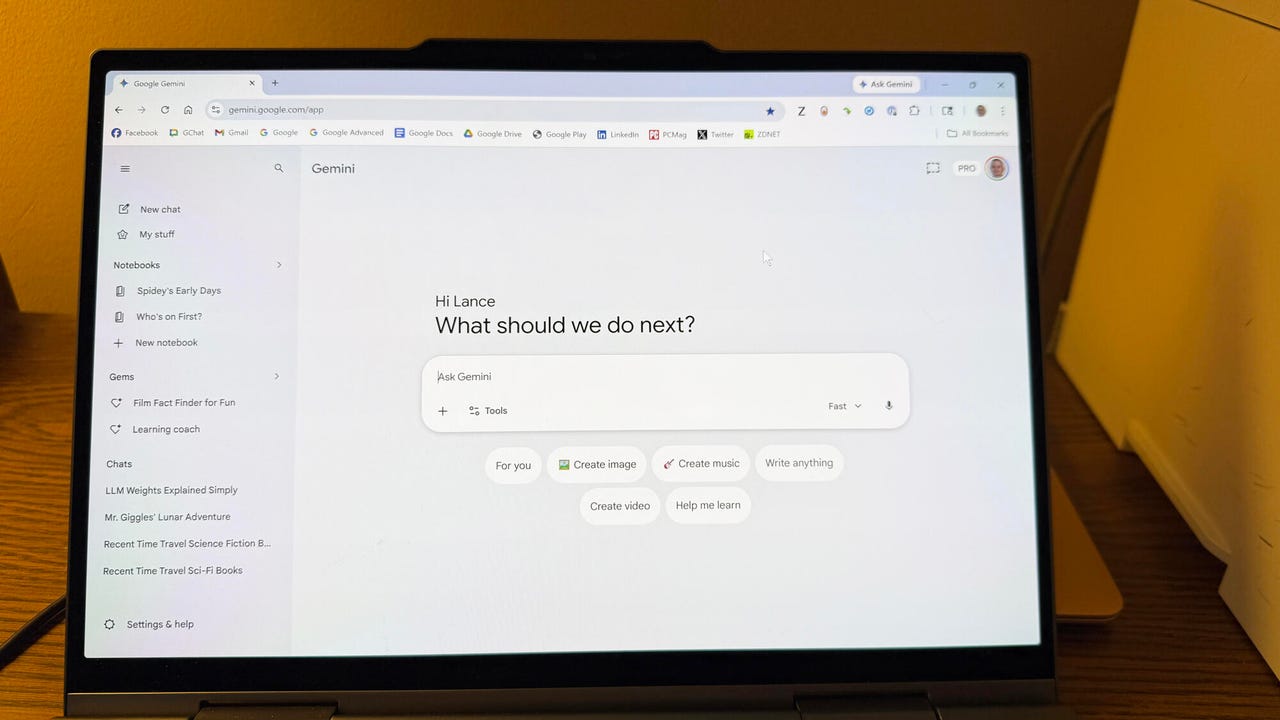
Google Gemini

Lance Whitney/ZDNET

Follow ZDNET: Add us as a preferred source on Google.


ZDNET’s key takeaways

  • Google is downloading a 4GB file to the PCs of many Chrome users.
  • The file is harmless and is used for the Gemini Nano on-device LLM.
  • You’ll see it if you’ve opted into the on-device AI setting in Chrome.

Google is silently saving a Chrome-related file to many computers. That’s nothing earth-shaking. But this file is a hefty 4GB in size, which has caught the attention of some Google watchers. What is the file, why is it being installed, and how can you check for it?

Also: I let Chrome’s AI agent shop, research, and email for me – here’s how it went

In a new blog post, computer scientist Alexander Hanff, aka the Privacy Guy, pulled back the curtain on this mysterious file. Named weights.bin, the file is being downloaded deep within the user data folder of many Chrome users. The file itself is related to Gemini Nano, which Google is using as the on-device AI model for Chrome users.

If you delete the file, it comes back

Though there’s nothing risky or dangerous about the file, Hanff and others have expressed concerns that it’s being downloaded without users’ knowledge or permission. And if you delete the file, it eventually comes back, Hanff said. That by itself is hardly alarming; that’s part of any software update. Rather, some of the criticism centers on the file’s size. If you have ample hard disk space, then 4GB is likely not a big deal. But if you’re running low, that big a file might chew up space you can’t spare.

Traditionally, AI models like Gemini use the cloud to interact with you. Submit a request, ask a question, or kick off a conversation, and the AI taps into its online data and resources to respond. But that method can be slow and naturally requires that you be connected. By traveling between your device and the cloud, your data can also be exposed.

A trend has emerged in which companies are experimenting with locally stored LLMs (large language models). That not only speeds up the process, but it also means you can use the AI offline and more securely. Gemini Nano has already been in play on Google’s own Pixel phones.

That explains why the file is so large; it has to pack in a lot of data. In this case, a weights file contains numbers that measure the level of importance an AI model assigns to your input. The AI uses these values to determine what should come next. For example, let’s say you start typing the phrase “Why did my new phone cost me an arm and a…” at the prompt. The AI assigns weights to your input to help it predict that the next word would be “leg.”

Also: This powerful Gemini setting made my AI results way more personal and accurate

How can you tell if the file has been downloaded to your PC? First, open Chrome, go to Settings, and select System. On the System screen, check whether the On-device AI option is turned on. If so, then you probably have the file or will soon get it.

To double-check, you’ll have to navigate to the user folder on your PC. That location varies based on your operating system. On my Windows 11 PC, I ran a search in File Explorer for weights.bin. The search took a long journey through the following path: C:\Users\lance\AppData\Local\Google\Chrome\User Data\OptGuideOnDeviceModel\2025.8.8.1141. At that final location, the weights.bin file appeared, measuring 4GB.

Since the file is downloaded again if you simply delete it, you’ll have to take an extra step to get rid of it permanently. After you delete the file, go back to Settings in Chrome and select System. Then  turn off the switch for On-device AI.

But as long as you have enough disk space (and if you can’t spare 4GB, then it’s time to clean up your drive), the file is little cause for concern. Just forget about it, especially if you’re keen to try on-device AI, and we’ll see what the future holds for Gemini Nano.


Source link