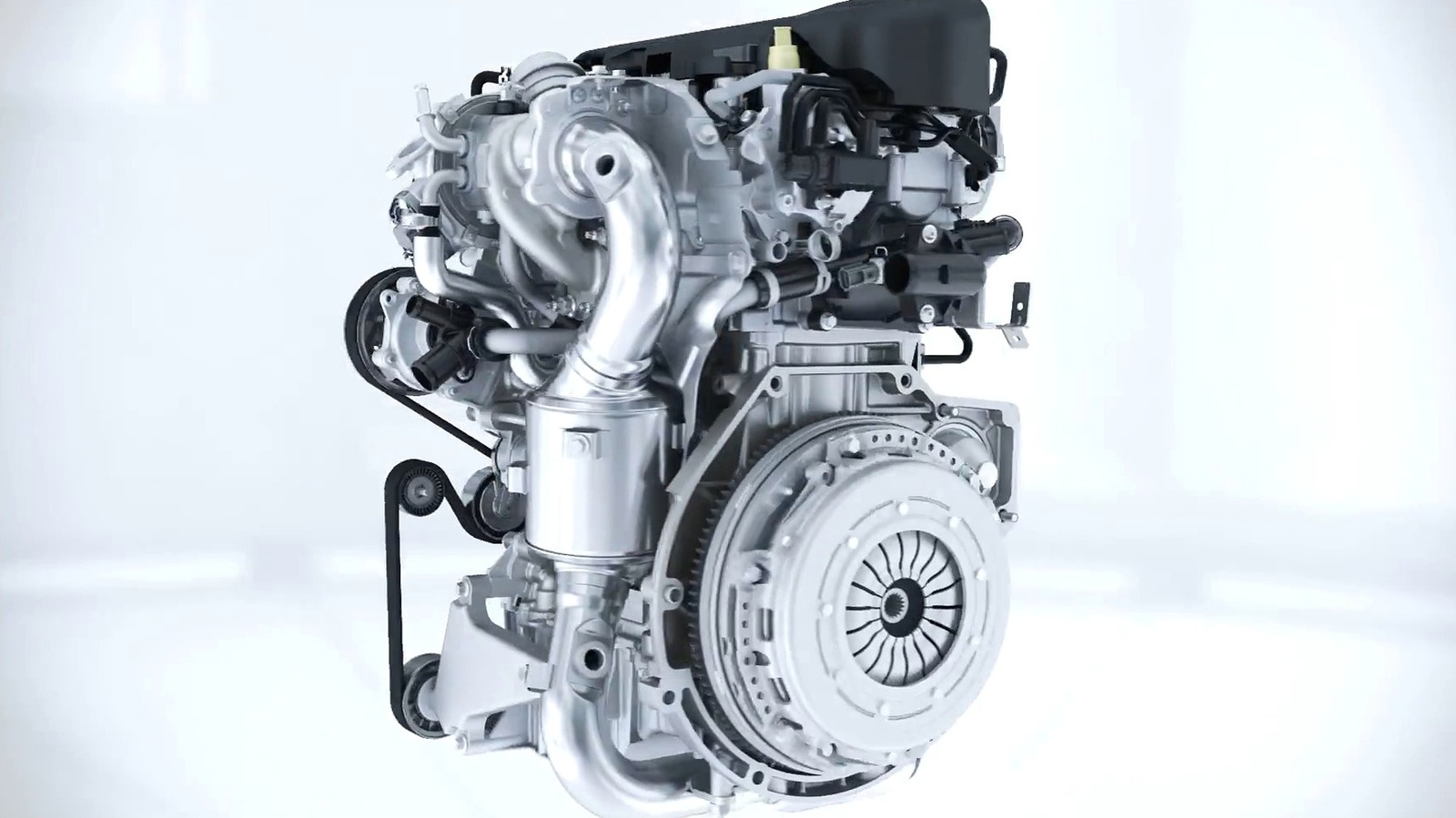

Over the years, the consensus has been that three cylinders don’t sound like much. However, that thinking has aged poorly, because manufacturers figured out that fewer cylinders didn’t have to mean less performance, and the results have been hard to ignore.
Today’s best three-cylinder engines are pulling off things that would have seemed unthinkable not too long ago, like powering hot hatches, SUVs, and even hypercars in different ways, whether through turbochargers or direct injection. Still, three-cylinder engines are not created equal, and for every standout, there are plenty that came and went without leaving much of an impression.
The ones on this list are different, though, because they earned their reputations through years of real-world use, across a wide range of vehicles, and in the hands of everyday drivers and professional tuners. Some of them even rewrote what was thought possible for their displacement class, while some kept going long after their peers had retired. Without saying much, the list covers the most reliable three-cylinder engines ever made, both on paper and in practice.
Ford 1.0-liter EcoBoost
When the Ford Sigma stepped aside in 2012, the 1.0-liter EcoBoost — known internally as the Fox — stepped in and wasted no time proving how reliable a compact engine could be by having six “International Engine of the Year” wins in its class. Built around a 999cc cast-iron block packed with cast aluminum, an aluminum alloy head, a DOHC setup run by a variable camshaft timing, and a belt-in-oil camshaft drive keeping everything in sync, the Fox was engineered with far more intention than its size suggested. Its standard output came in at 170 lb-ft of torque, and Ford’s own engineers also confirmed that, in the right hands, the engine had enough headroom for 177 horsepower.
American drivers got their first taste of it in 2014 when the Ford Fiesta brought it stateside as a manual-only offering. From there, it spread steadily to several models like the Focus, B-Max, and EcoSport, picking up a wider audience on every new application. Its success story, however, had its own complications. Lawsuits, investigations, and a recall eventually caught up with it, and by 2017, the 1.0-liter EcoBoost’s chapter came to a close. The story didn’t end there. As of 2025, regulators took another look when 44 Ford drivers filed complaints with the NHTSA, all reporting the same troubling pattern playing out while their engine was still running under load.
Honda S07A
Honda left a void in the kei roadster world the day the Beat bowed out in 1996, but all of that changed with the arrival of the S660 in 2015, and the engine powering it was the S07A. That same little unit has since made its home under the hood of the Honda N-One and N-Box, which says a lot about how dependable and versatile this engine is.
Under the hood sits a 1,873-pound 656cc DOHC turbocharged three-cylinder that puts out roughly 63 horsepower and serves up about 77 lb-ft torque (as low as 2,600 rpm), all channeled through a six-speed manual gearbox. On the road, that setup can go about 85 mph max and hit 60 mph in about 10.5 seconds, as the engine stretches all the way to a 7,700 rpm redline. On the other hand, when using the CVT, its overall weight gets shaved off a touch, which allows for an extra second during a 0-60 mph sprint while also pulling back the rpm limit to around 7,000 rpm.
Yes, none of these numbers scream “powerhouse,” and a good chunk of that comes down to the strict horsepower limit Japanese regulations place on every kei vehicle.
BMW B38
The BMW B38 made its debut in 2012, and from the jump, it was clear that it wasn’t just another small-displacement engine. The 1.5-liter inline three-cylinder arrived with a technical foundation that punched well above its size, pairing a single twin-scroll turbo with direct injection and BMW’s twin variable camshaft timing system, all working in concert to deliver 175 horsepower, 14.5 PSI of boost, and 200 lb-ft of torque (available from 1,500 rpm). With a redline hitting 7,000 rpm, it also has the legs to back it all up, getting from zero to 62 mph in about seven seconds.
As time went on, the B38 started showing up everywhere. It worked its way through the 1 Series, 2 Series, 3 Series, X1, and X2, found a home in the MINI Cooper, and eventually landed in something as ambitious as the i8 and the 225xe plug-in hybrid Active Tourer. That reach across so many different vehicles means more parts availability due to its shared DNA with BMW’s B48 and B58, which helps keep ownership costs in check.
Still, like any reliable engine, the B38 has a few things to watch out for, because ignition parts could tap out, carbon could stack up on the intake valves, and the thermostat has a habit of swapping out over time. Yet, none of these are dealbreakers as long as you stay on top of oil changes and don’t ignore the early warning signs.
Toyota G16E-GTS
The G16E-GTS can only displace 1.6 liters, but Toyota still managed to turn it into one of the wildest production three-cylinder engines around. The turbocharged triple first showed up in the GR Yaris with 257 horsepower, but when Toyota brought the engine over to the GR Corolla, engineers took things a step further instead of just leaving it untouched. They made upgrades like reinforced oil-jet-cooled pistons, bigger exhaust valves, a revised intake port design, and higher 22.33 psi boost pressure, which helped in bumping power to about 300 horsepower. But what makes those numbers even more impressive is that every engine was manually assembled at the legendary Motomachi factory in Japan.
The engine also comes packed with serious hardware, like a dual-injection setup and a turbocharged manifold, and when paired with a stick shift and a performance-focused limited-slip diff, the setup becomes one of the most balanced performance packages Toyota has ever built. And the fact that tuners have already managed to squeeze more than 740 horsepower out of the GR Yaris version of this engine says everything about just how overbuilt and capable the platform was from day one.
Koenigsegg TFG
Found exclusively in the Koenigsegg Gemera, the Tiny Friendly Giant is one of those small engines that can churn out power impressively. At 7,500 rpm, this 2.0-liter three-cylinder engine, weighing just 154.3 pounds and equipped with two turbochargers, can produce up to 600 horsepower. On the torque side, at as low as 2,000 rpm, you can get maximum torque at around 442.8 lb-ft, and that stays on tap even through 7,000 rpm, right above the point where the larger turbo exhaust is fully in its stride. Its lofty 8,500-rpm redline caps it all off, and every bit of that output gets routed through a nine-speed gearbox when the combustion engine is taking care of the front axle together with Gemera’s electric side.
However, what truly sets the TFG apart from any engine on this list is how Koenigsegg ditched the traditional camshafts in favor of Freevalve’s pneumatic actuators. That move alone allows the engine to operate at a different level of valve timing control that no conventional setup can come close to, while its pair of exhaust valves for each cylinder help keep gases moving efficiently. To top it all up, its dry sump lubrication setup also helps hold oil pressure steady too even if you’re stopping for a stoplight or approaching 250 mph.
So much thought went into this engine, that even Koenigsegg confirmed a possibility of about 280 horsepower in its naturally aspirated form. Still, if you’re running on the Gemera’s combustion engine alone, it can stretch up to 590 miles of range on just one tank.
Methodology
The three-cylinder engines that made it here were selected based on a combination of engineering merit, real-world reliability data, and how well it held up across multiple applications over time. Instead of leaning on a single source or one person’s opinion, we pulled from credible automotive sources like Road and Track, Auto Evolution, Driving Line, Torque News, Motor Trend, and Car and Driver. We also consulted NHTSA complaint databases, owner reports, manufacturer documentation, and tuning communities to build a broad, honest picture of what each engine is like to live with.
From there, each engine was measured against a consistent set of standards — how long it stayed in active production, how many different vehicles it powered across different segments and brands, how it held up at high mileage, how the manufacturer responded when problems came up, and how much tuning headroom the engine had as a signal of its underlying engineering strength.
A few ground rules shaped the list from the start as well. Only production three-cylinder engines available to everyday buyers were considered, which meant prototypes were left out entirely, and no strict numerical ranking was applied. Plus, where known issues existed, they were included honestly rather than brushed aside, because a truly reliable engine isn’t one without flaws.

Stephan is the sports journalist for the Maple Grove Report.