Audi’s Sober Styling Hides The 2027 Q7 And SQ7’s Secret Weapon


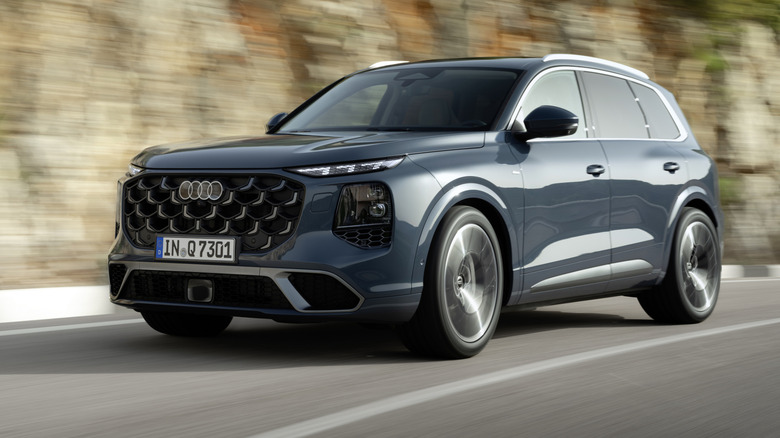
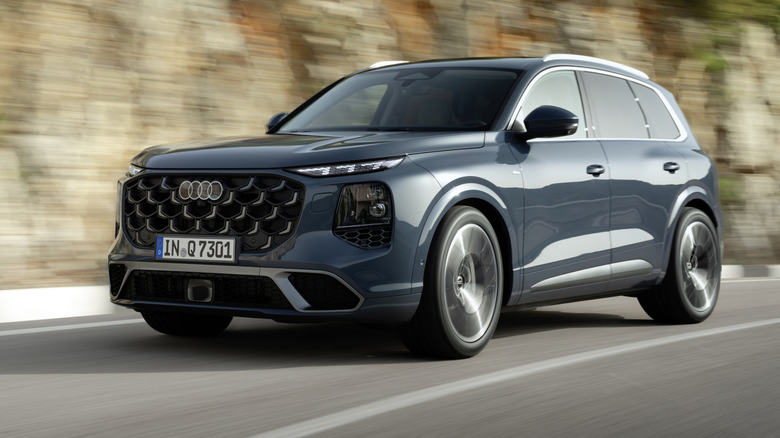
Audi has revealed the looks and specifications for the latest iteration of the six (or optionally seven) seater SUV, the third generation Q7 and hopped-up SQ7. Inside and outside, it has all you can expect from a big new Audi including a new set of powertrains and a litany of customization and aesthetic options.

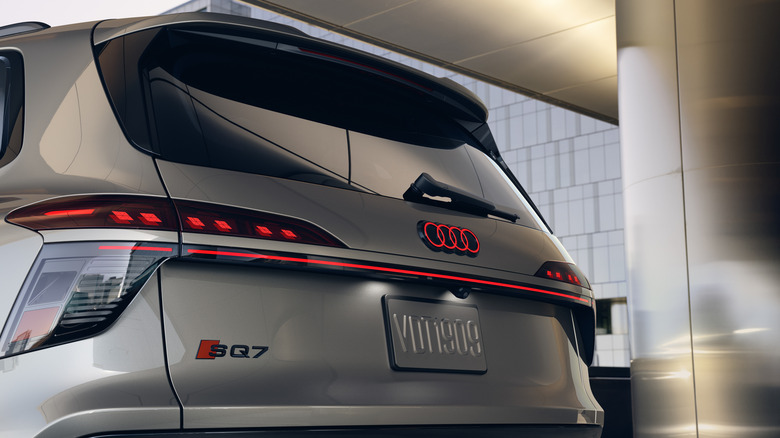
Getting the big German pachyderm out of the way, you might immediately notice that Audi has played its conservative when it came to styling the newest Q7 and SQ7, at least when compared to more left-field super-SUVs like the SQ8 coupe. It definitely doesn’t seem to be borrowing any of the styling language from the brand’s big new flagship supercar, the nearly 1,000 horsepower Nuvolari.
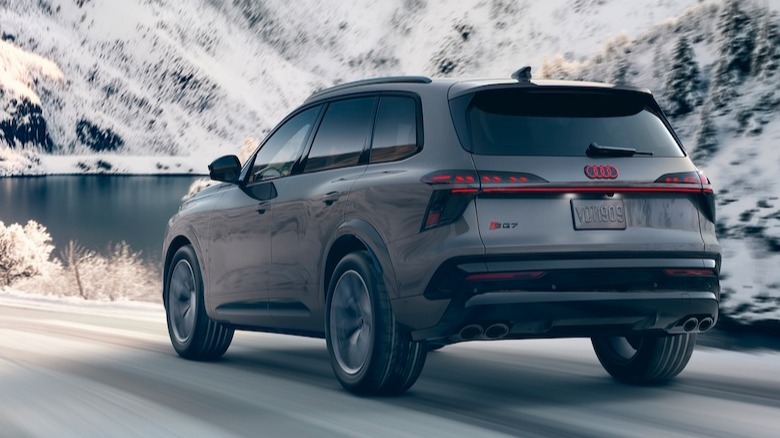
The design is more likely to have mass appeal, or course, perhaps stealing customers who might have been interested in other more sober-styled options from Volvo, Genesis, or non-AMG Mercedes models.

Bigger and more luxurious on the inside
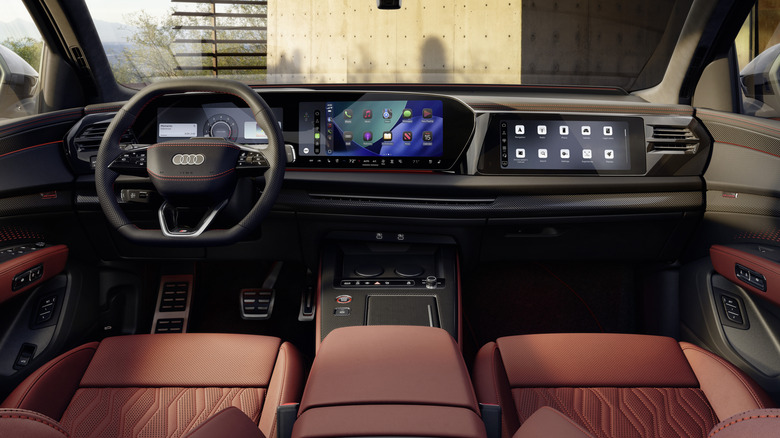
On the inside, it’s what you could expect from a luxury SUV. In the six-seater configuration, the second and third row are sets of captain’s chairs, like the bridge of your own little Starship Enterprise. The seven-seater has a three-spot bench for the middle row. On the storage end, Audi notes that with all the seats folded down, it will have a full capacity of 78.1 cubic feet, making it a notable step up from the previous generation Q7’s 68.1 cubic-feet. 
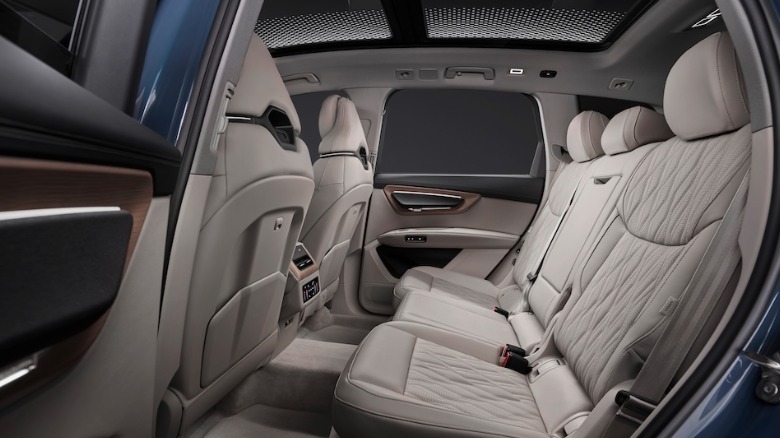
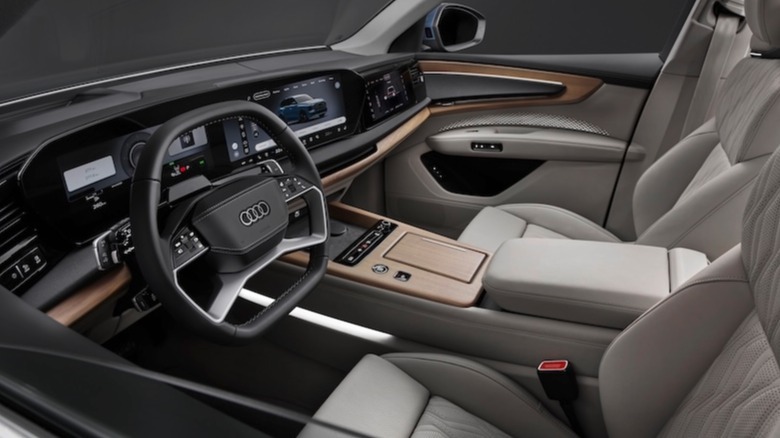
The amenities definitely don’t betray the four rings on the grille. You get a big panoramic roof with adjustable opaqueness, and of course a monstrous optional 22-speaker Bang and Olufsen sound system that’s rated at 1,360 watts. Audi notes that the motors in the seats are tuned to synchronize with the music, allowing for what it calls a more immersive listening experience. Whether or not you’ll notice those adjustments while going down the highway at 70 miles per hour, who can say, but you can’t accuse Audi of not at least putting the effort into making the sound system stick out.
For towing, both the Q7 and SQ7 enjoy a pretty beefy rating of 7,700 pounds, thanks to the primarily rear-wheel drive bias Quattro all-wheel drive system, eight-speed automatic transmission, and rear-differential lock.

Power, and a lot of it
Here’s the Chekhov’s Gun of the 2027 Audi Q7 and SQ7. It’s quite powerful, not matter how you spec it out. The “base” model (let’s face it, a Q7 isn’t a “base model” in any universe) features a 2.9-liter turbocharged V6 (up from the previous generation’s four-banger) that throws down 429 horsepower, a full 168 more angry horses than the old Q7. 

The 2027 SQ7 gets a full-bore bi-turbo 4.0-liter V8 that gives out 591 horsepower and 590 pound-feet of torque. Not that 0-60 times matter all that much in family-SUVs, but if you feel so inclined, this big beast made in Bratislava can sprint to highway speed in 3.7 seconds. The old SQ7 topped out at “only” 4 seconds even with its 500 horsepower. 
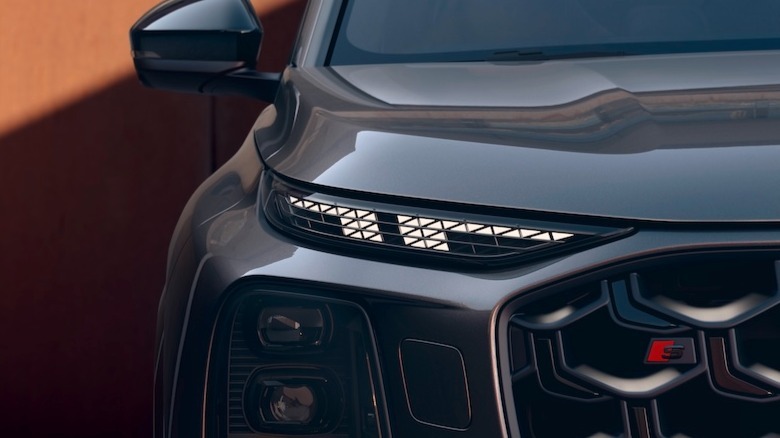
By way of comparison, Audi’s RS 7 Performance liftback sedan and the RS 6 Avant super-wagon also feature a 4.0-liter bi-turbo V8, albeit tuned up in those cases to 621 horsepower.

The big Audi badge tells you what you need to know
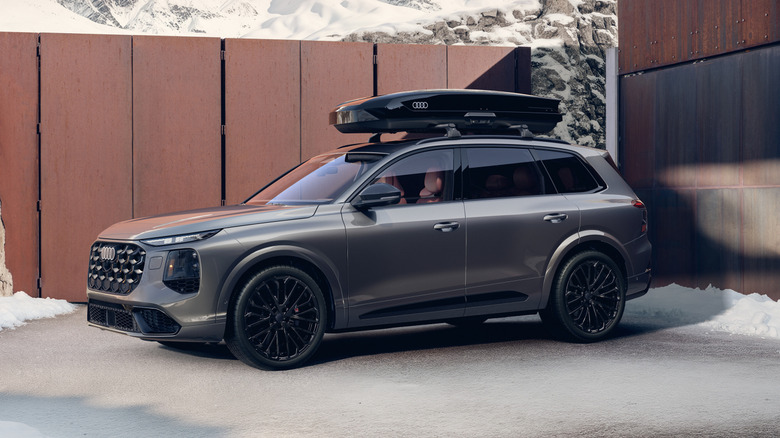
Pardoning the contrived metaphor, the Q7 and SQ7 are like wolves in German Shepherd’s clothing. You know it’s going to be a big, nicely, equipped, and reasonably powerful because it has a sizable Audi badge (and of course the as-yet-unannounced price tag). So it’s not exactly fooling anyone that it’s not just another grocery getter, next to every other Honda Pilot or Toyota Grand Highlander in the parking lot. 

The fact that the SQ7 has nearly 600 horsepower and shares the same acceleration time as a Ford Mustang GT is a bit of a surprise to people who overlook the SQ badging. Still a luxury barge, certainly, but a remarkably fast one.
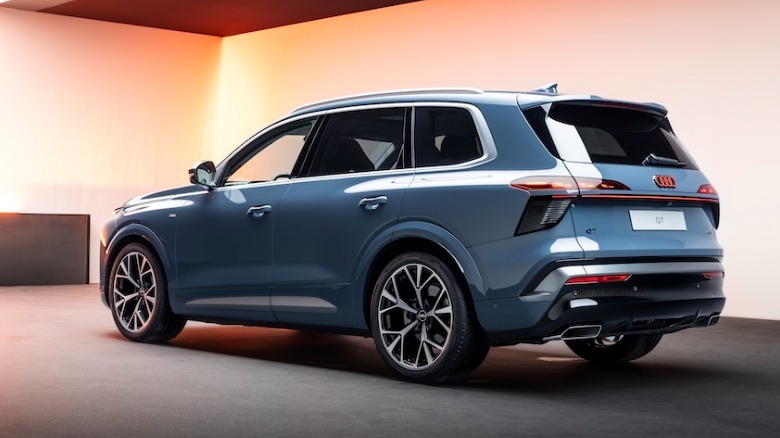
Most important, though, it’s a long-overdue revamp: the previous-generation Q7 is now more than a decade old. When the new Q7 and SQ7 launch in the U.S. towards the end of this year, they will surely find worthy competition with the likes of other big (and notably more ostentatiously designed) German monsters like the BMW M-line of SUVs and whatever Mercedes-AMG is cooking up.


Source link

Leave a Reply

Subscribe to Our Newsletter

Get our latest articles delivered straight to your inbox. No spam, we promise.

Recent Reviews


There are certain engine configurations that are known even to those whose interest in engines is minimal. For instance, most people will know what makes a V-engine a V-engine, and even the differences between an in-line and flat engine

One engine design trait that’s perhaps less well-known is also related to the engine block, but not to with how the cylinders are arranged in the engine, rather with how they’re supported and cooled. When looking at this aspect of engine design, there are really three main types of engine block to look at. At the extremes are closed-deck and open-deck engine blocks, with some modern engines taking a halfway house approach with a semi-closed design. 

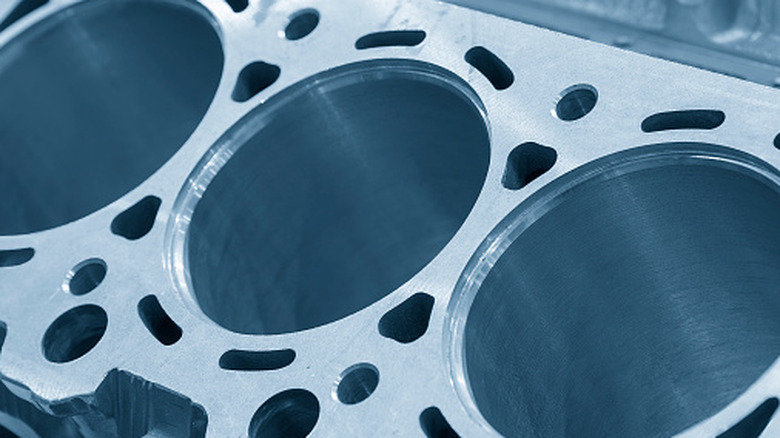
Let’s start by defining what an engine deck is. Essentially, the engine deck is that part of the block that the head gasket sits on, and the engine head attaches to. This means that an inline engine with a single line of cylinders will have one deck, whereas a V-configuration with two banks of cylinders will have two decks. 

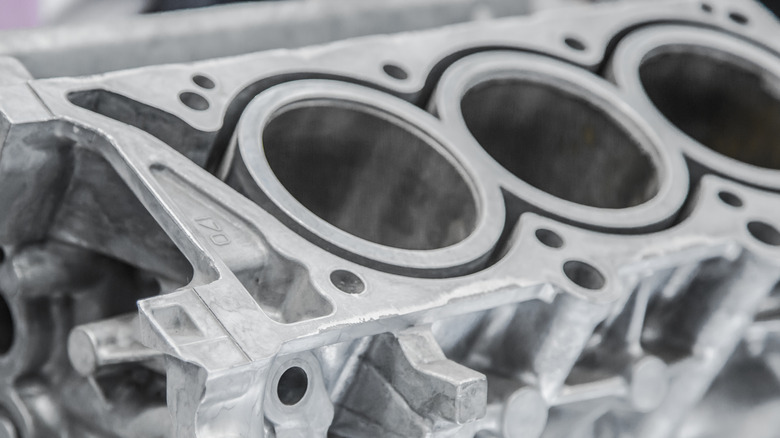
Now that we understand that, we can begin to discuss the differences between closed-deck and open-deck engine blocks. In an open-deck engine, there is open space around the top of the cylinders that allows the coolant to circulate more freely. In a closed-deck design, in case you haven’t guessed it by now, the deck features extra material that offers less in the way of cooling, but it does support the cylinders more rigidly. Let’s pop the cylinder head off and have a closer look at these engine block types and why they matter more than you may think. 

Open-deck engines are cool, but flawed

For engine makers, there are definite advantages to open-deck designs — they cost less to manufacture when compared to closed-deck engines, and keep the engine cooler by exposing more of the surface area of the cylinder to the cooling liquid. 

However, all this open space around the cylinders is all very well and good when looking at cooling and manufacturing complexity — but cracks start to appear (sometimes literally) when we look at other aspects of closed-deck engine blocks. While it’s unfair to call open-deck engines unreliable and leave it at that, there are trade-offs in the design, and these become more noticeable in high-performance situations.

Essentially, the lack of material at the top of the engine deck means the engine is less structurally rigid right at the point where it meets some of the most extreme forces engines have to cope with — the combustion point at the top of the cylinder.

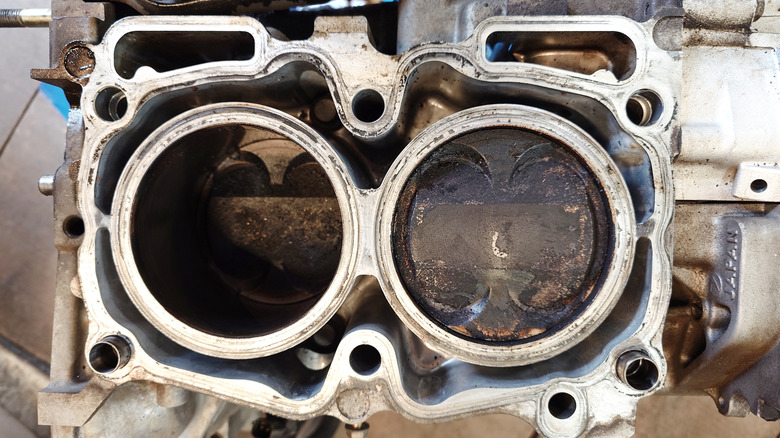
If you removed the head from an open-deck design and look down at the deck, this structural weakness is visible. From this viewpoint, the cylinders look separate from the rest of the engine block, with the gap between the two being used for coolant, as some open-deck designs have limited support at either end of the cylinder bank. While this gives more space for coolant to move freely, the downside is that it also does the same for the cylinder. Over time, even the limited movements of cylinders can weaken the head gasket and bring all the associated troubles that follow such a failure. 

Why some engines use closed- and semi-closed deck designs

Open-deck engine blocks are optimized for cooling and manufacturing efficiency. However, incorporate such a configuration in a high-revving, turbocharged brute of an engine and, well, it could end very badly. This is why such engines will usually use a closed-deck configuration. 

In a closed-deck engine, the open spaces around the cylinders of an open deck are filled with additional material. Obviously, the removal of such space and the flexibility it gives to the cylinders substantially strengthens the engine block. This is why some people fill engine blocks with concrete — it removes the flexibility afforded by the presence of cooling chambers. This is especially important for high-performance engines, but to call it overkill for the family runabout is not overstating the case. 

However, and the more observant among you will be there by now, filling an engine’s cooling cavities with material may add strength — but at the expense of cooling efficiency. This is why many modern turbocharged engines or higher-performance engines use a halfway house design in the form of semi-closed decks. 

Semi-closed decks are a compromise design that offers more rigidity to the cylinders by adding more support points. These supports are usually at the top of the cylinder. For instance, while there are pros and cons to Subaru’s EJ20 engine, the company released a version with a semi-closed deck with four additional support points, which should make it less prone to bore distortion. Ultimately, open-deck and closed-deck engine blocks represent design decisions based on the demands the engine is expected to handle. 


Source link