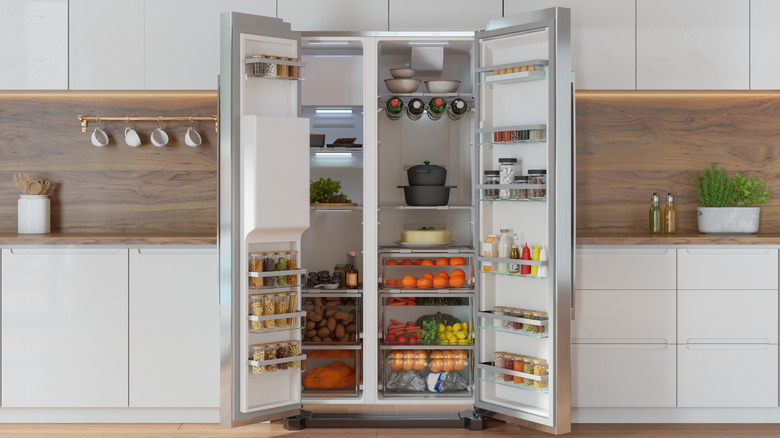

With energy prices continuing to hit household budgets hard, many of us are modifying our habits more and more. Refrigerators, because they’re very rarely (if ever) switched off, are quite a cause for concern when it comes to continuous energy expenditure.
It’s important to think about the settings that best fit your unit and the way it’s regularly used. It’s quite complicated, though, because you’ll need an understanding of factors such as No Load Performance, which you may have seen displayed on your refrigerator and/or within its materials from the manufacturer. Essentially, this is a measure of how a specific model performs while it’s empty, the amount of energy used over a particular period of time in specific conditions. In one Reddit discussion of the term, the owner of a refrigerator found this value listed but didn’t recognize it. In that specific case, it included exterior temperature values at two ambient levels, 70°F and 90°F, and how those room temperatures affected the ice tray and fresh food areas over time at the same set power level.
While your model at home typically won’t be entirely empty, these particular details can be an important part of the rigorous standard testing refrigerators are put through. Let’s take a look at why, as well as how the amount of food and drink you put in the appliance can impact its overall performance. It’s one factor in how much electricity a refrigerator ultimately uses.
Different types and methods of refrigerator testing
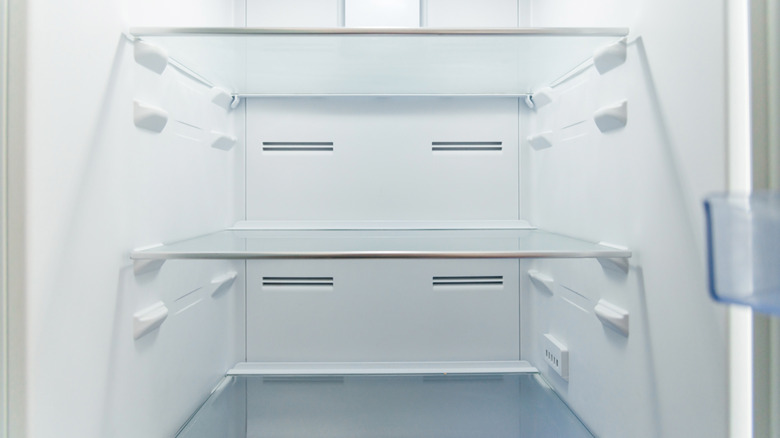
The manufacturer’s responsibility is to ensure that a refrigerator is safe and compliant for standard use before it arrives at a home. In order to do so, uniformity really matters. Tests to determine these ratings potentially allow manufacturers to ensure not only that each of their models are performing the same, but also that they adhere to the required standards. With such a device, conditions won’t be entirely stable all the time when they’re in use in homes (because they’ll be opened and closed quite regularly), and so testing often incorporates this.
It can be important that a baseline of how much power the appliance consumes when it isn’t cooling any food is acquired, but refrigerator testing is performed in different ways by different outlets. For example, Which? explains its criteria for testing a fridge’s capacity to cool its contents. This is achieved by means of gel packs placed on the shelves and in the drawers, determining how long they take to cool down in a controlled atmosphere with a pre-set room temperature.
Temperature performance testing for refrigerators and freezers can also incorporate sophisticated m-packs (measurement packs) in place of a food/drink load. They are typically made of a substance like Tylose gel, potentially with platinum resonance thermometers (PRT sensors) or thermistors inside to more accurately and conveniently keep track of the temperature in different parts of a refrigerator.
How the amount of food and drink in your refrigerator affects its operation
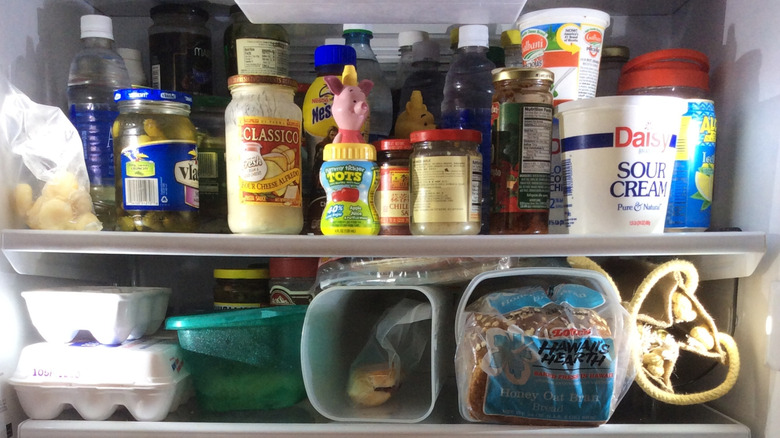
When buying a new appliance, the rating information provided with it will provide you some guidance on its KWh consumption, but this is only an average guideline. Refrigerators run most efficiently while they’re maintaining specific temperatures. You might not expect factors like the amount inside the refrigerator to have a big impact on its temperature or its performance, but it certainly can.
Efficient cooling means a more standardized, predictable temperature, and the machine not working overtime to increase or decrease in order to correct it. One big factor that can influence this is an overstocked refrigerator. Of course, we’ve all been guilty of filling our systems to bursting at times, particularly when entertaining family and friends for the holidays, but we should be aware of the consequences. As food scientist Bryan Quoc Le put it to the Huffington Post in September 2025, when there’s too much food in a fridge, “vents become blocked, consequently restricting airflow and causing the internal temperature to rise and become uneven.”
This is what puts the strain on the internal components of your model, as well as potentially dramatically increasing the power it uses. A refrigerator, just like a washing machine, has a recommended filling limit. On the latter, you’ll typically see a maximum fill line marked on the side of the drum, while for a refrigerator, a common rule of thumb is that about three-quarters full is a good target to aim for. If your refrigerator is too empty, there isn’t enough food inside to retain the cold, which strains the system in just the same way, potentially limiting the lifespan of your refrigerator.

Stephan is the sports journalist for the Maple Grove Report.