NASA’s Nancy Grace Roman Telescope Is Ready to Start Its Cosmic Survey


After nearly a decade in development, NASA’s next big telescope is almost ready to travel into space. The agency has set Aug. 30 as the launch date for the Nancy Grace Roman Space Telescope. This places the project approximately eight months ahead of its original schedule and, according to NASA leadership, significantly under budget.

“With less than three months to go, the Roman team now is finishing up tasks,” NASA said in a blog post. “Engineers are currently packing Roman up for a voyage from NASA’s Goddard Space Flight Center in Greenbelt, Maryland, down to the agency’s Kennedy Space Center in Florida later this month.”

Once at the launch site, the telescope will undergo a detailed inspection to verify that it sustained no damage during transit. Engineers will then fuel it with roughly 290 gallons of hydrazine and conduct several dress rehearsals before launching it into space.

The destination for the Nancy Grace Roman Space Telescope is the Sun-Earth L2 Lagrange point, located about 1 million miles from Earth on the far side of the sun. The region is a gravitational sweet spot that allows spacecraft to maintain a relatively stable position while orbiting the sun alongside Earth.

Livestream details are expected to be released closer to the launch date. The broadcast will likely be available on the NASA app, YouTube, and Netflix, which has an agreement with NASA to carry launches, spacewalks and other live programming.

Infographic listing stats of expected sightings for the Nancy Grace Roman telescope

With its wider field of view, the Roman telescope promises to see quite a lot of the universe. 

NASA

What is the Nancy Grace Roman Telescope looking for?

The telescope is named after astronomer Nancy Grace Roman, NASA’s first female executive and an instrumental voice in the planning and construction of the Hubble Space Telescope

The two telescopes share more than just a connection to Roman. Both use 2.4-meter mirrors and can produce images with similar sharpness. But Roman is designed to see much more of the sky at once, capturing images at least 100 times larger than Hubble’s. The observatories also specialize in different wavelengths of light: Hubble observes ultraviolet, visible and near-infrared light, while Roman focuses on visible and infrared wavelengths.

Many stars in the blackness of space, with grids superimposed

The Roman Telescope can see as much of space in just two images as the Hubble does in over 400. 

NASA

NASA envisions Roman and Hubble working hand in hand. Roman will scan enormous swaths of the sky, uncovering objects and phenomena that can later be examined in greater detail by Hubble. By combining Roman’s panoramic surveys with Hubble’s more focused observations, astronomers hope to build a richer picture of the cosmos. 

During its mission, Roman is expected to observe more than 100 billion stars and billions of galaxies, detect tens of thousands of supernovae and transmit nearly 1.4 terabytes of scientific data to Earth every day.


Source link

Leave a Reply

Subscribe to Our Newsletter

Get our latest articles delivered straight to your inbox. No spam, we promise.

Recent Reviews


We may receive a commission on purchases made from links.

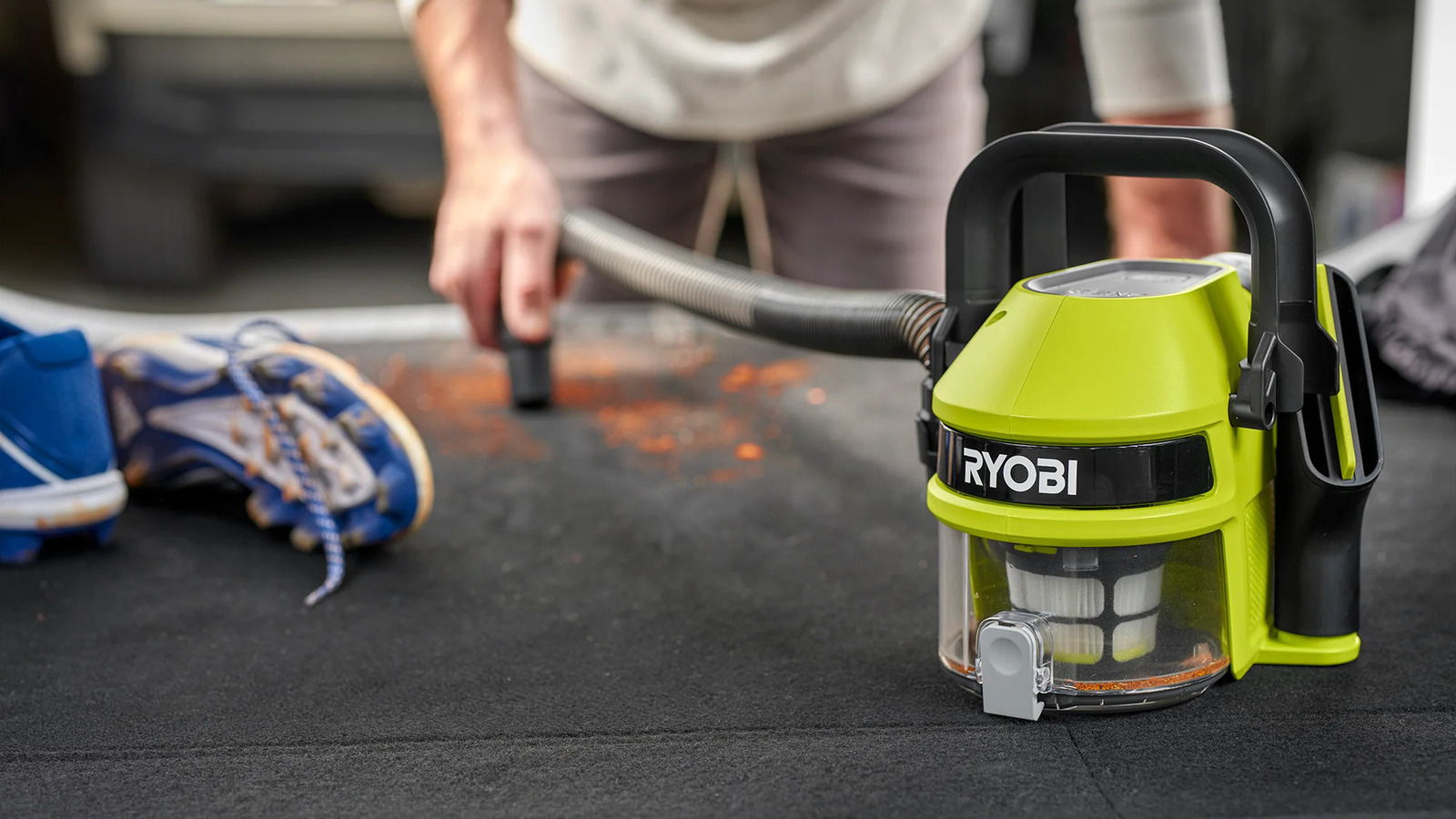
Ryobi regularly updates its lineup of cordless cleaning products with fresh additions, and one of the latest is the brand’s new 18V One+ GoGoVac. It’s available in tool-only form at Home Depot for $79, and will soon be available as part of a kit with a 2Ah battery and charger for $129. The GoGoVac is designed to combine the portability of a small handheld vacuum with the convenience of a flexible hose and crevice tool, and it looks noticeably different from the other handheld vacuums in Ryobi’s range.

A chunky handle at the top of the vacuum lets you carry it around with one hand while using the other to control the position of its hose and nozzle. The extendable hose is four feet long, helping it to reach into crevices and awkward corners that the brand’s other handheld vacuums might struggle to fit into. Ryobi also includes a pet hair tool to help remove embedded fur from furniture or flooring.

Thanks to its compact design and easy-to-grip handle, the GoGoVac is suited to a wide variety of jobs, both around the house and inside the car. Its dustbin can hold up to 16 ounces of dirt and debris, so if there are multiple smaller jobs you need to get done, you should be able to complete them without needing to repeatedly return to the trash bin. Thanks to its small size, it can also be a convenient cleaning companion for road trips and weekends away.

It’s part of Ryobi’s 18V One+ range

For Ryobi fans, a big part of the brand’s appeal comes from the fact that there are so many products that can be powered by the same 18V One+ battery packs. As well as the new GoGoVac, Ryobi’s 18V cordless tool range includes plenty of cleaning essentials, as well as a few cleaning tools you might not have realized existed. Among many other things, its current products include a carpet washer and even a submersible pool vacuum.

Another key selling point is Ryobi’s generous three-year warranty, which is included as standard with almost all of the brand’s new 18V One+ tools. The GoGoVac benefits from the same warranty, and when the GoGoVac kit launches, the included battery and charger will also receive the same period of coverage.

Compared to other Ryobi cordless vacuums, the GoGoVac packs an impressive amount of power. Its 45 inches of water (IOW) of sealed suction is almost double that of the 18V One+ powered brush hand vacuum, and slightly higher than its 18V One+ performance hand vacuum. It’s even more powerful than some of Ryobi’s range of stick vacuums, such as the classic 18V One+ stick vacuum, which has 25 IOW of sealed suction.

The removable filter promises to trap particulates collected by the vacuum’s powerful suction, but it will only be able to do its job for so long. Ryobi recommends changing the filter every 3-6 months, adding an extra cost to factor into the purchase price.


Source link