
Rivian Is Reusing Its Own Car Batteries In A Very Resourceful Way


The trouble with batteries is that they are complicated to get rid of, which is why people are always looking for clever ways to recycle them. As EVs become more commonplace on the market, manufacturers are also looking for ways to reduce waste. Rivian has come up with a potential solution, at least for their own used batteries. 

In conjunction with energy tech company Redwood Materials, Rivian will now be able to reuse battery packs that were formerly built into the vehicles they produced as part of the Rivian repurposed battery energy storage system. Here’s how it works: Rivian will take 100 EV battery packs from its vehicles at the end of their life. These battery packs will be given to Redwood Materials, which will use its Pack Manager tech to recycle the batteries. They will then provide power directly to the Rivian vehicle production plant located in Normal, Illinois. This is similar to how used EV batteries get a second life powering homes.

What else should you know about Rivian’s recycled batteries?

These batteries will provide energy during periods of peak demand, which can also help reduce the load placed on the energy grid. The idea is that less capacity would be needed from the electric grid if companies used more systems like this to level out peak demand and meet their ever-increasing electricity appetites. It’s also good for Rivian. Adding built-in power capacity to its production plant lets it charge these batteries when rates are lowest and use their stored power when costs peak, reducing production costs. These work in conjunction with the plant’s solar cells and wind turbines, which currently enable Rivian to charge its production vehicles with clean energy. 

Rivian isn’t the only company to try something like this, though. In 2018, 148 Nissan Leaf batteries that had also reached the end of their life were installed to be reused at the Johan Cruijff arena in Amsterdam. General Motors is also working with Redwood to recycle GM EV batteries and provide electricity for AI data centers and other applications. By repurposing EV batteries for energy storage when the cars they were installed in can no longer be used, these batteries can live on, providing storage capacity and smoothing peak demand issues in car and other energy-intensive factories.


Source link

Leave a Reply

Subscribe to Our Newsletter

Get our latest articles delivered straight to your inbox. No spam, we promise.

Recent Reviews


Soundcore, which you may have heard does both audio and video now, has launched another pair of headphones in the Liberty 5 Pro and Liberty 5 Pro Max.

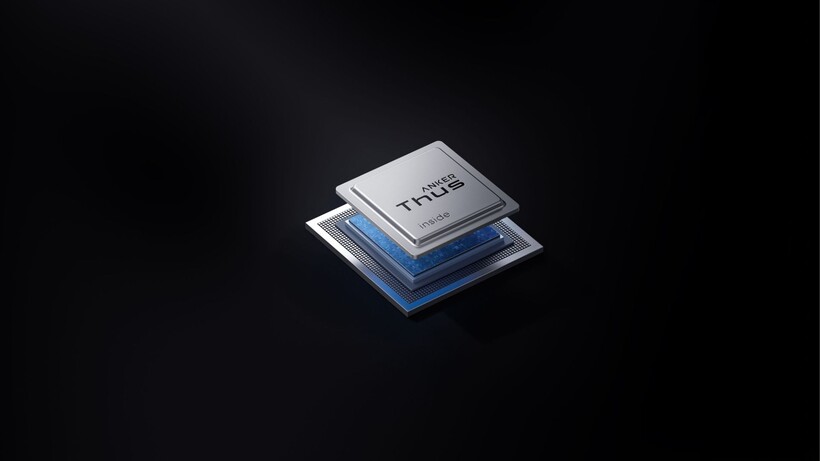
Another pair of true wireless earbuds, you might think what’s interesting about that? Well, in a first for Soundcore, this true wireless pair are the first two products to features Anker’s co-developed Thus AI chip, which it claims can offer “Whisper Clear” calls.

How so? By utilising a 10-sensor matrix that can separated the speaker’s voice from background noise, combined with eight microphones to capture ambient noise and two bone conduction sensors that can detect skull vibrations, the Thus AI chip is said to ensure “clear voice pickup even in noisy environments.” Interesting.


Of course there have been improvements in other areas for both the Liberty 5 Pro and Max efforts, with ANC improved up to two times over previous generations, while the Liberty 5 Pro Max also features AI Note-Taker for recording meetings without having to reach for your phone.

Anker Thus AI chip
Image Credit (Anker)

Advertisement

As you can see, Anker/Soundcore is delving deeply into AI for its latest products, with it involved in seemingly every aspect of the two earbuds that have just been announced.

Another area where AI is used is with voice interaction, with 20 built-in commands that allow users to adjust volume, answer or hang up phone calls, skip tracks and change ANC modes.

Soundcore Liberty 5 Pro Max product
Image Credit (Anker Soundcore)

Speaking of ANC, there’s a transparency mode for paying attention to your surroundings, and what Soundcore is dubbing its Easy Chat feature, where audio is paused when the headphones sense you’re speaking.

Both earbuds offer up to 6.5 hours of playback with noise cancelling on, and 28 hours in total with the charging case. Bluetooth 6.1 is supported, as is Google Fast Pair, Apple’s Find My (in case you lose the earbuds somewhere), and Bluetooth multipoint for connecting to not just two devices but three. What’s the main difference between the two? The Liberty 5 Pro Max’s charging case has a touch screen.

Advertisement

The Liberty 5 Pro is available now, priced at $169.99 / £149.99 / €179.99, putting within the midrange area of the market. Colours include blue, white, black and pink.

The flagship Liberty 5 Pro Max is the more expensive at $229.99 / £199.99 / €249.99. Colours are a choice of Titanium-Gold and black.

Look out for our review of both headphones in the coming weeks.


Source link