Six Flags’ Record-Shattering Coaster Is Way More High-Tech Than You May Have Thought


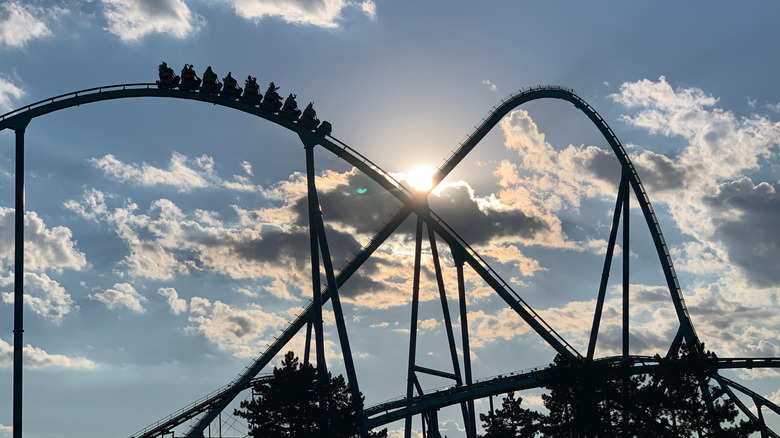
In September 2026, Six Flags will become home to a record-breaking rollercoaster, the Tormenta Rampaging Run. At 309 feet tall and 4,199 feet long, and with a top speed of 87 miles per hour, this giga coaster will become the tallest, fastest, and longest dive coaster in the world. It will also have the highest 95-degree beyond vertical drop (285 feet), the highest Immelmann inversion (218 feet), and the tallest vertical coaster loop (197 feet). To build such an incredible roller coaster into a park, builders Quorum Architects had to use specialized software to visualize how the massive coaster would fit. This makes it one of the most high-tech coasters in the world

Quorum Architects has worked on other Six Flags rides at the Texas location, including Aquaman Power Wave and The Joker & Harley Quinn Spinsanity, but this is the first time the firm has used a brand-new piece of software, Autodesk Revit. This software can render a highly detailed 3D model of the roller coaster so architects and engineers working on the Tormenta can find the best configuration for the ride. “It was the first time we put one of our roller coaster projects in that, which was great because we were able to see any interferences immediately,” said Senior Associate Arthur Calcaterra (via Arlington Report). 

What is the record-holding dive coaster ahead of Tormenta Rampaging Run’s opening?
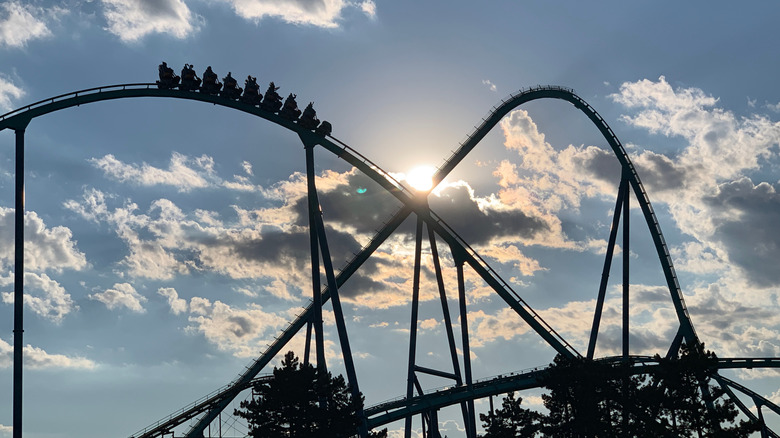
Dive coasters are a specific coaster type made of steel with a wide train. When Tormenta Rampaging Run opens later in 2026, it will take all kinds of records in the dive coaster category. However, the current record-holding dive coaster is another Six Flags ride called the Yukon Striker. It’s currently the fastest, reaching 80 mph, the longest, reaching 3,625 feet, and the tallest, peaking at 223 feet. (Here’s the tallest hybrid coaster.)

While the Yukon Striker is impressive, it’s not considered a giga coaster like the Tormenta Rampaging Run. To be categorized as a giga coaster, the rollercoaster has to be between 300 and 399 feet tall — at 309 feet tall, the Tormenta just makes it. Right now, there are only seven giga coasters in the world. Five of the seven are in the United States, including North America’s tallest giga coaster, Fury 325, which is at Carowinds in North Carolina. You probably guessed it, but it’s 325 feet tall. 

Tormenta Rampaging Run is located in Six Flags Over Texas, in the Spain section. The area around the coaster will match the ride’s theme, which is “Running of the Bulls,” including a new restaurant. 


Source link

Leave a Reply

Subscribe to Our Newsletter

Get our latest articles delivered straight to your inbox. No spam, we promise.

Recent Reviews


There are certain engine configurations that are known even to those whose interest in engines is minimal. For instance, most people will know what makes a V-engine a V-engine, and even the differences between an in-line and flat engine

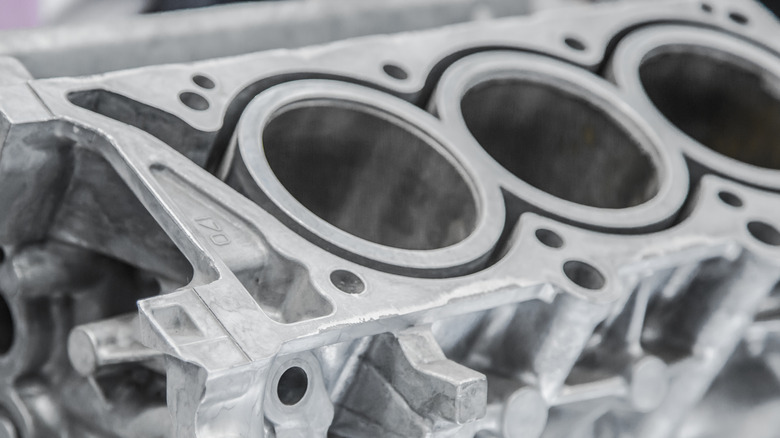
One engine design trait that’s perhaps less well-known is also related to the engine block, but not to with how the cylinders are arranged in the engine, rather with how they’re supported and cooled. When looking at this aspect of engine design, there are really three main types of engine block to look at. At the extremes are closed-deck and open-deck engine blocks, with some modern engines taking a halfway house approach with a semi-closed design. 

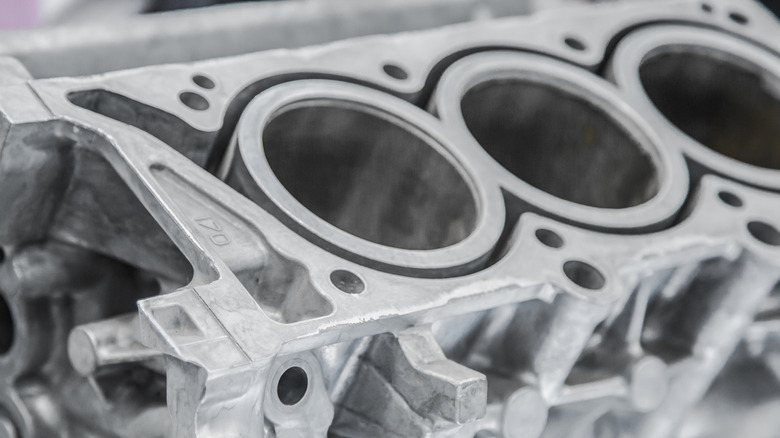
Let’s start by defining what an engine deck is. Essentially, the engine deck is that part of the block that the head gasket sits on, and the engine head attaches to. This means that an inline engine with a single line of cylinders will have one deck, whereas a V-configuration with two banks of cylinders will have two decks. 

Now that we understand that, we can begin to discuss the differences between closed-deck and open-deck engine blocks. In an open-deck engine, there is open space around the top of the cylinders that allows the coolant to circulate more freely. In a closed-deck design, in case you haven’t guessed it by now, the deck features extra material that offers less in the way of cooling, but it does support the cylinders more rigidly. Let’s pop the cylinder head off and have a closer look at these engine block types and why they matter more than you may think. 

Open-deck engines are cool, but flawed

For engine makers, there are definite advantages to open-deck designs — they cost less to manufacture when compared to closed-deck engines, and keep the engine cooler by exposing more of the surface area of the cylinder to the cooling liquid. 

However, all this open space around the cylinders is all very well and good when looking at cooling and manufacturing complexity — but cracks start to appear (sometimes literally) when we look at other aspects of closed-deck engine blocks. While it’s unfair to call open-deck engines unreliable and leave it at that, there are trade-offs in the design, and these become more noticeable in high-performance situations.

Essentially, the lack of material at the top of the engine deck means the engine is less structurally rigid right at the point where it meets some of the most extreme forces engines have to cope with — the combustion point at the top of the cylinder.

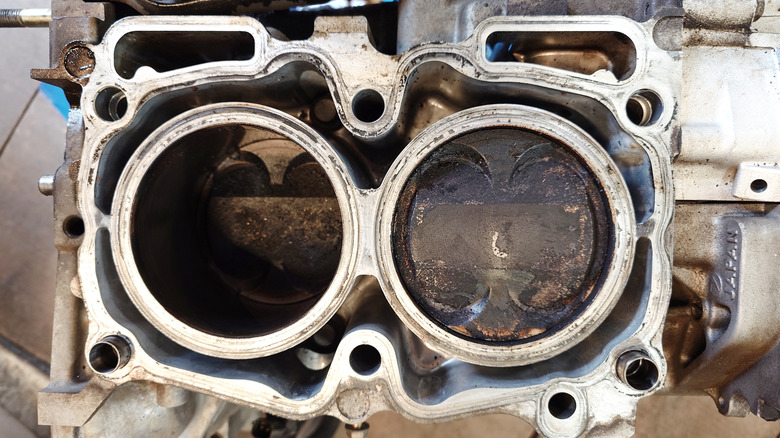
If you removed the head from an open-deck design and look down at the deck, this structural weakness is visible. From this viewpoint, the cylinders look separate from the rest of the engine block, with the gap between the two being used for coolant, as some open-deck designs have limited support at either end of the cylinder bank. While this gives more space for coolant to move freely, the downside is that it also does the same for the cylinder. Over time, even the limited movements of cylinders can weaken the head gasket and bring all the associated troubles that follow such a failure. 

Why some engines use closed- and semi-closed deck designs

Open-deck engine blocks are optimized for cooling and manufacturing efficiency. However, incorporate such a configuration in a high-revving, turbocharged brute of an engine and, well, it could end very badly. This is why such engines will usually use a closed-deck configuration. 

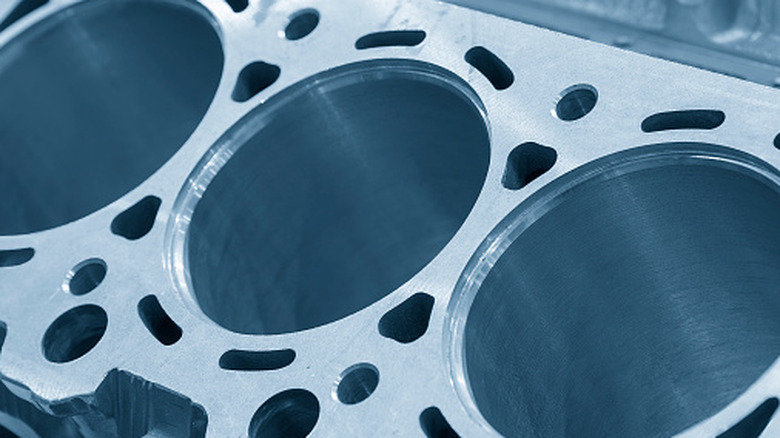
In a closed-deck engine, the open spaces around the cylinders of an open deck are filled with additional material. Obviously, the removal of such space and the flexibility it gives to the cylinders substantially strengthens the engine block. This is why some people fill engine blocks with concrete — it removes the flexibility afforded by the presence of cooling chambers. This is especially important for high-performance engines, but to call it overkill for the family runabout is not overstating the case. 

However, and the more observant among you will be there by now, filling an engine’s cooling cavities with material may add strength — but at the expense of cooling efficiency. This is why many modern turbocharged engines or higher-performance engines use a halfway house design in the form of semi-closed decks. 

Semi-closed decks are a compromise design that offers more rigidity to the cylinders by adding more support points. These supports are usually at the top of the cylinder. For instance, while there are pros and cons to Subaru’s EJ20 engine, the company released a version with a semi-closed deck with four additional support points, which should make it less prone to bore distortion. Ultimately, open-deck and closed-deck engine blocks represent design decisions based on the demands the engine is expected to handle. 


Source link