What’s The Difference Between A Pickup And Utility Truck?


The terms “pickup” and “utility truck” are often used interchangeably, even though they aren’t always supposed to be. Sure, there’s an overlap here and there, but the two handle very different jobs.

The pickup is the more common term, so let’s start there. Merriam-Webster defines a pickup truck as “a light truck having an enclosed cab and an open body with low sides and tailgate.” In other words, what typifies a pickup is that open cargo bed at the back. This bed is typically left open to the sky, unless you opt for a tonneau cover, a truck cap, or a camper shell. There’s plenty of other stuff that can change from one truck to the next, like the size, but the bed stays put.

The word itself actually traces back to Henry Ford and a special version of the 1925 Model T Roadster with a bed on the rear, which he coined the term “pickup” for. The goal with that vehicle was to provide farmers with something they could put to work. Roughly 135,000 units were sold throughout its life — and the term eventually caught on as well.

Meanwhile, the other term, “utility truck,” has had a fuzzier start. One of the earliest mentions was with the WWII Willys Jeep, which was billed by AM General as the country’s first four-wheel-drive tactical utility truck. Eventually, it settled onto other purpose-built pickups that power, water, and telecom crews drive.

The overarching meaning is a pickup truck built for a specific task, rather than being multipurpose. The Oxford Pocket Dictionary defines a utility vehicle, also called a utility truck, as “a truck with low sides designed for carrying small loads.” That sounds generalized, but when an American says utility truck, they usually mean a work rig and aren’t thinking of a consumer pickup at all.

How to tell one apart from the other

The easiest way to tell a utility truck from a plain pickup truck, though, is that bed around the back. In utility trucks, you typically get a more specialized setup on the rear. This may include a crane for hoisting heavy parts if the truck is intended for construction, or towing equipment like a tilt tray if it’s a tow truck. Besides this, the bed may feature lockable compartments, drawers, and shelves for tools. Obviously, none of this is stock.

Common pickup models that get such treatment are the Ford F-250 and F-350 Super Duty. The bare XL trim often leaves the lot as a plain pickup. From there, it heads straight to an upfitter, who takes the open bed out and replaces it with a service body. These upfitters are often third-party makers like Knapheide and CM Truck Beds, a company based in Oklahoma.

So is one a subcategory of the other? Sort of, though even that depends. If the truck started life as a pickup, then yes, the utility truck is just that pickup with a work body. But the term often stretches wider than that and covers just about any specially equipped vehicle. And those vehicles may not always be pickup trucks. Some barely belong on a road at all, which we’ll get to.

Utes and how not every utility vehicle is a truck
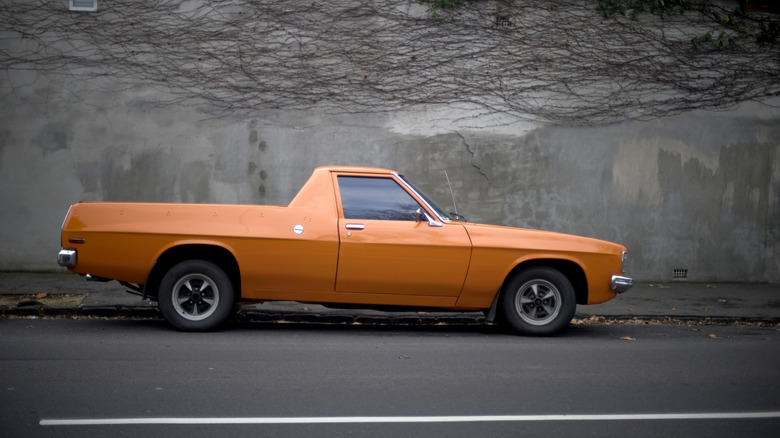
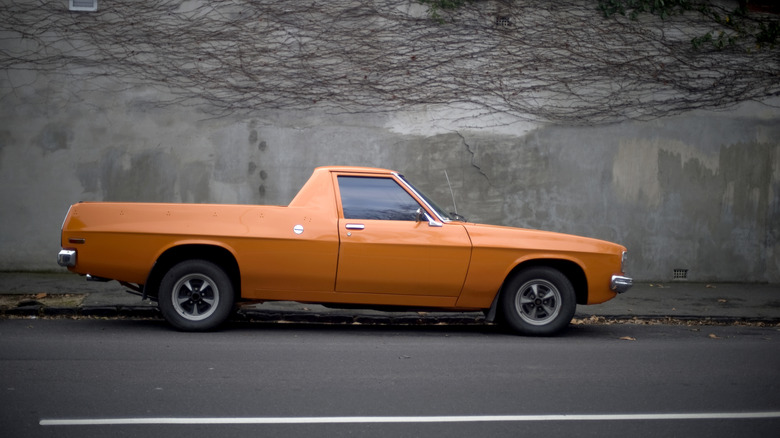
But first, also worth mentioning here is the term’s shorthand, “ute,” commonly used in Australia and New Zealand. It points to a distinct design that’s big there, where select car models — typically sedans — have their back turned into a cargo bed. The thing is, a ute is a utility truck in name only. In function it sits much closer to a pickup, which makes it more of a subcategory of that. This goes to show how the two classifications bleed together, sometimes one way, sometimes the other.

Also worth mentioning here is the much smaller utility vehicle that’s neither a truck nor a ute. It’s known as a UTV (utility task vehicle), and you may have seen it buzzing around a golf course, a college campus, or a city park. A common example of these is the Polaris Ranger and Kawasaki Mule. Their whole point is that they do a specific job that a full-size truck would be simply too bulky or expensive for. Indeed, a small 4×4 from this category costs between just $12,500 and $20,000, which is half the starting price of $30,000 you’d need for a pickup. What makes them especially shine is how little room they need to turn around. Where a utility truck would never squeeze down places like a warehouse aisle or between livestock pens, these manage perfectly fine.

Ultimately, the word “utility” can refer to both vehicles, as long as they’re built for specific tasks. Where one spends its days off the road on grounds and trails, the other is the full-size work truck.


Source link

Leave a Reply

Subscribe to Our Newsletter

Get our latest articles delivered straight to your inbox. No spam, we promise.

Recent Reviews


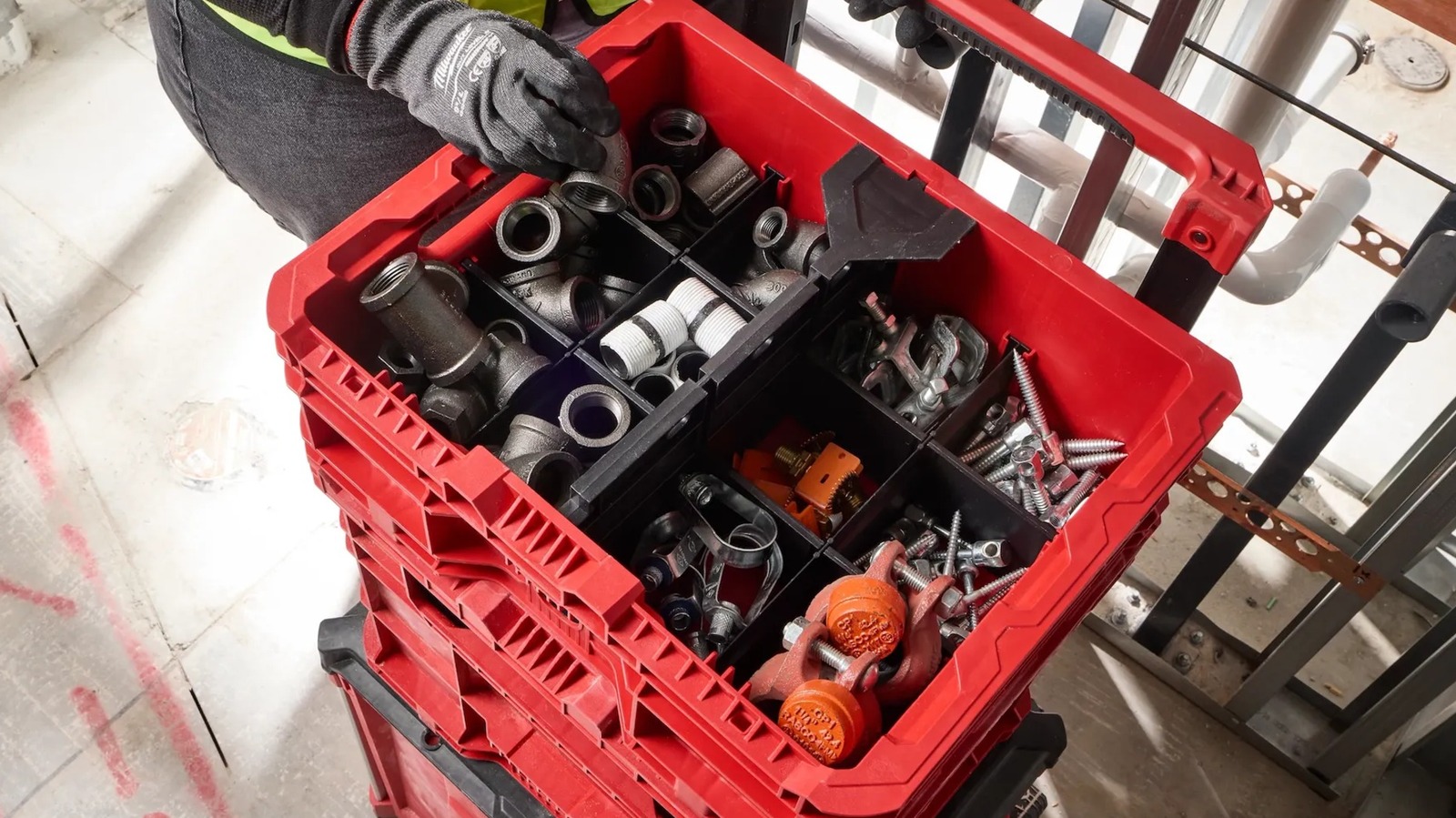
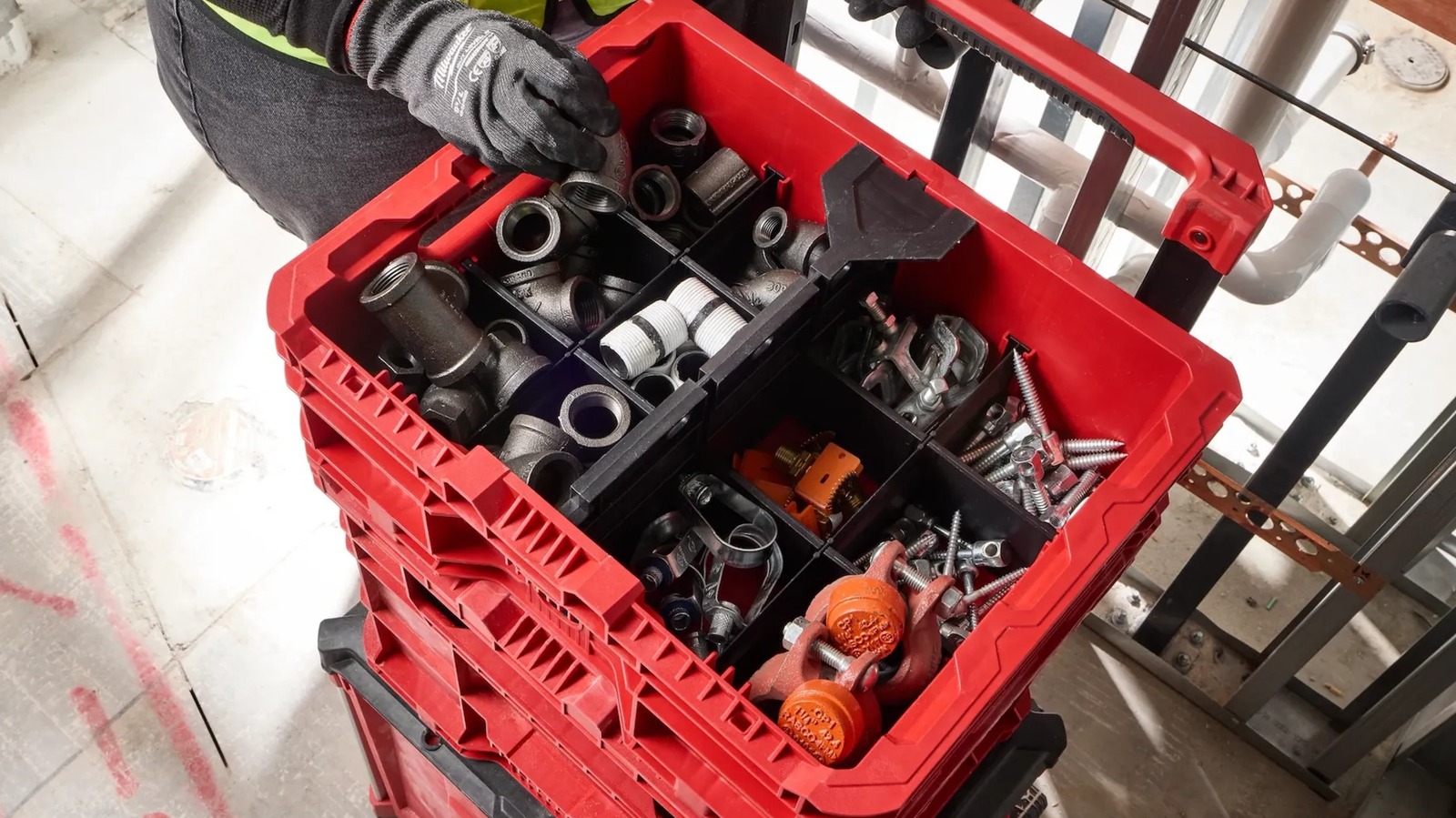
2026 has shaped up to be a big year for Milwaukee, and the company shows no signs of slowing down as it expands its product line. For example, it has announced that some solid new Milwaukee hand tools and organizers will be arriving throughout the summer, but that’s not all. At the end of the day, you need somewhere to put all of this stuff, and while the Milwaukee Packout storage system is deep and varied as is, the company will expand the line in the summer months.

More methods for organizing your tools are on the way, too, with the Milwaukee Packout line set to introduce some new entries this summer. They vary in size, purpose, and price point, but they’re all compatible with the wider Packout line. That means they can connect to each other, making transportation easier. In some cases, they’ll be able to help keep tools and other items secure and organized while on the move. Additionally, all of these new Packout products are covered by Milwaukee’s Limited Lifetime Warranty.

So, what new products does Milwaukee have to offer from its Packout line this summer? Here are the drops you can look forward to throughout June and July 2026.

Milwaukee compact crate

Sometimes, a massive Packout crate isn’t a necessity, which is why the line has its share of smaller options. Yet another will be coming to the Milwaukee catalog in the form of the Milwaukee Packout compact crate, which is set for a June 2026 release and will cost $39.97. It has a 30-pound weight capacity, comes in at 8.75 inches tall, 9.5 inches wide, 15.5 inches long, and 3.75 pounds, and includes two removable dividers to create up to three sections within the crate. The dividers can also be customized by cutting them to size along the pre-made score lines.

This compact crate features a wide front opening for easy access to its contents while on the job, as well as a metal top handle to carry it around on its own. Should you want to add it to your current Packout stack, you can use the connection points at the top and bottom of the crate. Speaking of durability, Milwaukee notes that it has an impact-resistant body along with weep holes to prevent water collection. At the same time, there is some nuance regarding the waterproof nature of Milwaukee Packout products, so keep that in mind before letting this crate get soaked.

Milwaukee Packout low-profile crate

A shorter but equally mighty Milwaukee Packout container is also on its way to customers this summer. The Milwaukee Packout low-profile crate is the shortest of the new releases at just 6.625 inches tall, though it makes up for what it lacks in height with a 15-inch length and an 18.625-inch width. Even though it’s slightly heavier than the compact crate at 4.85 pounds, it wins out in weight capacity with a 50-pound limit. It will be released in June 2026 and will cost $44.97.

For added modularity, the low-profile crate includes three different divider types: eight short, two long, and one for the middle of the container. When combined, they form up to 12 individual sections for tool and accessory organization. In terms of connecting to other Packout containers, it can do so from the top and bottom. Alternatively, built-in side handles are integrated into the design to make it easier to carry the crate on its own. The crate has weep holes for water drainage and an impact-resistant body.

Milwaukee Packout XL crate

Moving on to one of the larger upcoming Milwaukee Packout releases — even if it ultimately lands somewhere in the middle of the smallest and largest Packout containers for sale — there’s the aptly-named Milwaukee Packout XL crate. This release will hit shelves in June 2026 and comes with a $69.97 price tag. The 8.03-pound crate can take on some serious tools with its 75-pound weight capacity. It measures 15 inches tall, 15.75 inches long, and 18.625 inches wide. Despite its size, it can be hung up on a wall like most other Packout containers.

While some may hang this crate in their workshop, many will use it as part of their mobile Packout stack. You can connect it to your existing setup via the top and bottom connection points. It can also be used with Milwaukee toolbox attachments to hold smaller tools and batteries with connection points on the sides. Alternatively, you can move the crate around using its built-in side handles. It’s advertised as having an impact-resistant body along with anti-water collection weep holes. Suffice to say, there’s more to this seemingly simple crate than initially meets the eye.

Milwaukee Packout Wire Pulling XL Crate

For the most part, the Milwaukee Packout line is so popular because of its versatility. While most entries can be used for just about anything, there are those that come with a specialized function. Case in point, the forthcoming Milwaukee Packout Wire Pulling XL crate, which is designed for dispensing wire. This involves inserting and locking in spools of the user’s needed material, threading the wire through the wire retention slots, and using the fold-down panel to keep the end of the wire from rolling back into the box.

Overall, this crate has the same dimensions and weight capacity as the previously covered Packout XL crate, though it is the heavier of the two at 9.85 pounds. It can accommodate up to six spools, can be stacked onto other Packout containers or hung up, and has an impact-resistant body. This is the most expensive of the new Packout releases at a hefty $119.97, and it’s set to release during July 2026. Alongside the best Milwaukee power tools for electrical work, this crate seems like a vital piece for any Milwaukee-enthusiast electrician’s kit.

New Milwaukee Packout inserts are coming, too

That’s it for the new Milwaukee Packout containers set to debut this summer, but there are more new releases yet to cover. To pair with some of these containers and improve their levels of organization and function, come two new insert sets. First is the divider for the Milwaukee Packout XL crate, which splits the container into two sections. It simply slides down the middle of the crate and fits snugly into place, while retaining its ability to connect with smaller Packout attachments. It will be released in July 2026 for $29.97.

Alongside the Packout XL crate divider is the set of Packout wire pulling inserts for the XL crate. You’ll need these if you end up buying an XL crate and later want to use it as a wire-pulling crate. These inserts allow you to convert it instead of having to buy a new designated wire pulling crate. They attach to two of the inner sides of the crate via T-25 screws and include wire puller guards as well. The Milwaukee product listing says these inserts are meant for 1/2-inch EMT conduit. This insert set also comes out in July and will cost $49.97. 


Source link