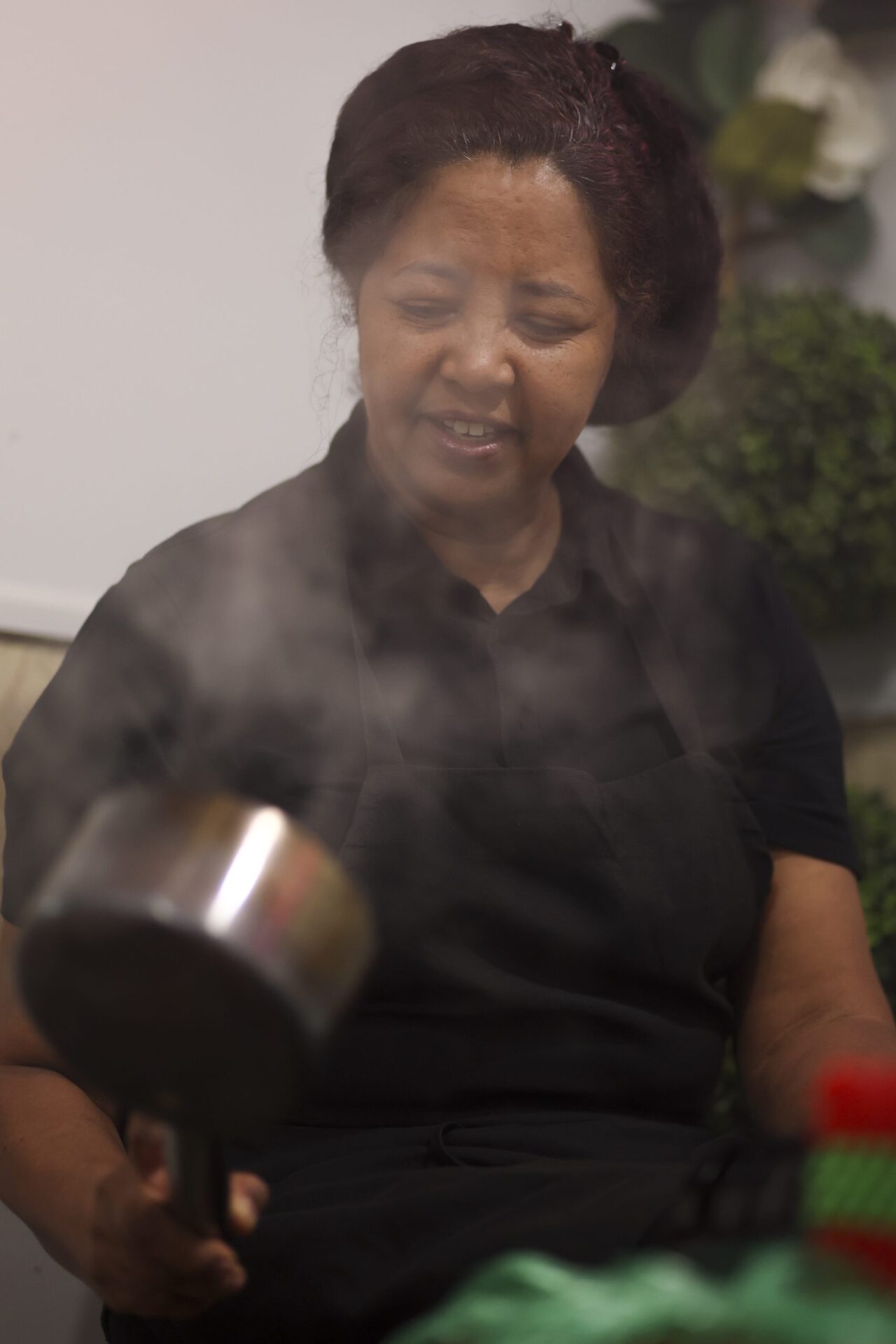
Sara Wordofa, the owner of Katar River Restaurant and Bakery in Minneapolis’ Longfellow neighborhood, originally planned to expand her business in January, with another expansion planned for April.
Then Operation Metro Surge happened. The expansions were delayed, leaving her holding on to several outstanding loans.
“It affected me a lot,” she said in an interview. “Very hard time for me.”
Related: A simple step to support Minnesota’s small businesses
So when Wordofa recently got a letter in the mail from the City of Minneapolis, she opened it excitedly, hoping for a long-awaited confirmation of a $10,000 grant specifically to help with the expansions. Instead, the letter informed her of a refund of her 2026 city licensing fees, totaling $4,666.
“Small money,” she said. “It’s helpful. I bought groceries.”


The refunds are part of the city’s $7 million Small Business Resiliency Fund, aimed at helping businesses recover from the effects of Operation Metro Surge. The fund was approved unanimously by the Minneapolis City Council in February, avoiding the political challenges that faced efforts to help the city’s renters.
But still, the $7 million is only a small percentage of the $700 million in economic damage caused by Operation Metro Surge, according to the most recent city estimates. The majority of the impact came from lost revenue and lost wages, according to the report.
For Wordofa and other local business owners, the dollars are met with something of a grateful shrug. Any help is better than none. But more than actual financial relief, the city’s assistance is arriving as more of a symbol – an acknowledgement that at least city leaders are trying.

By design, $4 million of the fund was set aside to cover licensing fees for hospitality businesses, including food, wine, brewery and liquor licenses. $1.75 million went toward refunding license fees that had already been paid, while the remaining $2.25 million will cover fees for those who have yet to pay.
The refunds went through automatically, meaning businesses didn’t need to go through what could’ve been an onerous application process.
“I think that was the right way to go if the goal was [to] help them any way they can as quickly as we can,” said Russ Adams, the manager of corridor recovery initiatives for Lake Street Council, a nonprofit that supports small businesses in the Lake Street corridor.
But that non-targeted approach means that it wasn’t just small, locally-owned businesses that received refunds. Walgreen’s, based in Deerfield, Illinois, received $11,647, according to dollar amounts compiled by the city. Northern Tier Retail LLC, an operator of gas station convenience stores, received more than $18,000. Restaurants like Chipotle and Raising Cane’s and grocery stores like Aldi and Whole Foods saw refunds, too.
Hospitality Minnesota, a statewide trade association representing the state’s hospitality business owners, said in a statement that the refunds were important but that they were “only a Band-Aid for an industry that needs stability and relief from burdensome local and state-imposed mandates.”
The $3 million remaining in the Small Business Resiliency Fund after covering licensing fees will go toward covering event permits in the city and funding business support programs.
Related: Operation Metro Surge cost Minneapolis $700M, city estimates
Adams praised the effort overall. “You can’t sugarcoat the big gap,” he said. Still, he argued that the city had used “a very small infusion of money” effectively.
It was the State Legislature, Adams said, that should have stepped up to help. A bill that would have provided $100 million in loans to state businesses passed the Senate but couldn’t clear the House.
Meanwhile, Wordofa remains hopeful that her next letter will be the one informing her of her grant funding. Her expansions are set – she hopes – for August. “We are going to survive,” she said.
Related