
We may receive a commission on purchases made from links.
Makita isn’t the cheapest toolmaker on the market, but its products are downright affordable compared to Snap-On. One can assume, then, that the highly respected Snap-On will be the go-to brand for professionals who need high-powered tools, but that might not always be the case. In fact, Snap-On doesn’t even always offer more power than the tools found on Harbor Freight’s aisles, even though the latter is one of the most affordable hardware stores around.
We’ve assembled a list of five common tools you can get from Makita that outperform their Snap-On equivalents, with plenty more still left to discover. Now, just because the two brands report different power levels (torque, speed, impacts per minute, and so on) doesn’t mean that one tool is better than the other. It is admittedly hard to recommend the weaker tool — especially when, as is often the case with Snap-On, that weaker tool is also the most expensive — but there are many variables, like versatility and toughness, that we’re not considering here and which may be more important to you. With that out of the way, let’s talk about some powerful tools.
18V LXT 1/2-inch Hammer Driver-Drill
The Makita ½-inch Hammer Driver-Drill is one of the company’s most powerful hammer driver-drills, and the best ½-inch Makita model. It comes with a powerful brushless motor that produces up to 1,250 in-lb and has two speed modes, the fastest of which manages 2,100 rpm. It has a clutch for torque control and a hammer drilling mode capable of up to 31,500 blows per minute (bpm).
The Snap-On ½-inch Drive Hammer Drill also doubles as a hammer drill, but with no BPM value reported, it’s hard to say how efficient it is. The Makita bests it in every other metric, though: The Snap-On only generates 470 in-lb of torque, and while its two speeds top out at respectable speeds of 400 and 2,000 rpm, it doesn’t quite reach the 2,100 rpm of the Makita. Both tools have an LED light and a brushless motor, though, and the Snap-On is slightly lighter at 5.3 pounds against 6 pounds, batteries included.
Pricing, as usual with Snap-On’s expensive cordless power tools, is very different. Makita will sell you its driver for $135 on Amazon, though the same tool costs $200 at Home Depot — which is more in line with this tool category. A $65 price difference is quite significant, but it’s almost meaningless compared to the Snap-On’s price. The Snap-On 1/2-inch drive hammer drill sells at an outstanding $491.95, tool only — with a worse two-year warranty than Makita, at that.
40V Max XGT 4‑speed High‑Torque 1/2-inch Impact Wrench
Makita’s most powerful impact wrench, the XGT 4‑speed High‑Torque ½-inch Impact Wrench, is part of the Makita XGT line of tools and batteries. It generates 1,620 ft-lb of breakaway torque and 1,250 ft-lb of fastening torque. To support this torque, the tool comes with three auto-stop modes in forward and reverse, as well as four speeds that tap out at 1,800 rpm and 2,400 ipm. These are really great numbers and will be more than enough for common tasks such as DIY car maintenance.
Snap-On’s 18V ½-inch Drive Impact Wrench is not on the same level as the Makita, with 1,440 ft-lb of breakaway torque and 1,050 ft-lb of fastening torque, but these are still solid numbers overall. What really separates the two, and makes the Makita easier to recommend for most users, is their prices. Snap-On’s CT9080DB sells for around $620, no battery or charger included, while the Makita comes in at a little less than $400. You could use the difference to get a massive 40V/4Ah GXT battery to go with your Makita impact wrench.
When it comes to the details, these two tools appear to be similar. Both have a brushless motor, multiple torque settings, built-in brakes, a variable speed trigger, and an LED near the tool’s head. While dimensions and weight are quite similar, the Makita is a little smaller and lighter, at about 8.5 inches long and 7.7 pounds.
18V LXT Recipro Saw
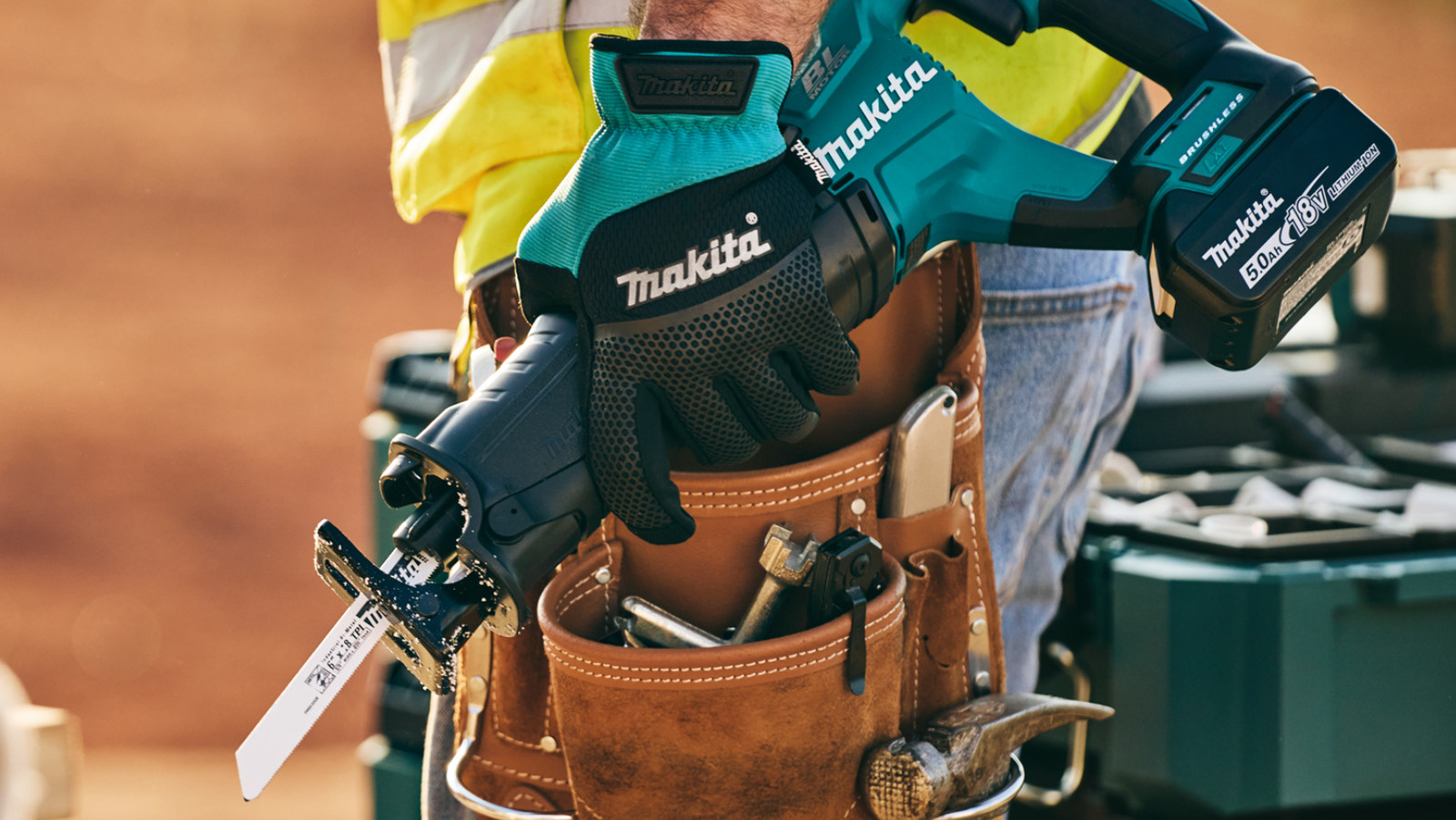
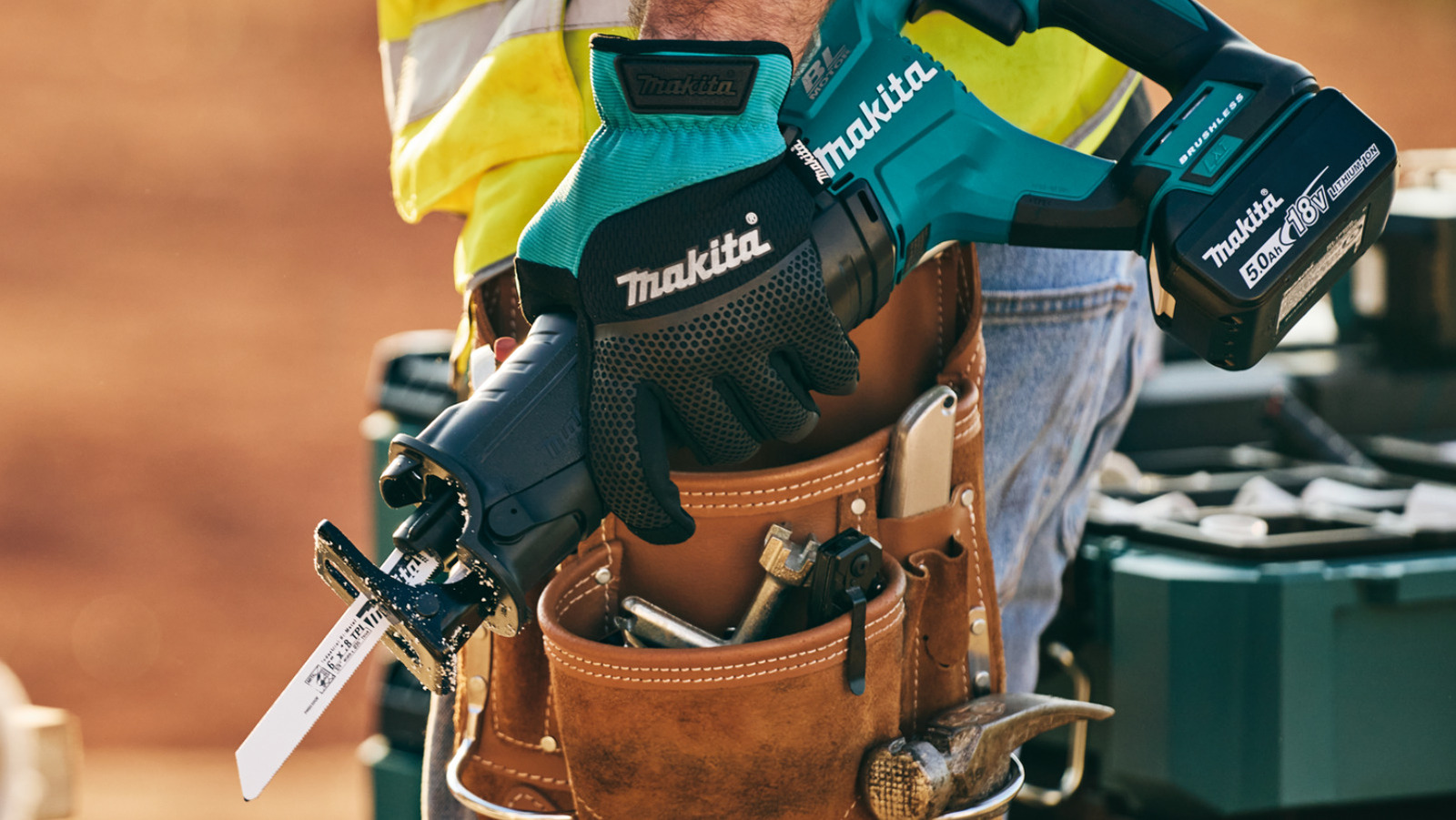
Makita claimed top spot on our list of the best brands of reciprocating saws, and there are plenty of reasons why. The Makita 18V LXT Recipro Saw, for example, is faster than the Snap-On equivalent (3,000 spm versus 2,400 spm) and has a longer stroke length (1-¼ inches instead of 1 inch). This isn’t even the only saw from the brand that outperforms Snap-On’s offering, either. The non-brushless version still reaches 2,800 spm, and even the compact and one-hand reciprocating saws reach 3,100 spm, although they have a much smaller stroke length.
Getting back to the big Makita saw, it has a two-speed brushless motor and a variable speed trigger. It has a crank mechanism that supposedly reduces blade deflection and vibration while working, while tool-less blade replacements simplify maintenance. The Snap-On also has a variable-speed trigger and no-tool blade swaps, but it isn’t clear if it has a multiple-speed motor.
Of course, the Snap-On is more expensive, at $415 compared to the $170 to $230 — depending on retailer — of the Makita. Sure, the Snap-On claims that its 14-gauge internal wiring and tough construction will ensure it lasts a long time, but Makita tools are also known for their ruggedness.
18V LXT Rivet Tool
Hand rivet tools and small rivet power tools are relatively inexpensive and quite straightforward. Rivet guns made for industrial use, however, are much more expensive than the DIY gear they share a name with, and the price difference can be more significant than with other types of tools. That becomes obvious once you look at these two high-end models from Makita and Snap-On.
Makita’s strongest LXT Rivet Tool (XVR02Z) and Snap-On’s 18V Rivet Gun — Snap-On’s only offering here — both run on the companies’ respective 18V battery systems and work with rivets up to ¼ inch. Where the Makita takes the lead is in force, albeit just slightly: it makes about 4,500 pound-force against the Snap-On’s 4,400. It’s a similar case with stroke length, where the Makita’s 30 mm bests its competitor’s 25 mm. Surprisingly, however, this is one case where the Snap-On is the cheaper option.
Snap-On’s rivet gun comes in at $915, while the Makita retails for $1,739. Both accept aluminum, steel, and stainless steel rivets, and neither product includes a battery or a charger. Neither tool seems to be intended for personal use, but for the sort of industrial work that companies capable of spending $900 or $1,700 on a single tool tend to perform.
18V LXT Paddle Switch Cut‑Off/Angle Grinder with Electric Brake
Makita’s 18V LXT Paddle Switch Cut‑Off/Angle Grinder with Electric Brake is slightly faster (8,500 rpm against 8,000 rpm) than Snap-On’s equivalent, the 18V Angle Grinder/Cut-Off Tool with Safety Switch. It’s not a massive difference, but the Makita is, by this metric, still the more powerful tool. Both grinders are available with safety or regular switches, but only the Makita model has an electric brake, which the brand claims will stop the blade in 2 seconds or less. It seems like this feature, along with a paddle switch, should also make the tool safer to use.
Makita also claims to have integrated features like its Automatic Speed Change, which adjusts speed and torque during operation, and Active Feedback-sensing Technology, which is supposed to stop the motor when the wheel is forcibly stopped, preventing damage. Meanwhile, the Snap-On promises an anti-vibration handle that’s supposedly more comfortable, and an OSHA-compliant switch. Both companies’ products, however, adhere to OSHA criteria.
Both tools have all the expected features of angle grinders, like a safety guard and a second handle. The Snap-On, as usual, is significantly more expensive, priced at $560 against the $196 that Makita is asking for its grinder.

Stephan is the sports journalist for the Maple Grove Report.