
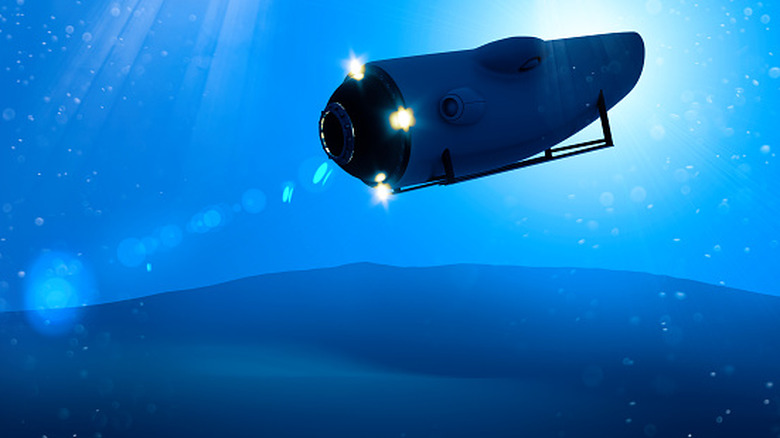
Antarctica is a massive block of ice hiding land underneath it, and you can hardly blame scientists for wanting to take a peek at the secrets it holds. But since you can’t send humans down there — there’s already a hard limit on the deepest depth a person has explored in the ocean – a robot named Ran went instead. The machine was a bright orange autonomous underwater vehicle measuring around 20 feet in length.
Back in 2022, it was sent into the cavity beneath West Antarctica’s Dotson Ice Shelf by researchers with the International Thwaites Glacier Collaboration. There, Ran explored the shelf’s underbelly by sweeping it using upward-looking sonar. It did so across 54 square miles, and the images that came back were strange, to say the least.
It was found that the ice wasn’t one smooth sheet, contrary to what the researchers expected. In some places, it stepped down in terraces, like a frozen staircase. In others, it formed channels and scooped grooves. There were also teardrop-shaped pits gouging upward into the ice, some nearly 1,000 feet long. This was all new information, since none of it showed up on satellites.
Anna Wåhlin, the oceanographer from the University of Gothenburg who led the work, said it actually felt a little like getting a first look at the far side of the Moon. But that wasn’t even the most startling part. When the crew returned to take another look in early 2024, specifically to see how the ice had moved, Ran went back under and never resurfaced.
Gone, but not before doing its job
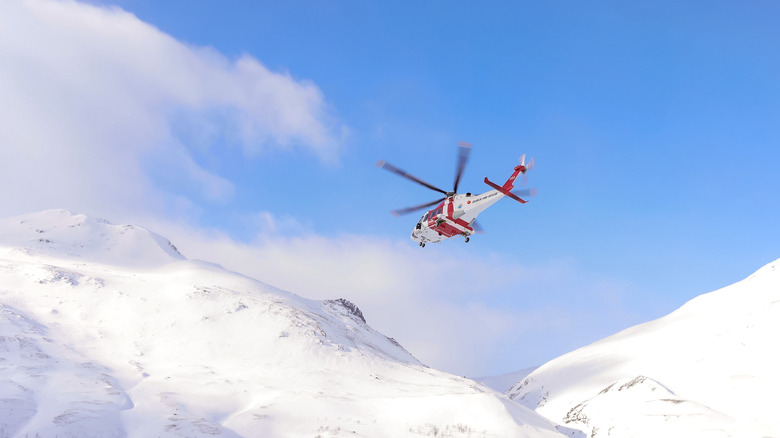
Not only did Ran stop sending signals, but it left no debris either. Follow-up search attempts using acoustic gear, helicopters, and drones found absolutely nothing. There are theories of course — the team has floated reasons like a mechanical fault, a run-in with an ice ridge, or perhaps even curious seals. The deep sea is hard on machines either way, and pressure can crush a submarine that dives too deep. Whatever the cause of the disappearance, the maps Ran sent back before it was lost have been pretty useful.
You’d think that the shelf would melt evenly, the way an ice cube does in a warm glass. But the maps show that isn’t the case with Dotson. The melting is being driven by a current called Circumpolar Deep Water, this relatively warm and salty water drifting up from the Southern Ocean. It reaches the underside of the shelf and quietly wears it down. “Warm” is a generous word here, but even a small temperature differential goes a long way for ice.
The shapes are only half the story
This flow also helps explain the odd shapes seen under the ice. That range of forms is caused by the varying speeds of the current. When it’s slow, the ice wears back in gradual steps, eventually forming those stacked terraces. When it’s fast, you get smoother grooves, channels, and those teardrop pits. On top of that, certain regions of the ice receive different strengths of the current, too. For instance, Dotson’s west melts quicker simply because the currents run stronger there, pushing more heat into the ice. The eastern side is calmer.
Ultimately, though, the findings clear up one crucial thing: A shelf like Dotson works like a doorstop, holding back the glaciers that sit on the land behind it. That doorstop is important, because as it thins, it loses its grip, and the glaciers start sliding into the ocean. Land-based ice ends up raising sea levels, resulting in higher tides and greater chances of flooding — even for coasts half a world away from Antarctica. Already, Antarctic melt has pushed the sea up about half an inch since 1979. Maps like Ran’s (published in the journal Science Advances) are extremely useful in the area because they help researchers sharpen forecasts.

Stephan is the sports journalist for the Maple Grove Report.