
Every year in the hi-fi and home cinema world there are trends – some you see from the start of the year, others start to develop over the course of a few months.
This type of convergence can almost be an act of serendipity – all these products launching around the same time – what could have kick-started this or any trend?
Let’s take a look at active, also known as powered speakers. They are starting to pop up with unerring regularity.
We’ve had Ruark Audio’s five-star powered speakers. We’ve also had the launch of Cambridge Audio’s L/R S (with more to come), KEF has launched a few active/powered speakers in the last few years, there are new models from Tangent, Triangle, Elipson, Kanto, Klipsch, Edifier – and this is just the beginning.
Hi-Fi for the masses?
Hi-Fi has struggled to attract the attention of a younger generation glued to smartphones, tablets and other mobile devices. Hi-Fi can seem hoary and stuffy compared to the worlds that mobile devices can offer.
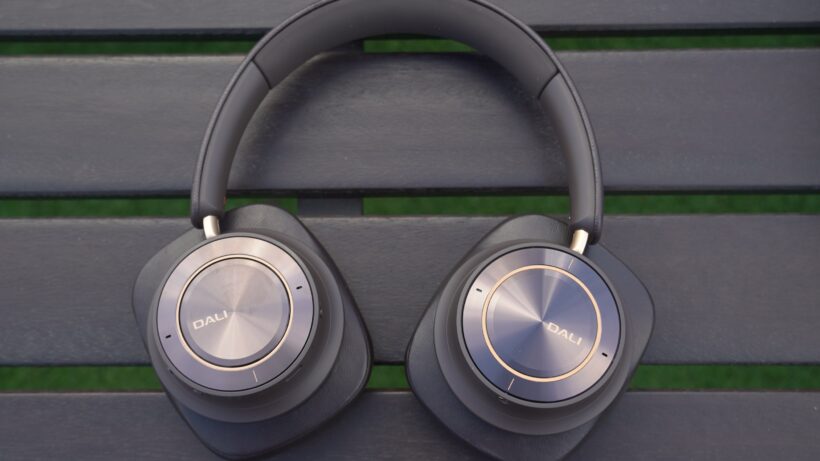
Some hi-fi brands have taken the route of headphones to entice people not au fait with hi-fi. Speaker brands such as Bowers & Wilkins, Dali, Focal and others have invested big-time in headphones (or head-fi) as a gateway to hi-fi, but is it actually a gateway? Do people jump from headphones to hi-fi? Let’s say I’m not too sure.

But we’ve seen a renaissance of vinyl. There’s been a resurgence in CD, and even cassette tapes have enjoyed a few days in the sun, while wired headphones continue to drum up positive publicity.
But proper – or trad hi-fi – still struggles for some traction and momentum. The appeal it has is men of a certain age who like to decamp to their den to listen to music in peace.
But active and powered speakers could change that outlook.
For one, hi-fi takes up space. Who has space these days? Everyone wants to move to a bigger house for more space, and everyone wants to move to a smaller house because it’s less expensive. What’s something that’s the best of both worlds – saving space, still offering a good experience but ultimately provides convenience?
Well that could be active/powered speakers.

The amplification, in some cases the streaming and processing, can be done with just two boxes rather than many. But more than that, they’re multi-purpose in use.
I’m currently testing a pair of KEF and Edifier speakers, both of which come with HDMI eARC to connect to a TV, making them potential soundbar replacements. Other models have a built-in phono stage to connect directly to a turntable. USB means you can plug your music in that way.
And then there’s the wireless support. Some cheaper options will make do with just Bluetooth, but active speakers with Wi-Fi open the world to the likes of Spotify Connect, Tidal, Qobuz etc – high quality music streaming services that you just need to tap a few buttons to get started.
Hi-Fi sound, but without the faff. You can see the appeal, and why brands seem to have set their stall up in this area of the market.
But can they have an impact?
The great thing about active and powered speakers is that they can fit within your current set-up rather than having to buy certain products to create a system.
While traditional hi-fi offers outright performance, especially if you know what you’re doing, knowledge can also be a bit of a bugbear. Not everyone knows what they’re doing or can be bothered to find out either.
This is why the convenience of powered speakers is useful. The plug-and-play mentality, of reducing the number of steps and therefore complexity, is one I’d reckon has wide appeal.
Everyone likes to listen to good music – if you don’t, I fear you might be a miserable so–and–so–and a pair of speakers that can do that without sacrificing much in the way of performance has got to be worth pursuing.

But convenience is only great if you can afford it. At the low end you might consider £400 rather expensive – especially if you’re the type of person for whom a £70 Bluetooth speaker is you pushing the boat out. £400 (sorry, £399) has become the first boundary marker. You’ll find a decent experience for less, but you won’t find better for less.
It’s when we start to go up through the price bands that I can see things start to stall. Yes, Wi-Fi is a ‘good thing’ to have, but eyebrows start to raise when you see those models pushing £1000 if not more. And then we have your ‘posh’ active speakers, models that stretch the asking price to £2000+, despite not offering a feature set that’s markedly different from a pair of actives half the price. And in some cases, a performance that doesn’t quite live up to the premium billing.
So while this emergence of active and powered speakers is very much ‘good’, it’s also susceptible to money. It is also something of a lifestyle choice. People like listening to music, but how they do so is different. Not everyone wants to be tied to a desktop or their living room. They like to take their music with them.

So while this emergence/growth of the active/powered is a good thing and may lower the barrier and make hi-fi more accessible, the biggest obstacle active speakers face is not in terms of perception. The biggest obstacle that active speakers, and hi-fi in general faces, is that it has, in a way, been superseded by something in plain view.
Like a riddle; what can you use at home and outside of it? What comes in different forms that allows you to listen to audio however you like? What’s the device tied to you in a very personal way?
What hi-fi has to overcome is the unassailable might of headphones, which has pretty much replaced traditional hi-fi. And I for one can’t see that happening anytime soon. Is the active/powered speaker doomed? Of course not, but maybe this sudden gold rush won’t necessarily result in the riches hi-fi brands hope it will.

Stephan is the sports journalist for the Maple Grove Report.