
We may receive a commission on purchases made from links.
One of the big downsides to cordless power tools is that you need a battery to operate them. Most of the time, you can buy batteries with the power tools, thereby eliminating the need for two separate purchases. In most cases, those power tools, including those sold by Ryobi, come with a battery that is properly sized for the task at hand. Ryobi sells tons of tools, including both full-size and compact versions, in its lineup, and you can buy most of them with an appropriately sized battery.
However, Ryobi does sell larger batteries should you want them, including a 12Ah monster that you can buy for the brand’s sizable ONE+ 18-volt lineup. Such a large battery is massive overkill most of the time. After all, most people probably rarely use a drill long enough to drain the 1.5 Ah batteries that usually come with them, let alone one that is eight times larger. Your everyday beginner power tools probably don’t need anything that big, and the extra weight and heft may actually make some of those tools more difficult to use.
That is not the case for every power tool. It’s no secret that some power tools simply take more power than others, and for those tools, you’ll probably want something larger.
Ryobi ONE+ HP 18V Brushless Table Saw
Table saws are among the most power-hungry tools that a DIYer can buy. They’re useful mostly for construction purposes, including tasks like building a deck, refinishing your baseboards, or any other task that requires you to cut something down to size a lot of times so that they fit where they need to go. Ryobi’s ONE+ 18-Volt Brushless Table Saw is big enough for DIY use, and it’s also portable so you can carry it around to wherever you need work done.
Per Ryobi, this table saw can cut up to 240 linear feet per charge when using two 4.0Ah batteries, for a total of 8.0Ah. The math works out to a 50% increase in usage time when upgrading to a 12Ah battery, giving you 360 linear feet per charge with a single 12Ah cell. Since a table saw is meant to be stationary, the extra weight and size of the battery don’t impact usability here.
Unlike many DIY tools, there are use cases where you may get that far, especially if your home improvement project is big. It’s not something we’d recommend in a home tool kit, but for big jobs, it’s helpful.
Ryobi ONE+ HP 18V Brushless Miter Saw
Miter saws are much like table saws in terms of power usage. They’re stationary saws meant to cut wood, plastic, and other materials for the purposes of construction and home improvement. Table saws are best for long, straight cuts, whereas miter saws are best for repeatable, angled cuts, which are equally necessary when doing big projects. Ryobi sells the ONE+ HP 18-Volt Brushless Compound Miter Saw, and thanks to its size and the fact that it’s a saw, it would definitely benefit from a larger battery.
Ryobi says that the 10-inch version can get up to 550 cuts per charge with a 4.0Ah battery. The 12Ah battery would effectively triple that, giving you 1,650 cuts to work with per charge. Since this is a stationary tool, so the extra weight won’t matter. The size of the miter saw does matter here as well. The smaller (and more power efficient) 7 ¼-inch model gets 900 cuts on a 4.0Ah battery, which is honestly probably enough for most DIY and home improvement work. Thus, you can probably skip the 12Ah battery if you opt for the 7 ¼-inch model.
Ryobi ONE+ 18V 6-Gallon Wet Dry Vacuum
In my experience, it’s probably better to have a plug-in shop vac, since you really don’t want it to lose power in the middle of cleaning. They’re also a lot cheaper compared to cordless when comparing similar prices. However, if you are dead set on getting a cordless shop vac, Ryobi makes the ONE+ 18-Volt Wet Dry Vacuum. Ryobi usually sells this with a 4Ah battery, which is probably good enough much of the time, but if you’ve ever had a long cleaning project, you’ll know how beneficial it is to have a larger battery on tap.
Ryobi doesn’t give usage numbers with its 4.0Ah battery, but anecdotally, users do lament that the 4.0Ah battery doesn’t last terribly long. By most accounts, it’s between 20 and 30 minutes on high power and 45 or so minutes on low power. That means a 12Ah battery can boost runtime to about an hour on high power and over two hours in low power mode, making the wet-dry vac one of the best examples of where a larger battery can come in handy.
Ryobi ONE+ HP 18V High-Capacity Stick Vacuum
Vacuum cleaners sit in that Venn diagram of instruments that you use for a while since it’s often recommended to vacuum multiple times a week and the fact that houses are getting bigger over time. Ryobi makes several stick vacuums, including the 18-Volt ONE+ HP Cordless High-Capacity Stick Vacuum, which isn’t a catchy name, but it is descriptive. It doesn’t really matter which one you choose. They’re all meant for vacuuming carpets, hardwood floors, and rugs.
They also use quite a lot of power, with runtimes at about 45 minutes per charge on a 4.0Ah battery. That should get a small house cleaned up in a single charge, but if you are spring cleaning or have a larger house, the 12Ah battery would up that time to two hours and 15 minutes, thereby giving you more than enough time to hit every nook and cranny in your house with some time to spare. Whether or not it’s worth it depends on the size of your home and how thoroughly you clean.
Almost all of Ryobi’s cleaning products are like this, including the Ryobi Swift Cleaner and other vacuums. As long as it cleans, you can probably stand to get a larger battery.
Ryobi ONE+ 18V 150W Portable Battery Inverter
The Ryobi 18-Volt ONE+ 150-Watt Portable Battery Inverter is something a little bit different. This nifty little gadget is basically a charger and outlet that you can use to charge or power other things, like your electronics. The use is simple enough. You pop in a battery, plug in your electronics, and it’ll power those electronics until the battery dies. You can use this for a TV while camping or charging a phone during your kids’ sporting event. It’s a neat little power source that can be used in a lot of scenarios.
The use of a bigger battery here has obvious benefits. The larger the battery, the longer it can run or charge whatever you plug into it. Ryobi says that you can power a 32-inch TV or charge your phone three times with a 4.0Ah battery. Triple all of those numbers and that’s what you can get with the 12 Ah battery. This thing is pretty small, so the larger battery will make it quite a bit heftier. However, the tradeoffs are well worth it in this case since it’ll be sitting stationary wherever you take it.
Ryobi ONE+ HP Brushless 20-inch Lawn Mower
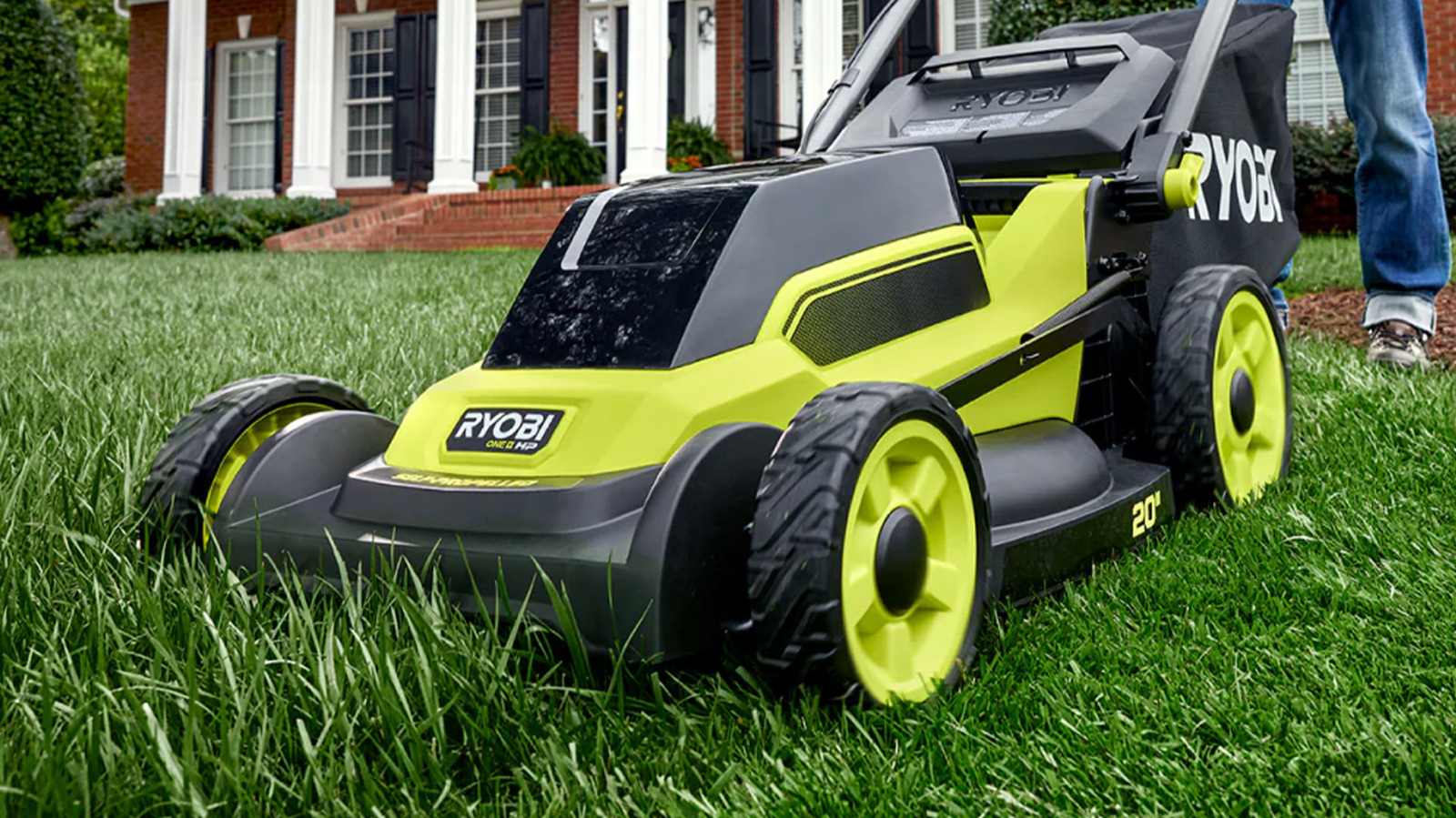
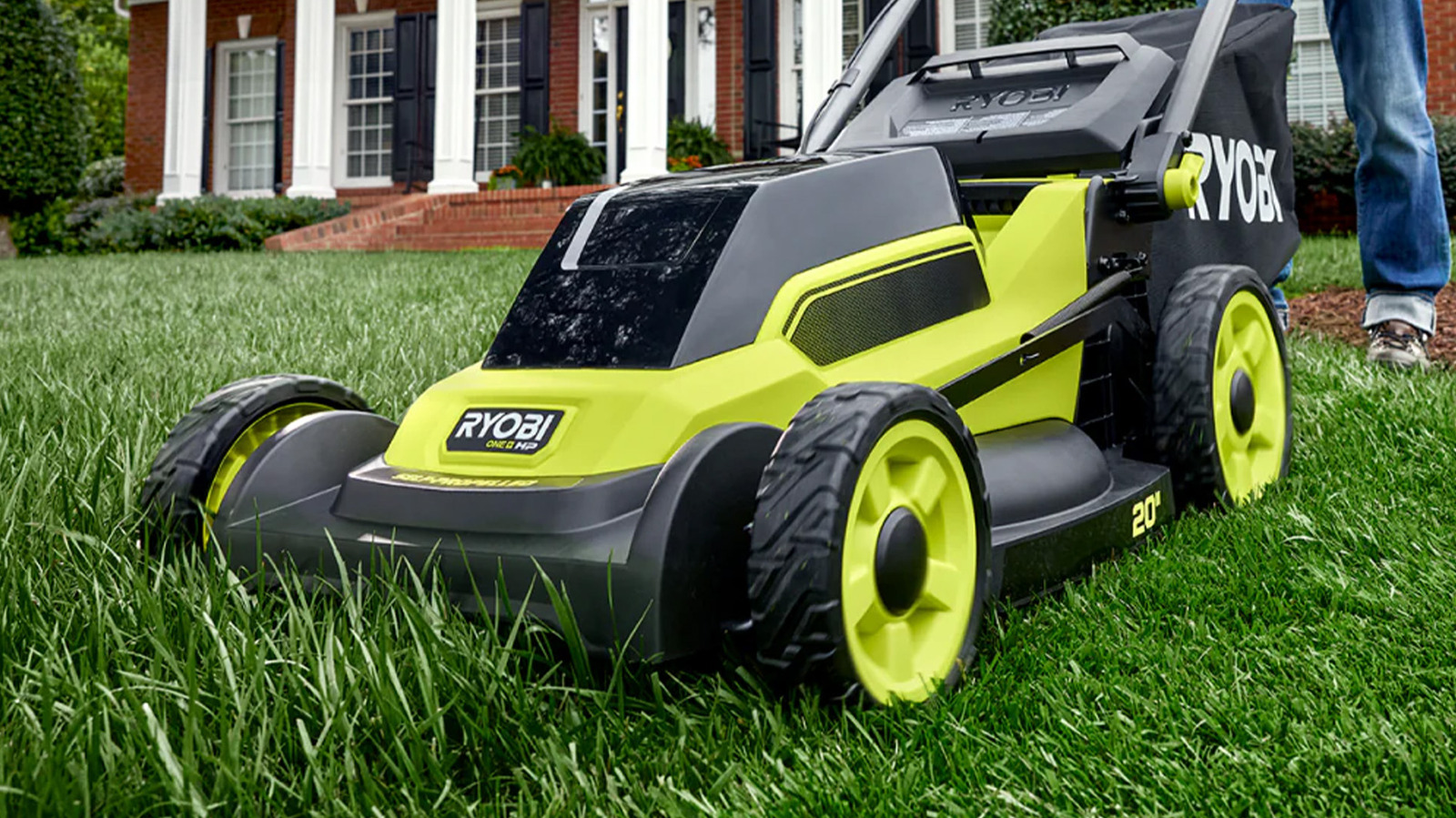
As an owner of Ryobi lawn tools, I can attest that they will chew through batteries. In the spring, when the grass is longer, it’s not uncommon for me to eat through a 40-volt, 5Ah battery for just my backyard, since the mowers tend to ramp up when meeting taller, heavier grass. Ryobi also sells 18-volt lawnmowers, including this ONE+ HP 18-Volt Cordless Lawn Mower. It’s 20 inches wide, which is the same as my 40-volt model, and also includes a self-propel function.
Ryobi says that the included batteries can mow half an acre with up to 40 minutes of runtime. The thing is, this thing comes with two 6.0Ah batteries, totally 12Ah. Buying a single 12Ah battery effectively doubles the time to 80 minutes and up to an acre, depending on your grass length and type. As someone who actually purchased an extra battery for their 40-volt lawnmower, I can safely say that this is worth it, because if you chew through your batteries before you get done, you’ll lament not buying a gas mower as you sit and wait for batteries to charge.
Ryobi ONE+ HP 18V Brushless Leaf Blower
Leaf blowers are nearly just as bad as lawn mowers when it comes to power draw. Ryobi sells a whole bunch of these things in both 18 and 40-volt configurations, and the observations about them are the same. Leaf blowers shoot air at a maximum rate, known as its CFM, and the more CFM it has, the more power it needs. The Ryobi ONE+ HP 18-Volt 510 CFM Leaf Blower is the most powerful leaf blower you can get in the ONE+ 18-volt collection and, as you may have guessed, it uses the most power of any of the 18-volt leaf blowers.
Ryobi says that the 510 CFM model can get up to one hour of runtime on a 6.0Ah battery, which means a 12Ah battery will effectively double the use. I routinely run through 4.0Ah, 40-volt batteries with my Ryobi leaf blower, especially in the autumn when leaves fall. Or, if your yard is smaller, you can get a 12Ah battery, use it in your Ryobi lawn mower, and then still have enough juice to hit your sidewalk and driveway with the leaf blower, letting you do two tasks with one battery.
Ryobi ONE+ HP 18V Brushless 15-inch String Trimmer
Rounding out the lawn tools portion of the list is the string trimmer. Ryobi makes some of the best ones you can buy these days, and it rounds out the trio of yard tools you usually need to keep a nice lawn, with the other two being the leaf blower and lawn mower. The Ryobi ONE+ HP 18-Volt Whisper Series String Trimmer is the company’s hallmark 18-volt string trimmer, and it supports various attachments in case you want to augment further.
String trimmers are power hungry like other yard tools. Ryobi says that a 4.0 Ah battery can run one of these for about an hour, which means a 12Ah battery will increase that to three hours. There is a caveat, though. String trimmer use depends wildly on use. Some people use theirs to do all sorts of stuff like edging their sidewalks and cleaning up long fence lines. Those people would benefit from a 12Ah battery, especially if they use the same battery for their leaf blower or lawn mower, thereby saving them the hassle of recharging multiple batteries. If you don’t use your string trimmer much, you can skip the 12Ah battery.
Ryobi ONE+ HP 18V Brushless 10-inch Chainsaw
We’ve shown that saws and lawn implementations take up quite a lot of battery power, so it shouldn’t be a surprise that the one saw that is also a yard implement is also here. Like other chainsaw brands, Ryobi makes these in varying sizes, and also in both 18 and 40-volt varieties. The ONE+ 18-Volt Whisper Series 12-inch Chainsaw is the largest 18-volt chainsaw you can buy, and it’s good enough for most common chainsaw chores, although the 40-volt versions do tend to be both longer and stronger.
Ryobi doesn’t publish numbers about battery life on the 12-inch models, but the 10-inch model can do 70 cuts per charge on a 4.0Ah battery, so it stands to reason that the 12-inch model does less than that. The 12Ah battery would increase that substantially, giving you way more cuts before needing to swap out batteries. Chainsaws are a lot like string trimmers, though, where they don’t get a ton of use consistently, so this is another case where 12Ah batteries would be nice to have to power multiple yard implements instead of having four or five batteries to cover the same work.
Any Ryobi ONE+ 18V light
Ryobi makes quite a lot of lighting products that range from area lighting to flashlights, and just about everything in between. These are usable for all sorts of things, like working in dark areas, working at night, and you can take them on camping trips or to social gatherings where you may need some extra light at night. The cool thing about them is that nearly all of them can benefit from a larger battery, except maybe lights designed for small spaces where a larger battery may not fit.
Lights tend to last a while. According to Ryobi, some lights can go upwards of 48 hours on a single 6.0Ah battery, albeit usually in low power mode. A 12Ah battery would increase that time to four days, or much longer at a higher brightness if your project or other use case demands it. The overall time benefit varies from light to light, since they’re not all the same size or require the same power. Since most lights remain stationary, the extra heft won’t be a big deal, and the heavier battery acting as a base may even be helpful in some cases.
Any Ryobi ONE+ 18V fan
Fans are a lot like lights in that they’re usually a set-it-and-forget-it type of thing. They’re useful for keeping a shop or garage aired out, and they feel mighty nice on warmer days if you just need some air. Ryobi makes quite a lot of 18 and 40-volt fans, and even some USB-rechargeable smaller fans. They all do different stuff. Some serve to blow air through larger spaces while others clip onto your workbench and provide you with direct air. Some of them even mist you while you work.
A larger battery has the same benefit as it does for Ryobi’s battery inverter or the company’s large selection of lights. More power means more runtime, and that means fewer trips to the charger. A 12Ah battery can run Ryobi’s 20-inch air cannon for about 36 hours, and smaller fans with fewer power requirements will last even longer. There is one thing to watch out for, though. Some of these fans have misting functions, and that means water is involved. Ryobi says that 12Ah batteries don’t work with these fans because it’ll compromise the water resistance, so we do not recommend 12Ah batteries for those fans.
Ryobi ONE+ 18V Brushless Tile Saw
In case we haven’t hammered it home enough, virtually any saw would benefit from a 12Ah battery upgrade, including Ryobi’s ONE+ HP 18-Volt Wet-Dry Masonry Tile Saw. This is a pretty niche tool that you don’t see very often in the home of a DIY enthusiast. The reason is because tile can last half a century or longer and thus, there simply isn’t a reason to keep one of these around long-term. However, when you do eventually need to redo all the tile in your house, it’s a long task that requires a lot of cutting.
Ryobi says that its wet-dry tile saw can cut 100 linear feet of tile per charge with the included 4.0Ah battery. That sounds like a lot, but if you’re doing a whole backsplash or an entire tile floor, 100 feet can go by pretty quickly. A 12Ah cell increases that to 300 linear feet, which is probably more than you need, but you can use the excess power on the other power tools you’d need for a renovation that involves dealing with tile. Other niche tools like this could often use some extra power if you have it around, especially if you do this professionally, which is about the only reason you’d own one of these.
How we chose these tools
For this list, we took three major factors into consideration. The first is how much power a tool takes to use. Saws, lawn mowers, and other such tools simply use more power than your average cordless drill, paint sprayer, or other, smaller power tools, which allows us to remove a sizable percentage of Ryobi’s lineup right out of the gate. The second thing we took into consideration was the size of the tool and the size of Ryobi’s 12Ah battery. The battery is pretty big and hefty, and that can make something like a drill more cumbersome to use, negating any benefit of additional longevity.
Finally, we took into account tools that run for extended periods during use. That includes the lights and the fans, which are usually largely stationary, so the extra weight and size isn’t much of a detriment. The ability to toss a huge battery into a light and have it shine for days opens up more use cases for those lights, like taking them camping in addition to using them in your garage or workshop.
Since this is more of an informational article and not a recommendation article, we didn’t take user or pro reviews into account. This is just to give you an idea of what kinds of tools benefit from Ryobi’s largest 18-volt battery. Whether or not you need these tools is entirely up to you.

Stephan is the sports journalist for the Maple Grove Report.