
We may receive a commission on purchases made from links.
There’s an assumption many of us carry into the hardware store that a higher price tag buys better stuff. And since no one really wants to explain to an ER nurse that they saved four bucks, we end up overspending without realizing it. But what if that assumption is not necessarily true, at least for gloves? Popular YouTuber Project Farm actually went ahead and pitted $3 pairs against a bunch of others, some running north of $30 – and the results speak for themselves.
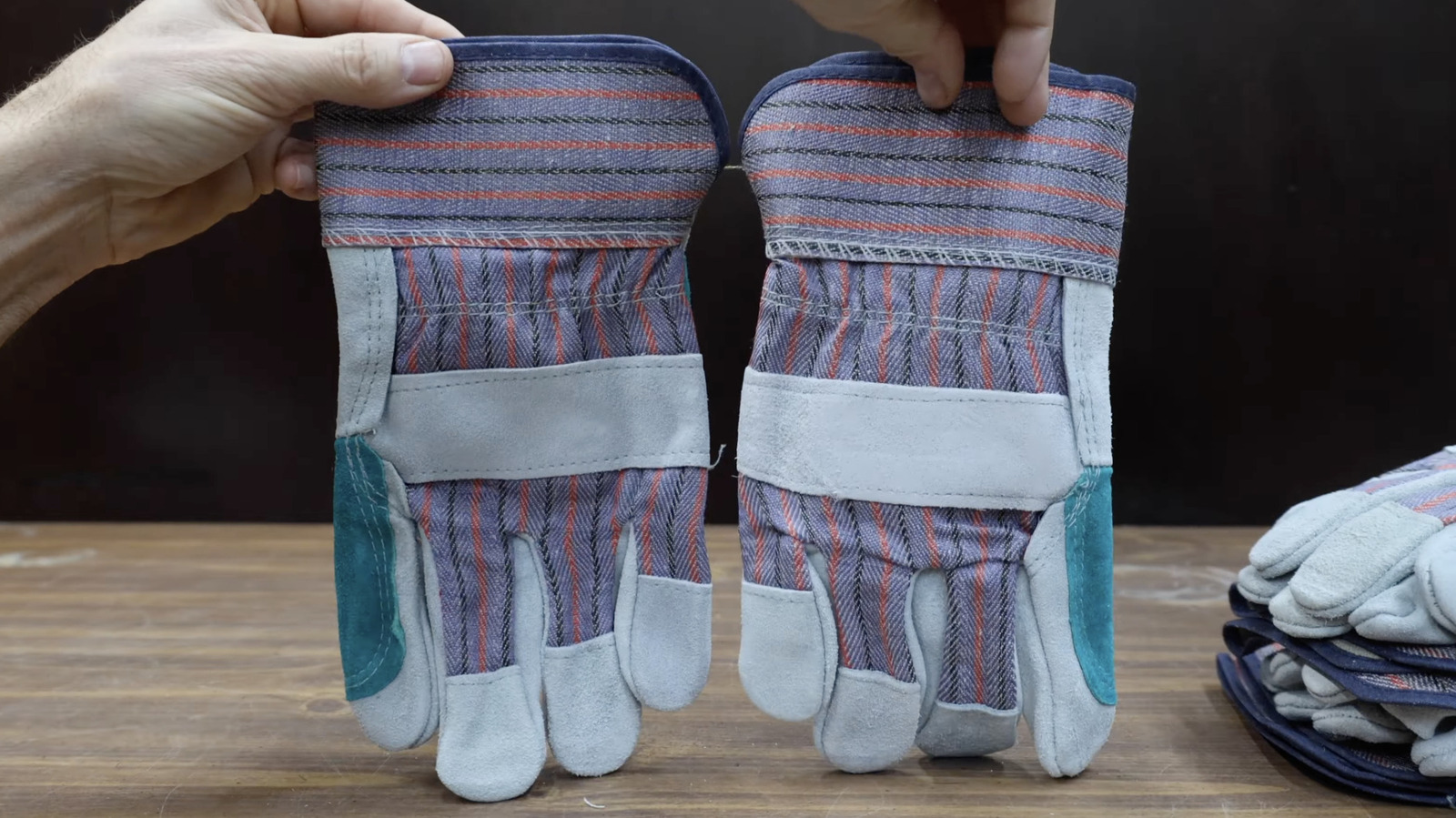
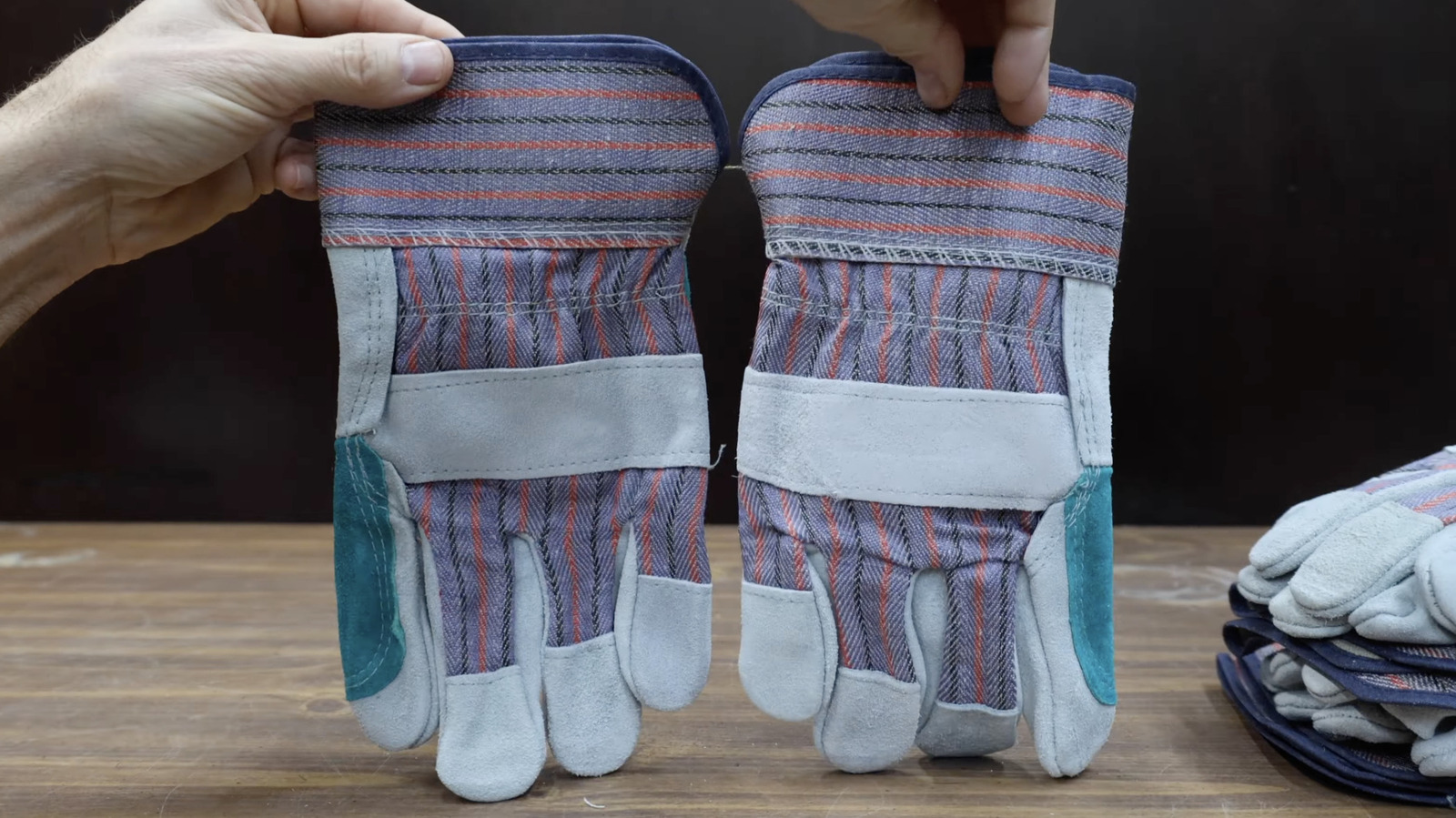
The $3 gloves in question were from this brand called G&F. They are made of suede and feature a reinforced index finger with a 2.5-inch rubberized cuff at the wrist. One of the tests where the gloves pulled way ahead was durability. To assess that, he runs each glove’s finger against 180-grit sandpaper under a fixed downward load and counts how many passes it takes to wear through. The G&F made it 61 passes, which was way ahead of the pack.
Then there’s the impact test, which tests how well the glove protects the finger. Performing this test is a custom rig that drops a striker onto a wooden dowel tucked inside the glove. When the damage was measured, the G&F was found to let through only 0.59 mm of it, the best result in the lineup. For context, the number two — Cestus — sustained 1.15 mm.
The YouTuber also checked puncture resistance by forcing a point into the glove until it breaks through. That reinforced index finger on our star held off 8.95 pounds before it gave. Even the cut test, where an electric knife slices into the finger on a timer, went better than expected.
Why they hold up, and where they don’t
Helping these gloves perform so well is a clever use of materials in all the right places. The palm is made of cowhide leather, which is doubled up in the high-wear spots. That explains how they held off the sandpaper for so long. Meanwhile, the back is plain cotton, in place to let some air through.
Overall, the closest competitors to it in the video were a $20 Toolant pair and a $10 set from WZ. In a way, it’s a story similar to how Harbor Freight’s Icon work gloves now sell for less than comparable Mechanix pairs.
Of course, though, you can’t get everything right. One knock is comfort, because these gloves are stiffer than the others. In a push-pull meter test designed to see how much force it takes to bend a finger, the G&F needed about 5.9 pounds, among the stiffest of the bunch. Project Farm even noted they aren’t exactly pleasant to wear. They also run snug, so size up if you want a little wiggle room.
As for pricing, they actually go for around $13.64 for a five-pack on Amazon, which shakes out to roughly $2.73 a pair. But you can get them even cheaper from Work Gloves Depot when you buy them in bigger quantities. Like if you pick up two or more packs, each drops to around $10.91. Get a dozen, and that drops to $10.64. Just one little quirk is that the paper trail is a wee bit muddy: While the video pegs them as built in China, the Amazon page reads “Made in the USA” and “Imported.”

Stephan is the sports journalist for the Maple Grove Report.