
pros and cons
- Loud, crisp sound
- Gemini for Home with generative AI
- Intuitive controls.
- The microphone array doesn’t pick up voices when the music is loud
- More expensive than Nest Mini alternatives.
more buying choices
Follow ZDNET: Add us as a preferred source on Google.
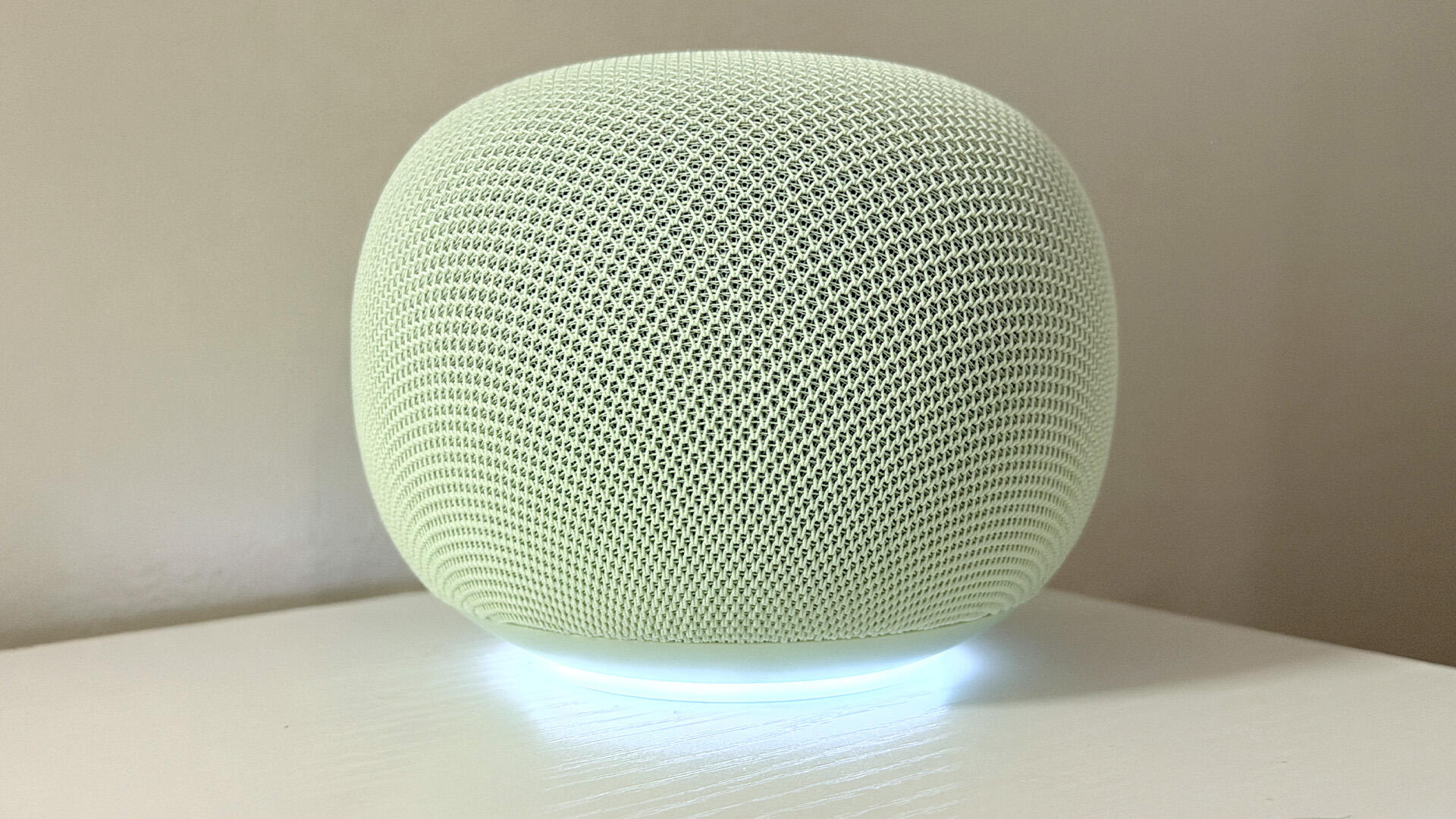
The Google Home Speaker was officially released as the company’s latest take on a smart speaker, its first in six years. I’ve been testing the Google Home Speaker for nearly 48 hours, and I’ve got some interesting first impressions.
Also: This tablet replaced both my iPad and Kindle, and it’s 40% off on Amazon right now
With 360-degree audio, the Google Home Speaker offers a new audio experience compared to the Nest Audio and Nest Mini, both of which feature front-facing sound. The new experience, however, doesn’t necessarily mean it will be obviously better.
Best bluetooth speaker deals of the week
Deals are selected by the CNET Group commerce team, and may be unrelated to this article.
The new audio experience
With the Google Home Speaker, Google did away with the Nest moniker for its smart home speakers and redesigned the audio experience for its newest device. While many customers are looking forward to the new Google Home Speaker, others are concerned that the technology inside may not be enough to justify the upgrade.
Though Google says the new speaker has 2.5 times the bass of the Nest Mini, it uses a single 58mm driver. The $120 Google Nest Audio, released in 2020, has better hardware, with a 75mm mid-woofer and a 19mm tweeter. Considering that the new Google Home Speaker sits squarely in the same $100 price range as the Nest Audio, I’d say the concern is valid.
Also: I’m a smart home expert, and these security camera deals are actually worth considering
However, the specs alone don’t tell the full story. In my, albeit limited, tests, the Google Home Speaker delivers powerful, clear sound comparable to that of the Apple HomePod mini, which also features a two-inch full-range driver. It certainly surpasses the audio experience from the Nest Mini and the older Echo Dot.
Surprisingly easy controls
Unlike its biggest competitors, the Google Home Speaker doesn’t have a physical control panel along the top: There are no buttons or display to control volume or play or pause. I was convinced that this would make it hard to navigate or to learn to control it without using my voice or the Google Home app, yet I was surprised that this wasn’t the case.
Google keeps it pretty simple with the Google Home Speaker: Tap the top to play or pause, and tap the lights on the sides to increase or decrease the volume. The lights turn on as soon as you tap the speaker, so you can easily see them without having to figure out what you’re doing.
The new Gemini vs. Google Assistant
Google has been committed to delivering an improved Gemini for Home experience for months, and the Google Home Speaker succeeds in this endeavor. Compared to Alexa+, its most similar competitor, Gemini in the new smart speaker is a less jarring experience right off the bat. As someone who’s used Alexa+ for months, I still haven’t gotten used to its happy-go-lucky, overly excited tone.
Also: I tried Gmail’s new Gemini Flows feature, and it’s a huge filter improvement (with one big catch)
Like the Gemini experience in Google Home, the Gemini app, and Android devices, Gemini in the Google Home Speaker is conversational without being too cheery, though it still has some quirks. Most AI companies have done away with certain quirks like the “as an AI…” responses, but not Gemini.
This doesn’t make Gemini obsolete or mean the assistant is falling behind; it’s just something to point out.
Gemini in Google Home Assistant works as well as it does elsewhere. It’s responsive without being overeager, its responses are informative and mostly accurate (which is what you can expect from any generative AI bot), and it reliably generates content. Conversations in general with the Google speaker feel more natural than any other smart device I’ve tested in my home.
These features put it leaps and bounds ahead of Siri’s performance on the HomePod and HomePod mini, which still don’t have generative AI. Plus, with Alexa+’s gratingly Pollyannaish tone, Gemini for Home has been my preferred home assistant over the past couple of days.
The letdown: microphone array
Far-field microphone arrays tend to be problematic for smart speakers, as they must balance voice input collection with the playback of music or other audio content. Every company wants the best-sounding, most powerful speaker with a smart, AI-powered voice assistant at the lowest price, and it’s no easy feat.
As a result, speakers need a strong microphone array that allows them to hear voices even with the volume turned up. The Google Home Speaker features three far-field microphones with a neural processing unit (NPU) for local sound isolation. Unfortunately, I struggled to get the Google Home Speaker to listen to me when I played music, even when I turned it down to two-thirds of the way up.
Also: I got a 50% off Fire TV Stick this Prime Day, and I’m watching these top streaming deals
This means I have to go up to the speaker and pause the music by tapping the top, which isn’t a terrible inconvenience, but it defeats the purpose of having a voice-activated smart speaker.
ZDNET’s buying advice (for now)
Amazon Echo Dot (left), Google Home Speaker (center), Apple HomePod mini (right).
Maria Diaz/ZDNET
Compared to its direct competitors, the Google Home Speaker is a strong contender that outperforms the fourth-generation Amazon Echo Dot and, in some cases, can beat the newer Echo Dot Max.
Compared to the Apple HomePod Mini, Google’s latest speaker falls a bit flat on audio and can’t beat Apple’s microphone performance and quality. However, Google’s speaker has Gemini, a hands-free generative AI assistant, while the HomePod mini is, for now, still stuck with the older version of Siri. That alone may sell the Google speaker for many of you.