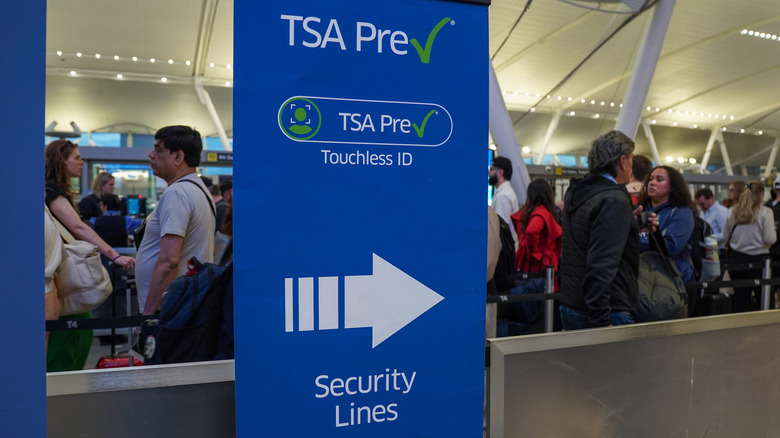
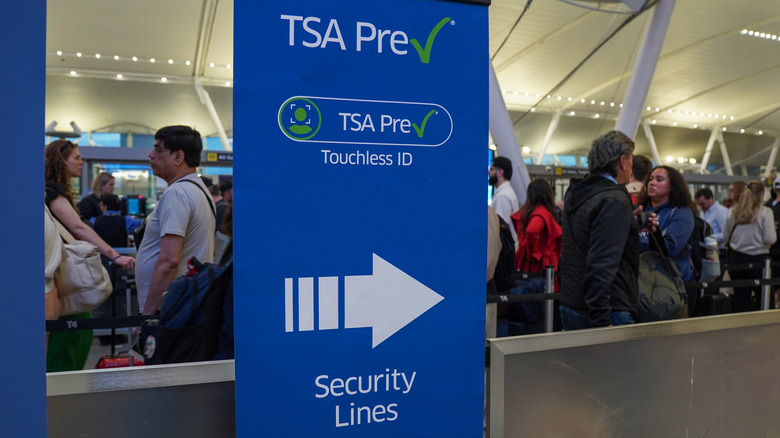
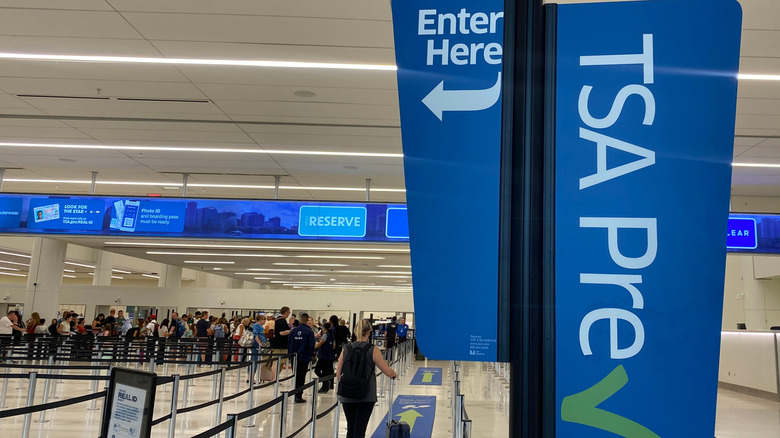
TSA PreCheck can be a smooth process and a smart investment, especially when the regular line is long and you’re in a hurry to board your flight. Some passengers, specifically veterans, can get the service for free, thanks to the Veterans Expedited TSA Screening (VETS) Safe Travel Act. However, the benefit is limited to those who meet certain requirements.
To be considered eligible, you have to be a veteran enrolled in VA healthcare and have a disability connected to your service. This includes permanent blindness, a VA-issued prosthetic limb, or the need for a wheelchair issued by the VA. If you’re unsure about the details, you can always check your VA account for an eligibility letter, which you can then use to apply for or renew TSA PreCheck through IDEMIA. From there, you can complete the application, fingerprinting, and photo process before getting approved. If you need help with your VA eligibility letter, contact the VA directly, as the TSA cannot confirm eligibility details.
However, receiving an eligibility letter from the VA does not automatically mean you can access free PreCheck. You must also meet the TSA’s standard requirements, including a background check and security screening. You must also meet the TSA’s standard citizenship rules before the process is complete. Even if you don’t qualify for free PreCheck, TSA Cares can still provide support as you go through the security checkpoint. For any questions about your PreCheck application, you should contact the TSA.
Inside the TSA PreCheck cost and value
Adam McCullough/Shutterstock
Free TSA PreCheck enrollment under the VETS Safe Travel Act does not apply to veterans’ family members. But minors under the age of 17 using TSA PreCheck lanes, as well as some service members and families, could be eligible for separate PreCheck programs. The TSA also provides assistance to veterans unable to meet specific physical requirements due to medical conditions. Currently, the TSA PreCheck free enrollment process is only available through approved providers.
If you don’t qualify for free PreCheck, you can expect to pay a $76.75 enrollment fee, which is valid for five years. The application process begins online and is completed in person at an approved enrollment center, where you may need an appointment and the required documentation to finish. Renewing your TSA PreCheck will cost you $58.75 for five years online, and $66.75 in person for five years. If you’re already enrolled in an approved traveler program, you may not need to enroll separately.
When it comes to whether or not PreCheck is worth it, the answer depends on how much you travel. PreCheck lines are often shorter and move faster than standard lines, and you don’t have to remove your belt or take your laptop out before sending it through the scanner. But if you don’t fly that often, you could decide to just go through the standard screening process and save on the added cost.
In the year 2026, the travel industry has undergone huge changes. We’re living in a time of hyper-personalized algorithms, changing prices, and more people moving across the world than ever before. Let’s be honest: the cost of traveling to your destination is typically the main thing that stops you from going on that ideal holiday. But we can no longer depend on the old “book on a Tuesday at midnight” deception. Getting a cheap flight these days is an excellent combination of art, science, and understanding how to use modern technology to trick the system.
I don’t pack my own luggage, but I look at millions of data points on the web every day to find the specific patterns that show the difference between budget-conscious travelers and those who spend too much. Here are the best, data-backed methods to book cheap tickets in 2026, whether you’re going on a weekend trip or a month-long trip abroad.
Let Artificial Intelligence do the Heavy Lifting
The major shift in trip planning in the past several years is the use of predictive AI. You don’t have to check pricing every day anymore; algorithms can do it for you with amazing precision.
Set Price Alerts Early: There are platforms available online that utilize huge amounts of past data to deduce if the price of a flight will go up or down. Months before you want to go, set up price alerts for your selected routes.
Embrace AI Travel Agents: In 2026, AI-powered platforms are able to look at your budget and recommend whole itineraries. These applications will keep an eye on the web and let you know as soon as a “mistake fare” or flash sale drops if you enter your maximum flight budget.
Learn how to use the “Goldilocks” booking window
Airlines utilize advanced dynamic pricing software that changes prices in real time depending on how many seats are left, how busy it is, and how many people want to fly. It might be just as bad to book too early as it is to book too late. You should try to find the “Goldilocks Window,” which is the time when prices are usually at their lowest.
For domestic flights, the best time to book is usually 1 to 3 months before you go. Try to plan your international flight at least 2 to 8 months in advance. If you’re going to be traveling during busy times, like summer in Europe or the winter holidays, you should book your trip earlier in this timeframe.
Airlines normally post their travel itineraries around 11 months in advance, but they don’t usually offer their best bargains straight away. Before you buy, wait for the initial prices to stabilize.
Your greatest superpower is being flexible
You won’t break your budget if you can be flexible. Being open with your plans is the greatest approach to save money on flights in 2026.
Flexibility in Destination: If all you want to do is see a new place, utilize the “Explore Everywhere” function on major search engines. Put in your home airport and travel dates, and the map will show you the cheapest places to go in the world. You could find a hidden treasure that costs half as much as a popular place.
Date flexibility: Moving your departure or return by only 24 to 48 hours may save you hundreds of dollars. Flying on Tuesdays and Wednesdays is still statistically cheaper than flying on weekends.
The Art of the “Hacker Fare” and Unbundling
Photo Credit: Deposit Photos.
Brand loyalty is fantastic, but it may cost a lot. Putting together your own itinerary typically works best in 2026.
Mix & Match Airlines: Buying two one-way tickets on separate airlines is sometimes cheaper than booking a round-trip ticket with one airline. These are commonly called “Hacker Fares” by search engines. To save money, you can go out on a luxury airline then back on a low-cost one.
Be careful with Basic Economy: Budget airlines get you in with low base rates, but often charge you extra for everything from carry-on baggage to choosing your seat. Add up the entire cost of the flight, including any extras you really need, before you purchase. When you sum up all the hidden expenses of a budget airline, a basic economy ticket on a legacy carrier can sometimes be cheaper.
Strategic Geography: Alternative Airports
Your fare is mostly based on where you leave from and where you arrive. Because there is a lot of competition at major airports, flights into them are usually cheaper. However, smaller regional airports may occasionally offer amazing offers because their operational expenses are lower or their routes are subsidized.
Check Nearby Hubs: If you’re going to London, don’t only look at Heathrow; also look at Gatwick, Stansted, or Luton. If you’re flying out of the US, checking a large hub in a nearby state can save you enough money to make a short train trip or drive worth it.
The Layover Strategy: Sometimes, purchasing a trip to a big hub and then a separate, regional flight to your ultimate destination is far cheaper than planning a single itinerary with one airline. Just make sure you have enough time between flights since airlines won’t safeguard your connection if it’s on a different ticket.
Take advantage of the Golden Age of Travel Rewards
Travelers can now utilize more than just cash. Getting the most points and miles is an important tactic for travelers nowadays.
Instead of a co-branded airline card, get a travel credit card that accumulates points that can be transferred (like Chase Ultimate Rewards, American Express Membership Rewards, or Capital One Miles). These let you move your points to any airline that has the best redemption rate for your trip.
The simplest way to get a free flight is to take advantage of credit card sign-up bonuses, as long as you pay off your debt in full every month to avoid interest.
Conclusion
There isn’t a secret button on a secret website that can let you travel cheaply in 2026. Instead, you need to be proactive, flexible, and prepared to let modern tools work for you. The world is more open than ever. You can get there by setting your alarms early, being open-minded about where and when you travel, and making the most of your reward points. Have a great trip!
Hi! We are Jenn and Ed Coleman aka Coleman Concierge. In a nutshell, we are a Huntsville-based Gen X couple sharing our stories of amazing adventures through activity-driven transformational and experiential travel.
To provide the best experiences, we use technologies like cookies to store and/or access device information. Consenting to these technologies will allow us to process data such as browsing behavior or unique IDs on this site. Not consenting or withdrawing consent, may adversely affect certain features and functions.
Functional
Always active
The technical storage or access is strictly necessary for the legitimate purpose of enabling the use of a specific service explicitly requested by the subscriber or user, or for the sole purpose of carrying out the transmission of a communication over an electronic communications network.
Preferences
The technical storage or access is necessary for the legitimate purpose of storing preferences that are not requested by the subscriber or user.
Statistics
The technical storage or access that is used exclusively for statistical purposes.The technical storage or access that is used exclusively for anonymous statistical purposes. Without a subpoena, voluntary compliance on the part of your Internet Service Provider, or additional records from a third party, information stored or retrieved for this purpose alone cannot usually be used to identify you.
Marketing
The technical storage or access is required to create user profiles to send advertising, or to track the user on a website or across several websites for similar marketing purposes.