
Getting started with power tools can be rather overwhelming. There are quite literally hundreds to choose from, and a dozen or more competent brands that make them. There is often no indication of what tools a beginner should or shouldn’t purchase. So, how does one choose? Well, the first thing one might do is come to an article just like this one because sometimes, asking another human being is the best possible way forward.
The good news is that there are absolutely power tools that a beginner should start with. We have a whole separate article for those, and most beginners will do just fine with that starter list of tools. On the other end of the spectrum are tools that may seem like a good idea at first but will ultimately either end up gathering dust or prove too much for the task you have planned. Unlike hand tools, which can sit on a shelf for decades without degrading, power tools need batteries. If you have a bunch of tools you never use, those batteries will simply degrade over time.
So, if you’re a beginner and you’re looking for power tools to buy and avoid, we highly recommend clicking the link in the prior paragraph for tools you should start with and then scrolling down for tools that you can skip for now until you get a better idea of what you need or want to do with them.
Hammer drill
A cordless drill and even a cordless impact driver make for great beginner power tools. They have tons of uses, and if you’re active in home improvement projects or home repair, you’ll use them all the time. However, there is such a thing as a hammer drill, which is the stronger, burly older brother to the drill and impact driver. Many brands sell these, and you’ll easily find them at your local Harbor Freight, Home Depot, or Lowe’s. They use the same batteries as their smaller counterparts, so it may seem like a good idea to have one.
Well, this is today’s edition of bigger is not always better. Hammer drills do have specific purposes and aren’t good at everything. They work by having an internal mechanism that acts like a mini jackhammer. In short, take a normal drill, use it, and imagine someone smacking the back of it with a hammer very quickly, and you get the general idea. That extra forward hammering helps the hammer drill into masonry materials like stone, concrete, brick, and cinder block. This is vastly overkill for most home repair uses, where the strongest materials you’re likely to run into are wood and drywall.
For now, get yourself a good cordless drill, and you can often find them in combo kits with impact drivers. Save the hammer drill for later when you’re sure that you’re going to actually need one, or borrow one from your neighbor.
Tile saw
A tile saw is another good example of a tool you’ll probably use only once and then never again. It’s made for cutting tile like the kind you see on floors or kitchen backsplashes. There are two types of tile saws. Dry ones score the tile, making it easier to snap it into the shape you want, while wet tile saws use diamond-tipped saw blades cooled with water to cut all the way through the tile for more precise cuts. Most major power tool brands make both types, and as a beginner, you don’t need either of them.
The reason is pretty simple. Most DIYers will only need to work with tile a few times. Tile lasts a very long time. We’re talking decades between replacements. That means most first-time homeowners wanting to redo all their tile will probably only need to do so once or twice in their entire lives. Thus, it seems like a good idea to buy a tile saw for that big renovation, but after that renovation is done, you won’t really need it anymore, and it’ll sit on a shelf somewhere collecting dust.
For projects like the ones described above, your best bet is to rent a tile saw, which you can do at places like Home Depot and other tool rental companies. It costs less to rent one of these for a few days than it does to buy a tile saw, and you won’t have to deal with storing it after you’re done.
Pipe crimper
Pipe crimper tools, also known as press tools, are excellent tools for plumbers. They work by essentially pressing pipes and fittings together, alleviating the need to solder them. When used properly, the connections won’t leak. This saves plumbers tons of time, effort, energy, and fume inhalation versus soldering a pipe together. The most well-known ones are made by Milwaukee, and if you’ve ever hired a plumber to replace or repair pipes in the recent past, there’s a good chance they had one. As a DIYer, you don’t need one of these.
There are a few reasons. For starters, a pro-level press tool costs roughly $2,000, and while Milwaukee’s version does work with its other M12 tools, $2,000 to fit a few pipes is massive overkill for home repair. There are cheaper models out there, but the same rule of thumb applies anyway. Beginners probably shouldn’t be doing complex plumbing tasks on their first time out anyway, and buying a tool specifically for a task they may only have to do a couple of times just isn’t a good idea.
In most cases, beginners should be calling a plumber for complex pipe fixes. For simpler, minor fixes, you can get by with a hacksaw and something like a SharkBite connector that will connect two pipes together without soldering or pressing. As long as it’s installed properly, it won’t leak, and as long as you check it every now and then, you should catch any potential problems while they’re still small. Save the press tools for the pros.
Lathe
Lathes are rather large machines that fill a niche. The machine works by securely wedging an object in its jaws and spinning it around really quickly. You can then set the tool to carve or shape the material as you prefer. You put a length of wood on the lathe, spin it, and you can easily carve out a design for your chair leg. This is a hobbyist-level tool that DIYers probably won’t ever need unless they want to get into fabricating their own stuff.
There are two major reasons for this. The first is that you can usually go buy the stuff you need at a local hardware store that’ll fit just fine. Lathes are best for custom-making stuff, and unless that’s on your docket, there’s no reason to have one. The other is that lathes are large tools that take up quite a lot of space. Thus, if you own one and don’t use it, you have almost a whole table dedicated to a big machine that doesn’t get any use.
You can buy decently powerful lathes from most hardware stores, including Harbor Freight. If you make it past the beginner stage of power tools and find yourself wanting to start making your own stuff, then a lathe should be on your list. Otherwise, just buy it from a hardware store and go about your day. It’s easier and cheaper that way.
Biscuit joiner
There comes a time when you may need to get two pieces of wood to connect together in such a way that screws or nails won’t work. Biscuit joiners, also known as plate joiners, help with that. They work by affixing two pieces of wood together using “biscuits,” which are small pieces of compressed wood that fit into slots cut into each piece of wood that needs to be fit together. The joiners then press that wood together (in combination with something like wood glue) to turn two wood boards into one.
If you’re having trouble visualizing how that process works, then you probably don’t need this tool. It’s a woodworking tool often used in woodworking and by hobbyists who make their own furniture, cabinets, and things like that. There is virtually no reason to own this as a beginner since you’ll have virtually no occasion to use it, and thus, having one is almost entirely a waste of money. There are YouTube videos and other sources that will sing the praises of this thing. Don’t listen to them, at least not yet.
The kinds of projects that require something like this are well within the bounds of intermediate or expert levels. You should definitely know what it does in case you ever feel like getting into woodworking or building your own stuff. However, that is not usually a place where beginners begin, so keep it in your bookmarks for right now.
Cordless ratchet
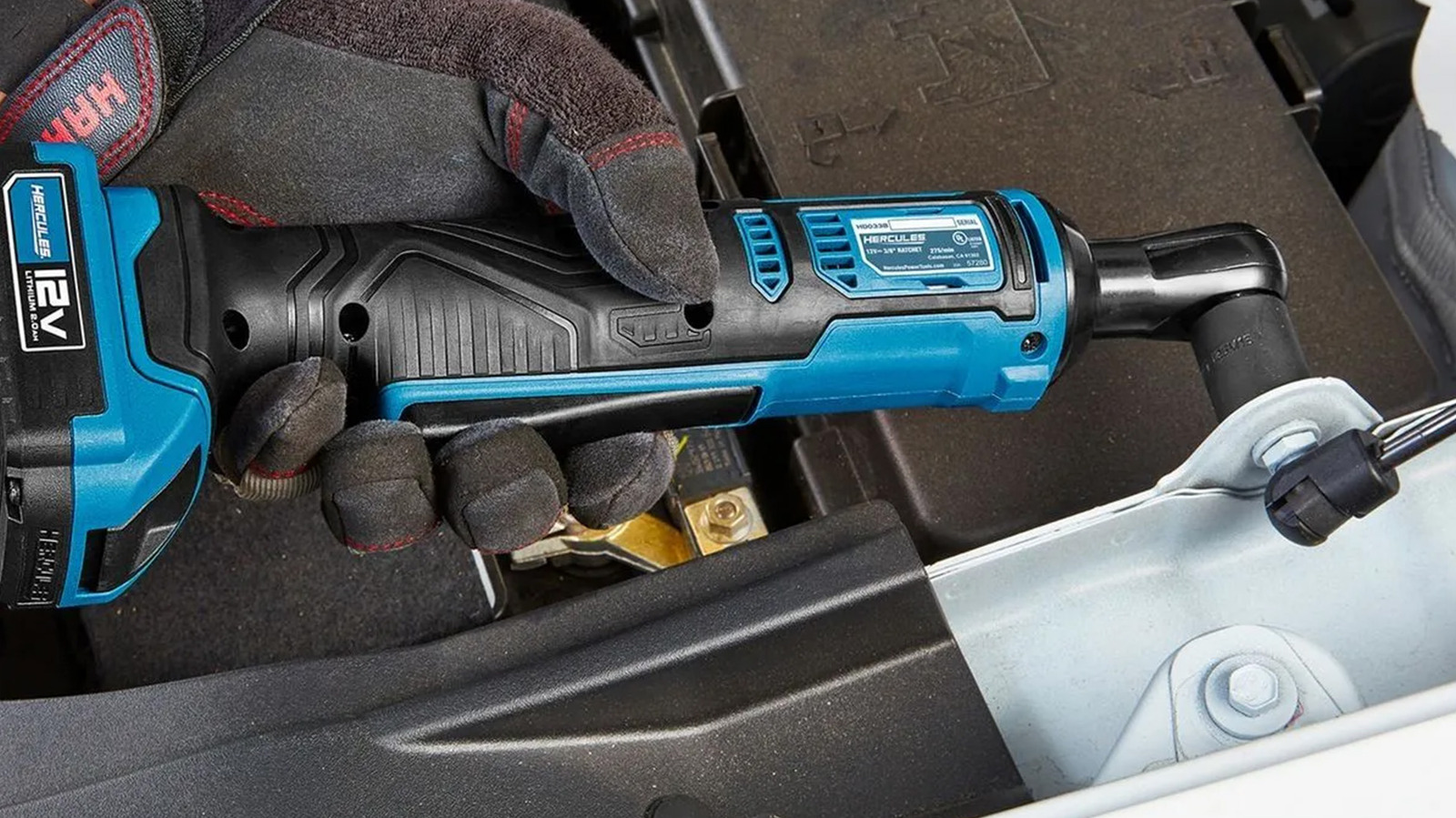
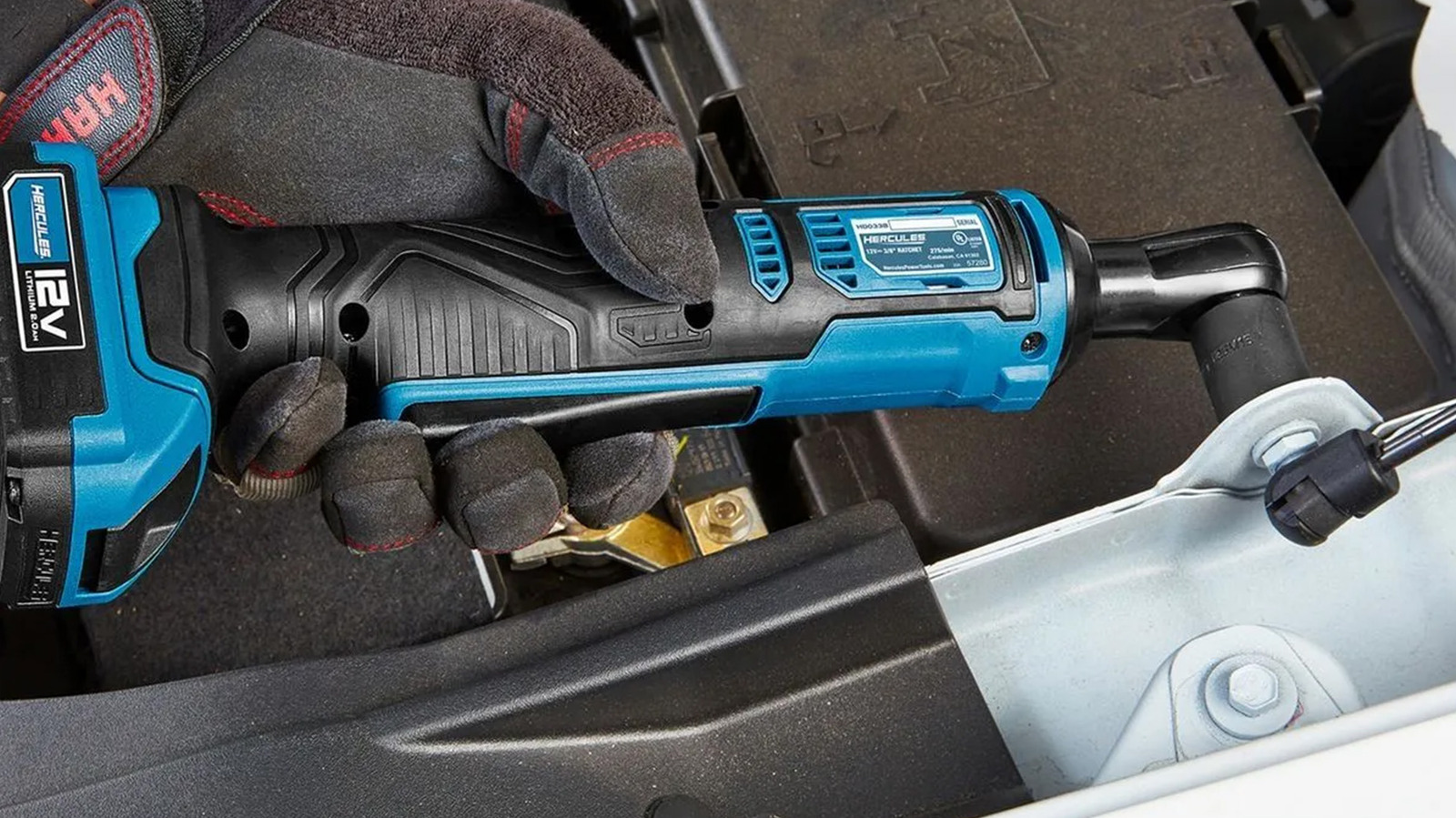
Cordless ratchets are a real thing. They work just like regular ratchets and are often used in automotive applications, often in place of pneumatic ratchet wrenches, when someone has to loosen or tighten a whole bunch of nuts and bolts. These also come in a couple of different flavors, although the most common ones tend to be the type where you just grip it and rip it, and the tool does all the work. There are real benefits to these, but as a beginner, you probably don’t need one.
There are two reasons why. The first is that you probably don’t need to loosen so many nuts and bolts that having a tool that does it that quickly will save you any measurable amount of time. People who use these are often professionals or hobbyists who have to deal with nuts and bolts all the time. Spending upwards of $300 for the tool and batteries to loosen the occasional nut just isn’t a good idea, especially since most of them don’t come with sockets.
That takes us to our second reason, which is that you can find reasonably priced ratchet and socket sets that cover all your common bases. Since hand tools often come with a lifetime warranty, you’ll get more bang for your buck by getting a ratchet and socket set first, and then if you find yourself needing one all the time, then you should consider something like a cordless ratchet, since you’ll already have the sockets at home.
Router
Routers are another woodworking tool that no beginner should ever need. They’re used to cut wood. This can be used for decorative purposes if you’re crafting something or to cut channels, notches, or grooves into wood for functional uses like joining two pieces of wood together. If you’ve ever seen a cool beveled edge on a cabinet or cutting board, there’s a good chance it came from a router. You can buy these at any hardware store, and most of them are pretty decent for their intended purpose.
The reason beginners should stay away from these is virtually identical to the biscuit joiner and other woodworking tools. These are used for creating things, and beginners usually don’t start by designing cabinet doors or cutting boards, nor are they performing surgery on wood to combine pieces together. This is definitely an intermediate or advanced tool, and not a great choice if you’re just starting out.
To compound the issue, there are various types of routers, including fixed-base, plunge, combination, and trim routers, each of which has its own features, functions, and use cases. However, if you are stubborn and must get one, the combination router is the most beginner-friendly since it combines fixed-base and plunge routers. This gives it more versatility, making it more likely to be a tool you’ll actually use. However, if you don’t intend on doing a lot of woodworking, you can skip owning a router entirely.
Cultivator, tiller, or auger
Yard tools are a whole animal, and there are many that beginners should absolutely get, like a lawn mower, string trimmer, and leaf blower. These aren’t traditionally powered with electricity, but there are many electric brands and models today. That means there are a lot of other power tools designed for outdoor use, like augers, cultivators, and tillers. These tools specialize in breaking up soil and digging holes for the purposes of replanting, gardening, or other such activities, and unless you’re really into messing with your lawn (or gardening), you can skip these tools altogether.
These ones are tricky because they seem like a good idea at the onset. After all, you have a lawn, and it needs work, and these tools essentially do that exact thing. However, most of the jobs that these tools handle really only need to be done once in a great while unless you have a garden, which you may want to cultivate more frequently. This is much the same as woodworking tools. They’re great if you enjoy the hobby or work on this stuff professionally but are mostly worthless if you don’t do either of those things.
There is one exception. Many brands now have string trimmers that support attachments. These give you a way to add extra versatility to your string trimmer, like a cultivator add-on, without needing a whole other tool to do it. For one-off projects, you can also rent these tools pretty easily.
Table saw
Table saws are some of the most common and popular power tools in the world. They’re widely considered the heart of a woodworker’s kit, and they’re useful for a lot of things. Their claim to fame is the ability to make long, clean cuts, which is perfect for cutting down wood into all sorts of shapes for various home improvement projects. Most major brands make them, and they’re available at almost any hardware store. As a beginner, you can probably skip this one if you’re just starting out.
Table saws are undoubtedly useful, and one day, when you make it to intermediate status, this is likely to be the first tool on your list, especially if you get into building stuff like tables, chairs, or other furniture. However, if you’re just starting out, you can do most of your cutting with more beginner-friendly tools like circular saws. It may not be as clean, but you only need to consider investing in one of these if you’re doing some bigger projects on a regular basis.
So, like most of the other saws on this list, it’s a matter of experience rather than use. If you end up getting into building your own shelves or building a deck on the regular, then a table saw is a valuable asset to have in your shop. Otherwise, keep it simple and save the time, money, and space, and avoid it for now.
How we chose these tools
This list was actually pretty easy to make. There are two types of tools that beginners really want to avoid. The first is pro-use tools, like the press tools that squeeze pipes together, as these perform tasks that DIYers will rarely have to deal with more than once or twice if at all. That makes them a waste of space and money. The other is tools with niche use cases, like a lathe, where they’re really only useful for folks who perform that kind of work often or as a hobby. The list above has several of these, but the list is also not exhaustive. For example, this Milwaukee M12 16 Gauge Variable Speed Nibbler isn’t on the list above, but it’s both a pro-use and niche tool, and is completely pointless for a beginner to own.
To narrow down the list, we chose tools that most people have at least heard of and may have seen in use around their neighborhood or in a high school shop class. After that, I drew on nearly a decade of experience as a homeowner and DIYer to narrow the list even further. For example, I still don’t have a reason to own my own table saw, and I’m hardly a beginner anymore.
Finally, this list isn’t about brands, but more about the tools themselves. The recommendation is for beginners to hold off on buying tile saws in general, rather than focusing on any particular brand.

Stephan is the sports journalist for the Maple Grove Report.