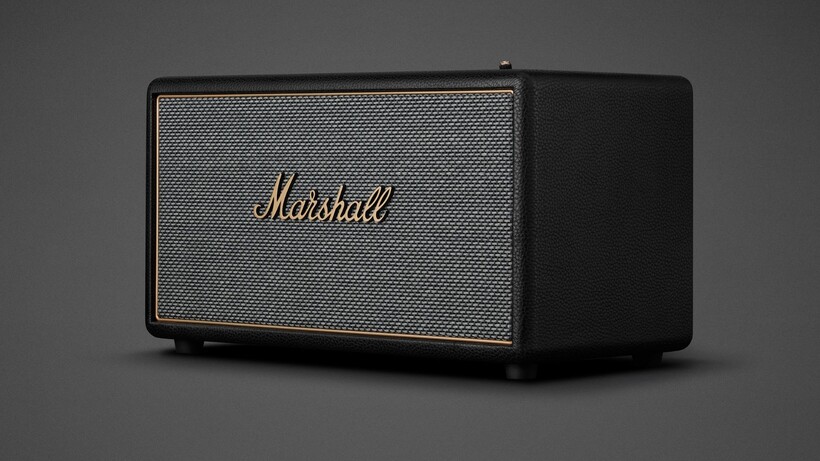

It’s been a while since we last saw home audio speakers from Marshall, but the wait is over as they’ve announced the Acton IV and Stanmore IV Bluetooth speakers.
These new models form part of Marshall’s Homeline IV series, which implies we should expect more models within this range at a yet unconfirmed date.
But for now we’re focusing on the Acton IV and Stanmore IV, and Marshall claims that both sound and usability have been “elevated” across the speakers, with upgraded tweeter and waveguides “to deliver a wider, more evenly dispersed and expansive soundstage”.
Bass is another mined for improvements with a redesigned bass port that Marshall says improves airflow “for cleaner, more powerful” performance.
The Dynamic Loudness feature similar to what’s appeared on headphones from Marshall makes its entrance here, for sound that retains clarity, richness and warmth at lower volumes and delivers a cleaner performance when turned up.

New is an RCA input that makes adding a turntable easier, and with the 3.5mm stereo jack to AUX input that’s on top of the speaker, you can add other devices to the speakers as well. Auracast Bluetooth means you can group other Bluetooth speakers (from any brand) and play music across them; while there’s the possibility of adding Marshall’s Heddon streaming hub, so if you have older Marshall speakers such as the Acton III and Stanmore III, you can group these latest speakers with older models.
And as these are Marshall speakers, they carry the same vibe and aesthetic that’s carried the brand’s wireless speakers since 2012, from the signature PU leather, to the salt and pepper fret and amp-inspired controls. The brass control panel features an improved media jog and power switch, and you can control playback, EQ (bass and treble) as well as switch sources though the top panel.
Another means of control is the Marshall app, to initially set the speaker up and from there the capacity to alter the sound, and optimise the bass performance with the placement compensation feature “so each speaker sounds exactly as it should, wherever placed.”
The Acton IV is priced at £259.99 / $299.99 / €299 and the Stanmore IV at £349.99 / $399.99 / €399; with both available in black or cream versions.

Stephan is the sports journalist for the Maple Grove Report.