MN prosecutors obtain evidence in Renee Good, Alex Pretti killings


Minnesota prosecutors announced Monday that they have obtained key evidence in their ongoing investigations into fatal shootings of Renee Good and Alex Pretti during pitched protests against a federal immigration enforcement crackdown in the state earlier this year.

“Through the cooperation of our federal partners we have obtained the hard drives of previously withheld evidence in the killings of Renee Good and Alex Pretti and the shooting of Julio Sosa-Celis,” Hennepin County Attorney Mary Moriarty said. “We have also obtained some of the physical evidence that was previously withheld, including Renee Good’s car.”

Statements, police body camera video and other evidence had previously been withheld by federal officials in the killings.

She said state and local investigators now also have in their possession Good’s damaged car.

Good, a 37-year-old mother of three, was shot and killed in her car while leaving an anti-immigration enforcement protest in Minneapolis on Jan. 7 as U.S. Immigration and Customs Enforcement agents surged through the region.

Her death and that of Pretti, a 37-year-old intensive care nurse shot and killed by federal officers just weeks later during a Jan. 24 protest, sparked outrage across the country and calls to rein in immigration enforcement.

“The wonderful thing now is we have all the evidence,” Moriarty said.

Investigators are going through all the evidence, including hard drives with statements, hours of video recorded by body-worn cameras and the physical car Good was driving, Moriarty said.

“We need transparency. We need cooperation. Our community needs it,” she said. “Our democracy requires it.”

At the end of June, Minnesota Attorney General Keith Ellison and Moriarty asked a federal judge to push out the deadlines in their lawsuit against the U.S. Department of Justice because they said they were in the midst of recently reinitiated “ongoing discussions” with the FBI about information sharing.

Those ongoing discussions with the FBI about information sharing are likely to affect Minnesota’s request for summary judgment in the case, Ellison and Moriarty wrote in their motion to the court.

The attorneys representing the federal government signed onto the motion.

Ellison said he remains “deeply troubled that the federal government spent more than half a year attempting to conceal this evidence from state investigators.”

“It should never have taken this long for Minnesota law enforcement to gain access to the federal government’s evidence,” he said in a statement. “I hope that this is the beginning of a major course correction on the part of the federal government.”

There have been at least eight deaths since the Trump administration’s immigration enforcement campaign began last year, but nobody has been charged in connection with them.

A Minneapolis resident, Julio Cesar Sosa-Celis, was also shot and injured in his home while ICE agents were in pursuit of another man.

In May, Christian Castro, an ICE agent, was arrested and charged with assault as well as falsely reporting a crime in connection with that Jan. 14 nonfatal shooting.

Prosecutors say Castro, 52, fired through a home’s front door and shot Sosa-Celis in the thigh.

In April, Gregory Donnell Morgan Jr., another ICE agent, was charged with pointing his gun at a motorist and passenger on a Minneapolis highway.

Prosecutors said at the time it was the first criminal case against a federal officer involved in the Minnesota immigration crackdown.

On Monday, ICE was involved in the fatal shooting in Maine, according to state House Speaker Ryan Fecteau, a Democrat.

Details of what transpired in Biddeford, a coastal city of about 23,000 people roughly 15 miles (24 kilometers) southwest of Portland, remain unclear.

Last week, an ICE agent in Houston fatally shot a Mexican national who had lived in the U.S. for decades as the homebuilder drove his construction crew to a job site.

The federal Department of Homeland Security, which oversees ICE, has acknowledged officers were looking for someone else when they attempted to stop Lorenzo Salgado Araujo’s vehicle. The agency maintains Salgado Araujo rammed an ICE vehicle, prompting an officer to open fire in self-defense.


Source link

Leave a Reply

Subscribe to Our Newsletter

Get our latest articles delivered straight to your inbox. No spam, we promise.

Recent Reviews


It kind of makes no sense that literally every new car sold these days can go twice the regular speed limit in most countries. Even a Toyota Prius tops out at 115 mph, and reaching that speed in 99% of the world can easily land you in jail, or at least with a large dent in your bank account from a truly massive speeding ticket. Meanwhile, supercars can easily blow a Prius out of the water — for example, the Chevrolet Corvette ZR1 can hit speeds more than double that.

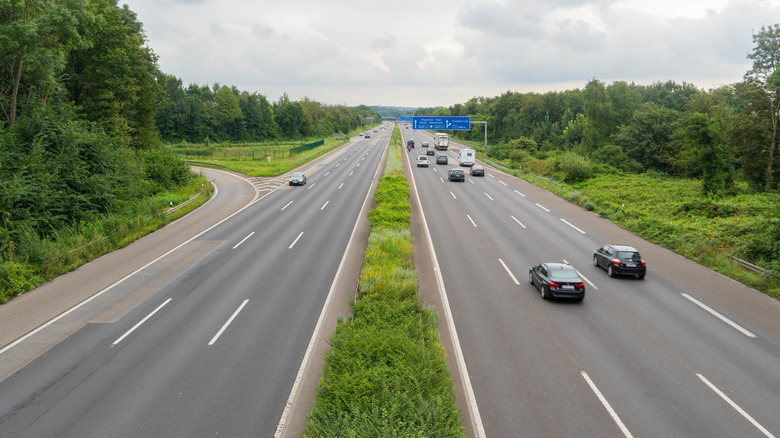
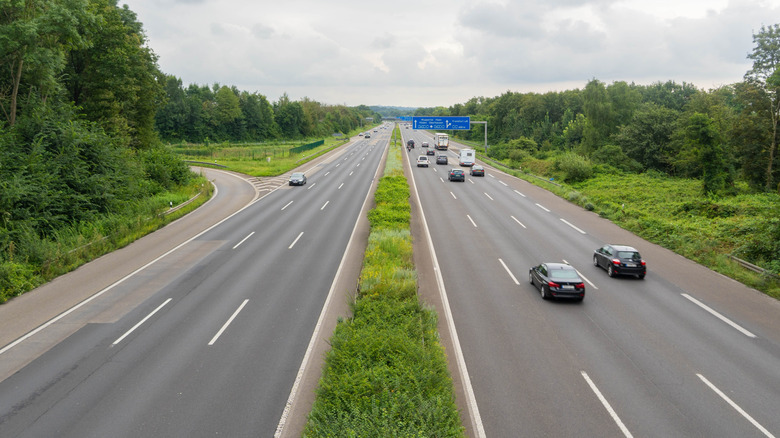
Either way, top speeds are merely hypothetical and completely off-limits for 99% of the world. Yet no matter if you own a ZR1 or a Prius and you want to test that top speed claim, there are public roads where you can try. The most obvious choice is the German Autobahn, which has certain sections with no speed limits. This means that, if it is safe to do so, you can theoretically chase that top speed.

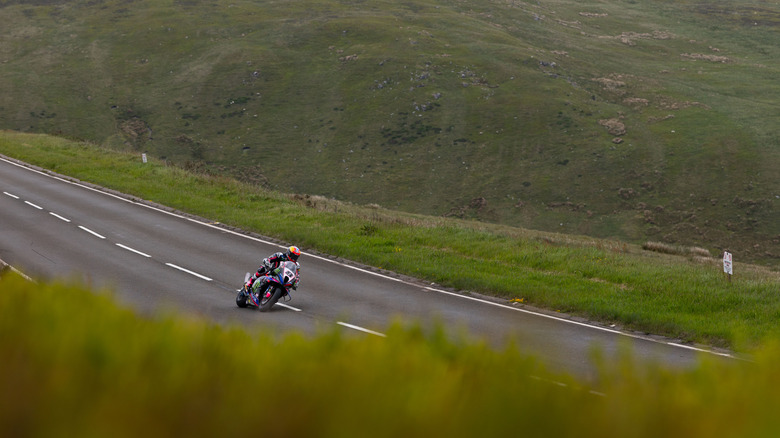
Besides the German Autobahn, the roadways on the Isle of Man — known for the Isle of Man TT — also has sections with no speed limits. About a decade and a bit ago, you were also able to max out your car on certain locations of the Australian Northern Territory, specifically the Stuart Highway. However, speed limits were reinstated in the interest of public safety in 2016. Besides the Isle and the Autobahn, if you want to max out your car, public roads simply aren’t an option.

Limitations and dangers on no-speed-limit roads

Although reaching the top speed on the Autobahn is possible, it is not as simple as merging and hitting the gas. For example, the A9 near Bayreuth, A20 in Mecklenburg, and parts of A24 between Berlin and Hamburg are without speed limits in certain sections. In total, around 70% of German autobahns don’t have a capped speed limit. Even on those unrestricted sections, German law sets a recommended speed of 130 km/h called the Richtgeschwindigkeit.

Exceeding it is not a criminal offense, but if you are involved in an accident above that threshold, it can affect your legal liability for the incident. German law also prohibits driving at any speed where your stopping distance exceeds your line of sight, which effectively puts a practical ceiling on how fast you can legally go based on road conditions. The AutoTopNL YouTube channel serves as a good educational basis for how one ought to approach high speed driving on the autobahn.

If Germany is too far away and you want a more rural experience while driving at ten-tenths, the Isle of Man is your only other option. Outside of towns you can press on, but keep in mind that these roads are much narrower and less protected, leaving no room for error. The best example is likely the Isle of Man’s TT Race, which the BBC called “the world’s most dangerous road race.” The Isle of Man TT and the Manx Grand Prix, held on the same roads that you can max out your car on, are races so dangerous that they have taken a collective 270 lives since inception.

Where do automakers actually test top speed claims?

For decades past, we’ve seen automakers advertising hypercars going over 250 mph, but not many people know the places where these tests are commonly carried out. For example, the fastest street-legal car on record, the Bugatti Chiron Super Sport 300+, reached its top speed of more than 300 mph on the Volkswagen Ehra-Lessien test track in 2019. This facility has 60 miles of private roads with a single straight that is 5.4 miles long.

There is also the Papenburg test facility, which features a 7.6-mile-long oval track banked at 50 degrees. This is where the Yangwang U9 Xtreme set the all-time production car top speed record at 308 mph in 2025, and where in 2023 the Rimac Nevera drove 171 mph backwards — not something you can do on the German autobahn. Italy’s Nardò Ring is a 7.8-mile circular track built by Fiat in 1975 and now owned by Porsche. It is so large it is visible from space, and so well-banked that a car traveling at 149 mph in the outer lane doesn’t need to be steered and can simply be driven straight. This last test track is perhaps best known from the 2012 Top Gear episode where Jeremy Clarkson, Richard Hammond, and James May pushed a Lamborghini Aventador, a Noble M600, and a McLaren MP4-12C to their limits. 

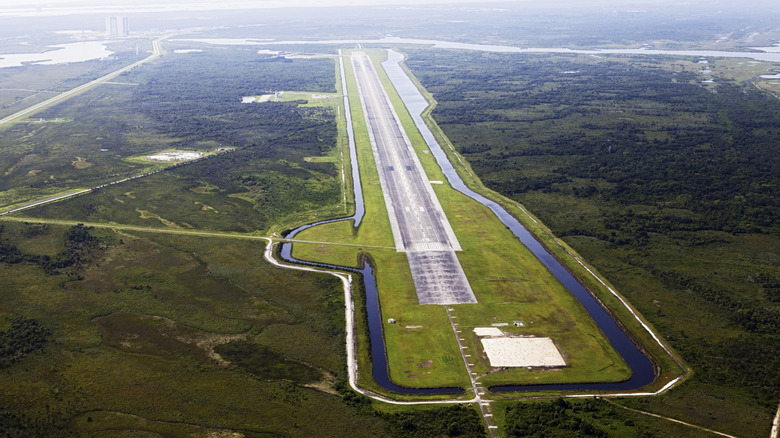
America’s equivalent is the former Space Shuttle Landing Facility at Kennedy Space Center, now operating as the Johnny Böhmer Proving Grounds. The 3.2-mile runway is where the SSC Tuatara hit 295 mph in 2022. Although these aren’t typically open for public joyriding, they are a few of a very limited number of places where top speeds are actually tested.


Source link