
We may receive a commission on purchases made from links.
Walking into a home improvement warehouse like Home Depot can be overwhelming if you are new to projects. The aisles are filled with high-performance machinery that claims it can make any project look professional. It’s tempting to grab the most powerful, specialized, or feature-heavy tools because you might think better equipment will make up for a lack of experience.
However, advanced tools are often a trap for anyone starting with home repair or project work. Success comes from technique, safety, and understanding materials instead of the power of your tools. You should focus on utility and manual skills instead of high-end, industrial equipment. Buying something complex before you know the basics will waste money and create both safety risks and frustrating learning curves.
A professional saw or a specialized pneumatic system won’t give you a better cut if you haven’t mastered the steady hand and patience needed for the job. It is more effective to build your toolkit slowly by picking tools that fix immediate problems and let your skills grow naturally. By avoiding the urge to buy too much gear, you make sure each purchase has a clear purpose and that you are ready to handle what you own. Here are some of the things Home Depot sells you should avoid before you’re ready.
10-Amp 2-HP Plunge Base Corded Router
The Ryobi plunge base corded router might catch your eye with its specs and design. This has a powerful 2-horsepower, 10-amp variable-speed motor designed for versatility, letting you match the cutting speed to the specific bit you’re using. It comes with a ½-inch collet and a ¼-inch adapter so you can use different bits, plus a spindle lock for easy bit changes with one wrench.
Even with these features, beginners should stay away from this one. Full-size routers are heavy and they can be scary if you’re just learning. Since the tool spins up to 25,000 RPM, any mistake in your technique can have bad consequences. If you feed the wood the wrong way, the bit will catch and throw it across the room, which is dangerous. This is a Ryobi product we’ve said to avoid before for a reason.
On top of the safety issues, the costs add up fast. The bits get expensive, turning a weekend hobby into a drain on your wallet as you build a collection for the ½-inch and ¼-inch collections. If you just need simple profiling, there are better and safer options. A compact palm router is easier to use and much lighter than a full-size plunge router. Leaving these routers to professionals will save you money and keep you safe while you learn.
11-Amp Corded Small Angle Grinder
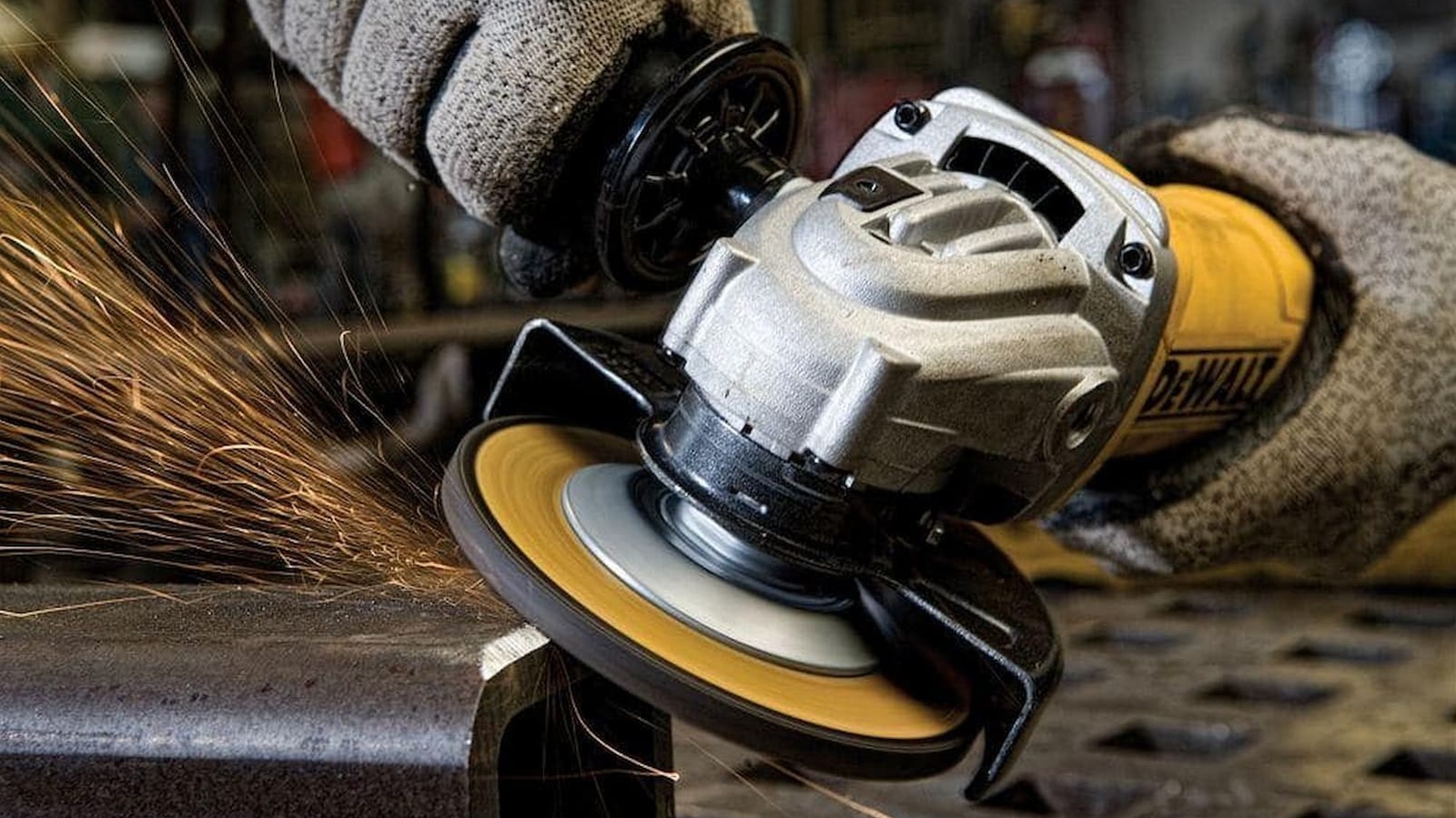
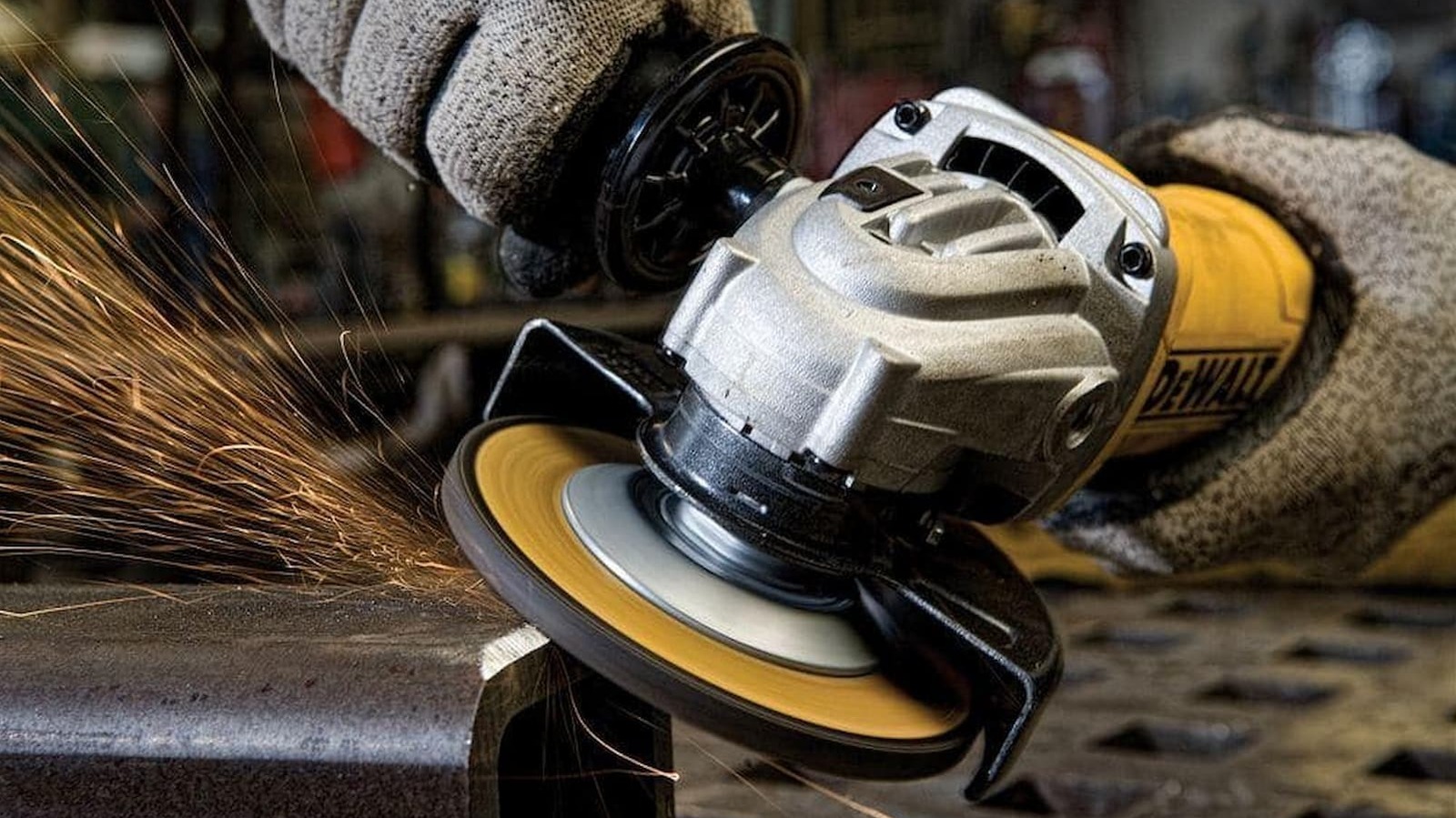
Angle grinders are versatile, so they look like a good buy if you’re expanding your tool collection. A popular one is the Dewalt 11-amp corded small-angle grinder. This grinder has an 11-amp AC/DC motor with a great power-to-weight ratio for its class. It weighs 6.25 pounds and uses 4.5-inch wheels. It has a small gripping surface and a side handle for better ergonomics.
It comes with features like a protected spindle lock button and a Quick-Change Wheel Release for tool-free removal. It also has a One-Touch Guard that lets you rotate it 360 degrees in one action. It comes with a Dust Ejection System to remove debris, and large auto-off brushes that last longer and shut the tool down when they need replacing.
However, these tools run at high speeds and can kick back, which is dangerous for beginners. This model reaches 11,000 RPM — definitely a safety hazard if you don’t know how to handle it. If the wheel catches, the motor will throw the grinder back at you with a lot of torque. For light work, it’s safer to use an oscillating multi-tool or a Dremel. Those are easier to control for DIY crafts or light metalwork, and they are a good alternative until you have the skills to use a Dewalt.
5.5-inch Magnetic Wristband Set
The MagnoGrip 5.5 inch magnetic wristband set is marketed as a great accessory, but for someone starting, it’s an unnecessary gimmick. It costs about $28.23 for a two-pack. These gray fabric wristbands are well-made and lightweight, so you can wear them all day. The company says they’re made from 1680D ballistic polyester with rivets at stress points to handle the heavy-duty daily needs of professional workers.
The main feature is the strong magnets that hold nails, screws, and small tools on your wrist. While it sounds convenient, you should think about your actual projects. If you’re working on a ladder or in a dark attic where reaching for a tool belt is hard, this might save time. However, if you’re just putting together a table or a bookshelf from Walmart, it isn’t as useful as it could be.
For basic assembly, a cup or a tabletop works fine for your screws and wrenches. You don’t want to spend too much on professional gear that you don’t need yet. It’s better to skip this for now and wait until you’re doing large-scale projects where you’ll actually need it. It is a cool gadget any handyman can get use out of, but not worth buying if you’re just fixing things around the house every so often.
18-Volt Lithium-Ion Cordless Combo Kit
The Milwaukee M18 18-volt lithium-ion cordless combo kit is an impressive collection, but beginners shouldn’t buy whole sets before they know what they need. This is expensive and comes with nine different 18-volt tools using Redlithium battery technology. The bundle has an M18 ½-inch drill/driver with 525 in-lb of torque and an M18 ¼-inch hex impact driver. It also comes with a Hackzall reciprocating saw, a multi-tool, and a ½-inch high-torque impact wrench.
You also get a 6½-inch circular saw, a 4½-inch grinder, a compact blower, and a work light. It comes with two batteries, a charger, and a bag. These tools have a four-pole motor and Redlink for better performance.
This sounds great, but it offers a lot of tools you probably won’t use as a beginner. If you’re only doing basic repairs, you won’t need an impact wrench or a blower right away, for instance. Instead of spending hundreds on a kit where half the tools sit in a bag, it’s better to buy tools as you need them. If you focus on that, you can build a collection that matches your skill and has a practical purpose.
Self-Adjusting Wire Stripper/Cutter with Comfort Grip
The Milwaukee self-adjusting wire stripper and cutter is made for stripping 10-20 solid AWG and 12-22 AWG stranded wire. It has a comfortable handle, and it comes with a cutter near the pivot point to help you cut through cable in one pass. It works with a self-adjusting mechanism for different wires. It also has a dial one for jaw tension and one to control the strip length.
That sounds great, and it comes with features that likely help professional electricians work faster, but beginners should stay away from automated tools. Automatic strippers are bulky, and you should learn how to do this manually first. Mastering the manual way is important because it teaches you how much pressure to use so you don’t nick the wire.
Using an automated tool keeps you from learning that skill, which is valuable. Since this tool has dials for tension and length, you might set it wrong and damage the wires, which is a safety hazard and can end up being costly. The size and the complex joint system are too much for someone who should focus on the basics. Even though it can handle many wire sizes at once, new DIYers should stick to a traditional manual stripper like the Dipped Grip Wire Stripper & Cutter, which is something that came out this year.
Straight Shank Metric Drill and Screw Bit Set
This Makita 75-piece bit set might look like an amazing deal for your toolkit. It comes in a carrying case and offers solutions for drilling, driving, and fastening in all kinds of materials. It has a huge assortment of accessories, like 19 titanium nitride-coated high-speed steel bits for metal and wood from 1 millimeter to 8 millimeters, four brad point wood bits, and five masonry hammer drill bits with straight shanks that fit most ⅜-inch and ½-inch drills.
While the long inventory list makes it sound like you’re ready for any household repair or weekend project, the reality for a beginner is different. Getting lots of bits seems smart, but you’ll probably only ever need a Phillips head, a slotted bit, and a few basic drill bits for hanging pictures or putting together furniture.
It isn’t likely that you will need specialized Pozidriv or masonry bits until you’re doing advanced renovations. Instead of spending your money on a 75-piece collection, just buy a set of 20 to 30 because that’s all you’ll need at first. You can get extra things later when you actually need a specialized tool like a countersink or a center punch.
20V Max Cordless Sidewinder Style Circular Saw (Tool Only)
The low price on the 20V Max Cordless Sidewinder Style Circular Saw will be tempting when you’re first building your kit. However, it’s sold as a tool only, which means it doesn’t come with the battery or charger. Many power tools are sold this way now, and it’s not always clear if you’re a first-time user. Since you might not have compatible batteries at home, buying them separately means you’re spending more for a single tool. While this is a tool you’ll want for a yard project, only use it when you’ve decided on a battery and have experience.
It’s better to look for a starter kit that has the battery so you have everything you need. That’s also a big choice in itself, because you’ll want to stick with your brand. Tool-only products are cheaper because they don’t need a battery. If you already have a battery from another toolset, then you’ll be fine to get tools within that brand.
Otherwise, if you really don’t care about a brand, you may be better off getting off-brand tools. They generally come with a charger and a battery just for the tool. While this tool is great, the missing battery changes the value if you are new to all of this.
15-Amp Corded Dual Bevel Sliding Miter Saw
The Ridgid 15 Amp 12-inch miter saw is a massive tool with a 70-degree miter capacity on both sides. It has a heavy-duty 15 amp motor that hits 4,000 RPM, so it can cut through difficult wood well. It comes with premium features like an LED cut line, an electric blade brake to stop the carbide-tipped blade quickly, and fences for wide materials.
A sliding miter saw isn’t something you want to start with if you’re a novice woodworker. The sliding action and the large blade can cause dangerous kickback if you haven’t learned how to handle the material. It is like driving a car when you have had no previous training or practice. You may do well, but you’re taking a big risk.
This tool needs a lot of space for safety, because it weighs 64 pounds and is over 38 inches deep. The sliding rails need a lot of room behind the tool to work safely. Putting this in a tight corner can be dangerous. It’s better to get a non-sliding version for beginner projects so you can learn the basics. Then, when you are comfortable, you can upgrade to these more advanced tools.
Controlmax 1650 18V High Efficiency Airless Cordless Backpack Paint Sprayer
The Titan ControlMax 1650 might look like a dream for a big painting project, but it’s a complex machine that beginners should build up to. This mobile system lets you work without being tied to an outlet. You can wear it as a backpack, carry it in a hand, or let it sit on the ground. The hopper has a lid, holds 1.25 gallons of material, and comes with a nine-foot hose with a swivel.
However, while YouTube videos showing people working with these make it look easy, those are professionals who do it for a living. A basketball player also makes his job look easy, but that’s because you didn’t watch all the practice it took at achieve that. While the features sound great, $599 is a lot to spend for someone just learning.
This pain sprayer is made for contractors, not weekend DIYers who may not know the best way to paint walls to begin with, let alone how to properly clean the tips and the internal pump. Since the setup is intense and the price is high, it’s better to use a high-quality brush and roller. This way, you can make mistakes without the high cost.
Gas 2-Stroke Rear Handle Timber Wolf Chainsaw
The Echo 20-inch Timber Wolf Chainsaw is priced at $479.00, and it comes with a massive 20-inch bar and a professional-grade 59.8cc 2-stroke gas engine. This is a great brand and an affordable pick, especially because it lets you slice through logs up to 35 inches wide. Since it has these heavy-duty specifications, it’s great for taking down huge trees or processing tons of firewood.
Still, this work is incredibly hard and dangerous if you don’t have experience. Moving a 16-pound saw with a spinning chain needs serious stamina, and getting tired can lead to bad accidents. Besides the physical part, owning a gas tool like this means you’ll need to handle specific maintenance. You can’t just pull a trigger and start cutting.
You have to prepare a 50:1 fuel-to-oil mix and make sure you’re using fresh gas with at least an 89 octane rating and special 2-stroke oil. Dealing with fuel, engine upkeep, and vibrations is just too much if you’re only trying to clean up your yard. It’s much better to use a smaller electric battery-powered version instead.
15-Amp Corded 13 in. Thickness Corded Planer
The Ridgid 13-inch Thickness Planer weighs almost 73 pounds and has a powerful 15 Amp motor that spins a three-blade cutter head at 9,000 RPM to shave down wood. It comes with features like an Ind-I-Cut depth gauge to measure cuts, an extra-wide steel top with infeed and outfeed table extensions, and eight stops to plane boards up to 13 inches wide and 6⅛ inches thick.
It isn’t easy to fix wood snipe, which is a defect where the planer digs too deep into the ends of a board. It needs special feeding techniques you may not have learned yet, even with the carriage locks. Also, you’ll have a hard time managing all the dust. Even with fans and vacuums, a planer makes a lot of sawdust.
Most importantly, a planer is made for turning rough wood into usable boards instead of using the finished wood that most beginners start with. Instead of spending over $400 on a messy machine, just buy Surfaced Four Sides lumber from the store, which is already ready to use. Using finished wood lets you skip the hard part of milling, so you can focus on building your project instead of fighting with a machine that’s too much for your shop right now.
Atomic 20V Max Cordless Brushless Oscillating SDS Plus Hammer Drill
When you start your first toolbox, the DeWalt Atomic 20V Max cordless brushless SDS Plus hammer drill might look appealing, but you should avoid this purchase if you don’t know what you’re doing. A rotary hammer is a specialized tool for demolition and drilling into solid concrete. Do not confuse this with an all-purpose drill, even though it is a Dewalt tool worth buying.
This tool comes with a mode selector switch for alternating between drill and hammer drill applications, but it is built for professional environments instead of everyday DIY projects. It has an efficient brushless motor that gives 1.4 joules of impact energy. It uses a specialized ⅝-inch SDS Plus chuck instead of a standard keyless drill chuck, which means your standard household drill bits won’t fit into the device. Basically, it’s meant for specific industrial tasks, like concrete forming, rod hanging, cable tray and strut mounting, clip and bracket mounting, and railing mounting.
Another catch is that this model is sold as a tool-only unit. You need a 20V battery and charger, and that could add to the cost quite a bit. Just get a conventional drill or standard hammer, leave the more advanced equipment for when you need it what its suited to.

Stephan is the sports journalist for the Maple Grove Report.