3 Greek Islands That Look Like Santorini For A Fraction Of The Price


Share The Article

If you’re planning a little Greek island-hopping adventure this summer, chances are it’s the whitewashed towns perched atop vertiginous coastal cliffs, and the shiny, freshly-painted blue church domes you’re fantasizing about.

For lack of better words, chances are it’s the ‘Santorini vibe’ you’re looking for.
3 Greek Islands That Look Like Santorini For A Fraction Of The Price

You probably know at this point Santorini is crowded, expensive, overrated (according to some), and every bad name under the travel blogsphere sun. If Santorini’s buzzing shopping streets and $800-a-night infinity-pool villas are non-negotiable to you, by all means, go for it.

Now, if you’re chasing after the iconic Aegean aesthetic, yet you’re not exactly willing to literally go broke on a 3-night stint in Greece’s most famous island, we’ve got just the alternative for you. Well, a whole trio of them.

Here are 3 Greek islands that are effectively Santorini’s spiritual sisters, but cost a small fraction of the caldera’s jaw-dropping prices:

PLUS: We’ve created an interactive quiz for you at the end of this article to find your perfect match!

Amorgos
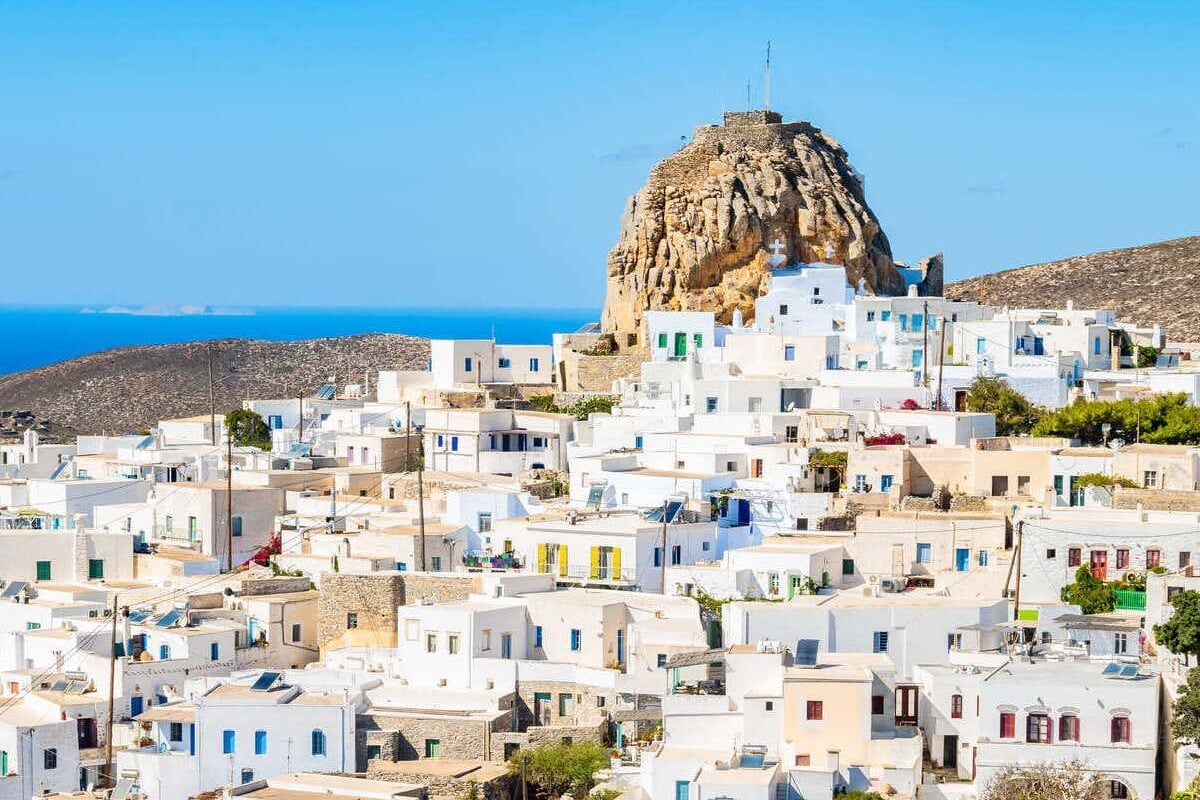
Panoramic View Of The Whitewashed Chora Of Amorgos, Cyclades Island Group Of Greece, Southern Europe

Tucked away in the easternmost reaches of the Cyclades, the same group of islands that tourism powerhouses like Santorini and Mykonos are a part of, Amorgos almost feels like it exists in its own microcosm of calmness and serenity.

Think the same steep cliffs, the deep blue water, and whitewashed villages climbing up rugged hills, except these ones feel actually lived-in, rather than curated for visitors.

Amorgos’ main attraction is Hozoviotissa Monastery, a fortress-like, chalk-white religious sanctuary, accessible via a rock-carved staircase, and embedded into a cliff face, directly above the sea.

It looks like AI, we know, but it’s very much the real thing, and it used to protect local monks from pirate and Ottoman raids back in the day.
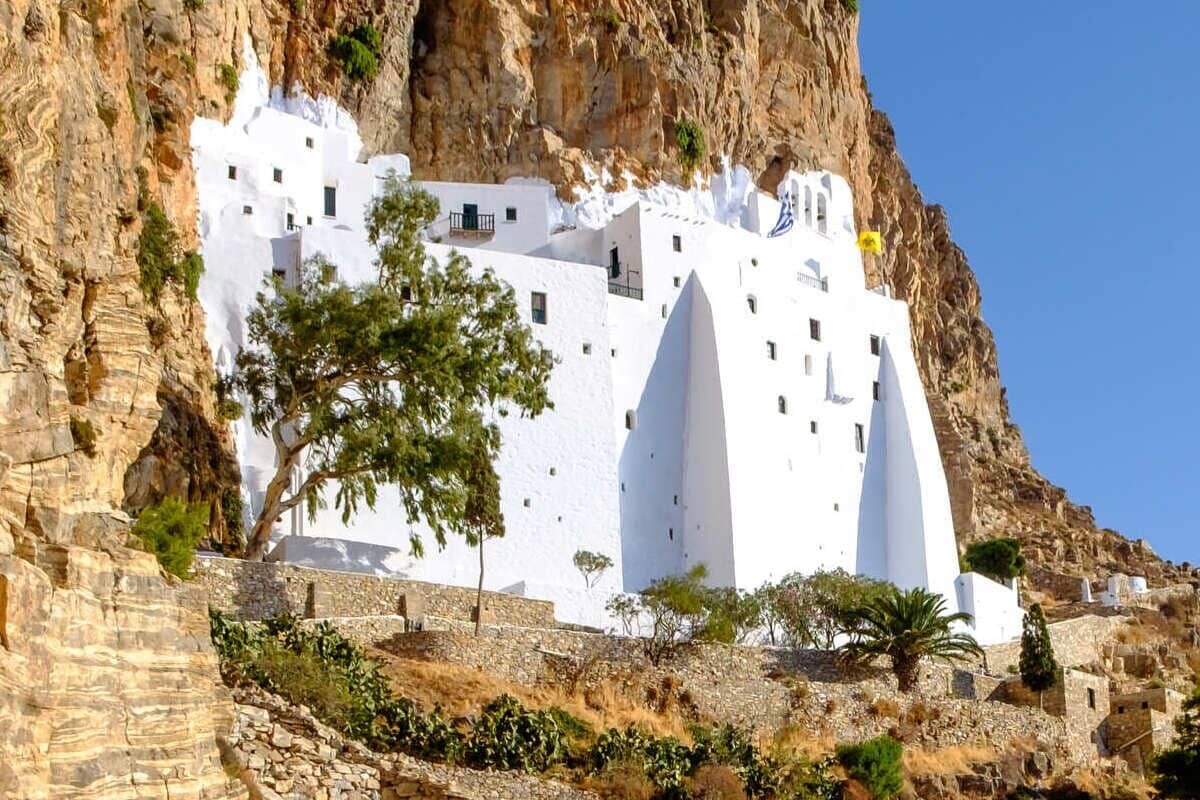
Historic Whitewashed Monastery Of Amorgos, Greece, Southern Europe

Chora, the main village, has Oia’s narrow white streets, tiny squares, and the cutest little set of windmills. It does see an influx of visitors during the day, but never at Santorini levels, and at night it’s perfectly quiet and almost eerily atmospheric.

Chora is also home to Taverna Vakhos, hands down one of the top eateries in the Cyclades if you love grilled fish and mezze plates, and a short 15-minute hike down from the village, Agia Anna is a tiny pebbly stretch offering crystal-clear waters and cinematic views. Like, it literally featured on The Big Blue.

Average Prices in Amorgos, Greece
  • Takeout meal (gyros, souvlaki): $10–$15
  • 3-course meal (local taverna, mid-range): $21–$35
  • Hotel/guesthouse (budget stay): $55–$88 per night
  • Luxury accommodation (villa-style): $165–$440+ per night
  • Car rental (economy/compact): $30–$60

Before you go booking those flight tickets, though, make sure you check the Entry Requirements that apply at your European destination on this page.

Whether it’s mandatory fingerprinting or travel authorization forms, travel to Europe has changed quite a bit since your last visit a few years ago, and if you plan on making that flight without boarding hiccups, you’d better come prepared to the airport.

Folegandros
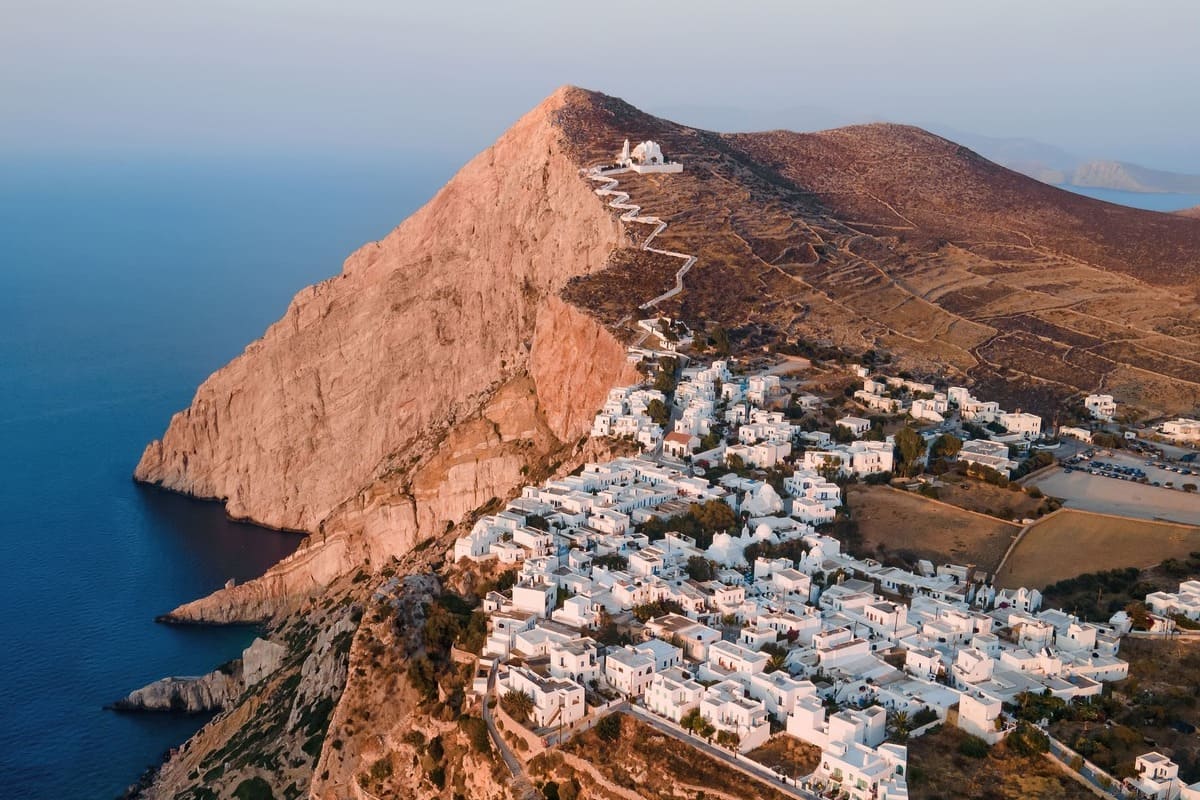
Panoramic View Of Folegandros, Greece

If you thought Amorgos was quiet and laid-back, wait until you’ve pulled up to dreamy Folegandros with that rocky Aegean ferry. Santorini’s even-more offbeat cousin, it measures only 12 square miles, and its main town Chora very much gives ‘edge of the cliff’ drama.

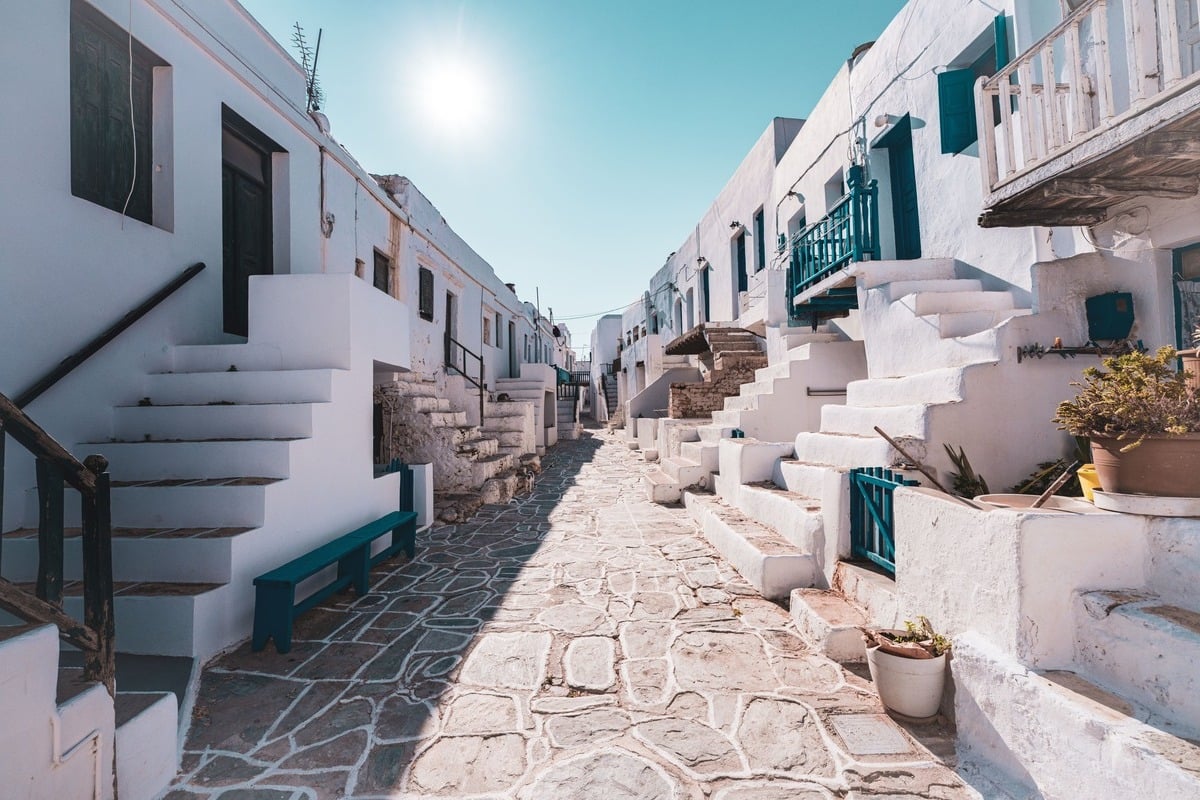
Chora is arguably one of the most striking island towns in the Aegean: almost no mass tourism infrastructure, just cobble-paved lanes, the typically-Greek minimalist white townhouses, and a central square flanked by family-run tavernas.

It lies at the foot of a hilltop Byzantine-era church, distinguished mainly for the unique zig-zag climb that leads up to it. Climb at sunset for the most otherworldly, fiery-red sunset you’ll ever see—if you’re asking me, it even beats Santorini’s popular Oia Castle sundown.
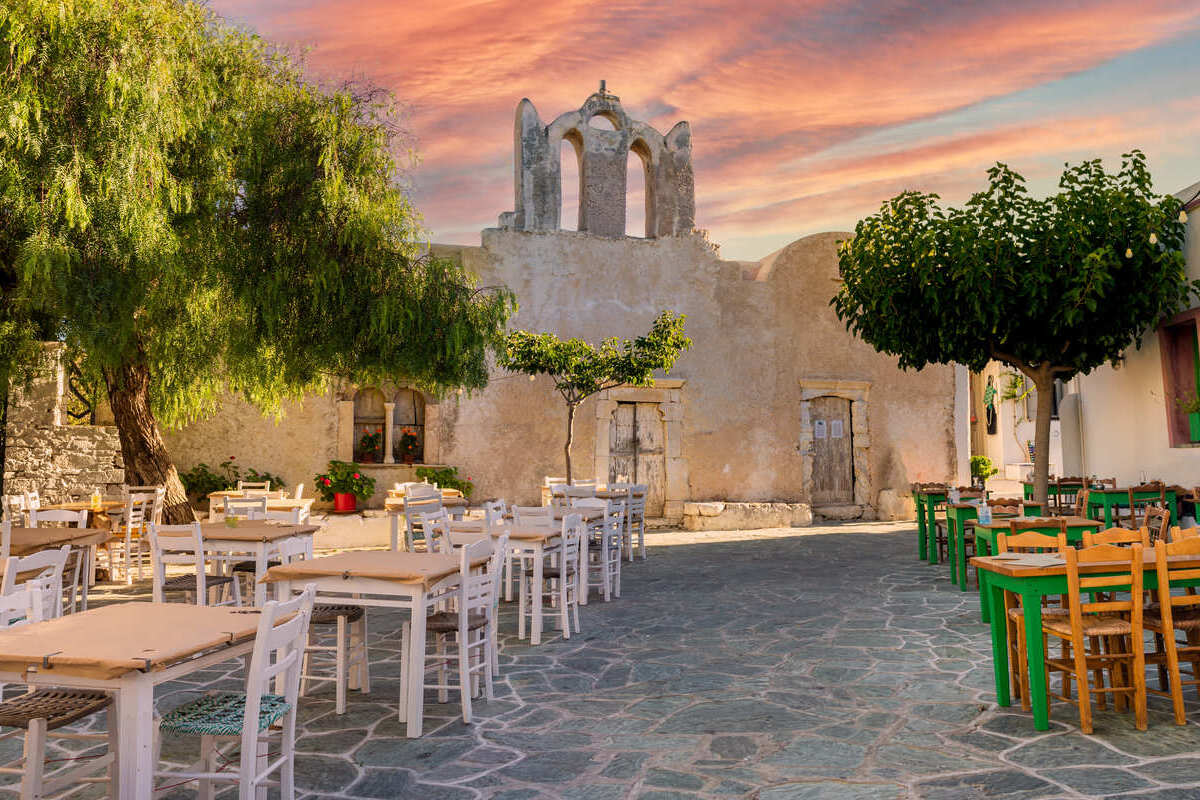
Village Square In Folegandros Chora, Greece

Folegandros is well-served by tourist minivans in summer, but if you’ve brought your walking shoes, and you’re not scared of steep downhill hikes, most beaches are within a 40-minute to 1h30-walk from town, like Agali Beach—clear water, calm bay, and traditional tavernas—and the virtually crowd-free Livadaki.

To my fellow goodies out there, a classic spot in Chora for traditional Cycladic food is Piatsa, right on the town square. Good local wine, crispy roasted lamb, and a relaxed terrace for that after-sunset dinner right in the heart of the village.

Average Prices In Folegandros, Greece
  • Takeout meal (gyros, souvlaki, bakery pastries): $12–$18
  • 3-course meal (local taverna, mid-range): $25–$45
  • Hotel/guesthouse (budget stay): $70–$120 per night
  • Luxury accommodation (villa-style): $180–$500+ per night
  • Car rental (economy/compact): $35–$70

If you’re wondering how safe Greece is to visit right now, how about very? It’s one of the last Western European countries that still enjoys a Level 1 classification, as awarded by the U.S. Department of State, which means Americans can exercise normal precautions when visiting.

Ahem, France, Italy, take notes.

If Government advice doesn’t mean the world to you, you can always go by reports from travelers on the ground. In this case, Greece scores an impressive 89 out of 100 on the Traveler Safety Index. When both the official travel advice and the popular vote align, that’s how you know the country is as safe as can be.

Sifnos
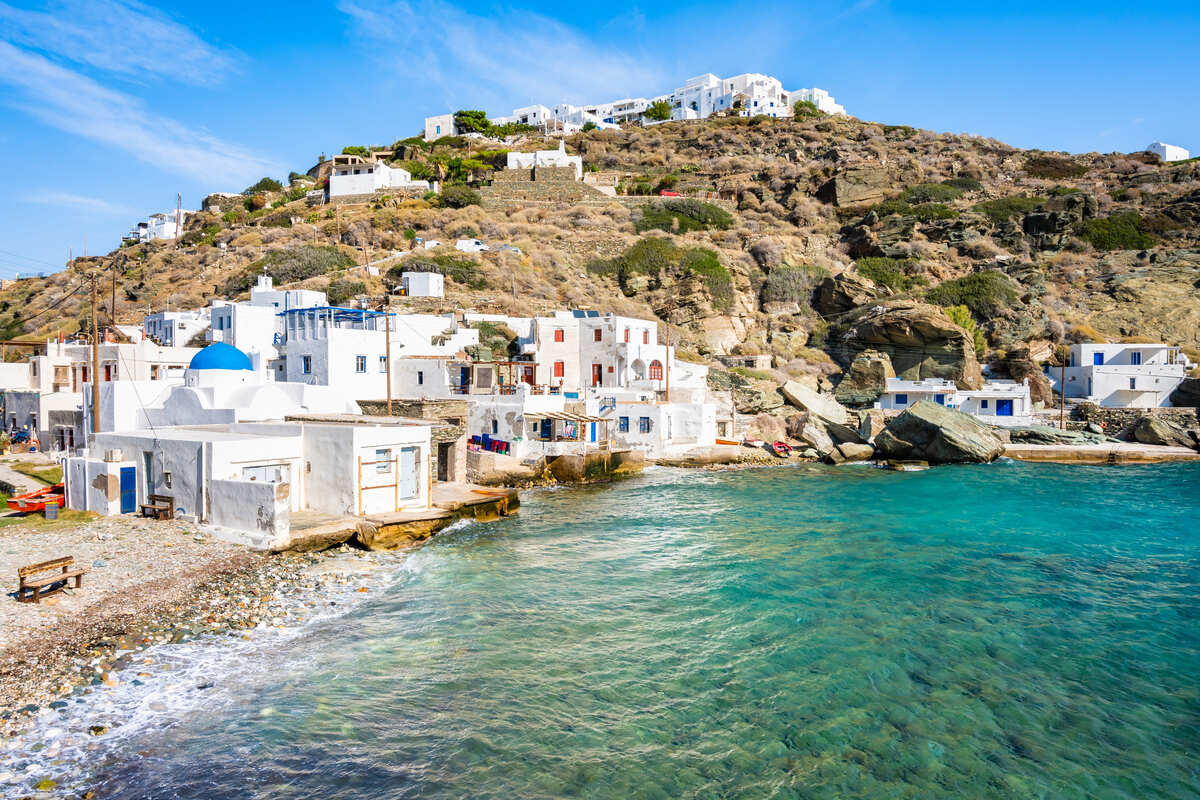
Coastal Town In Sifnos, Greece

For a Santorini dupe, Sifnos serves up quite the culinary punch. Somewhat more refined than rugged Folegandros, or remote Amorgos, it’s renowned for the excellent food—you can even say it’s one of Greece’s foodie capitals—and balanced vibe.

Not necessarily party-heavy, not deserted either.

If the previous islands felt too wild and remote for your liking, Sifnos feels more accessible and well-designed without breaching the Oia price bracket.

The largest settlement here is Apollonia (Sifnos), a hillside village with your usual narrow alleys, cozy bars, and boutique shops. It’s the social hub of Sifnos, particularly at night, and the perfect base for exploring the island without wasting time in transit.

Over in Kastro, you get the Santorini aesthetic without the added chaos: this medieval settlement clings to an eroding coastal cliff, and it has tight stone alleys and sweeping coastal views. One of the most effortlessly cinematic, magical spots on the island.

Whitewashed Chapel On A Peninsula In Sifnos, Greece

Not far from Chrisopigi Monastery, Chrisopigi is the most photographed site in Sifnos, and for good reason: it’s a monastery perched on a rocky peninsula that juts out into the sea.

Over in Faros, a laid-back seaside village with walking paths leading down to hidden beaches and coves, like Fassolou and Glyfo, where you can swim in turquoise waters without crowded resort-style beaches and chapels. Easier hiking than Amorgos, but very scenic.

That’s the nature. Three-quarters of the fun of visiting Sifnos is actually the food, and if you’re hoping for some mind-blowing, flavor-bomb Greek comfort food, Omega3 is the s̶h̶i̶t̶.

Their seafood linguine and locally sourced wine are the reasons why Sifnos wins all of these gastronomy accolades, and the beachside setting? Och. A literal slice of heaven.

Average Prices In Sifnos, Greece
  • Takeout meal (gyros, souvlaki, bakery pastries): $11–$16
  • 3-course meal (local taverna, mid-range): $25–$50
  • Hotel/guesthouse (budget stay): $65–$115 per night
  • Luxury accommodation (villa-style): $180–$550+ per night
  • Car rental (economy/compact): $35–$75

Now take this quiz to find your perfect match!

Step 1 of 3

What’s your ideal island vibe?


Step 2 of 3

Choose your perfect afternoon:


Final Step

What scenery are you chasing?


Amorgos

The Serene Cycladic Hideaway

Why it’s a match: You love an authentic, lived-in aesthetic over a curated tourist trap! Amorgos offers steep cliffs, deep blue water, and whitewashed villages without Santorini’s staggering prices.

Don’t Miss: The fortress-like Hozoviotissa Monastery, embedded into a cliff face directly above the sea. Treat yourself to mezze plates at Taverna Vakhos in Chora!

🌅

Folegandros

The Dramatic Cliffside Cousin

Why it’s a match: You want edge-of-the-cliff drama and minimalist Greek architecture without the mass tourism infrastructure. Folegandros serves up cobble-paved lanes and calm, secluded bays.

Don’t Miss: The sunset climb up the zig-zag path to the hilltop Byzantine-era church. It easily rivals Oia’s sundown views—minus the pushing and shoving!

🦐

Sifnos

The Cinematic Foodie Capital

Why it’s a match: You want an accessible, well-designed island that serves up a major culinary punch! Sifnos perfectly balances its vibrant social hub with breathtaking medieval settlements.

Don’t Miss: A visit to Kastro, an effortlessly magical coastal cliff settlement, followed by mind-blowing seafood linguine right on the beach at Omega3!


Source link

Leave a Reply

Subscribe to Our Newsletter

Get our latest articles delivered straight to your inbox. No spam, we promise.

Recent Reviews


buynowkey-gettyimages-2270986884

JuSun/ iStock / Getty Images Plus via Getty Images

Follow ZDNET: Add us as a preferred source on Google.


ZDNET’s key takeaways

  • New Visa research says AI-accelerated scams are the “fastest growing source of consumer harm.”
  • Fraud is shifting from credential theft and account hijacking to social engineering tactics.
  • Visa outlines what consumers and businesses need to do to meet these threats. 

While AI’s vast potential to improve security, ramp up productivity, and reduce operational costs is being explored by countless companies, the technology is also being weaponized by cybercrooks involved in fraud and financial crime.  

Also: 5 security tactics your business can’t get wrong in the age of AI – and why they’re critical

A new report from Visa says AI is reshaping both cyberattack and defense tactics and, specifically, is compressing the fraud cycle, making it easier to dupe consumers into authorizing malicious transactions. 

AI accelerates ClickFix-like fraud

Remember ClickFix? It’s a social engineering technique, popularized in recent years, that bypasses traditional phishing defenses by exploiting psychological vulnerabilities. 

In ClickFix attacks, victims are lured into performing a malicious action themselves by being presented with a problem to solve — a problem that has an easy solution. For example, you may come across a fake malware alert on a website that urges you to open up a command prompt, copy and paste a code, and submit it to fix a PC “issue” in only a few steps. 

In reality, this “solution” leads you to execute malicious commands yourself, resulting in malware deployment, data theft, and more. 

Also: OpenAI’s new image watermarks make it easier to spot AI fakes – here’s how

Standard digital defenses can’t prevent us from performing malicious or destructive actions ourselves, which makes this social engineering tactic far more effective than basic drive-by downloads or standard phishing campaigns.

Apply this to finance, and the problem is this: If you authorize a transaction (fraudulent or otherwise), the responsibility lies with you — and you will most likely bear the financial cost. 

According to Visa’s Spring 2026 Biannual Threats Report, AI-enabled social engineering is becoming a serious issue for fraud prevention. 

How these scams work

Payment fraud can cost you dearly. Now that financial institutions are well aware of the risks posed to consumers by online scams, phishing, and social engineering, they often implement stringent security controls for large financial transactions. 

You may have to authorize payments before a payment request is accepted, such as by verifying yourself through an app, providing a one-time passcode, or clicking confirm.  

As a consequence, fraudsters are adopting AI and social engineering to “manipulate people into authorizing payments themselves,” according to the report, which includes using AI-generated scam content, voice impersonation, and deepfake media, to “increase both the reach and perceived credibility of scams when exploited by actors with malicious intent.”

In other words, AI is being used to generate sophisticated content that appears to come from a legitimate, trustworthy source — such as your bank — which is convincing enough for you to pay up and authorize a fraudulent transaction, thereby stripping yourself of the ID theft and banking crime guarantees that you are normally protected with by your financial provider. 

Visa says this is forcing a shift from “detect stolen credentials” to “detect and disrupt deception” for financial institutions; for the rest of us, it’s a behavioral and awareness issue that must be tackled. 

The red flags to watch out for

From July to December 2025, Visa detected nearly $1 billion in scam-related activity, including impersonation of trusted brands and companies, scams and phishing campaigns laced with financial urgency, and deception that led unwitting victims to complete transactions that appeared legitimate on the surface, but actually resulted in financial loss. 

We at ZDNET have monitored scam trends for years, and whether or not AI is involved, these are some common patterns and practices to watch out for: 

1. Cold calls

Scammers often pretend to work for trusted companies, such as your bank or wireless provider. They may try to lure you with a discount or free service in return for verification codes or account details, or they may request payment to resolve an “unpaid” bill. If you’re being cold-called, hang up. If you believe the call may be legitimate, use an official communication channel — such as the organization’s website — to confirm before you hand over a single dollar.

2. ClickFix-like tactics

ClickFix attacks are successful because they appeal to people’s problem-solving tendencies. They outline an issue and promise a quick fix with just a few steps. This can apply to financial fraud, too. Imagine you receive an email from your bank demanding an overdue payment and a discount if you act quickly — the message outlines three steps, including a link to pay or a QR code to scan, and one of the steps requires you to authorize a transaction. It causes panic and seems simple to fix, but it’s fake. Take a step back before you make any payments, think rationally, and verify through an official channel, such as your bank’s customer service line or support desk. 

Also: This cyberattack tricks you into hacking yourself. Here’s how to spot it

3. Romance scams

Financial fraud often tries to make you feel panic so you make irrational decisions, and, unfortunately, may also abuse you by engaging your emotions over the long-term. Romance scams often lead to investment and financial fraud. If someone you’ve never met asks you for money, simply say no.  

4. Nearly genuine appearance

One issue surrounding the AI is the sheer volume of AI-generated content, much of which is difficult to distinguish from real, legitimate content, including emails, images, audio, and video. If we can create images, photos, or even a more professional-sounding email using an AI assistant, remember that cybercriminals have the same tools at hand. 

Also: 5 ways to fortify your network against the new speed of AI attacks

Ever see a strange news report on social media and question its legitimacy, or suspect it might be “AI slop“? Apply that same skepticism. Even when an email looks genuine, if any financial change or payment is requested, go through an official channel to confirm it is what it appears to be.

The solution for organizations is speed

As Visa notes in its report, building advanced scam detection networks and adopting AI-backed solutions to detect and flag impersonation, social engineering, or unusual transactions can all boost fraud prevention, but speed is the key ingredient. 

Now that AI is being used for everything from social engineering to vulnerability discovery, reconnaissance, and network intrusion at a pace faster than we can defend against, businesses can’t rely on time-consuming, manual processes to handle their cybersecurity requirements or protect consumers. (Mandiant has also provided technical guidance on this topic recently.)

Also: Why AI-powered security tools are your secret weapon against tomorrow’s attacks

If AI is being weaponized, using automation — and potentially AI assistants, too — is the required shift to keep up. Automation can also take over time-consuming tasks, such as triage, freeing cybersecurity professionals to detect and respond to cyberattacks more effectively. Large language models and automated tools can complete tasks far more rapidly than humans can; as long as these tools are properly supervised, defenders can be better equipped to combat modern threats. 

“The rapid adoption of AI has fundamentally changed the economics of fraud,” says Michael Jabbara, SVP, Payment Ecosystem Risk and Control at Visa. “What once required deep technical skill can now be executed with a prompt. That reality makes intelligence-driven defenses and coordinated action across the ecosystem more critical than ever.” 

Acting quickly can help protect consumers from being scammed and may also give them the time they need to step back and consider whether they should OK that payment after all. 


Source link