4 Common Problems With Inline-6 Engines


An inline six (straight six) engine is a type of internal combustion engine that arranges six cylinders in a single straight row (in a line, hence the name), rather than splitting them into two banks like a V6. Mechanically, this layout is what sets it apart: All six pistons fire along one axis, on top of a single cylinder head and crankshaft, which gives the engine inherent primary and secondary balance without needing counterweights or balance shafts.

Because of cost, packaging, and the engineering complexity of casting a longer block, only a handful of automakers still build inline sixes today, namely BMW, Mazda, General Motors, Mercedes-Benz, Stellantis (through brands like Jeep and Ram), and Jaguar Land Rover. Still, what an inline six does inherently well is smoothness; the natural balance of the firing order means less vibration and a more refined power delivery than a V6.

This often comes along with strong torque characteristics and a simpler, often more serviceable design since there’s only one head and one set of accessories to deal with. However, the very same things that make the inline-six superior in some ways can also work against it in others. Here are four common problems with inline-six engines.

The inline-six’s size and dimensions lead to packaging challenges

Beyond the length itself, an inline six’s mass sits higher in the chassis than a V-configuration engine of similar weight would. Autoblog puts it directly: A straight-six “will typically have a higher center of gravity” than a V-engine of similar mass. This is because the V engine is notably shorter due to having two banks; that allows it to sit lower in the engine bay which helps with center of gravity.

This is also partly why BMW slants its engines. Rather than mounting them upright, the brand tilts them roughly 30 degrees in the chassis, a packaging choice made to clear the hood line on cars designed around shorter V8s and to place the center of mass lower. The long design of an inline-six engine creates packaging challenges that can also limit vehicle design. Its size generally confines it to a front-mounted position.

Another reason why V6 engines are often favored over older inline-sixes is that the length of the inline-six can be a problem for crash safety since shorter V6s could do with more favorable crumple zones. Where an inline-six also falls short is packaging and width versus length; the long block doesn’t fit well in transverse front-wheel-drive platforms, and it takes up significant longitudinal space in the engine bay, which is part of why it’s largely been confined to rear-wheel-drive and truck applications.

The inline-six’s longer camshaft leads to greater flex and torsion

When the car is on the move, all of its components feel weight shifts. Because of that, many of these components can also flex. Where a V6 basically splits cylinders with three on each bank, an inline-six lines them up in a straight row. The downside? The crankshaft is much longer on an inline-six. That extra length is precisely what a crankshaft’s torsional twist scales with, which is why the inline six’s one-piece crank fights more resistance than a V6’s shorter one ever has to. With every cylinder added, the flex is a more serious problem -– partly why seven-cylinder engines don’t exist.

An engineering paper published by Politechnika Krakowska (Cracow University of Technology) ties the severity of that twist to bore size. In other words, it flags anything above approximately 90mm as the point where torsional vibration turns into a real problem you need to counter. You can do so by first trimming the crankshaft mass. However, when that does not work, the paper’s prescribed fix is the torsional vibration damper, built around “increasing the work of friction (damping work) and thus decreasing the crankshaft torsion.”

Engine Builder Magazine puts the underlying problem more plainly, describing torsional vibration as “the end-to-end twisting and rebounding of the crankshaft caused by combustion,” which is why some form of damper ends up on nearly every multi-cylinder engine. Bore diameter and crankshaft length are just two of several variables engineers juggle to get an inline six smooth. The leftover, uncancelled vibration from all of this juggling also produces torsional vibrations in the camshaft, not the crankshaft alone.

Inline-six engines suffer from uneven cylinder air/fuel distribution

Crankshaft flexing isn’t the only inherent problem of placing six cylinders in a row instead of splitting them into two V-shaped banks. Another practical consideration of such a design is the fact that the intake manifold needs considerably longer, more convoluted runners to reach every cylinder evenly. In other words, the potential problem is the manifold not distributing air and fuel evenly to the first and last cylinder in line, and that can cause combustion problems.

Ford’s old 144, 170, 200, and 250 cubic-inch inline-sixes show what that looks like in practice. Those engines cast the intake manifold directly into the cylinder head as one piece, and per OnAllCylinders, “the log-style intake manifold suffered from air and fuel distribution issues.” Put plainly, that means certain cylinders along that single row pulled in a different air-fuel ratio than others, simply because of where they sat relative to the carburetor feeding them.

A 2016 SAE study using an inline six heavy-duty engine found that as intake valve closing timing was delayed, cylinder-to-cylinder power output varied, ranging from a 9% difference at one timing to a 38% difference at a later one. The researchers traced part of that variation to intake runner length and the direction fuel flows back into the manifold.

Some inline-sixes are notorious for timing chain problems

When we wrote our five inline-six engines you should avoid list, all but one of the engines covered had notable timing chain issues. Some BMW inline-sixes, like the N57, get hit with this criticism often, partly because the chain sits at the firewall side of the block. To replace the chain, cost depends heavily on whether it sits at the front or back of the engine. 

RepairPal prices a timing chain tensioner job on the front-accessible N54 335i at $1,235 to $1,707; rear-mounted chains, like on the N47, cost more. One owner on BimmerFest was quoted $5,500 for a related N55 chain repair. The difference is mostly labor: BMW Insights puts dealer labor at $1,200 to $1,500+ versus $600 to $800 at an independent shop, with rear-mounted jobs adding hours since the engine often has to come out first. 

Mazda’s new turbo inline-six in the CX-90 and CX-70 follows a similar layout. It runs three separate chains, one each for the camshafts, crankshaft, and fuel pump, all positioned at the rear of the engine rather than the front, per discussion on Mazdas247. That’s the same positioning choice that makes BMW’s chain jobs so expensive, since reaching it again means dropping the engine. It is worth noting that timing chain problems aren’t inherent to inline-six engines, but rather that some inline-six engines had to compromise due to length and place their timing chains where servicing them is a lot more difficult.


Source link

Leave a Reply

Subscribe to Our Newsletter

Get our latest articles delivered straight to your inbox. No spam, we promise.

Recent Reviews


Harbor Freight tools have become one of the primary points of purchase for DIYers looking to tackle various jobs on the home front without spending too much money on the tools required to accomplish each task. Over the years, the family-owned hardware chain has continued to build out its lineup of offerings, and these days even offers a full range of trailers, heavy garage gear, and even tow packages fit for off-road adventures.

You may not realize it, but Harbor Freight has also secured ownership rights over many of the most notable tool brands you’ll find available through its brick-and-mortar stores and its online retail outlet. One of the more respected names you’ll find among Harbor Freight’s in-house offerings is that of Icon Tools, which makes a full line of non-powered hand tools for virtually any job you can imagine.

While the budget-friendly pricing make Icon Tools ideal for the non-professional workers of the world, the brand’s offerings are, by and large, considered professional grade in quality. That fact alone should make them hard to resist for any DIYer in need. It’s worth noting, however, that some of those pro-graded Icon tools are a little more budget-friendly than others. Some can currently even be purchased for less than $50 through Harbor Freight Tools outlets. Here’s a look at 5 tools in that category that users have deemed to be well worth buying.

Professional 4-Piece 10 mm Socket Set – $9.99

Whether you’re putting together your first mechanic’s tool set, or just adding on to the kit you’ve already assembled, any home tinkerer would be wise to keep an eye out for a good socket or two. That is particularly true of 10 mm sockets, which some Harbor Freight Tools shoppers insist you just cannot have enough of in your tool kit. If you find yourself searching for 10 mm sockets from Harbor Freight, Icon’s 4-Piece Socket Set is as highly-rated an offering as you’ll find, and the set will cost you just $9.99.

As for what you get in that small socket set, it includes one shallow and one deep 10 mm socket in both 1/4-inch and 3/8-inch size. Those sockets are made from hardened chrome-moly steel to provide extra strength and torque, and given a high-polish finish to reduce the risk of corrosion. Their thin-walled design and chamfered openings are designed to provide easy fastening and a firmer hold during use. They’re also backed by Icon’s lifetime manufacturer’s warranty.

If all that wasn’t enticing enough, this 10 mm socket set currently holds a 5-star rating from Harbor Freight customers, which is itself based on 264 reviews of 4-stars or higher. Only 8 of those are 4-star, by the way, and even those admit the set is extremely well-made, with one even comparing them favorably to Snap-on sockets. The 5-star reviews are, obviously, equally glowing, with many praising Icon for not only having the foresight to offer a standalone 10 mm socket set, but making it in such high quality.

Professional 4-Piece Mini Screwdriver Set – $14.99

Speaking of essential items for any homeowner’s tool kit, a good set of screwdrivers is high on the list. Not all screwdrivers are the same, of course, with some slotted (AKA flat head) and Phillips head models proving too large for use in tight spaces. Thus, it can be smart to have a set of smaller screwdrivers around for those occasion when space is at a premium. In such a case, Icon’s 4-Piece Mini Screwdriver Set may be an ideal choice at a cost of just $14.99.

This set is designed for use in small spaces, with Icon capping their length at just 6-inches. Each of those drivers is made from special alloys to increase durability, and fit with an ergonomic handle for comfort during use. They’re also chrome plated for corrosion resistance and fit with precision-machined magnetic tips to hold screws tight while driving. There are also drivers in wider and slimmer sizes, the latter of which are small enough for use with JIS (Japanese Industrial Standards) gear.

This set is well-liked by many home tinkerers like YouTuber MECHAWORKS, with several 5-star user reviews from Harbor Freighters specifically noting they bought this set to use with Japanese made engines or electronics. Others claim the drivers are unexpectedly high quality for the price, with one admitting that fact led them to consider buying a full Icon tool set. There were, however, a pair of 1-star reviews bringing the overall rating to 4.8-stars, with one claiming their driver broke during usage, and the other questioning the claims of a magnetic tip.   

Soft Face Dead Blow Hammer – $24.99

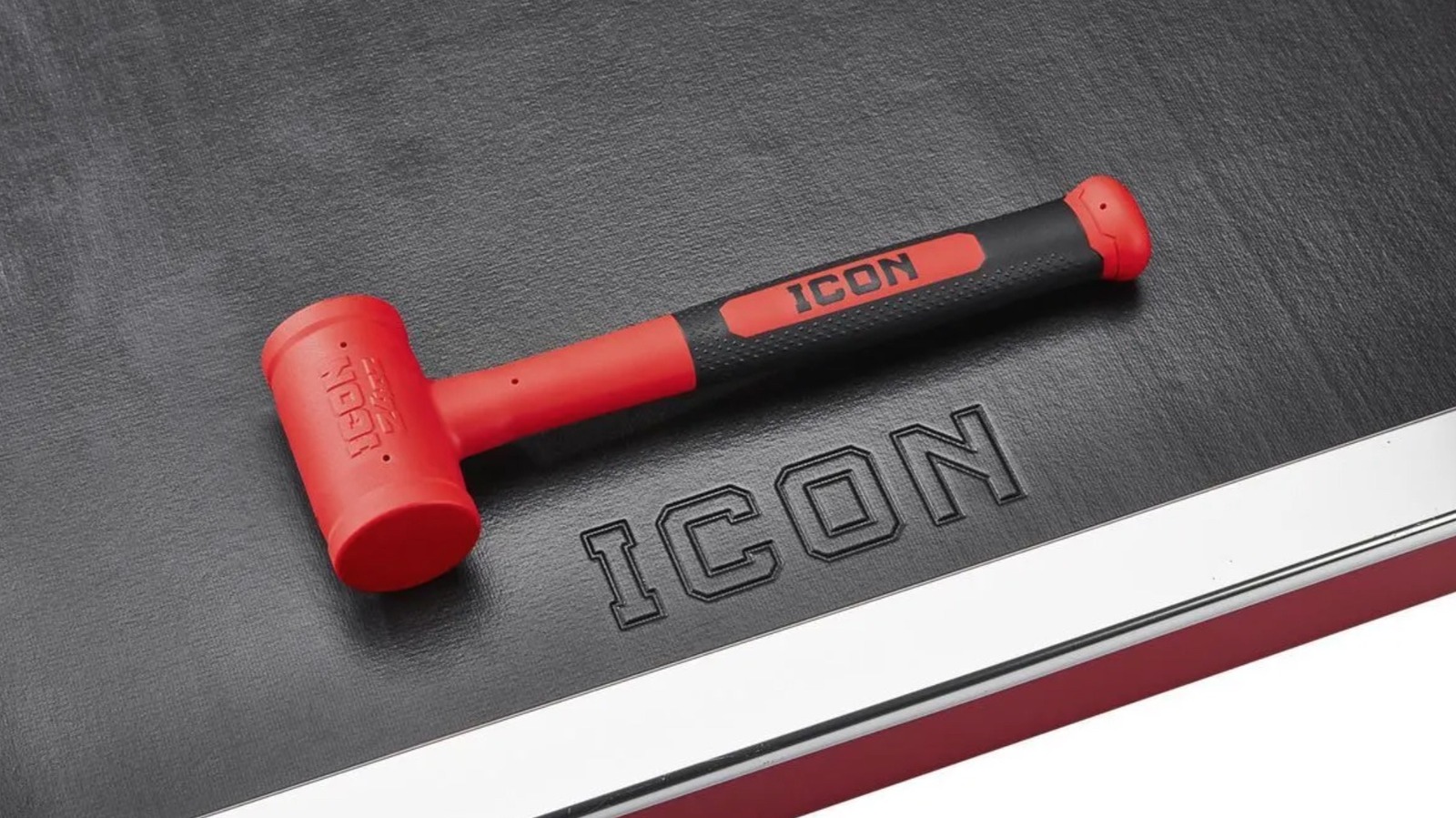
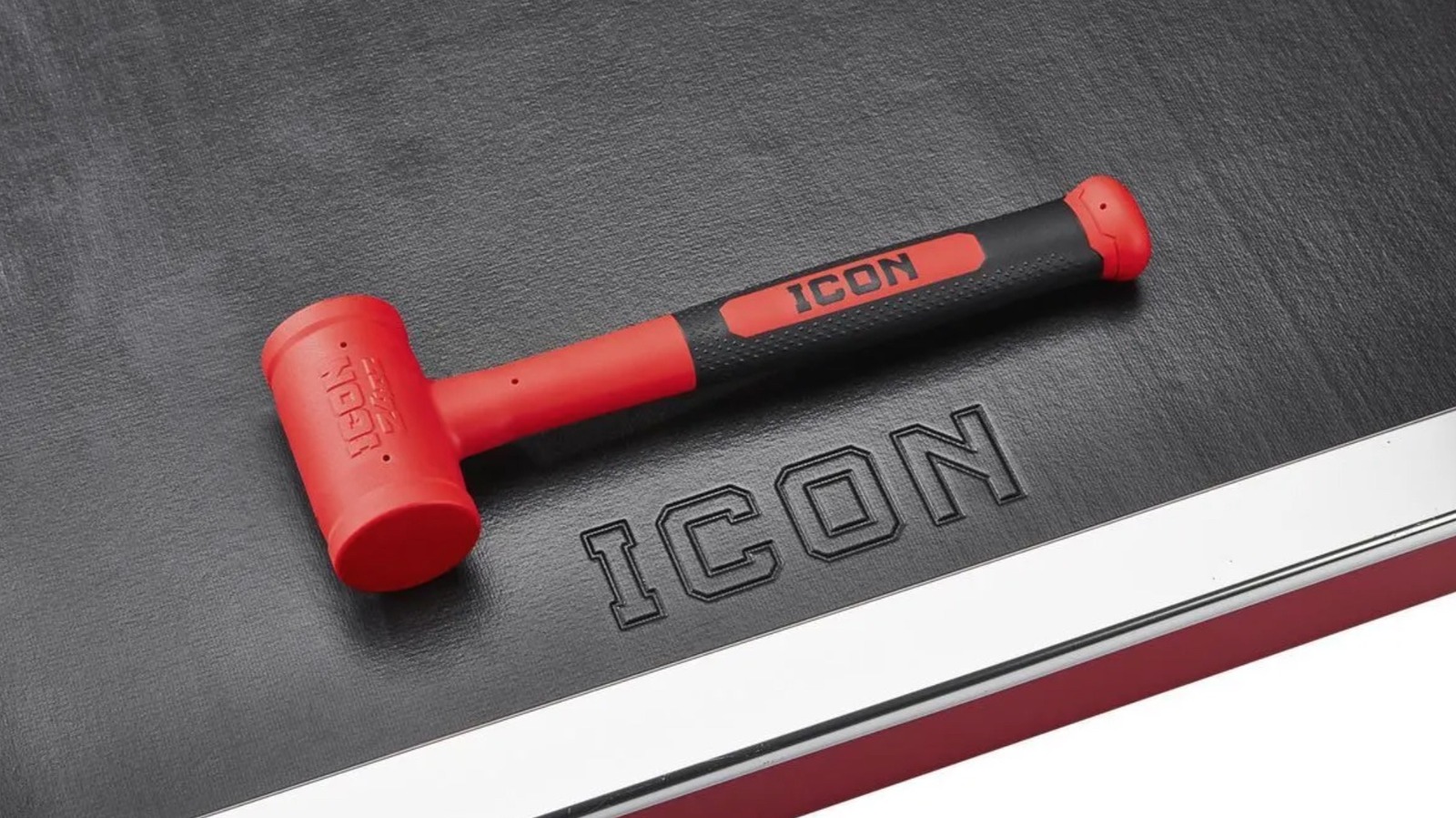
While it can be used to perform the functions of a traditional hammer, a dead blow hammer is a strike device designed for different areas of usage. More specifically, it is a mallet-styled tool designed to reduce the level of bounce-back from each strike via a shot-filled head and a rubberized coating. The increased control makes it an ideal option for use in automotive endeavors like chassis work and suspension jobs, as well as woodworking projects and certain machining gigs. While Harbor Freight carries dead blow hammers from other brands, few are quite as well rated by customers than the 24-inch model made by Icon.

At present, a total of 274 users have chimed in on their Icon Dead Blow Hammer, bestowing upon the hammer an overall rating of 4.9-stars. As for that lone 3-star rating, the user questioned the materials used in its making to the point that they claimed it isn’t a dead blow hammer in the truest sense. Few of the other reviewers agreed, with most hailing it as a first-rate dead blow option that is ideal for automotive work and easy to manage in hand. One even hailed the hammer as, “the best product Icon sells.”

Apart from the shot-filled head and rubberized face, they also boast a steel shank and are covered in Polyurethane materials that make them resistant to many chemicals common to garages and workshops. The hammer is also backed by Icon’s lifetime warranty, and can be purchased for just $24.99. As YouTuber Last Best Tool points out, that considerably less than a similar Snap-On hammer for about the same quality.

35-Piece Locking Flex-Head Ratchet and Bit Set – $34.99

We already covered a well-rated socket set from Icon, so it seems fitting that we also cover a ratchet and bit set. This 35-Piece Ratchet and Bit Set features far more pieces than the other, of course. To that end, it understandably costs more, with Harbor Freight pricing it at $34.99. For the record, the kit is also not quite as highly rated as the socket set, though its 4.9-star rating is, arguably, more impressive as it is based on a whopping 2,387 user reviews.

Not all of those reviews are positive, with complaints ranging from soft bits and rusting to faulty parts and design and excessive back-drag from the ratchet head. Some of the positive reviews also note similar issues, by the way, even as the bulk of users and YouTube reviewers praise the kit for being durable and effective. Many Harbor Freight shoppers claim the inclusion of so many bits makes the kit incredibly versatile too. Several also claim its size makes it not only ideal for engine work, but easy to stow away in your car or even a motorcycle.

If you’re breaking down the cost, the $34.99 basically prices each piece of the kit at $1. So, if you’re curious as to what is included, the 1/4-inch chrome-vanadium steel Flex Head Ratchet is the biggest piece, though the kit also includes a 4-inch extender. As for the S2 steel bits, there are 11 TORX bits, 2 slotted bits, 3 Phillips bit sizes, 13 hex bits, and 3 Pozidrive bits, all of which fit inside a handy carrying case.

11-Piece SAE Professional High-Torque T-Handle Hex Key Set – $44.99

As previously noted, screwdrivers are a legitimately essential part of any tool kit, but not every fastener is fit with either a slotted or Phillips head. And yes, if you find yourself staring at a head with a hexagonal opening, neither type of driver will do you much good. In fact, only a hex key will suffice in that scenario, and even then, only the exact right size of hex key can move that fastener.  It stands to reason, then, that if you often deal with hexagonal fasteners, it might be wise to have several sizes of hex tipped drivers on hand when you need to tighten or loosen them.

Enter Icon’s 11-Piece T-Handle Hex Key Set, which is currently selling for $44.99 through Harbor Freight Tools. The keys in that set are designed for fasteners in SAE measurements, and range in size from 5/64-inch, 3/32-inch, 7/64-inch, 1/8-inch, 9/64-inch, 5/32-inch, 3/16-inch, 7/32-inch, 1/4-inch, 5/16-inch, and 3/8-inch. Each of those hex keys is made from black oxide coated steel for durability, and the T-Handle design allows for a short hex tip on the end of the ergonomic handle, as well as a longer shafted tip for heavier torquing jobs.

Users are overwhelmingly impressed with the set as well, rating it at 4.8-stars through Harbor Freight. Of the happy users, many praise the set for its variety as much as they do for the overall quality and design of the tools, noting that the T-handles are not only comfortable to use, but allow for extra torque. They also love the lifetime warranty that comes with them.

How we got here

In assembling this list, we scoured the Harbor Freight Tools website to examine every tool bearing the Icon branding that is currently listed with a sticker price under the $50 marker. We also limited our selections to Icon tools that have earned a user rating of at least 4.8-stars and currently show reviews from at least 50 Harbor Freight customers. Whenever appropriate, some reviews may have been cited directly to ensure accuracy. If possible, additional reviews were also consulted to prop up the consumer point of view. 


Source link