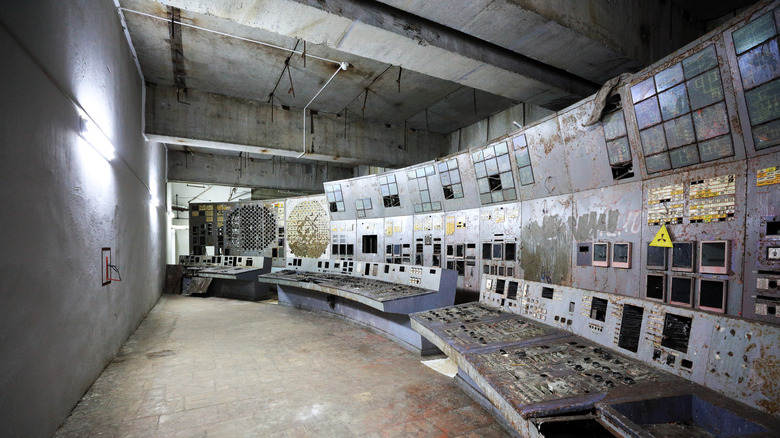

As we reach the 40-year milestone of the 1986 Chernobyl nuclear disaster, few things have captured the public’s angst and imagination quite like Chernobyl. In the intervening years, Chernobyl has lived in popular culture as a genre all its own, and has often served as a dystopian backdrop for sci-fi stories. But reality couldn’t be further from fiction –- to look upon Chernobyl is to see a haunting reminder of the worst nuclear accident in recorded history, continuing to exist as a tragic time capsule, but one that has also paved the way for the future of nuclear reactors.
On April 26th, 1986, the skies glowed and a plume of smoke rose from the Chernobyl Nuclear Power Plant, as radioactive detritus rained across Europe, resulting from the destruction of the plant’s reactor 4. Reactor 4 catastrophically failed during a test to simulate how long the reactor could be cooled while under loss of power, resulting in two explosions, a nuclear meltdown, and finally, a reactor core fire. A flawed Soviet-designed RBMK-1000 reactor was the primary cause, but was also coupled with operator error and a lack of transparent communication from Soviet Union leadership. And that says nothing of the subsequent cover up by the Soviet government. Forty years later, the Chernobyl Power Plant is still an active work site that requires ongoing management and monitoring. The cleanup of radioactive waste is expected to last through 2064.
A nuclear disaster frozen in time for 40 years shows fossilized Soviet-era tech
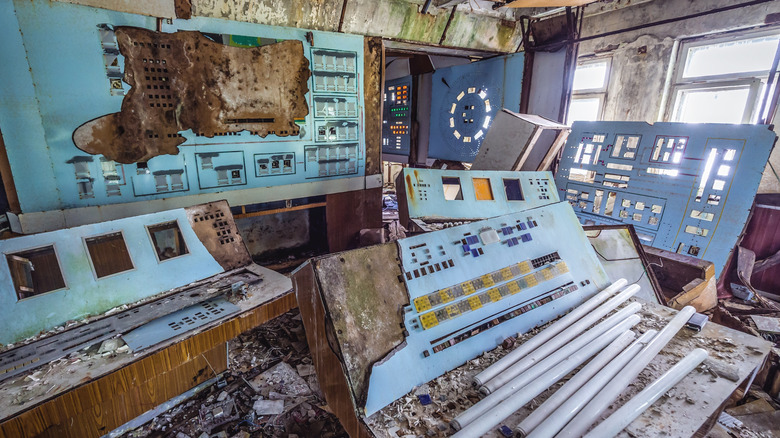
Following the fallout, the nearby town of Pripyat was evacuated and the Chernobyl Exclusion Zone (CEZ) was established around the surrounding areas. There are parts of the CEZ that will likely never be inhabitable by humans again, as long term radiation is expected to persist for potentially thousands of years. On the 40th anniversary of the disaster, pictures via The New York Post show the control room for reactor 4 with buttons still glowing, and fossilized Soviet-era machinery appearing to be relatively preserved underneath four decades of rust.
As shown by the BBC, within the CEZ lie two massive graveyards for irradiated equipment –- one in Rossokha and the other in Buriakivka, both established as sites for radioactive waste disposal. These sites have been used to house the Soviet Union’s fleets of vehicles and helicopters that were used to clean up the radioactive debris in the aftermath of the accident, and became heavily irradiated in the process. Unable to return the vehicles to normal service outside the CEZ, they were left suspended in time to be claimed by nature.
As for the destroyed reactor 4 itself, its eerie, radioactive ruins lie entombed. The original Chernobyl Power Plant Sarcophagus was built in late 1986 to house the molten reactor. As that structure began to fail, a new structure known as the Chernobyl New Safe Confinement was built and placed over the existing shelter in 2016. The structure serves as a nuclear entombment device, is rated to last for 100 years, and is the world’s largest movable land-based building.
The escalating conflict between Russia and Ukraine has made Chernobyl a point of interest in the war, as a 2025 Russian drone strike using a dangerous Shahed drone inflicted severe damage to the New Safe Confinement structure, with repairs estimated to cost millions.
Chernobyl’s legacy is informing the future, and still matters today
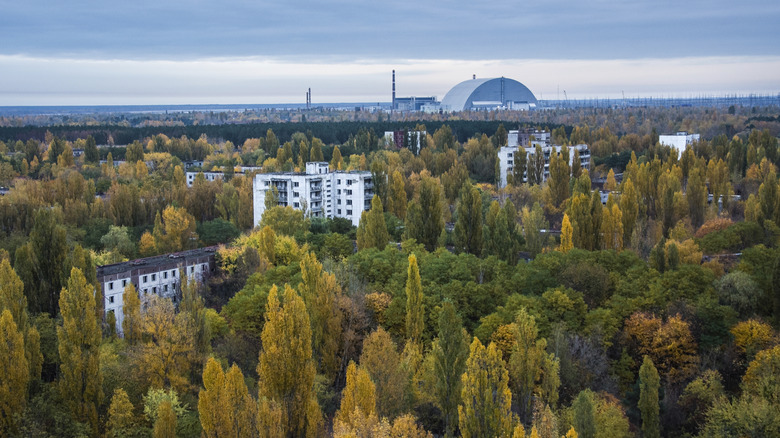
Chernobyl’s legacy will always be in part a tragic monument to human hubris, but it also serves as evidence that Earth can recover, and its everlasting lessons on nuclear policy continue to inform a safer future. Research into the radiation at Chernobyl has produced far-reaching discoveries, such as the presence of radiotrophic fungi that have helped NASA explore the habitability of exoplanets, and that can potentially be used to protect astronauts from cosmic radiation during space travel.
The Chornobyl Radiation and Ecological Biosphere Reserve is the largest biosphere reserve in Ukraine, where the irradiated landscape became an accidental nature reserve in the absence of human activity. The rewilding of the area and the rebounding, unique ecosystem continue to be an area of active study. The Proceedings of The Royal Society B research journal published a study evaluating the biodiversity in the CEZ, and found a variety of animals to be thriving: Przewalski’s horse, the Eurasian lynx, moose, red deer, red fox, and others. Some of the species thriving within Chernobyl are rare or endangered; Przewalski’s horses were once on the brink of extinction, and the Eurasian lynx is currently a threatened species. There’s even evidence of the evolution of a new kind of dog.
Chernobyl is also home to a Ukrainian solar farm, sitting adjacent to reactor 4. Solar energy has been another symbolic milestone in the years after the nuclear fallout. The one-megawatt solar farm is able to produce enough clean energy to power 2,000 homes. Construction is also underway on a new two-megawatt solar park on the grounds of Chernobyl to mitigate the risk of relying on external power sources like diesel generators in the event of power loss.

Stephan is the sports journalist for the Maple Grove Report.