
We may receive a commission on purchases made from links.
Many of us have switched a good bulk of our shopping from brick-and-mortar stores to Amazon because of the undeniable convenience of having goods shipped directly to our homes. That’s not the only reason the retailer has become one of the biggest companies in the world, though. Amazon has also attracted shoppers because it sometimes offers lower prices than the competition.
With that said, it can also be tricky to shop on Amazon because prices can fluctuate, so something that’s jaw-droppingly cheap one day might be too pricey the next. Pricing may be inconsistent, but something that doesn’t change is the quality of a product. That’s why Amazon shopping is all about finding that perfect middle where the price and quality align.
Just as there are Amazon items that beat out Ace Hardware in price and quality, the retailer also sells hardware and home improvement products that, at times, are cheaper and more reliable than what you’d find at Lowe’s. Based on current prices, expert testing, and user feedback, here are five Amazon finds that outshine Lowe’s in price and quality. More information on how these products were evaluated can be found at the end of this list.
Heinpro 20V Cordless Leaf Blower
The Heinpro 20V Cordless Leaf Blower is sometimes on sale, but even at its full list price, it’s over $100 cheaper on Amazon than the DeWalt 20V Max Jobsite Blower (model DCE100B). Despite this huge difference in cost, Heinpro’s blower generates five times the airflow as DeWalt’s tool, which is limited to 100 CFM. Heinpro’s 500-CFM airflow and 150-MPH airspeed are two likely reasons why the tool is also better rated than DeWalt when it comes to user reviews — it has a 4.4 out of 5 overall customer score on Amazon, based on over 1,300 reviews at the time of writing. Meanwhile, the DeWalt tool has a rating of 4.2 at Lowe’s across over 500 reviews.
The tool has five different speed settings that you can adjust depending on the task. Without the battery, it weighs a bit over four pounds, so it’s said to be easy to carry and maneuver. Its handle is rubber-wrapped for a better and more comfortable grip, and a hook hole is built into the tool to make it easier to store.
Heinpro still has one more thing going for it — it’s one of the third-party tools that are compatible with DeWalt batteries. Even DeWalt enthusiasts with a tool shed full of the brand can save money by choosing Heinpro’s cheaper blower without having to worry about buying additional batteries to power it. The Heinpro 20V Cordless Leaf Blower is currently available on Amazon for $53.
Senix 60V 16-inch Chainsaw
Battery-powered chainsaws have been a game-changer for many landscapers, professional or otherwise, though the technology is still new enough that many options pale in comparison to gas-powered counterparts. Consumer Reports tested many different models and found that, overall, the Senix 60V 16-inch Chainsaw ties with Ego as the highest-rated battery-powered chainsaw.
The 16-inch model is available for less than $200 ($169 at the time of writing) on Amazon and is labeled by Consumer Reports as a recommended smart buy, placing ahead of some of the best chainsaws on the market. Consumer Reports scores imply that it’s not a remarkably quiet chainsaw, but the tool scores perfectly when it comes to cutting speed, handling, and safety. It runs at 85 feet per second and includes a 5-year tool warranty and a 3-year limited warranty for battery and charger, both of which are included with the tool.
The Kobalt 80V 16-inch Chainsaw (model KCS280B-06) also includes a charger and battery, but it sells for $769 right now, meaning $600 more than the Senix. The 2 Ah battery that comes with it is also half the capacity of the one Senix includes with its chainsaw. Kobalt’s tool boasts solid specs, including 110 cuts per charge, but Consumer Reports ranks it much lower than the Senix 16-inch. It scores well when it comes to safety, but its marks for handling, cutting speed, noise, and owner satisfaction leave something to be desired.
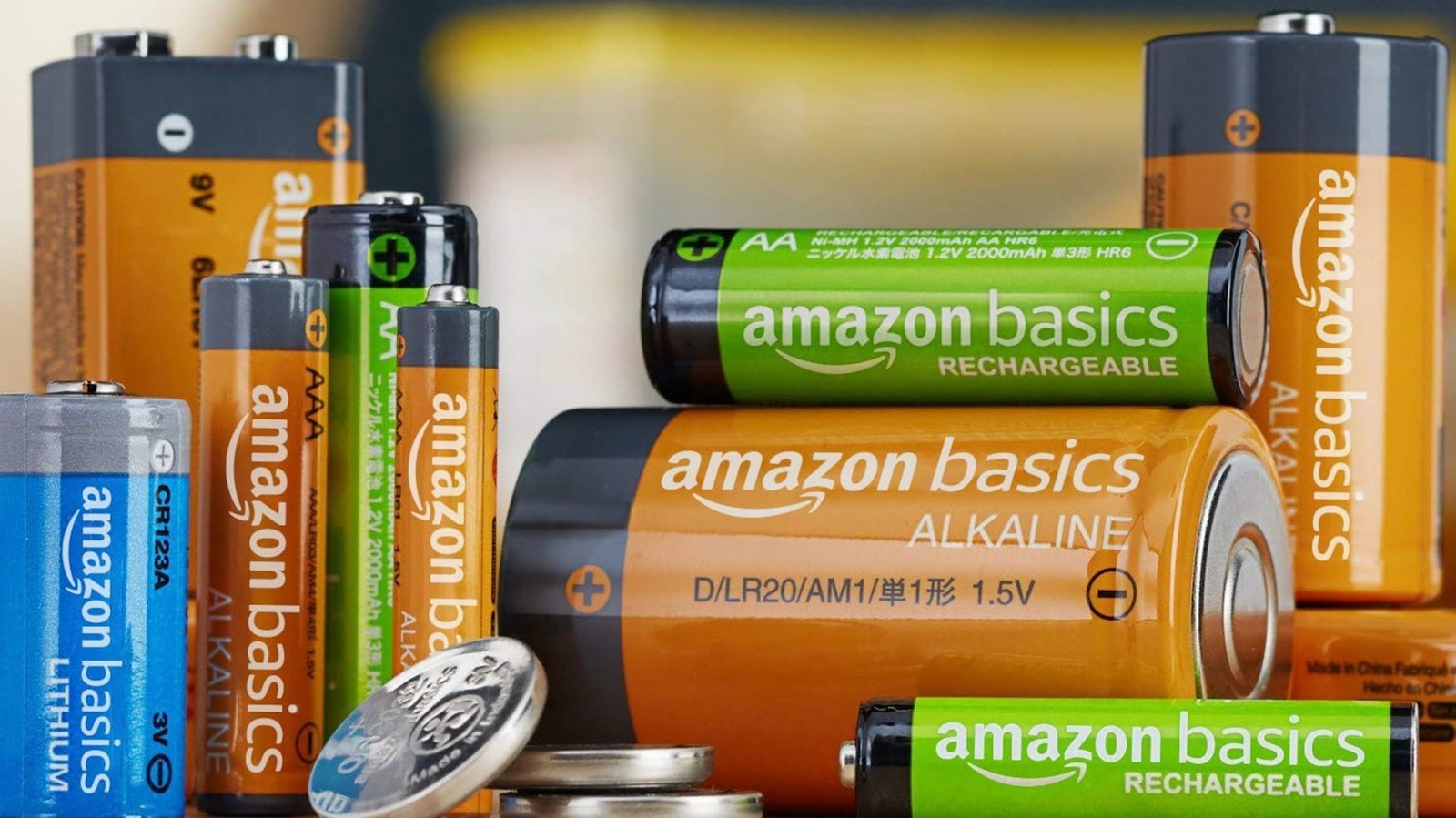
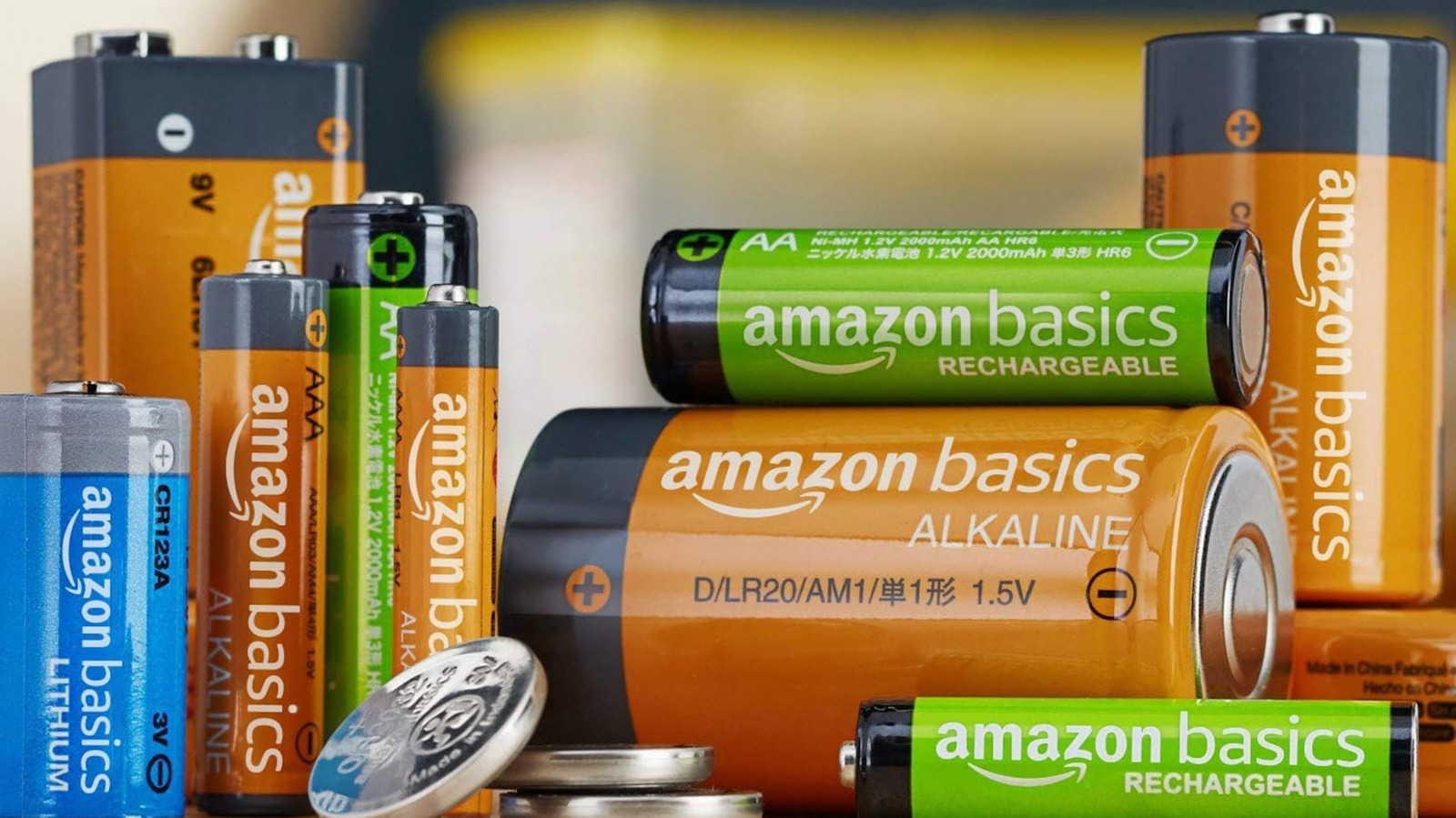
Amazon Basics Rechargeable High-Capacity AA Batteries
Lowe’s is one of the many retailers where you can find Energizer batteries, which come in not just different sizes — like AA, C, and D — but different chemical compositions as well. Traditional AA batteries are alkaline and disposable, but NiMH (Nickel-Metal Hydride) ones can be used over and over. The downside is that Energizer’s rechargeable NiMH batteries are sometimes significantly pricier than other brands.
Usually, people let the company get away with this because its batteries are noticeably superior to many others. However, that’s only true for alkaline batteries. When it comes to rechargeable batteries, even store brands like Amazon Basics sometimes end up higher on the ranked list of rechargeable battery brands. The YouTube channel Lumencraft tested many different brands of batteries with an analyzer and a Convoy T3 flashlight, and in their test, the Amazon Basics lasted longer than Energizer equivalents.
On top of that, Amazon’s high-capacity model offers slightly more mAh than Energizer’s high-capacity AAs. They have a shelf life of up to five years and can be recharged up to 400 times. After a year, they will still have half their original capacity.
Despite seemingly being the better NiMH battery, Amazon Basics is also significantly cheaper. A 4-pack of Energizer Power Plus Rechargeable NiMH will run you $14.48, whereas a 4-pack of Amazon’s is just $10.34. Amazon’s batteries are cheaper in bulk and are only $1.17 each in a 24-pack.
ReliaRoads 20V Wet/Dry Vacuum
Next, let’s take a look at the Kobalt 24-volt 3-Gallon 1 HP Wet/Dry Shop Vacuum, which averages a middling 3.9 out of 5 based on over 150 customer ratings at Lowe’s. Some shoppers have complained about the quality of the motor and performance, and several mentioned issues with finding replacement filters. The ReliaRoads 20V Wet/Dry Vacuum, on the other hand, has a strong 4.5 out of 5 overall customer score, based on over 420 Amazon reviews.
It delivers 12,100 Pa suction and has an airflow of 45 CFM. It’s equipped with a 2.65-gallon dust collector that’s a bit smaller than Kobalt’s 3-gallon option, and it includes a 6.5-foot-long hose. It also comes with a multipurpose nozzle, sofa brush, and both standard and extended crevice tools, along with a filter that’s washable and reusable.
On price, the ReliaRoads shop vac goes for $85 on Amazon, with occasional sales bringing the price as low as $69. The Kobalt alternative at Lowe’s costs $129.
You won’t find ReliaRoads on SlashGear’s ranked list of major shop vacuum brands, but it uses the batteries of one such brand — DeWalt. Anyone already using DeWalt 20V tools will already have the batteries they need and can save money with ReliaRoads’ shop vac. With a DeWalt 5 Ah battery, the cleaner can run 30 minutes before needing to recharge.
Craftsman V20 Cordless ⅜–inch Ratchet Wrench
Both Kobalt and Craftsman make some of the highest-rated mechanics tool sets you can find at Lowe’s, but when it comes to this particular electric ratchet wrench, Craftsman beats out the private label brand in blue according to some tests and customer reviews. The Kobalt tool scored 4.4 out of 5, based on close to 100 customer reviews, while the Craftsman averages 4.7 out of 5 based on over 1,100 ratings. Beyond that, YouTuber Torque Test Channel put the cordless ratchets in a head-to-head test, along with those from other major brands. Neither could match the power and performance of premium brands like Milwaukee and DeWalt, but Craftsman outshines Kobalt in the final rankings.
The Kobalt 24V KRW124B-03 ⅜-inch Drive Cordless Ratchet Wrench actually delivers much higher-powered torque than the Craftsman V20 Cordless ⅜–inch Ratchet Wrench, putting out 55 ft-lb to Craftsman’s 35 ft-lb. It also outperformed Craftsman in a manual leverage stress test, breaking at 200 ft-lb compared to Craftsman’s 125 ft-lb. However, Craftsman’s tool loosened a gauntlet of nylon lock nuts ranging between 4 and 15 ft-lb significantly faster than Kobalt’s tool, with a difference of 22 seconds. It’s also more lightweight and has a slightly smaller head, giving it more access in tighter spaces. Finally, it helps that the Craftsman model costs $80 at the time of writing, which is $50 cheaper than the Kobalt.
If Craftsman’s device breaking under 125 ft-lb is a dealbreaker, Amazon has other ratchet wrenches that are also cheaper than Kobalt’s but still more highly rated. Priced at $68, the ACDelco G12 12V ⅜-inch Ratchet Wrench (model ARW1209P) is even cheaper than Craftsman’s tool, and has a strong 4.6 out of 5 overall customer score based on nearly 5,000 reviews.
How these products were evaluated for this list
The prices used to compare Amazon and Lowe’s products for the purposes of this list are the listed prices from each retailer at the time of this writing. Only products similar to one another are directly compared — it wouldn’t be fair to compare an 80V leaf blower to a 12V model, for example. To evaluate which products outshine which, manufacturers’ specs as well as results from expert tests are considered. Tests by popular YouTubers like Torque Test Channel and nonprofit organizations like Consumer Reports compare some of the products head-to-head, while individual results are also factored into the evaluation of certain products.
Additionally, the firsthand experience of those who’ve used products from Amazon and Lowe’s has also been taken into account. This user feedback is derived from customer scores and written reviews found on Amazon’s and Lowe’s websites, as well as from online discussions on Reddit. The latter provides additional insight from users having a dialogue about certain brands and products, based on hands-on working with the tools and equipment.

Stephan is the sports journalist for the Maple Grove Report.