
Apple is usually known for its premium products and the accompanying premium pricing it puts on them. Because of this, some tech enthusiasts prefer Samsung devices, especially as some features have been around for years in Android phones even before Apple put them in the iPhone. Still, that does not mean that Apple products aren’t worth spending on.
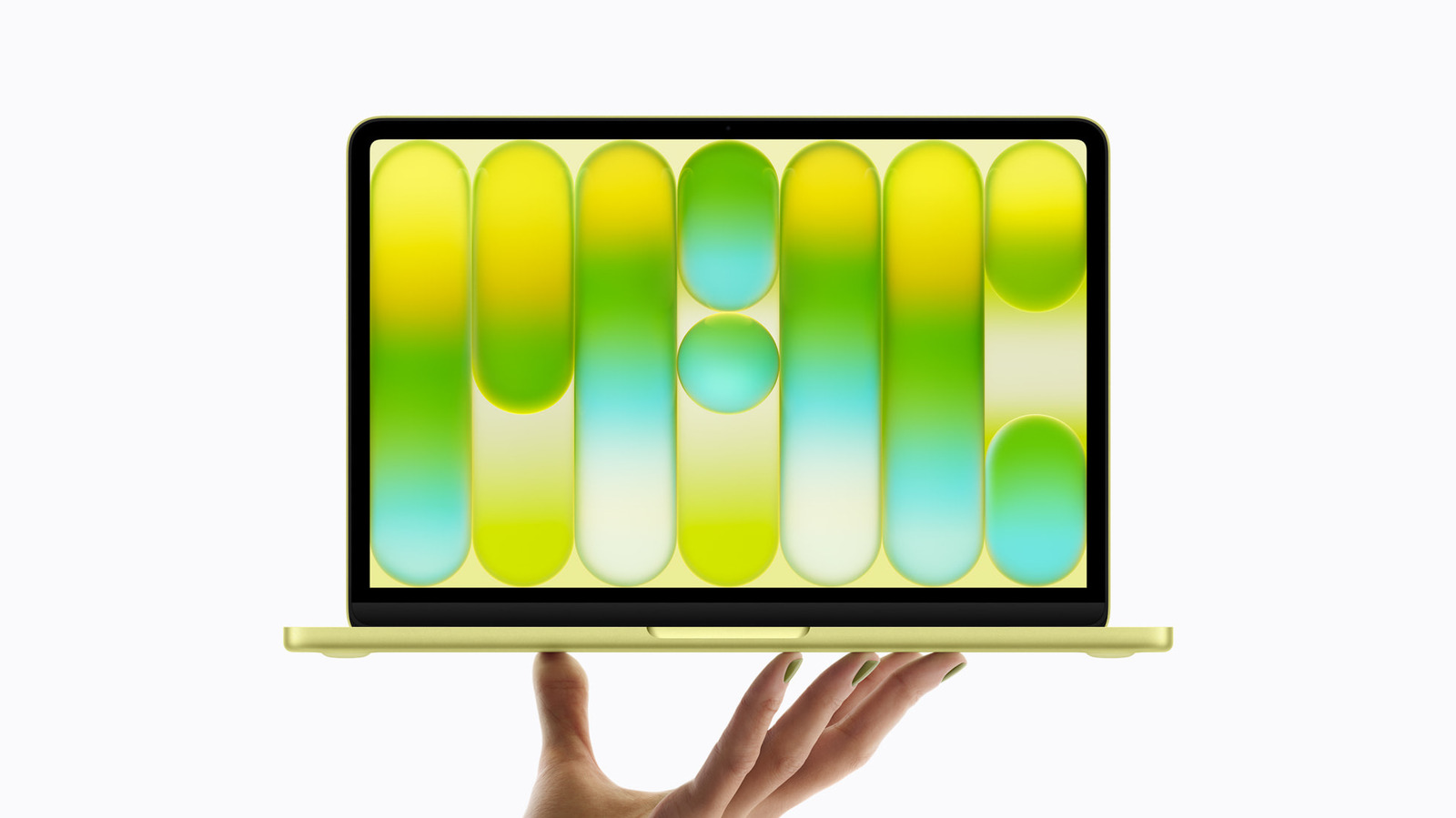
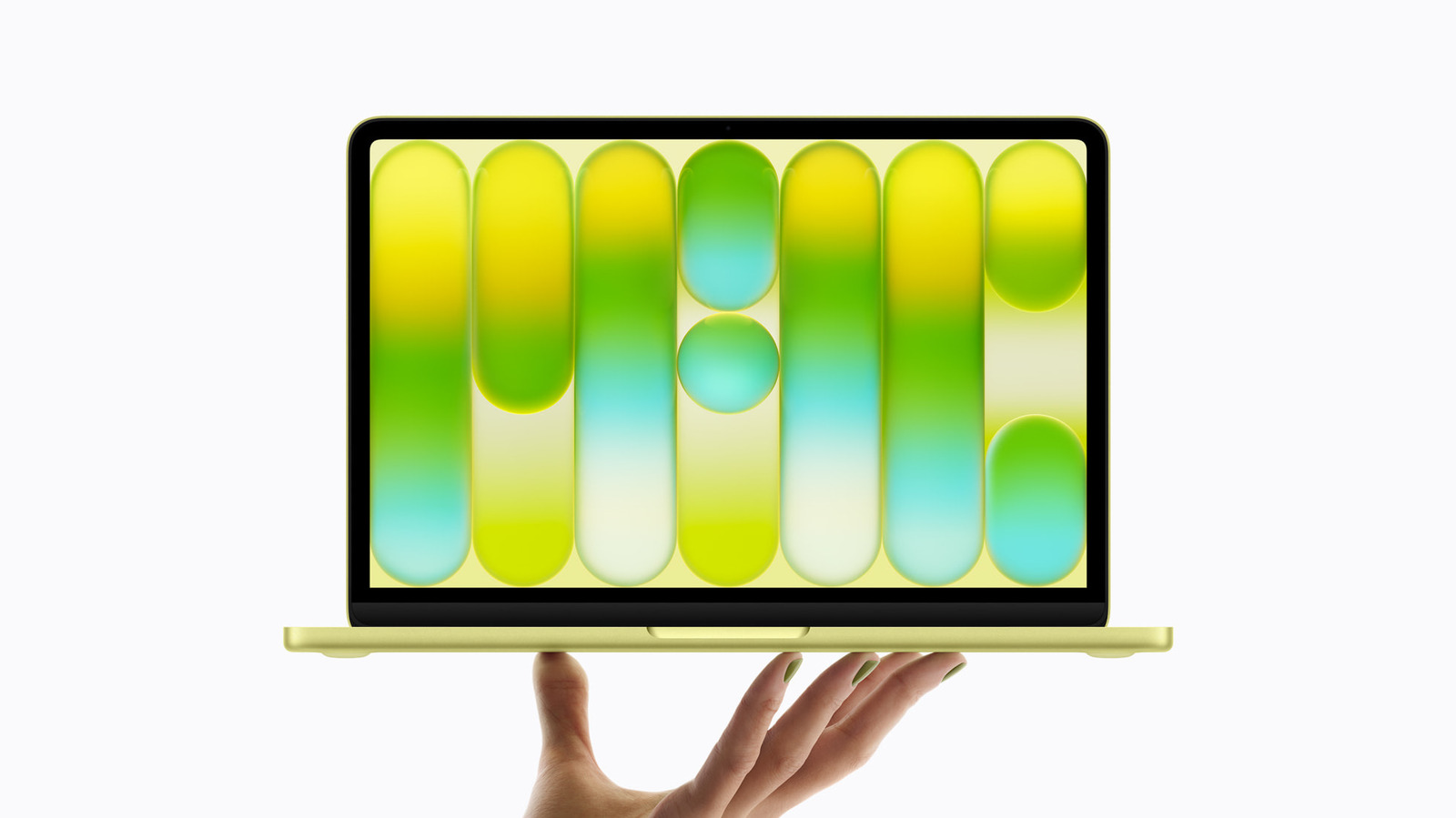
Many of its gadgets are well-built and offer a polished experience in both hardware and software, meaning you’re actually getting good value for price that you pay. We even received a surprise product launch from Apple this year with the MacBook Neo, which is one of the most affordable entry-level laptops you can buy today. It was so good, in fact, that it came as a shock to the entire PC market, with some major manufacturers, like Asus, conceding that it did not expect it to launch at just $599.
So, let’s look at some a few recent Apple products and compare them with what Samsung has to offer. We’re mostly looking at laptops and tablets, though, as we found that Samsung phones and accessories typically match or undercut Apple. It’s difficult to make an apples-to-apples (pun intended) comparison between these brands, but we made sure to match devices with near similar specifications, so that neither brand gets an unfair advantage over the other.
Apple M5 Pro MacBook Pro vs. Samsung Galaxy Book6 Ultra
The MacBook Pro is Apple’s most expensive laptop, and it’s available with three different processors — the top-of-the-line M5 Max, the mid-range M5 Pro, and the entry-level M5 chip. For this comparison, we’ll look at the mid-range 16-inch M5 Pro variant, which goes for $3,099, and compare it with Samsung’s top-of-the-line Galaxy Book6 Ultra, which retails for $3,799.99. This comparison might seem unfair, as we are comparing a mid-range Apple laptop with Samsung’s best, but the M5 Pro on the MacBook Pro is so powerful that multiple benchmarks put it ahead of the Intel Core Ultra 7 356H found on the Samsung.
Aside from the processor, we can also compare the memory and storage configuration of both devices. The M5 Pro MacBook Pro comes with 48 GB of Unified Memory and 1 TB of storage — it originally only came with a 24 GB configuration, but we upgraded it to 48 GB to account for the fact that the Book6 has 32 GB of RAM. We could have chosen a 36 GB configuration, but this meant that we’d have to pick the even more powerful M5 Max chip, which would also put the price at $3,899.
The only advantage that the Book6 Ultra has is that it has a discrete GPU with 8 GB of dedicated VRAM. However, we’ve more than made up for this with the extra 16 GB of Unified Memory we added to the Apple laptop.
So, unless you specifically need Windows, a discrete GPU, or an x86 processor for your workflow (or gaming), the Apple M5 Pro MacBook Pro delivers much more power than the Samsung Galaxy Book6 Ultra. More importantly, it’s $700 cheaper, saving quite a significant amount.
Apple M5 MacBook Pro vs. Samsung Galaxy Book5 Pro
If you don’t need that much processing horsepower, but you do still need something good enough for the occasional video editing project, you can consider the entry-level variant of the MacBook Pro, powered by the still powerful M5 chip. This laptop is much more affordable at just $1,699, but pairs the base chip with a more modest 16 GB of Unified Memory. Still, it comes with 1 TB of storage, so you don’t need to buy an external drive unless you store a lot of data. We will compare this with the Galaxy Book5 Pro, Samsung’s own mid-range contender, that comes in at $1,949.99.
The Samsung laptop comes with the same 16 GB of RAM and 1 TB SSD, but it’s powered by an Intel Core Ultra 7 256V processor. This device does not have a discrete GPU, so you’ll have to settle for the integrated Intel Arc 140V GPU, making it closer to the integrated GPU design of the Apple silicon. Again, we compared the two chips using various benchmarks, and Apple silicon’s advantage shines through, outperforming Intel’s offering in nearly every metric.
One disadvantage that the M5 MacBook Pro has over the Galaxy Book5 Pro is that it has a smaller 14-inch screen. This might be a deal breaker for some users, but you need to go up to the more expensive M5 Pro (starting at $2,699) if you want the bigger screen. Nevertheless, you’re getting so much more performance while also saving $250 if you choose the M5 MacBook Pro over the Galaxy Book5 Pro.
13-inch Apple M4 iPad Air vs. 12.4-inch Samsung Galaxy Tab S10+
There is no shortage of cheap tablets in Samsung’s current lineup, and you can even get one for less than $300. However, we cannot realistically compare the cheapest tablet (the $599.99 Galaxy Tab S10 FE+) that falls near the 13-inch size of the $899 256 GB M4 iPad Air. After all, we’re considering other specifications, too, aside from the screen size.
The closest Samsung competitor to the large mid-range Apple tablet is the $939.99 12.4-inch Galaxy Tab S10+ powered by a MediaTek Dimensity 9300+ chip. Again, we compared the three processors using various benchmarks and the Apple M4 silicon always came out on top, followed by the MediaTek processor, while the S10 FE+’s Exynos 1580 chip sits in last place.
The 13-inch M4 iPad Air actually starts at just $799, but since we’re comparing it to 256 GB Samsung tablet, we opted for the 256 GB version for this comparison, and this one costs $100 more. Despite that, it’s still cheaper (and more powerful) than the slightly smaller Galaxy Tab S10+. The biggest advantage you get with the more expensive Samsung tablet is its AMOLED display, which offers deeper blacks and more vibrant colors compared to the IPS LCD screen found on the iPad Air.
Of course, the iPad comes with iPadOS, making it easier to use if already have a MacBook, iPhone, or other Apple products. It’s also good enough that you can use it as a laptop replacement, especially with the release of iPadOS 26. Because it’s about $40 cheaper than the Samsung option, you might just find it to be the more value-packed option if you have a $900 budget for your next tablet.
Apple MacBook Neo vs. Samsung Galaxy Book4 Edge
Apple launched its cheapest laptop in March 2026 with the $599 MacBook Neo, and you can get it for under $500 if you qualify for a student discount. However, you won’t feel you’re using a cheap laptop, even though it’s only powered by the A18 Pro, a chip primarily designed for the iPhone, and comes with either 256 or 512 GB of storage and 8 GB of Unified Memory. These are just some of the things you need to know before buying the Neo. These might seem sparse for power users, but it should be more than enough for the average student and casual user.
By comparison, Samsung’s cheapest offering is the $999.99 Galaxy Book4 Edge. This has double the RAM, at 16GB, and a starting storage capacity of 512 GB. It also has a larger 15.6-inch screen (compared to the 13 inches you’re stuck with on the Neo), and it’s powered by the Snapdragon X1-26-100 SoC (system on a chip) — an ARM-based chip designed for portable devices.
While theiPhone chip outperforms the latter in single-core performance, the Snapdragon laptop chip scored higher when it came to multi-core tests. This makes the Neo more likely to perform better in simple tasks like web browsing and word processing, while the Samsung is more suitable for multitasking and advanced workloads, like photo and video editing.
The biggest difference between the two, however, is the price — even if you pick the 512GB version of the Neo, which costs $699, you’ll still save $300. If you qualify for a student discount and prefer the cheapest Neo, you’re effectively paying half the cost of the Samsung laptop. So, if you’re a cash-strapped student, this difference is more than enough reason to get the Apple laptop.
11-inch A16 iPad vs. 10.9-inch Samsung Galaxy Tab S10 FE
While the $349 11-inch A16 iPad is the most affordable tablet in Apple’s tablet lineup, we cannot compare it to Samsung’s cheapest offering, the $299 Galaxy Tab A11+. After all, the A16 chip found on the Apple tablet delivers significantly better performance than the MediaTek Dimensity 7300 chip on the cheapest Samsung tablet.
Instead, we will go with the $469.99 10.9-inch Galaxy Tab S10 FE, which uses a more powerful Exynos 1580 SoC. Despite that, the A16 on the iPad still offers more performance than the Exynos chip, making it a better option for light gaming and other basic tasks.
Both the A16 iPad and the Galaxy Tab S10 FE come with a minimum of 128 GB of storage, although the latter offers 8 GB of RAM (compared to the iPad’s 6 GB) for the 128 GB version. You also get 12 GB of RAM if you choose the larger 256 GB storage capacity on the Samsung. However, you’ll only feel this difference if you’re into heavy multitasking, which you should try to avoid on entry-level tablets like these.
If you can overlook the slight difference in RAM between the two gadgets; you’ll save over $120 if you pick the base iPad over the Galaxy Tab S10 FE. This is a significant difference, especially if you only plan to use it for watching movies, browse the internet, and play some casual games. But if you’re a student and want to get the Samsung tablet for schoolwork, consider adding $30 and getting a MacBook Neo instead.

Stephan is the sports journalist for the Maple Grove Report.