5 Cheaper Alternatives To The Mazda CX-5


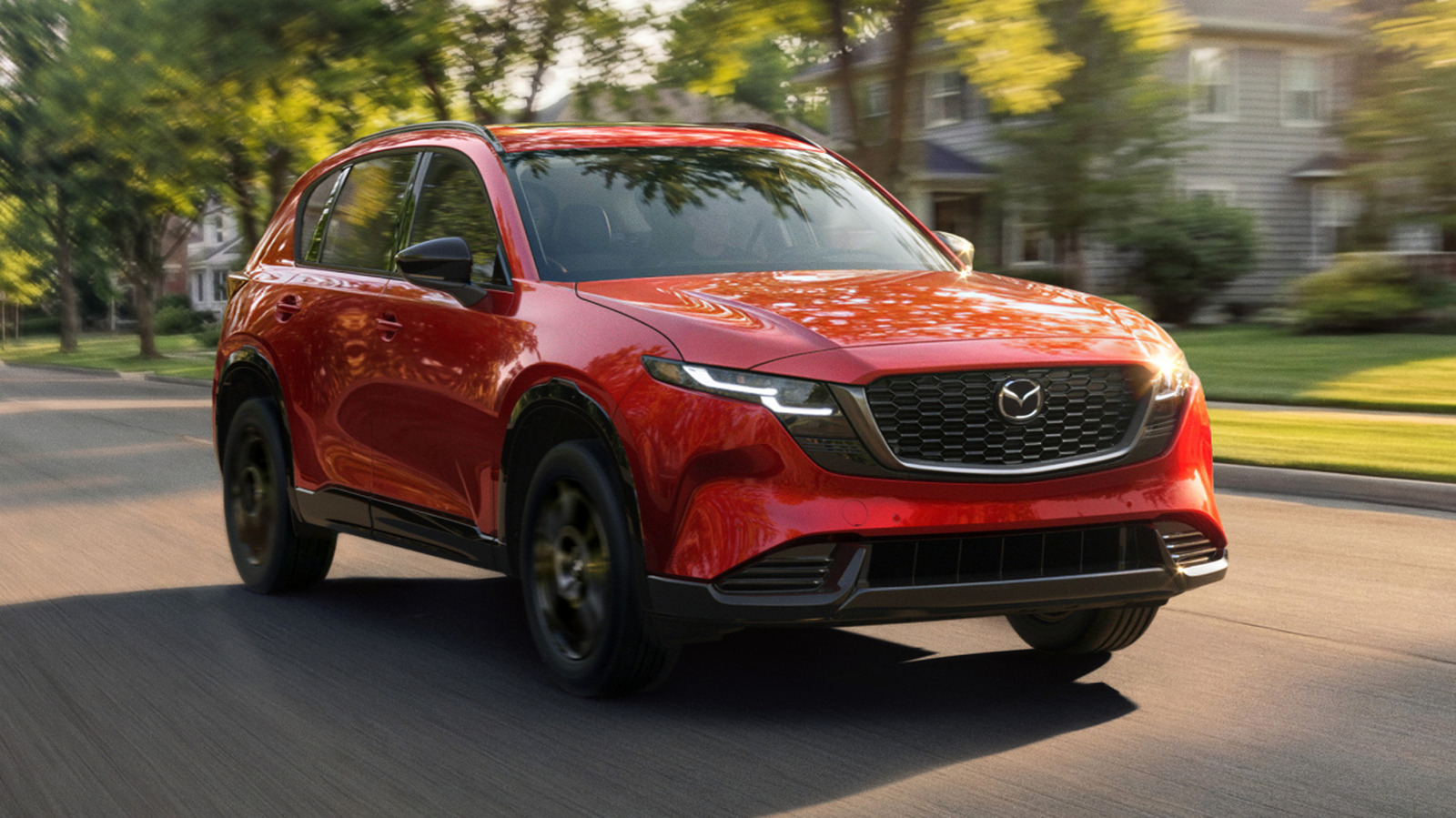
Buyers looking for a compact SUV have plenty of affordable options to choose from, including the Mazda CX-5. For the 2026 model year, the CX-5 starts from $31,485 (including a $1,495 destination fee) in base-spec form, undercutting rivals like the Honda CR-V and Toyota RAV4. Even with its affordable starting price, the base CX-5 is well equipped, with a 12.9-inch infotainment touchscreen and all-wheel drive as standard. All 2026 CX-5 trims also share the same 187 hp four-cylinder engine. Unlike many of its rivals, no hybrid option is available.

Mazda gave the CX-5 some upgrades for the 2026 model year, revising its styling both inside and out as well as adding a fresh batch of new tech. That has helped make the SUV a more competitive option in its segment, but it’s still not the cheapest.

Buyers looking to spend as little money as possible on their new SUV can still save a little by looking elsewhere, with rival Japanese, Korean, and American manufacturers all selling similarly sized models for less. Confusingly, Mazda itself even offers a cheaper alternative to the CX-5, and it could cost less at the fuel pump to boot.

Kia Sportage

The Kia Sportage offers a lot of capability for a modest price, and that has turned it into a perennially popular model. In 2025 alone, the Korean carmaker sold more than 180,000 examples in the U.S. In its base gas-powered form, it’s cheaper than the CX-5, with a starting price of $30,285 (including a $1,495 destination fee). The catch is that base versions of the Sportage are front-wheel drive, and adding all-wheel drive bumps the price up to $32,085. In contrast, the CX-5 offers all-wheel drive as standard.

Buyers who stick with front-wheel drive will also find that the 2026 Sportage is slightly more efficient than both its all-wheel drive sibling and the CX-5. While the all-wheel drive Mazda and all-wheel drive Kia achieve the same EPA-estimated 26 mpg combined, the front-wheel drive Kia should hit 28 mpg. Though, those figures all pale in comparison to the Kia Sportage Hybrid, which should achieve 42 mpg in front-wheel drive form.

Despite its superior efficiency, the Sportage Hybrid isn’t much more expensive to buy than the CX-5. It starts from $31,985 for the 2026 model year, and that $500 difference will be very quickly offset in fuel savings. According to the EPA’s estimates, a front-wheel drive Sportage Hybrid should cost $900 less in fuel every year than a CX-5, assuming an annual mileage of 15,000 miles.

Chevrolet Equinox

A base Chevy Equinox starts from $30,795 (including a $1,995 destination fee), and much like the Kia Sportage, it only offers front-wheel drive as standard. If all-wheel drive is a must-have option, you’ll be looking at a starting price of $32,795. In efficiency terms, there isn’t much difference between the Chevy and its gas-powered Japanese and Korean rivals. The all-wheel drive Equinox achieves 26 mpg combined, which is an equal figure to the Mazda CX-5 and all-wheel drive Sportage. Much like the Mazda, Chevrolet does not offer a hybrid version of the Equinox.

While the CX-5’s entire trim range is catered towards buyers who prefer to keep their cars firmly on the asphalt, the Equinox offers the Activ trim for those who need to venture onto a wider range of surfaces. The Equinox Activ is certainly no hardcore off-roader, but when we tested it in 2025, it handled a course of unpaved roads without complaint. The beefier tires and added cladding also help toughen up its appearance compared to the rest of the Equinox range.

The downside is that the Equinox Activ isn’t cheap. Without optional extras, it starts from $37,595. For a similar price, you could get the CX-5 2.5 S Premium trim, which features niceties like a 12-speaker Bose audio system and leather-trimmed seats. Our reviewer also found that the all-terrain tires of the Equinox Activ dented the car’s fuel efficiency by several mpg, despite EPA figures claiming that there was no difference between trims.

Mitsubishi Eclipse Cross

Both the Kia Sportage and Chevrolet Equinox have features that make them an appealing alternative to the Mazda CX-5, aside from simply being cheaper upfront. In comparison, the Mitsubishi Eclipse Cross doesn’t really do anything to stand out from the crowd. It is, however, the cheapest car here.

For 2026, Mitsubishi will sell you an Eclipse Cross for as little as $29,750 (including a $1,795 destination fee). The base trim also gets Mitsubishi’s S-AWC all-wheel drive system as standard. In its cheapest form, the Eclipse Cross hits an EPA-estimated 26 mpg combined, putting it exactly on par with its rivals, but in higher trims, it drops slightly to 25 mpg combined.

At the very top of the trim range is the Ralliart trim that loosely draws on the brand’s rallying heritage, but the changes are only cosmetic. There’s a rear wing, contrasting red skirts, and mudflaps, but Mitsubishi keeps the same 1.5-liter engine under the hood. With its 152 hp output, it makes the Eclipse Cross one of the slowest new cars in America from 0-60 mph. It’s still not quite as slow as the Chevrolet Equinox, mind, but it’s still comfortably bested by all of its hybrid rivals.

Nissan Rogue

The range-topping Nissan Rogue Platinum isn’t very exciting, although that’s not necessarily a bad thing. That trim is very pricey, but its base-spec variant is a much more wallet-friendly commuter car. The 2026.5 model year Rogue starts from $31,035 (including a $1,545 destination fee). Like many of its competitors, the Rogue is front-wheel drive in its base form. Adding all-wheel drive brings its starting price to $32,435, making the Mazda CX-5 slightly cheaper upfront if sending power to all four wheels is essential.

The difference in upfront costs between the base Rogue and CX-5 is minimal, but in efficiency terms, the Rogue should consistently be the cheaper option. According to the EPA, the front-wheel drive Rogue is capable of hitting 32 mpg combined, while its all-wheel drive sibling achieves 31 mpg. As a reminder, the CX-5 manages only 26 mpg combined according to the agency.

The least efficient Rogue trim is the Rock Creek, which is rated for 29 mpg combined. It’s a few thousand dollars more expensive than a base Rogue, but the Rock Creek trim adds extras like all-terrain tires and roof rails. Also included are plusher leatherette seats, while base trims receive cloth upholstery. As you’d expect for an all-terrain trim, all-wheel drive on the Rogue Rock Creek comes standard.

Mazda CX-50

Alongside the CX-5’s many rivals from outside Mazda’s dealerships, there’s one rival that can be found within them. The CX-50 shares plenty of components with the CX-5, including its base 187 hp engine, but it’s built with a slightly different audience in mind. While the CX-5 is tailored for the road, the CX-50 will tackle the great outdoors as well. It features a higher ride height and a lower roofline, as well as plastic cladding that should prove more resistant to scratches from rocks and plants.

Upfront, the CX-50 is marginally cheaper than the CX-5, with a base price of $31,395 (including a $1,495 destination fee). Base models also offer identical fuel efficiency to the CX-5, while the 256 horsepower turbocharged engine that’s available in higher trims achieves a single mpg less, hitting 25 mpg combined. Notably, that more powerful engine option is absent from the CX-5’s trim lineup.

Also missing from the CX-5 lineup is a hybrid option, but the CX-50 delivers in that regard too. The CX-50 Hybrid is pricier upfront, with a starting price of $36,245, but it should pay for itself over time at the gas pump. Based on an annual mileage of 15,000 miles, the EPA estimates that the base CX-50 will cost $2,400 in fuel each year, while the CX-50 Hybrid will cost $1,650. That equates to a saving of $750 annually, which means it should take around 6.5 years to fully offset the additional upfront cost of purchasing the hybrid.


Source link

Leave a Reply

Subscribe to Our Newsletter

Get our latest articles delivered straight to your inbox. No spam, we promise.

Recent Reviews


Deer Valley’s new terrain expansion is one of the most ambitious projects in modern skiing. The resort plans to nearly double its skiable terrain while maintaining the industry-leading standards it’s known for. We spent an extended trip in early 2026 skiing the new footprint alongside Deer Valley representatives and Olympic skier Fuzz Feddersen to see how it all came together.

Construction is still ongoing, and this season marked the worst snow year in Deer Valley’s history. Even so, we found the new terrain diverse and distinct, yet seamlessly integrated into the legacy Deer Valley experience.

This guide introduces the terrain, lifts, and base-area amenities in Deer Valley’s East Village so you can make the most of the Expanded Excellence initiative.

East Village: A Second Front Door

Keetley Express Opening Day
Photo Credit: Deer Valley Resort.

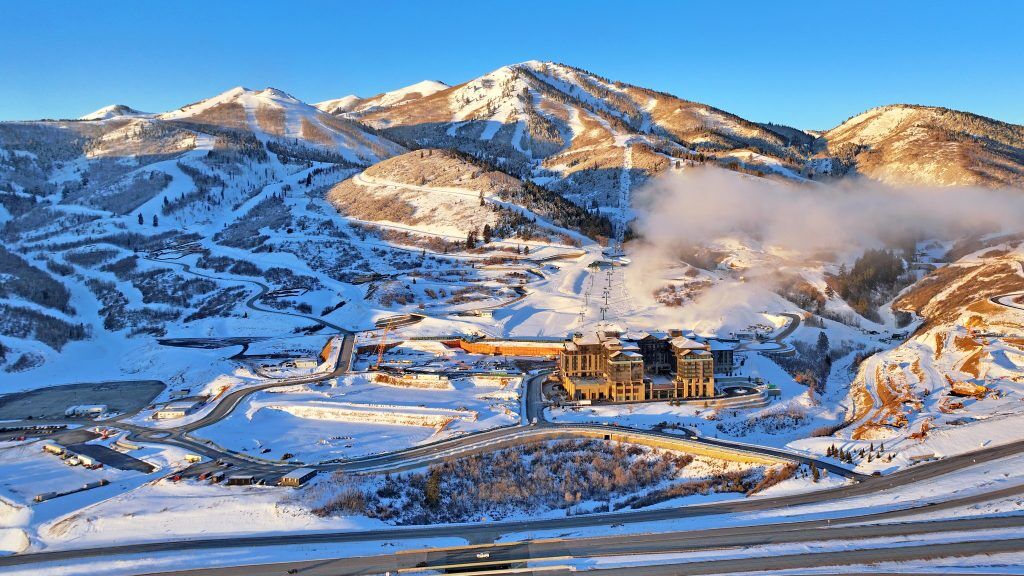
Deer Valley East Village is seamlessly connected on the slopes, but geographically separate from the main resort, and that separation works in its favor. Accessed via US-189, it bypasses Park City traffic entirely.

Yes, it’s still a work in progress. You’ll see active construction throughout the base area. But the core infrastructure is already in place, and it functions like a fully supported ski base. What’s here now works and what’s coming will only enhance it.

The East Village base area delivers the Deer Valley essentials: free parking, rental shop, ski valet, and East Village Restaurant, where a bowl of the resort’s signature chili tastes especially good on a cold afternoon.

Where to Stay in East Village (25/26 Season)

High hot chocolate at Grand Hyatt Deer Valley Utah
Photo Credit: Jenn Coleman.

For the 25/26 season, the clear lodging choice is the newly completed Grand Hyatt. It offers a signature restaurant, on-site Ski Butlers rentals, a full spa, and shuttle service to Park City and Snow Park. There’s no ski-in/ski-out access yet, but a short shuttle brings you directly to the East Village base.

Additional hotels are expected to open for 26/27, which will further transform East Village into a true walkable ski hub.

We found the Grand Hyatt welcoming and highly functional, particularly with Ski Butlers on-site and a massive locker room that makes gearing up painless. Their High Hot Chocolate service, modeled after high tea but featuring locally processed cocoa, may become a new tradition for us. It’s indulgent enough to stand in for a light meal or serve as a sweet reset between Park City’s famously rich dinners.

The only logistical wrinkle is shuttle coverage. Service does not extend to Empire Canyon (Fireside Dining) or Silver Lake (Stein Eriksen Lodge, Mariposa), so a bit of planning is required. Still, between Snow Park (St. Regis, Cast & Cut) and downtown Park City, dining options are abundant. With new hotels opening next season, you may soon be able to walk to a different restaurant every night and still not try them all.

Snow Science: The Engine Behind the Expansion

Expanded Terrain snowmaking gun
Photo Credit: Deer Valley Resort.

Deer Valley’s reputation has always been built on snow quality, from immaculate corduroy to sophisticated snowmaking. The expansion continues that legacy in a serious way.

The new terrain draws most of its water from Jordanelle Reservoir. Roughly 80 miles of new snowmaking pipe now support more than 1,200 high-efficiency snow guns. The reservoir isn’t just scenic, it’s foundational.

What’s more impressive is the sustainability loop. Deer Valley is allocated just 1% of the reservoir’s available water. Through dedicated irrigation channels, approximately 80% of that allotment is returned by season’s end. Combined with an expanded grooming fleet, that system allowed the resort to open a record number of runs during a historically hot and dry winter.

If you’re wondering how the terrain skied so well in a lean year, this is your answer.

East Village Gondola: The Spine of the New Terrain

East Village Gondola
Photo Credit: Deer Valley Resort.

The 10-passenger high-speed East Village Gondola is one of the two primary lifts out of the base area. It’s a 15-minute, 3,000-vertical-foot ride to Park Peak (9,350’), with a mid-station at Big Dutch Peak (8,170’).

From Park Peak, you access some of Utah’s longest runs along with terrain served by Pinyon Express and the Vulcan Express / Revelator Express lifts.

Green Monster is the headline act: a 4.85-mile green descent between Park Peak and Baldy Mountain, nearly 40% longer than Park City Mountain’s Home Run. It weaves between two blues: Carbonite, which drops along the ridge, and Age of Reason, which follows the valley floor.

Deer Valley partnered with longtime Mountain Host Michael O’Malley to name the new terrain in ways that honor both local mining history and the resort’s evolving identity. “Green Monster” references a Wasatch County copper mine, though you’ll never convince me there isn’t a double entendre for the 37-foot-tall wall in Fenway Park that has foiled many home runs. Common sense tells us that “Age of Reason” is an homage to Thomas Paine, and I could imagine cruising down the exposed ridge would freeze you like the compound that imprisoned Han Solo. However, “Carbonite” is a nod to Park City’s silver mining legacy. 

Names aside, the terrain progression is smart. Carbonite offers a manageable ridge experience before committing to Redemption Ridge. And if confidence wavers, Green Monster provides a bailout.

Another thoughtful touch is Corduroy Lunch. Select freshly groomed terrain off the gondola’s mid-station remains roped until noon. Carving fresh tracks midday is a true afternoon delight. 

Keetley Express: The Connector

Keetley Express lift Deer Valley Ski Resort Utah
Photo Credit: Deer Valley Resort.

Keetley Express is the other primary East Village lift and likely the fastest gateway back to legacy Deer Valley terrain. After the 1.25-mile ride up, a short ski down Road to Sultan brings you to Sultan Express.

Of course, you have to take Sultan up the mountain before you get back to skiing. That sets you up for over 5 continuous miles of green runs if you combine Homeward Bound with McHenry, or take a run on the classic black Stein’s Way. You could also use connectors to access the lower half of Green Monster or McHenry directly, or try the plethora of intermediate runs off Keetley Point.

Advanced skiers should keep Keetley on their radar as well. When conditions align, it’s a sneaky access point to Mayflower Bowl and its quiet pocket of expert terrain.

Aurora: Small but Essential

McHenry / Aurora area Deer Valley Ski Resort Utah
Photo Credit: Jenn Coleman.

Aurora is easy to underestimate. It’s only about 700 feet long and takes two minutes to ride, but it plays a crucial role.

It’s the return lift from McHenry, which connects directly to Silver Lake Lodge, and it services Keetley Point terrain. There’s also a confusing sign near the top of Aurora on Green Monster directing skiers left toward East Village. If you follow it, you’ll earn a short Aurora ride, and remember to hang right next time if you want to return directly to Keetley and the gondola.

Tiny lift. Big utility.

Vulcan Express & Revelator Express: Commitment Terrain

Woman carving Ridgeline at Deer Valley
Photo Credit: Deer Valley Resort.

These lifts rise from one of the steepest valleys in the Deer Valley footprint, so steep that lift towers had to be installed by helicopter.

Redemption Ridge is the signature descent, often described as Stein’s Way on steroids. At roughly twice the length of Stein’s, it drops 2,700 vertical feet over 2.5 miles. Once you commit, you’re in it, with steeper, more technical lines breaking off the ridgeline into the valley.

If that feels ambitious, start on Stein’s to calibrate. Carbonite also offers a similar exposed-ridge experience that’s much more forgiving. But If the snow is right and you can hang, Redemption could be your saving grace from the Bambi Basin blues.

Pinyon Express: High-Alpine Access for Everyone

Pinyon Express Chairlift
Photo Credit: Deer Valley Resort.

Pinyon Express and Revelator both reach Park Peak, but their personalities diverge from there.

Pinyon serves a beginner-friendly zone on the north side of Park Peak, allowing newer skiers to experience high-mountain terrain without intimidation. Clipper stands out because it also connects the East Village Gondola back into legacy Deer Valley terrain, but there are multiple easy route options.

Because Pinyon sits right at the boundary between old and new terrain, it functions as a seamless crossover point. Novice skiers and ski classes can access this alpine playground from either side of the resort.

The Future of Deer Valley Is Already Underfoot

Fuzz_Ski_with_a_Champion
Photo Credit: Deer Valley Resort.

It would be easy to judge an expansion like this on acreage alone. Nearly doubling skiable terrain is headline material in any snow year, let alone the driest season in resort history. But what impressed us most wasn’t the scale; it was the intention.

Expanded Excellence doesn’t feel bolted on. It feels studied. Deliberate. The lift placements make sense. The terrain progression makes sense. Even the names tell a story. You can ski a 4.85-mile green down Green Monster, test your mettle on Redemption Ridge, duck into legacy terrain off Keetley, and end the day with corduroy that rivals anything Deer Valley has ever groomed, all without feeling like you’ve left the original footprint of the resort.

That’s no small feat.

Skiing with Olympic veteran Fuzz Feddersen gave us an insider’s lens, but even without that access, the throughline is obvious: Deer Valley isn’t chasing growth for growth’s sake. They’re building a second front door that will eventually feel as iconic as Snow Park or Silver Lake, and they’re doing it with the same snow science, guest service, and meticulous grooming that built their reputation in the first place.

East Village still hums with construction equipment. You’ll see cranes on the skyline and fresh dirt where hotels will soon rise. But beneath that temporary noise is something permanent: infrastructure that works, terrain that skis well in lean years, and a blueprint that positions Deer Valley for the next several decades.

If this was Expanded Excellence in the worst snow year on record, it’s hard to imagine what it will feel like in a banner winter.

One thing is certain: the future of Deer Valley isn’t coming. It’s already here!

Ready to Book Your Trip? These Links Will Make It Easy:

Airfare:

Insurance:

  • Protect your trip and yourself with Squaremouth and Medjet
  • Safeguard your digital information by using a VPN. We love NordVPN as it is superfast for streaming Netflix
  • Stay safe on the go and stay connected with an eSim card through AloSIM

Our Packing Favs:

  • We LOVE Matador Equipment for their innovative products and sustainability focus. Their SEG45 is a game changer when you need large capacity while packing light.
  • Travel in style with a suitcase, carry-on, backpack, or handbag from Knack Bags
  • Packing cubes make organized packing a breeze! We love these from Eagle Creek

Disclosure: A big thank you to Deer Valley Resort for hosting us, setting up a fantastic itinerary, and usage of some of the images throughout (image credit in hover text ).

For more travel inspiration, check out Deer Valley Resort’s InstagramFacebookTwitter, and YouTube accounts.

As always, the views and opinions expressed are entirely our own, and we only recommend brands and destinations that we 100% stand behind.

Like it? Pin it for later on Pinterest!

Hi! We are Jenn and Ed Coleman aka Coleman Concierge. In a nutshell, we are a Huntsville-based Gen X couple sharing our stories of amazing adventures through activity-driven transformational and experiential travel.


Source link