5 Cheaper Alternatives To The Shelby Cobra


The Shelby Cobra was a legendary sports car that represented the realization of Carroll Shelby’s dream of building a car that would carry his name. Shelby had been a notable racing driver who had won the prestigious 1959 24 Hours of Le Mans race behind the wheel of an Aston Martin. Although a heart condition forced him to retire from racing the following year, he continued to follow his passion for high-performance automobiles.

In 1961, Shelby had heard that AC Cars in England planned to cease production of the Ace roadster because the Bristol engines they used would no longer be made. Shelby thought that the Ace body would be ideal for an American-made V8 engine that made plenty of power. That first engine was a Ford 260 cubic-inch V8, which was incorporated into the first Shelby Cobra in 1962. Over the years, as Shelby evolved into an automotive icon, the engine size would increase first to 289, then to 427 cubic inches for the Shelby Cobra 427, which ended up being a totally different car, thanks to the demands of its monster 450-horsepower engine.

Ultimately, around 1,000 original Shelby Cobras were produced, according to Hemmings. This has made the originals extremely valuable, with recently sold cars on Classic.com going for prices ranging from over one million dollars to a high of over three million for some 427 examples. So let’s now look at some “cheaper” alternatives to the Shelby Cobra, which we will define as British-made roadsters outfitted with V8 engines.

1. Sunbeam Tiger

The Sunbeam Tiger had a similar origin story to the Shelby Cobra and occurred just after Shelby started production of the 260 cubic-inch Cobra. The Rootes Group, which had been making the Sunbeam Alpine since 1959, had a West Coast Sales Manager who lived near the Shelby plant. He met with Shelby and had a prototype put together as proof of concept. Next came a production-ready version, approved by Lord Rootes himself. Rootes ordered 3,000 Ford 260 V8s for the first batch of these vehicles, which would become European cars with American muscle car engines.

Production of the Sunbeam Tiger began in June 1964. Aside from the V8, some visible differences from the Alpine version on which they were based included a wood dash, a wood steering wheel, and dual exhausts. The Tiger’s V8 engine produced 164 horsepower breathing through a two-barrel carburetor, while a Road and Track performance test of a 1964 Tiger recorded a 0-60 mph time of 7.8 seconds, with a quarter-mile time of 16.0 seconds at 84 mph. By the time that production ended in 1967, a total of 7,085 Sunbeam Tigers had been built, comprising three different series: the Mark I, the Mark IA, and the final 536 Mark II Tigers, which had the larger 289 Ford V8.

Today, according to recently sold original examples on Classic.com, Mark I and IA versions have ranged from $46,000 to $129,250, while Mark IIs start higher, selling from $77,500 up to $100,000. A lot less than a Cobra, despite sharing a similar history.

2. Morgan Plus 8

The Morgan Plus 8 also has an American connection to the V8 engine that ended up under its bonnet. While the Morgan’s 3.5-liter, 168-horsepower V8 engine was sourced from Rover, this engine started out as a Buick-designed mill originally made in the U.S. This represented a healthy upgrade over the Morgan Plus 4’s 2.2-liter, 100-horsepower Triumph-based four-cylinder engine. An Autocar Magazine road test from September 1968 showed that the Morgan Plus 8 did the 0-60 mph run in 6.7 seconds, with a quarter-mile time of 15.1 seconds at 92 mph and a top speed of 124 mph. Despite the added horses, the Plus 8 still kept the Plus 4’s ancient sliding-pillar front suspension and a live rear axle supported by semi-elliptic leaf springs.

The Morgan Plus 8 with the Rover V8 evolved considerably over its long lifespan, which started in 1968 and continued until 2004. Some of these changes included an alloy body option in 1969, a five-speed gearbox in 1977, electronic fuel injection in 1983, Lockheed brakes in 1993, plus airbags and a 220-horsepower engine option in 1997. 

To see what a Morgan Plus 8 will cost you today, recent Classic.com auction data for original-condition vehicles shows sold cars ranging from $20,000 to $70,000, with most settling between $38,000 and $57,000.

3. Triumph TR8 Convertible

The Triumph TR8 Convertible, unexpectedly powered by a V8 engine, is yet another British top-down car that got a Buick-based, Rover 3.5-liter aluminum V8 engine transplant to cure the poor performance of its four-cylinder TR7 model. Made from 1980 to 1982, the TR8 Convertible was made primarily for the U.S. and Canadian markets, where the vast majority were shipped. The TR8’s engine had two outputs, with the 49-state carbureted version producing 133 horsepower and the California-only fuel-injected version making a few more, at 137. Ultimately, only around 2,750 were produced, making them somewhat rare. There were numerous differences between the TR7 and TR8, with the TR8 receiving dual exhausts, alloy wheels, upgraded suspension and brakes, and a five-speed manual Rover transmission. An automatic transmission and air conditioning were options, but nearly every TR8 Convertible had A/C. 

Performance of the Triumph TR8 Convertible saw it clear the 0-60 mph sprint in 8.1 seconds, while top speed was between 125 and 130 mph. Road and Track recorded a quarter-mile time of 16.3 seconds at 85.5 mph.

According to Classic.com, the Triumph TR8 Convertible is another great deal on a used V8 sports car, especially compared to a Shelby Cobra. For cars in original condition sold in the past year, prices range from $8,000 to $19,500, making the TR8 Convertible an even better deal than any of the others listed so far.

4. Daimler SP250

The Daimler SP250 is yet another British sports car with a V8 engine, but this V8 owed nothing to Detroit. The Daimler SP250 originally debuted at the 1959 New York Auto Show as the  Daimler Dart. After Chrysler complained that “Dart” had already been registered as one of its Dodge model names, Daimler renamed it the SP250. The Daimler SP250 was somewhat of an odd duck, being a fiberglass-bodied sports car made by a carmaker that primarily sold limousines to the British royalty, who own some very rare cars, and other upper-class denizens. It was made from 1960 to 1964.

The V8 that sat beneath the fiberglass hood of the Daimler SP250 was actually a Hemi, with a 2.5-liter capacity and a conservatively rated 140-horsepower output. The SP250’s chassis was supposedly copied from that of the Triumph TR2, with its independent front suspension and semi-elliptic ‘cart springs’ holding up the rear. Four-wheel Girling disc brakes were standard. Transmission options included a four-speed manual or a three-speed automatic. Motor Sport magazine recorded the SP250’s performance, with 0-60 mph in 9.0 seconds, 0-80 mph in 15.4 seconds, and a quarter-mile time of 17 seconds — quite good for the early 1960s.

A total of 2,648 Daimler SP250s were produced, with around 40% sold in North America. Current values, based on selling prices for originals sold here over the past year on Classic.com, show that you can pick up an SP250 for between $17,100 and $48,250. It’s another great buy, compared to what a Shelby Cobra costs these days.

5. Triumph Stag

The Triumph Stag, a car powered by a V8 engine, is a cautionary tale that played out amid major financial problems stemming from the British Leyland merger. Other factors intervened as well, including labor unrest, poor quality control that ultimately led to engine failures, and the Middle East oil crisis. 

The Triumph Stag was a four-seat convertible designed by Michelotti of Turin, Italy. It was intended to compete with the Mercedes-Benz SL roadster in the U.S. market. The T-top style roof was actually added to prevent the cowl from shaking while the car was in motion. The production Stag was advanced for its day, having fully independent suspension, power steering and brakes, a four-speed manual transmission with optional overdrive, and a three-speed automatic for those owners who preferred it. The 3.0-liter, overhead cam V8 engine that Triumph created in-house produced 145 SAE net horsepower in U.S. trim and did 0-60 mph in 10.0 seconds, with a quarter-mile time of 17.4 seconds at 80 mph, according to Road Test magazine. While the Stag was produced from 1970 to 1978 in most parts of the world, its U.S. run was only from 1971 through 1973, with fewer than 2,900 of the roughly 26,000 total Stags sold in the U.S.

Thanks to the work of dedicated Triumph Stag clubs around the world, the car has been supported, and the problems eventually overcome. Based on figures from Classic.com, Triumph Stags sold in the U.S. over the past year ranged from $9,276 to $20,000. Not a bad deal.


Source link

Leave a Reply

Subscribe to Our Newsletter

Get our latest articles delivered straight to your inbox. No spam, we promise.

Recent Reviews


Bucket list trips for 2026 are shaping up to be bigger, bolder, and more experience-driven than ever. Travelers aren’t just checking off countries; they’re chasing moments—auroras dancing over Arctic fjords, elephants padding through misty savannas, and long, slow dinners in cities where food is practically a religion.

With international tourism up around 5% in 2025 and still growing, demand for “trips of a lifetime” is surging alongside interest in adventure, wellness, and deep cultural immersion. Surveys consistently show that top bucket list dreams include the northern lights, iconic national parks, overwater bungalows, and legendary cities like Tokyo and Paris.

Below is a guide to 15 curated bucket list trips for 2026 that blend classic, once-in-a-lifetime icons with emerging destinations and new travel trends.

How We Chose These Bucket List Trips For 2026

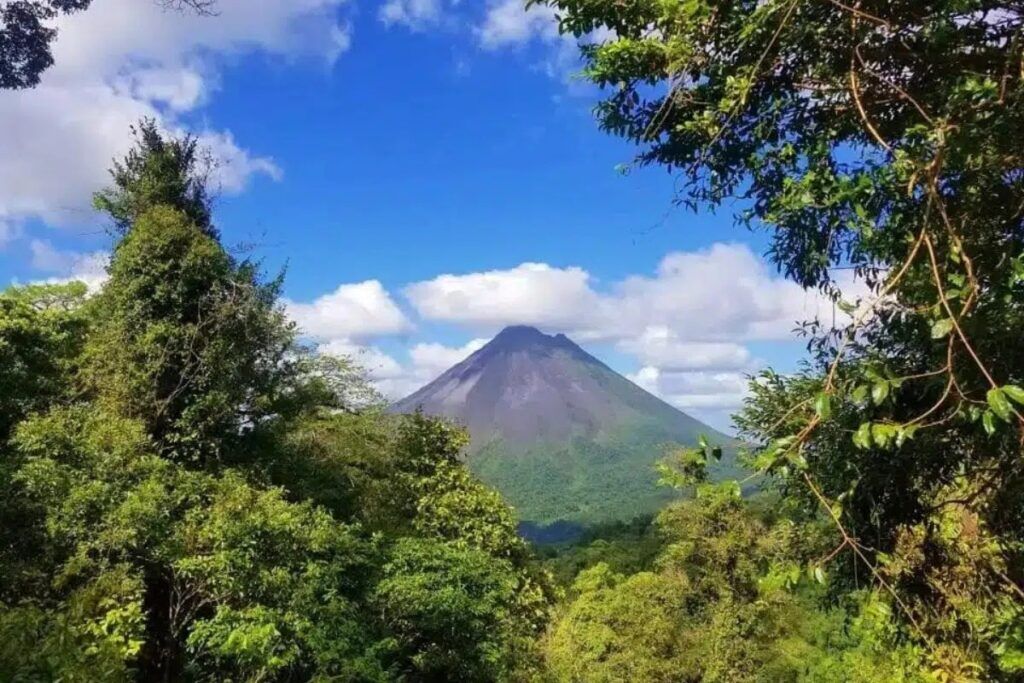
Arenal Volcano Costa Rica
Photo Credit: Jenn Coleman.

To build this list, we pulled from:

  • 2026 “where to go” lists from major travel publications and tour operators.
  • 2026 trend reports highlighting new hotspots from brands like American Express Travel and Four Seasons.
  • Fresh “bucket list experiences” roundups focused on once-in-a-lifetime safaris, rail journeys, and wellness escapes.

You’ll see a mix of:

  • Epic nature: auroras, mountains, deserts, and wildlife
  • Deep culture: food cities, historic routes, and sacred sites
  • Wellness and slow travel: spa breaks, rail journeys, and retreats
  • Responsible choices: places where tourism supports conservation and communities

Use this as your starting point to plan your own bucket list trips for 2026 that actually match how you like to travel.

1. Chase the Northern Lights in Arctic Europe

Northern Lights Iceland
Photo Credit: Deposit Photos.

Seeing the aurora borealis is still one of the most coveted bucket list experiences for Americans—it ranks number one in some recent surveys. For 2026, look to:

  • Tromsø and the Lofoten Islands (Norway) for fjords and cozy fishing villages
  • Lapland (Finland/Sweden) for glass igloos, reindeer safaris, and snowshoeing
  • Iceland for a blend of auroras, waterfalls, hot springs, and easy road-tripping

Why it’s a 2026 must:

  • Peak aurora season (roughly September–March) aligns with strong solar activity cycles.
  • Northern Europe continues to expand winter experiences—ice hotels, Sami culture tours, and wellness-focused saunas are all on the rise.

If “see the northern lights” has been sitting at the top of your list for years, 2026 is an ideal time to finally go.

2. A Classic African Safari with a Conservation Focus

Wandering group of elephants in Ngorongoro Crater Tanzania Africa
Photo Credit: Jenn Coleman.

Safari has always been a hallmark of bucket list travel, but the new trend is going deeper—fewer lodges, longer stays, and a clear link to conservation or community development.

Top 2026 choices:

  • Kenya’s Maasai Mara & conservancies – phenomenal big-cat viewing and community-run conservancies
  • Tanzania (Serengeti & Ngorongoro) – classic migration routes, crater landscapes, and cultural add-ons with Maasai and Hadzabe communities
  • Botswana’s Okavango Delta – water-based safaris, mokoro (dugout canoe) trips, and a strong low-impact tourism model

Look for lodges and operators that:

  • Support anti-poaching and habitat protection
  • Employ and train local guides
  • Limit vehicle numbers at sightings

For many travelers, a safari is the defining bucket list trip for 2026.

3. Overwater Bungalows in Bora Bora or the Maldives

Overwater Bungalows in Bora Bora
Photo Credit: Deposit Photos.

Sleep above turquoise water, step off your deck into a lagoon, and watch reef fish cruise under your bungalow—that’s the overwater fantasy that keeps showing up on global bucket list surveys.

Two iconic options:

  • Bora Bora, French Polynesia – Legendary for its lagoon, volcanic backdrop, and honeymoon-worthy overwater villas
  • The Maldives – Dozens of private-island resorts, world-class diving, and increasingly strong sustainability programs

Why 2026:

  • More flight options and packages make these destinations (slightly) more accessible.
  • Resorts are responding to traveler demand with reef-restoration programs, local culture experiences, and wellness-focused itineraries, not just “fly and flop” relaxation.

If “stay in an overwater bungalow” is on your dream list, 2026 is a great year to start planning while these destinations are still evolving in a more sustainable direction.

4. Cherry Blossoms in Japan and South Korea

Cherry Blossoms on Fujinomiya, Shizuoka, Japan
Photo Credit: Deposit Photos.

Japan has ranked as the world’s number-one bucket list destination in multiple surveys, with South Korea rising fast as a complementary trip.

For a 2026 bucket list trip, pair:

  • Japan: Tokyo and Kyoto, plus smaller cities like Kanazawa or Hiroshima
  • South Korea: Seoul, Busan, Gyeongju, or Jeju Island

Time it for late March to mid-April to catch cherry blossom season, with blooms starting in the south and moving north. Off-season, both countries still offer incredible food, temple stays, mountain hiking, and vibrant city life.

If you love culture, cuisine, and efficient public transit, this is one of the most achievable “big” bucket list trips for 2026.

5. Trekking in Patagonia (Chile & Argentina)

Hikers hiking, enjoying the view of Famous Patagonia Mount Fitz
Photo Credit: Deposit Photos.

Torres del Paine in Chile and Fitz Roy in Argentina show up again and again on “best places to visit in 2026” and lifetime adventure lists.

Why it belongs on your 2026 bucket list:

  • Iconic hikes: The W or O Circuit in Torres del Paine, day hikes around El Chaltén
  • Wild landscapes: Granite spires, glaciers, turquoise lakes, and guanacos grazing in the steppe
  • Seasonal sweet spot: October–April is ideal for most travelers, with long days and (relatively) stable weather

You can trek hut-to-hut, stay in eco-domes, or combine hiking with puma-tracking safaris or scenic drives down the Carretera Austral. For active travelers, this is one of the purest “world’s edge” feelings you’ll find in 2026.

6. An Expedition Cruise to Antarctica

Antarctica penguins and Cruise ship
Photo Credit: Deposit Photos.

Antarctica sits at the extreme edge of the bucket list—remote, fragile, and unforgettable. It regularly appears in “top bucket list places” research as the ultimate once-in-a-lifetime destination.

Current trends:

  • More small-ship expedition cruises with kayaks, zodiacs, and citizen-science programs
  • Stronger guidelines on landings and visitor numbers to protect wildlife and ecosystems.

If you go in 2026, look for operators that:

  • Belong to recognized polar associations
  • Offset emissions and support research
  • Keep landings small and structured

It’s not an inexpensive trip, but if “see Antarctica” is on your personal list, starting the planning 12–18 months ahead is key.

7. Wellness + Wild Nature in Costa Rica’s Papagayo Peninsula

Costa Rica’s Papagayo Peninsula
Photo Credit: Deposit Photos.

Wellness travel is booming, with projections for the sector heading toward $1.4 trillion by 2027 and 2026 shaping up as a big year for “wellness your way”—mixing spa time with adventure and social connection.

Costa Rica checks every box:

  • Papagayo Peninsula appears on trending destination lists for 2026 thanks to its eco-luxury resorts and protected coastline.
  • You can combine yoga, spa, and thermal springs with zip-lining, surfing, and wildlife watching.
  • Strong sustainability policies and reforestation programs mean your travel dollars can support long-term conservation.

For a balanced 2026 bucket list trip, split time between Papagayo’s resorts and more rustic areas like Monteverde or Arenal.

8. Grand National Park Road Trip in the USA

Road-to-Zion
Photo Credit, Jenn Coleman.

A good old-fashioned road trip ranks high on American bucket list surveys, often right alongside iconic sites like the Grand Canyon and Zion National Park.

In 2026, consider:

  • Southwest loop: Grand Canyon, Zion, Bryce Canyon, Page/Lake Powell, and Monument Valley
  • Rockies route: Yellowstone, Grand Teton, and Colorado’s San Juan Mountains, which feature on 2026 trending destination lists.

Tips for making it “bucket list” level:

  • Build in time for sunrise/sunset at a few anchor viewpoints.
  • Book at least one special experience—helicopter flight, guided slot canyon hike, or dark-sky stargazing.
  • Travel shoulder season (spring or fall) to avoid crowds and extreme heat.

Well-planned, a national park road trip can feel as epic as an international adventure.

9. Dolomites & Northern Italy: Mountains, Vineyards, and Villages

Dolomites
Photo Credit: Deposit Photos.

The Italian Dolomites feature prominently in “Best of the World 2026”-style lists, celebrated for their jagged peaks, alpine lakes, and hut-to-hut hiking culture.

Make it a full 2026 bucket list itinerary by pairing:

  • Dolomites: Lago di Braies, Seceda, Tre Cime di Lavaredo, and scenic passes
  • South Tyrol & Trentino: Wine routes, farm stays, and mountain cuisine
  • Venice or Verona: As a cultural bookend to your mountain time

The region now blends classic rifugio stays with stylish design hotels and wellness spas, reflecting the broader trend toward adventure-meets-wellness travel.

10. Marrakech and the Moroccan Desert

Main square of Marrakesh in old Medina. Morocco
Photo Credit: Deposit Photos.

Marrakech shows up on several 2026 trending destination lists thanks to its design-driven riads, vibrant souks, and evolving restaurant scene.

A bucket list-worthy Morocco trip can include:

  • Marrakech: Jardin Majorelle, medina rooftop dinners, hammams, and contemporary art spaces
  • Atlas Mountains: Hikes or village stays with community-run guesthouses
  • Sahara (Merzouga or beyond): Desert camps, camel treks, and stargazing under clear skies

This trip aligns perfectly with 2026 trends toward immersive, design-forward stays and “star bathing”—night-sky experiences that support mental well-being.

11. Rail Journeys Through Dramatic Landscapes

Views from Alaska Railroad
Photo Credit: Jenn Coleman.

Rail travel is having a moment again, both for sustainability and for the simple pleasure of watching the world glide past your window. Several 2026 bucket list roundups specifically highlight rail tours as “trips of a lifetime.”

Consider for 2026:

Alaska Railroad: Scenic routes like the Coastal Classic, Denali Star, and Glacier Discovery glide through fjords, tundra, alpine valleys, and glacier country.

Swiss Alps: Glacier Express or Bernina Express, linking iconic mountain towns.

Japan: Shinkansen journeys plus scenic local lines through rural regions.

Europe night trains: Revived sleeper routes, letting you wake up in a new city without stepping foot in an airport.

Add in food, local stays, and day hikes along the way, and your rail trip becomes a slow-travel bucket list adventure rather than just a way to get around.

12. New Zealand Road Trip from Alps to Ocean

New Zealand
Photo Credit: Deposit Photos.

New Zealand remains a dream destination for many travelers, showing up in multiple “best places to visit” lists going into 2026.

A classic 2–3-week itinerary might include:

  • South Island: Queenstown, Fiordland (Milford or Doubtful Sound), Wanaka, and the West Coast glaciers
  • North Island: Rotorua’s geothermal areas, Tongariro Alpine Crossing, and the wine regions around Hawke’s Bay or Waiheke

New Zealand also aligns with 2026 priorities like outdoor adventure, indigenous culture experiences, and high-quality yet small-scale hospitality.

13. Himalayan Adventures: From Spiritual Retreats to High Passes

Hiking the Himalayas
Photo Credit: Deposit Photos.

The Himalayas—whether in India, Nepal, or Bhutan—appear on several 2026 destination lists for travelers seeking a mix of spirituality, trekking, and cultural immersion.

Options range from:

  • Gentle wellness retreats and monastery visits in Bhutan or northern India
  • Classic treks such as Everest Base Camp or the Annapurna Circuit in Nepal
  • Jeep-based journeys through high passes and remote villages

For 2026 bucket list planning, think carefully about altitude, seasonality, and whether you want a challenging trek, a meditative retreat, or a bit of both.

14. Immersive City + Nature in Panama and Costa Rica

Panama City Panama
Photo Credit: Deposit Photos.

Panama City appears on trending lists for 2026 as a dynamic hub where old-world Casco Viejo meets gleaming skyscrapers and canal views. Pair it with Costa Rica or Panama’s own highlands and islands for a multi-country bucket list trip that mixes:

  • Historic neighborhoods and world-class dining
  • Cloud forests, coffee regions, and volcano hikes
  • Caribbean and Pacific beach escapes

This combination taps into 2026’s appetite for multi-stop itineraries that deliver big variety in a single trip—without round-the-world flight fatigue.

15. Culture, Carnival, and Coast in Brazil (Rio + Beyond)

Brazil
Photo Credit: Deposit Photos.

Rio de Janeiro’s blend of beaches, mountains, and music keeps it on lists of the best places to visit in 2026, especially around Carnival.

For a truly bucket list-level 2026 trip, expand your route beyond Rio:

  • Paraty & Costa Verde: Colonial streets and emerald bays
  • Iguaçu Falls: One of the world’s great waterfalls
  • Amazon or Pantanal: Wildlife and river-based adventures

Brazil rewards longer itineraries and slow exploration, aligning with 2026 trends toward meaningful, story-rich travel instead of rushing through a checklist.

How to Actually Make Your Bucket List Trips For 2026 Happen

Majestic waterfall in the rainforest jungle of Costa Rica. Tropical hike.
Photo Credit: Deposit Photos.

Big, dreamy trips tend to stay on the bucket list if you don’t connect them to a concrete plan. A few practical steps:

Pick one “flagship” trip for 2026.

  1. Pick one “flagship” trip for 2026.
  2. Instead of trying to do everything, choose the one experience that keeps pulling your attention—auroras, safari, Antarctica, Japan, etc.
  3. Match seasonality and budget.
    • Research best months for weather and wildlife.
    • Use shoulder seasons where possible for lower prices and fewer crowds.
    • For ultra-premium trips (Antarctica, overwater bungalows, business-class flights), plan 12–18 months out.
  4. Layer in one or two “stretch” experiences.
  5. A helicopter flight, private wildlife guide, or spa retreat can turn a great trip into a true trip of a lifetime. Pick the one or two splurges that matter most to you instead of upgrading everything.
  6. Travel responsibly.
  7. Consider 2026 “no lists” and overtourism warnings when you decide when and how to visit certain hotspots, and look for operators with clear sustainability and community-support policies.

When you design your 2026 travels around the experiences that matter most—rather than just ticking off places—you transform “someday” into a specific, bookable plan. That’s how bucket list trips for 2026 move from dream to departure date.

Hi! We are Jenn and Ed Coleman aka Coleman Concierge. In a nutshell, we are a Huntsville-based Gen X couple sharing our stories of amazing adventures through activity-driven transformational and experiential travel.


Source link