5 Cool Dyson Products You Probably Didn’t Realize Existed


We may receive a commission on purchases made from links.

Oftentimes, the first brand that comes to everyone’s mind when someone mentions a vacuum cleaner is Dyson. After all, it does have some fantastic products in its portfolio that can clean everything from your apartment to your car. While some users may have faced problems with Dyson vacuums, Dyson still makes models that are considered some of the best handheld vacuum brands in terms of customer satisfaction

Apart from vacuums, however, Dyson also sells a host of other products. Some of them are quite popular, like the Dyson AirWrap hair styler, while others, like the brand’s bladeless tower fan, haven’t attracted too many eyeballs. In fact, there are several such products from Dyson that seem extremely cool but have gone unnoticed for whatever reason, all the way from headphones that can not only play music but also protect your lungs to a smart lamp that’s aesthetically pleasing and has enticing features.

To that end, we’ve collected a handful of some cool Dyson products you probably didn’t realize existed. All of these are available to purchase either directly from Dyson or via online storefronts. Notably, we’re not endorsing these products or recommending you to buy them; if you like any of these items, we suggest taking a look at user reviews and expert opinions before committing to your own purchase.

Dyson Zone headphones

One look at the image above and you might think that Dyson is marketing a face mask that looks straight out of a sci-fi thriller. Instead, it’s a simple pair of headphones that has an extra trick up its sleeve. Dyson entered the audio segment with the Dyson Zone — a pair of Bluetooth headphones paired with a detachable facemask-like visor that projects two streams of purified air directly toward your nose and mouth. So, if you’re sitting in a crowded metro or walking to work, the Dyson Zone’s filtration system works to capture urban pollutants and gases while you simply listen to music. From an audio perspective, the headphones feature a high-resolution sound system with active noise-cancelling (ANC). All the fancy jargon aside, experts say that the Dyson Zone does sound good but falls short of the competition in the same price bracket.

What we found particularly interesting is that Dyson uses a built-in accelerometer to detect your movement speed, automatically adjusting airflow to match your breathing rate. The run time of the headphones could be a slight let down for some, though, as Dyson claims the headphones deliver only up to four hours of run time when using both air purification and ANC audio output. If you switch to audio-only mode, that jumps to a much more respectable 50 hours. If you’re on the lookout for the best Bluetooth headphones for audiophiles, you might be better off getting a pair from a more mainstream audio manufacturer like Sony or Bose. However, if you commute via public transportation often and want to breathe fresh air, these might be worth considering.

Dyson Solarcycle Morph floor light

While those sci-fi headphones may seem like a complete departure from what Dyson usually makes, the Solarcycle Morph floor light from the brand seems more in line with its other products. The Dyson Solarcycle Morph is a piece of smart furniture that tracks the sun and sets the mood of a room accordingly. The product uses your local GPS coordinates to calculate the sun’s position and adjust the color temperature and brightness of a room. Whether you want to simulate natural daylight in your home office or soften the mood with amber tones at sunset, the lamp does the math for you.

The “Morph” part of the name comes from the physical versatility of the product. You can dock the head onto the stem and project light for a soft, indirect glow, or rotate it 360 degrees to focus on a specific object. And because Dyson loves to over-engineer things, they’ve included heat pipe technology to keep the LEDs cool. As a result, the brand claims that this light will maintain its original brightness and quality for up to 60 years. If that claim is indeed true, it’s arguably the last floor lamp you’ll ever need to buy, which certainly helps justify is high price tag.

It’s also packed with a bunch of clever modes. The “Study mode” helps minimize eye strain, while the “Relax mode” cuts down on blue light with warmer hues as you wind down. What’s most impressive is the circadian rhythm integration via the MyDyson app. You can set a wake-up time, and instead of a jarring alarm, the lamp emulates a natural sunrise, gradually brightening to wake you up gently. There’s also a scaled-down, less expensive desk lamp version for smaller spaces.

Dyson Spot+Scrub AI robot vacuum

While we’ve seen robot mops and vacuums from multiple brands before, the Spot-Scrub AI is Dyson’s attempt to enter the category with an intelligent version demonstrating better performance. While traditional bots rely on suction and spinning brushes, the Dyson Spot-Scrub utilizes a motorized wet-roller system designed to physically see and lift dried-on messes from hard floors. Dyson says if its robot vacuum encounters a dried coffee spill or a muddy footprint, it doesn’t just roll over it; the AI recognizes the mess and triggers a localized scrubbing action. The manufacturer uses a high-frequency vibrating mop head to break down stubborn grime that a standard robot would usually leave behind.

The real magic, though, is in the mapping and decision-making capabilities of this product. The gadget has built-in 360-degree vision that it uses to build a detailed map of your home. While most robots do that, Dyson says this one learns where the problem areas of your house are and it can transition from scrubbing the kitchen tiles to deep-cleaning a rug by itself. It’s designed for those who want a truly hands-off cleaning experience. You don’t have to pre-sweep or check for missed spots afterward because the robot is programmed to stay on a stain until it’s gone, according to the manufacturer. 

With AI being integrated with pretty much every gadget these days, this could be a legitimately helpful use case if it’s an accurate portrayal of the Spot-Scrub AI’s capabilities. If all our appliances were smart enough to understand the difference between a bit of dust and a mess that needs some extra effort using AI, it would save a ton of time.

Dyson Purifier Hot+Cool HP2 De-Nox

Did you know that your furniture, carpets, paints, and several household items are capable of releasing an odorless gas called formaldehyde? This gas is known to irritate the skin, eyes, and even cause breathing issues and asthma in some. Most air purifiers aren’t equipped to filter formaldehyde from the air, instead sticking to your standard dust and pollen particles. However, Dyson says it’s gone a step further with a model specifically designed to target formaldehyde and other potentially harmful gases like nitrogen dioxide. The Dyson Purifier Hot+Cool HP2 De-Nox uses a catalytic filter that the manufacturer says actually breaks formaldehyde down into tiny amounts of water and carbon dioxide. In other words, it doesn’t just trap the gas; it destroys it.

Beyond the chemistry, this is an all-season purifier. It acts as a powerful heater in the winter and a cooling fan in the summer, all while circulating purified air throughout the entire room. It even sucks in distant pollutants and projects purified air into every corner, so you aren’t just cleaning the air right next to the machine. The LCD screen on the front gives you a real-time breakdown of exactly what’s in your air, from gases to microscopic allergens. For someone living in a newly renovated home or an area with heavy vehicular traffic, the Dyson Purifier Hot+Cool HP2 De-Nox is a specialized piece of equipment that might indeed work well in the background to handle any invisible threats that standard air filters might miss.

Dyson HushJet mini cool fan

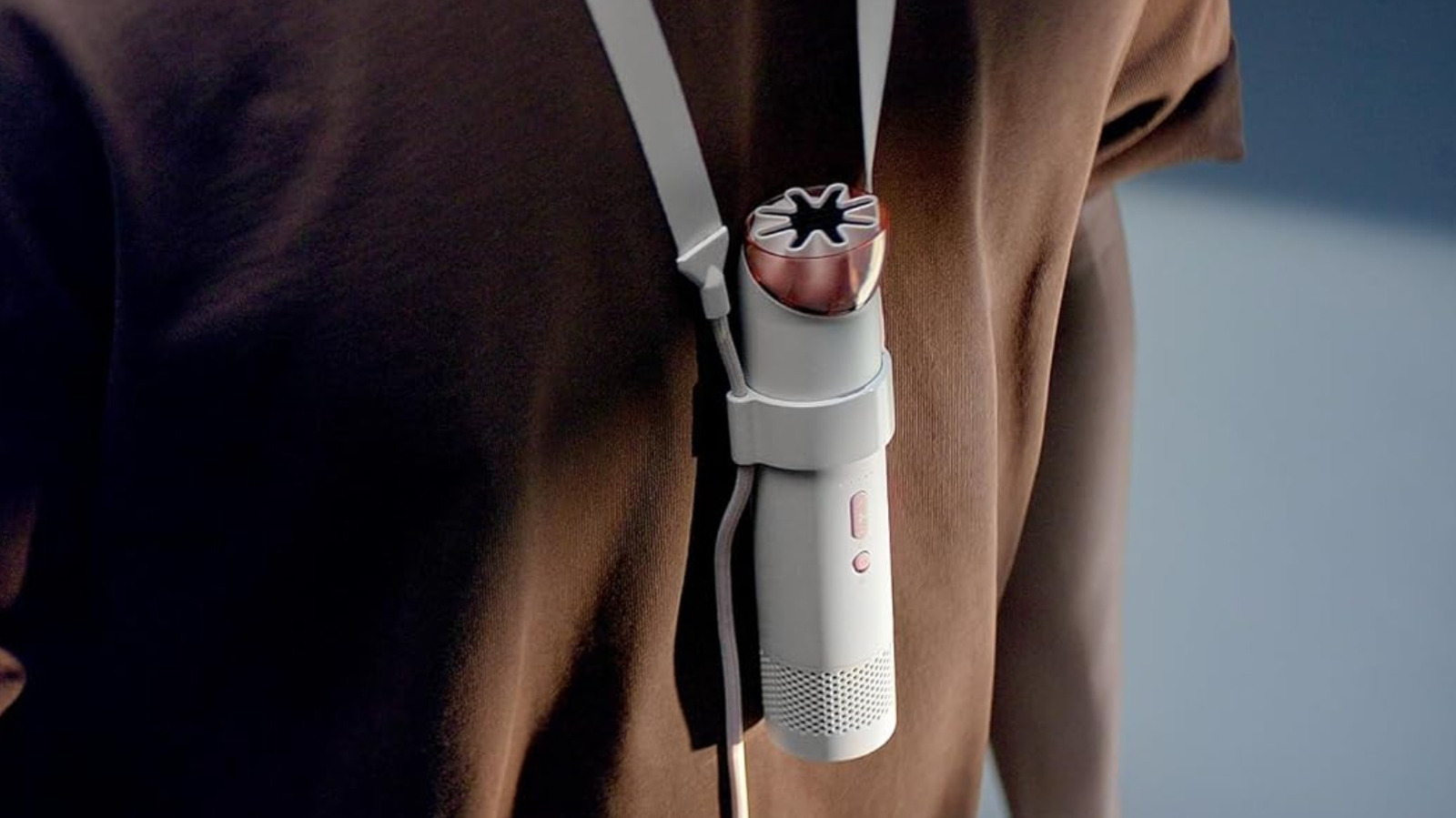
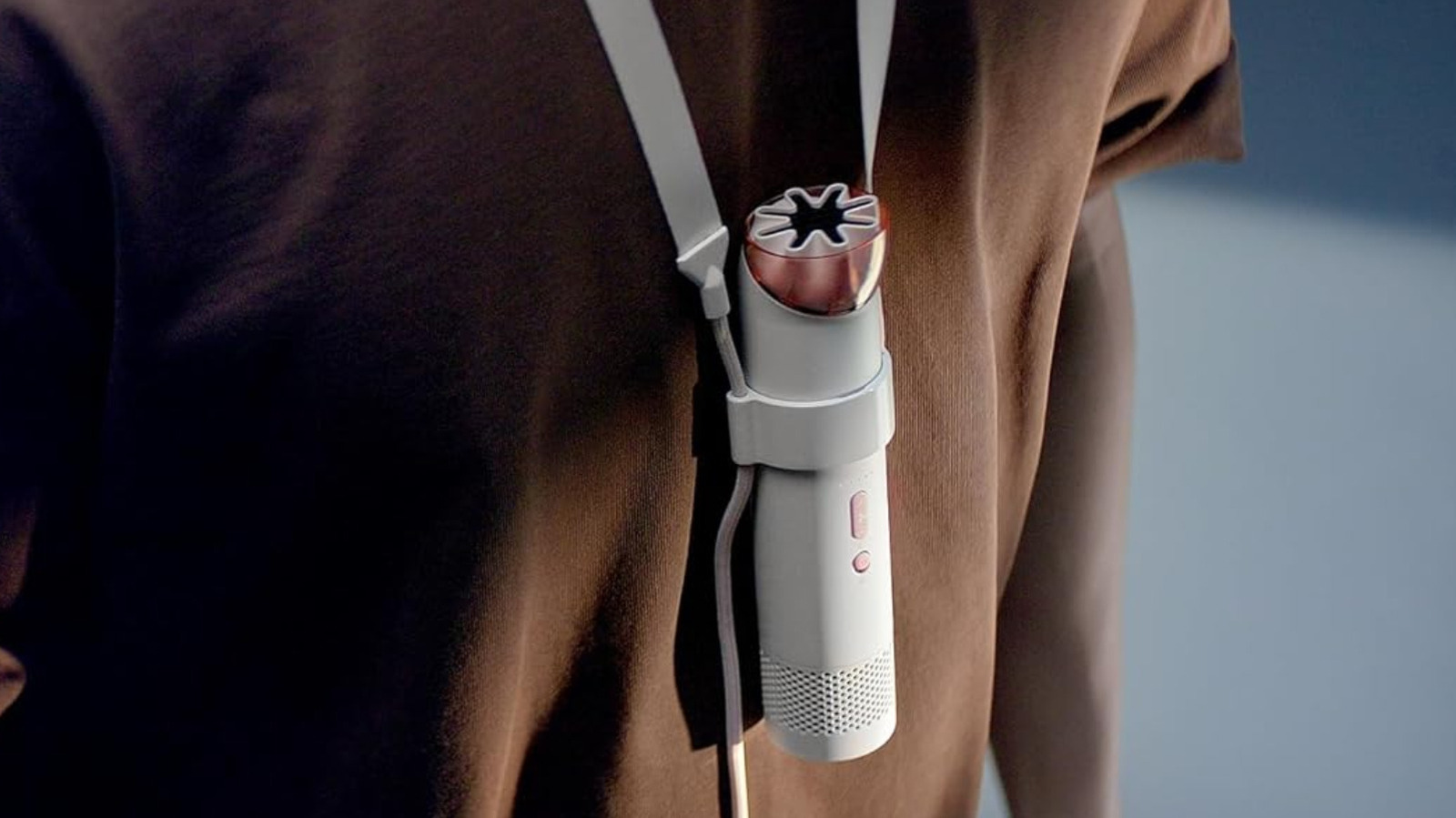
The HushJet Mini is one of Dyson’s more recent ventures into portable fans. It’s a compact device with a fancy, avant-garde look that can be used as a desk fan, a handheld fan, or even a wearable fan. The “Hush” part of the name is the main feature here; the fan is engineered with a complex system of acoustic silencers to provide a steady stream of air with almost zero motor noise. Unlike a traditional desk fan that creates a distracting hum or vibration, Dyson says the HushJet moves air through a series of tuned paths that strip out extraneous noise and distractions. In fact, like a number of the brand’s other products, this mini fan does not use any blades at all.

Thanks to the HushJet Mini’s compact design, you can just hold the fan in your hand and roam around when you’re traveling or commuting. Despite its small size, Dyson says it packs six hours of run time with five speeds, capable of focusing a jet of air exactly where you need it. It doesn’t matter if you’re lounging on a sunny beach or you’re street shopping; the manufacturer says you can simply hold the fan close to your face or just wear it like a necklace for some hands-free respite. 

The HushJet Mini was designed to offer a silent, powerful alternative to a table fan on your desk. The design is sleek and minimalist, finished in unique colors that help it blend into a modern aesthetic rather than looking like a piece of generic hardware. It’s certainly a unique-looking device to be sure!


Source link

Leave a Reply

Subscribe to Our Newsletter

Get our latest articles delivered straight to your inbox. No spam, we promise.

Recent Reviews


Do you ever wake up in the morning still feeling exhausted, causing you to wonder if you truly got a good night’s sleep? You may then go about your day feeling just as tired as you were the night before. Getting enough sleep every night is extremely important for your body’s overall health and is just as important as eating well, exercising regularly, and staying hydrated. Without adequate rest, your physical and mental health will suffer, as sleep impacts your mood, energy levels, and even your body’s immune system.

Unfortunately, there is no one-size-fits-all formula for how much sleep a person needs to feel well-rested, as various factors play into the amount required for optimal health. However, some guidelines are available to help you achieve better sleep. Keep reading to discover how much sleep you really need and some practical tips to improve your sleep quality.

Why Sleep Is Essential for Your Health

Sleep is a vital part of both physical and mental health as well as everyday life. In fact, Reproductive Biology and Endocrinology reports that the average person will spend a third of their life sleeping. Take a look at how sleep affects all aspects of health.

Mental and Cognitive Health

Good quality sleep plays a role in many functions of the body that affect mental and cognitive health. For example, proper sleep helps support healthy brain functions, allowing you to concentrate on your daily tasks while giving you the mental clarity to do so. It also improves the way nerve cells communicate with each other. The opposite is also true – when your body lacks sleep, focus and response time slow down, and the brain is unable to build or retain memories.

Physical Health

Getting the proper amount of sleep also plays a part in physical health. In fact, according to the CDC, studies have shown that a lack of sleep can impact the immune system in a variety of ways, which can later lead to the development of certain disorders. Individuals experiencing inadequate sleep are more likely to get sick, as fewer natural immune cells are produced. The CDC found that approximately 72% of immune cells are produced during a full night of sleep, but those with less sleep produced well below this quota.

Sufficient sleep also impacts the body’s hormonal balance as it is released following the individual’s circadian rhythm or the sleep-wake cycle. Women can experience greater disturbances in sleep because of hormonal changes, such as during a menstrual cycle, pregnancy, or menopause. Insufficient sleep can affect the levels of the estrogen and progesterone hormones while also slowing down the thyroid and impeding metabolism. Finally, losing sleep can also increase the production of inflammatory cytokines, which can lead to cardiovascular and metabolic issues.

As you can see, hormone imbalances caused by inadequate sleep can negatively affect your health. When this occurs, hormone replacement therapy may be necessary.

How Much Sleep Do I Need?

How Much Sleep Do I Need?

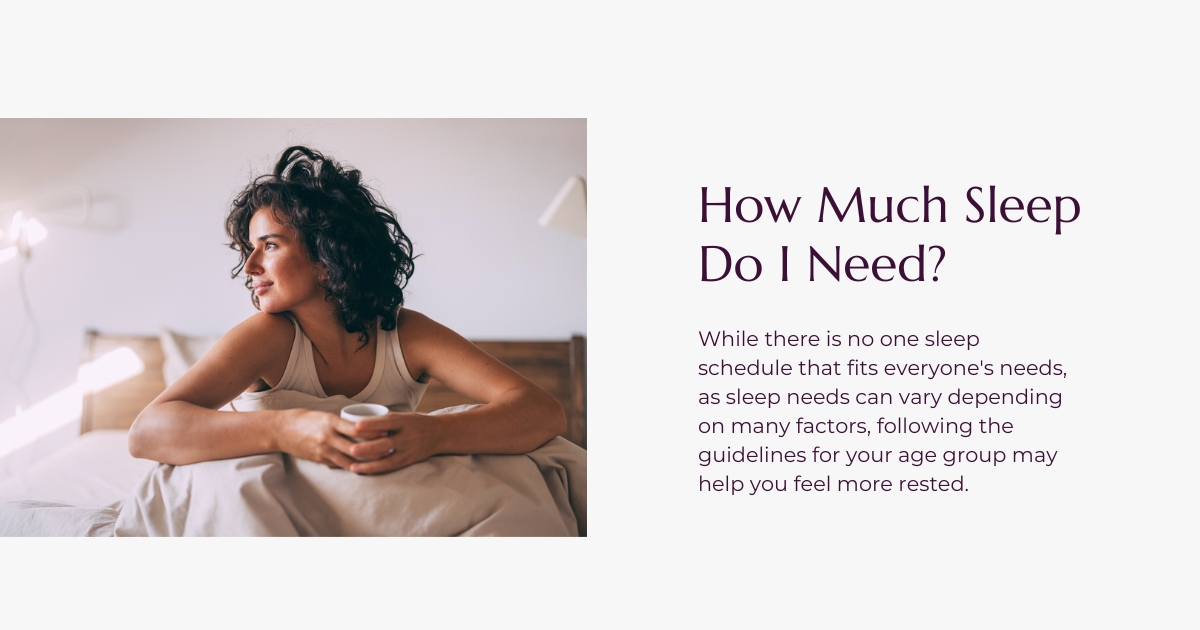
If your constant sleepiness is beginning to affect your physical and mental health, it’s time to begin determining how much sleep you truly need. While there is no one sleep schedule that fits everyone’s needs, as sleep needs can vary depending on many factors, following the guidelines for your age group may help you feel more rested.

Here are the most current sleep recommendations by age:

  • Newborns (0-3 months) – For the first three months of life, newborns need between 14-17 hours of sleep throughout the day, as they do not typically sleep through the night.
  • Infants (4-12 months) – Between four and twelve months of age, an infant requires 12 to 16 hours of sleep. This usually includes daytime naps.
  • Children (1-12 years) – Toddlers and children require between 9-14 hours of sleep during the night and may sometimes need daytime naps.
  • Teens (13-18 years) – As children become teenagers, they don’t need as many hours of sleep, and between 8-10 hours per night is sufficient.
  • Adults (18-64 years) – The recommended number of hours of sleep needed each night for adults is between 7 and 9 hours.
  • Seniors (65+ years) – Sleep is essential to aging gracefully, especially for women. Getting 7-8 hours per night is recommended.

While these amounts are the general recommendations for each age group, every person’s needs will vary. In fact, the number of hours required may evolve and change within these age brackets, depending on current conditions. For example, young children may need more sleep when going through a growth spurt, while older children may need more sleep if they are experiencing hormonal changes. Pregnant women often need more rest, especially when experiencing disruptions in their ability to sleep at night.

Other factors that can impact your need for sleep include your current lifestyle. For example, if you have a particularly busy lifestyle, you may find yourself becoming exhausted during the day even if you do achieve the recommended hours of sleep. Additionally, high stress levels caused by family, work, health, and other factors may leave you feeling tired and in need of more rest.

Signs You’re Not Getting Enough Sleep

Feeling sleepy can be normal as an occasional occurrence after a night of little sleep, but it’s important to watch for signs of sleep deprivation. Even if you seem to be able to function normally on a regular basis while achieving less sleep than recommended, you can still experience negative side effects.

Some of the most common signs that you’re habitually not getting sufficient rest include:

  • Chronic fatigue
  • Irritability
  • Trouble focusing and staying alert
  • Frequent illness due to a weakened immune system
  • Sudden weight gain
  • Increased blood pressure

If you continue to experience insufficient or poor-quality sleep, the above signs can eventually result in long-term issues. The most common issues resulting from the long-term effects of inadequate sleep involve chronic conditions like heart disease and diabetes. Poor sleep can also impact your mental health, resulting in depression. The cognitive impacts of poor sleep mentioned above may leave you with difficulty concentrating on important tasks, which can have dangerous consequences.

Why Should Women Prioritize Healthy Sleep?

According to a study published in Sleep Medicine, women are more likely to experience trouble sleeping and have a higher risk of developing sleep issues such as insomnia. Women are also more likely to struggle with poor-quality sleep, especially when they are experiencing hormonal changes. In addition, a woman going through extreme changes in their hormones due to pregnancy may have even more trouble sleeping due to feeling uncomfortable or frequently waking to urinate. Menopause may also disrupt sleep, as it can cause night sweats or hot flashes.

Unfortunately, for women, poor sleep can be a vicious cycle. Insufficient sleep can disrupt hormone production, as the release of hormones is affected by the circadian rhythm. It may also impact the menstrual cycle by disrupting the hormones used to help regulate sleep, such as melatonin.

How to Improve Your Sleep Quality

Improve Sleep Quality

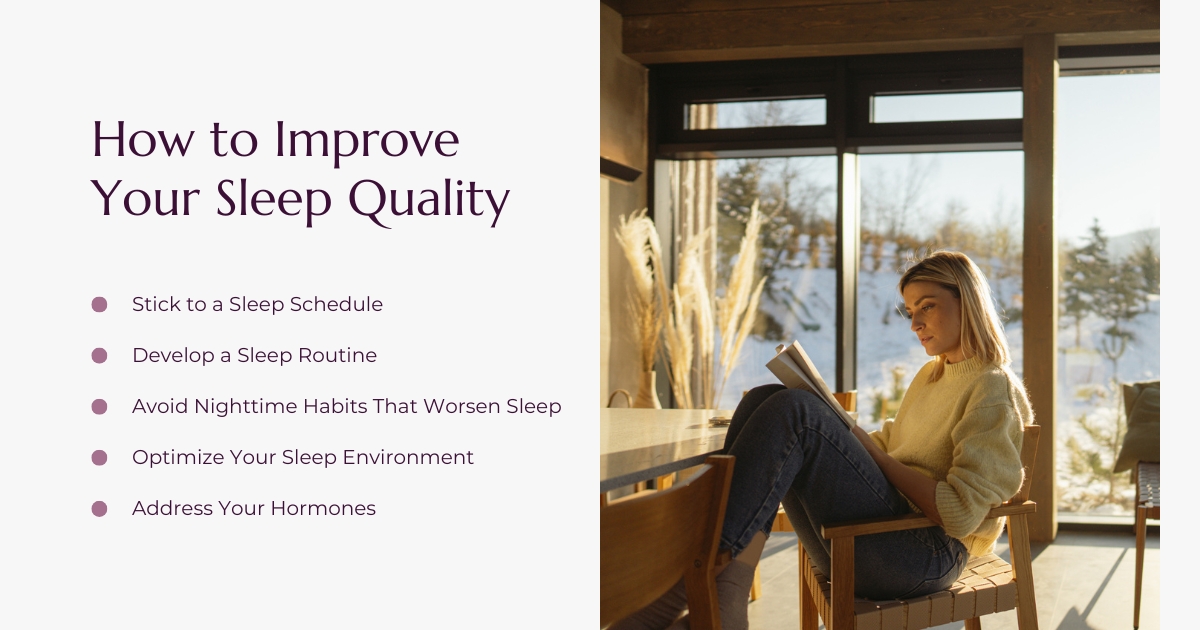
There are many ways to achieve better rest and have better health as a result. Below are some tips on how to improve sleep quality.

Stick to a Sleep Schedule

First, it is important to create an optimal sleep schedule. Keep in mind that when you are trying to implement a new habit, consistency is key, so make sure that your new schedule is one that you can follow every night. Start with your desired wake-up time, determine how many hours are ideal for a person your age, and work backward from there. Then, set your bedtime about half an hour before that to give yourself time to wind down and complete your sleep routine.

Develop a Sleep Routine

Determine what will help you to relax and unwind, preparing yourself mentally and physically for sleep. Many women choose to promote relaxation by practicing certain techniques, such as yoga or meditation, before bed, but simply making an effort to empty their mind of any anxieties can be enough.

Consider adding these relaxing activities earlier in the evening to help you release stress before bed:

  • Journaling before bedtime
  • Drinking a cup of herbal tea
  • Reading a book or watching a relaxing television show
  • Listening to instrumental music

Avoid Nighttime Habits That Worsen Sleep

In addition to partaking in relaxing activities before bed, it’s important to avoid activities or habits that can negatively affect your sleep. Before preparing for bed, make sure to avoid eating heavy meals, as they can keep you awake. Similarly, caffeine and alcohol can disrupt your ability to sleep. Finally, consider disconnecting from social media and ongoing text conversations in the hour leading up to bedtime.

Optimize Your Sleep Environment

Optimizing your sleep environment means that you are creating an environment that promotes sleep. The room should be dark without any distracting lights, which includes ensuring all television screens and smartphones are turned off. Keep the room cool so that you won’t wake up due to feeling too hot or sweating throughout the night. Ensure that you create a peaceful and quiet space, free of any loud or persistent noises; however, for some people, a sleep machine or some kind of white noise, such as a fan, can be soothing.

Address Your Hormones

Remember that hormonal imbalances are a major cause of sleep disturbances. Two primary hormones that have a large impact on your quality of sleep are progesterone and estrogen. These hormone levels can vary widely due to the menstrual cycle, pregnancy, perimenopause, and menopause. If you are looking to regulate your hormone levels, consider seeking treatment from Arizona Gynecology Consultants.

When to Seek Help for Sleep Problems

In many cases, sleep issues can be resolved by implementing a better sleep schedule or trying relaxation techniques before bed, but certain sleep problems require the help of a medical professional.

Common sleep disorders, such as insomnia, sleep apnea, and restless leg syndrome (RLS), typically require medical attention to resolve.

  • Insomnia – This sleep disorder is marked by difficulty achieving sleep. Chronic insomnia can cause trouble performing normal tasks and mental health issues, and the NHS reports that approximately 1 in 3 adults experience this common condition.
  • Sleep Apnea – This disorder occurs when a person frequently stops breathing while sleeping, which typically results from blocked airways or the brain failing to control the breathing process properly. Without treatment, the heart can begin to show potentially deadly signs of stress.
  • Restless Leg Syndrome (RLS) – This disorder is characterized by extreme urges to move the legs while trying to rest, which can make it difficult to fall asleep or stay asleep. Those who suffer from this condition usually feel itching, crawling, or throbbing sensations in the legs, which can be temporarily resolved by moving.

If you know you are experiencing any of the above disorders, it’s crucial to seek medical attention to address them and get a doctor’s help with working toward better sleep.

If you’re unsure whether you need medical assistance, look for the following warning signs that your sleep issues cannot be addressed on your own:

  • Constant fatigue, even if you have slept a sufficient amount of time the night before
  • Difficulty staying awake while performing daily tasks, such as driving or reading
  • Memory issues or trouble concentrating
  • Waking up frequently in an attempt to regain your breath

In addition, hormone issues may be affecting the quality or quantity of your sleep. If you suspect that a hormone imbalance is causing your sleep disturbances, it is important to consult with a doctor to explore hormone regulation for better quality sleep. Schedule a consultation with Arizona Gynecology Consultants to explore solutions.

Achieve Better Quality Sleep with the Help of Arizona Gynecology Consultants

Get Better Quality Sleep with Arizona Gynecology Consultants

Getting good quality sleep is vital for your overall health and is as essential as getting enough food and water. For most people, achieving better sleep is possible when you implement healthy sleep schedules, engage in relaxing habits while eliminating those that can cause poor sleep, and ensure that you create an environment that promotes rest rather than distractions. However, for others, these efforts are not enough to achieve healthy sleep patterns.

It’s important to monitor any concerning symptoms that may indicate a sleep disorder. Avoid ignoring warning signs, as continued poor sleep can result in more serious health issues. If you’re experiencing poor sleep that isn’t remedied by better sleep habits, be sure to notify your physician.

Are you struggling to get good quality sleep each night? Don’t let chronic sleep issues and the resulting fatigue or physical and mental health effects continue to negatively impact your life. Contact Arizona Gynecology Consultants to schedule a consultation and develop personalized solutions to improve your sleep and overall health.

*Editor’s Note: This article was originally published May 9, 2017 and has been updated April 24, 2025.


Resources:

  1. Centers for Disease Control and Prevention. (n.d.). About sleep. U.S. Department of Health & Human Services. https://www.cdc.gov/sleep/about/index.html
  2. Centers for Disease Control and Prevention. (n.d.). Work hours, sleep and fatigue: Training for nurses – Module 2: Impact of long work hours. National Institute for Occupational Safety and Health (NIOSH). https://www.cdc.gov/niosh/work-hour-training-for-nurses/longhours/mod2/05.html
  3. Cleveland Clinic. (n.d.). Restless legs syndrome (RLS). https://my.clevelandclinic.org/health/diseases/9497-restless-legs-syndrome
  4. Cleveland Clinic. (n.d.). Sleep apnea. https://my.clevelandclinic.org/health/diseases/8718-sleep-apnea
  5. Healthline. (n.d.). Hormonal insomnia: Symptoms, causes, and treatment. https://www.healthline.com/health/insomnia/hormonal-insomnia-symptoms#causes
  6. Mayo Clinic Staff. (n.d.). How many hours of sleep are enough?. Mayo Clinic. https://www.mayoclinic.org/healthy-lifestyle/adult-health/expert-answers/how-many-hours-of-sleep-are-enough/faq-20057898
  7. National Heart, Lung, and Blood Institute. (n.d.). Why is sleep important?. U.S. Department of Health & Human Services. https://www.nhlbi.nih.gov/health/sleep/why-sleep-important
  8. National Institute of Neurological Disorders and Stroke. (n.d.). Brain basics: Understanding sleep. National Institutes of Health. https://www.ninds.nih.gov/health-information/public-education/brain-basics/brain-basics-understanding-sleep
  9. National Library of Medicine. (2020). Physiology, sleep stages. In StatPearls. https://www.ncbi.nlm.nih.gov/books/NBK526136/
  10. Parthasarathy, S., Vasquez, M. M., Halonen, M., Bootzin, R., Quan, S. F., Martinez, F. D., & Guerra, S. (2012). Persistent insomnia is associated with mortality risk. Sleep, 35(5), 585–592. https://doi.org/10.1016/j.sleep.2012.01.011
  11. Zhou, E. S., Haack, M., Nguyen, J., & Mullington, J. M. (2022). The impact of sleep on mental and physical health. Journal of Clinical Sleep Medicine, 18(2), 509–520. https://www.ncbi.nlm.nih.gov/pmc/articles/PMC8764829/

The post How Much Sleep Do You Really Need? A Guide to Healthy Rest appeared first on AZGyn.


Source link