
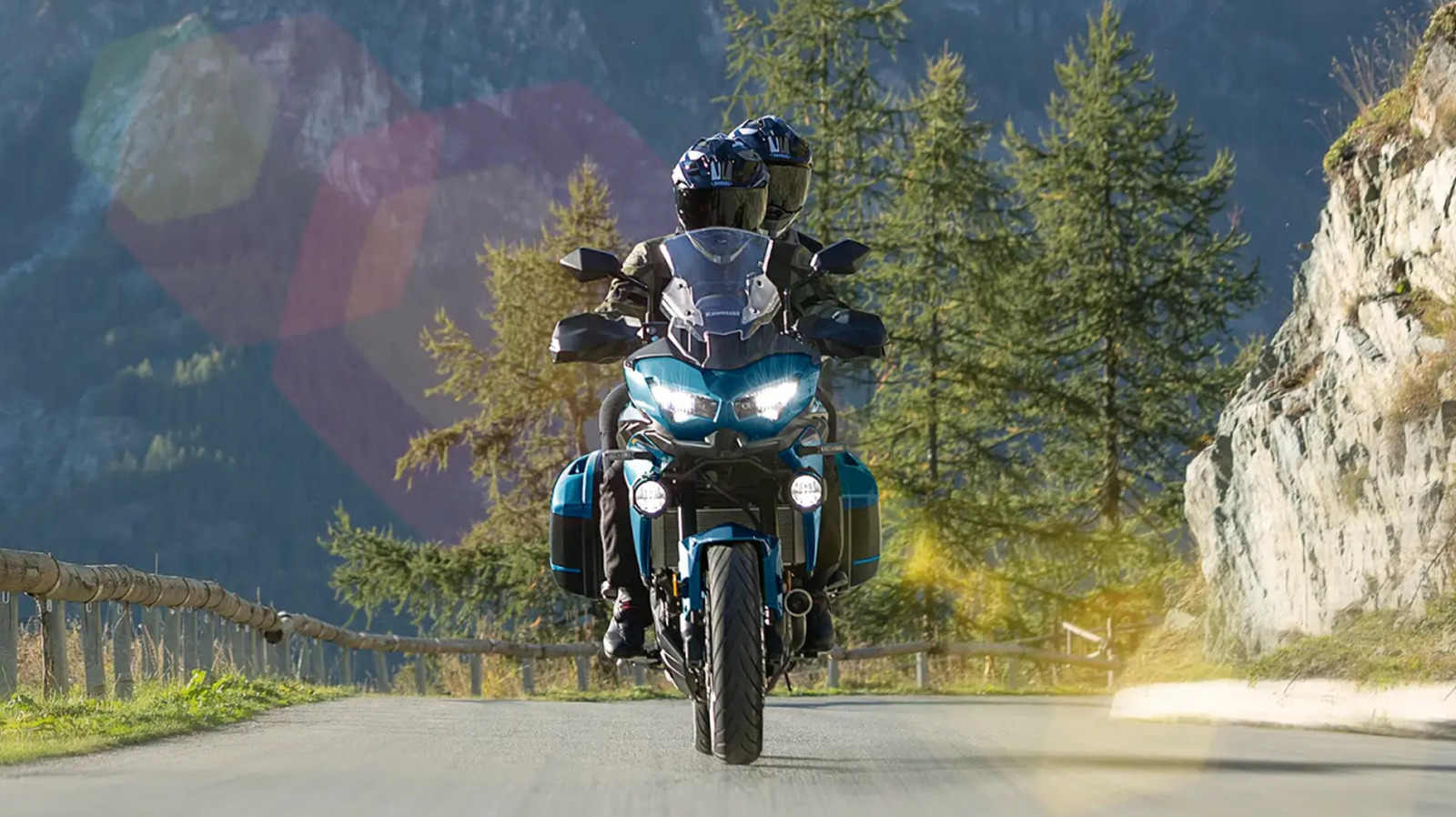
There are all sorts of options for big, heavy, ultra-plush motorcycling that’ll take you hundreds of miles in a single day. If you want maximum comfort and all the latest features, you can opt for big bikes like the Honda Gold Wing, which happily eats up the miles on any road trip. Then, of course, there are cruisers from Harley-Davidson and Indian Motorcycles that offer classically-styled riding and impressive on-road dynamics, but they do so in pretty large fashion.
What if you want something a bit smaller? Something with decent power, modern tech, and a bit of corner-carving capability? It still needs to be able to take you on long-distance rides, but without abusing your body or assaulting your wallet. That’s where the middleweight touring motorcycle category comes in.
Several bikes offer comfortable, long-distance riding capability in a smaller package. They’re not tiny beginner bikes, but they aren’t expensive heavy-duty motorcycles either. These middleweight bikes, at least in our mind, fall between 500 and 1000ccs, are under 600 pounds, priced below $15,000, and provide impressive riding dynamics.
Suzuki V-Strom 800
There are several different sizes of the Suzuki V-Strom: the 650, 800, and 1050. The 1050 is a bit too pricey for this list, and the 650 is a good deal for bargain shoppers, but we think the Goldilocks of the Suzuki Adventure/Touring lineup is the V-Strom 800. It’s powerful enough to be a bit of fun and affordable enough to be approachable.
For 2026, the V-Strom 800 is available in three different variants: the standard 800, the DE, and the DE Adventure. DE on those last two models stands for Dual Explorer, meaning that those bikes are designed for use on dirt and asphalt. The touring version of the bunch, really, is the basic 800. It’s focused on on-road riding, but it’s powered by the same smooth 776cc parallel-twin (an excellent engine I’ve had extensive experience with recently), and it comes standard with an up-and-down quick shifter. It produces 83.1 horsepower and 57.5 lb-ft of torque — more than enough to scoot along a mountain pass at pace and thoroughly enjoy yourself, even though it bumps up almost against my self-imposed 500-pound limit at 492 lbs.
Suzuki uses an excellent 5-inch TFT display on several of its bikes, including the V-Strom 800, and it’s one of many standard features on this bike. At just $10,949, it’s an impressive deal for a punchy middleweight tourer, and it’s definitely worth a closer look.
Triumph Tiger Sport 800
The new Triumph Tiger Sport 800 Tour would be a great bike for this list if it weren’t for two problems: it weighs over 500 lbs (511 lbs to be exact), and it’s a bit too pricey at $14,695, before destination. Add in destination fees, and taxes and this one will easily crest $15k. What a bummer! It even has TOUR in the name! Thankfully, the standard Tiger Sport 800 is one of the best looking middleweight touring bikes that money can buy, and you can configure one to be widely similar to the Tour model.
The Tiger Sport 800 is powered by a 798cc inline three-cylinder engine (the same engine in the Tour model) that puts out an impressive 113 hp and 70 lb-ft and it weighs just 471 lbs, so it fits our self-imposed restrictions. The Sport 800 has an MSRP of $12,845 (before destination) which means there’s some room for add-ons like available heated grips ($305), integrated panniers ($805), a USB charger ($35), and hand guards ($115). Total that all up and you’ve got a $14,105 version of the bike that widely resembles the Tour model.
I haven’t had the opportunity to ride the Tiger Sport 800 yet (my DM’s are open, Triumph!), but all the reviews I’ve read are pretty glowing. Cycle World, for instance, got the impression that the bike was extremely maneuverable, rode smaller than its weight would suggest, and was comfortable enough for long days in the saddle. Sounds like a winning combo to me.
Honda Transalp
There’s a pretty good chance that if you’re at least somewhat familiar with the motorcycle world, you’ve heard of the Honda Africa Twin. It’s the sort of bike that’s capable of circumnavigating the globe, whether you want to use roads or not. You might be slightly less familiar, though, with Honda’s smaller adventure bike, the Transalp.
The Transalp is geared a bit towards adventure touring that includes a bit of off-roading, but that doesn’t keep it from being a stout option for strictly on-road adventures. Also, the Transalp isn’t small at all – it’s firmly in the middleweight category with its 755cc parallel-twin engine, which produces 90.5 hp and 55 lb-ft, and a curb weight of 468 lbs. That svelte number does make it one of the lightest bikes in its class, which will help with maneuverability, but it’s got the upright riding position and commanding view of the road you expect from a middleweight tourer. It’s priced reasonably, too, with an MSRP of $10,799.
For 2026, the Transalp gets Honda’s E-Clutch system added to its transmission, which allows for clutchless shifting. It still has a six-speed manual, so you can do all the shifting yourself if you’d like (you still have to change gears with your foot), this addition just adds the ability to take the lever action out of the loop. I’ve used E-Clutch on a few different Honda motorcycles, including the latest Rebel 300, and it takes some getting used to, but it’ll certainly help long-distance rides be a bit less tiring on your left hand. No need to use the clutch means no need to squeeze the clutch lever, right?
Yamaha Tracer 9
Yamaha’s three-cylinder CP3 engine is one of the most thrilling powertrains you can buy today, and it’s what powers my personal bike (an XSR900 I’m having an impossible time finding a challenger for), along with powering the current Tracer 9. Instead of a sporty cafe bike, though, the Tracer 9 is a well-equipped and properly-priced touring motorcycle that will entertain you on long and winding rides alike. The Tracer’s six-axis IMU gives the bike features like traction control, slide control, wheelie control, and brake control. Features like the center stand will make it easy to do simple maintenance or repairs on the road, and the 7-inch TFT display helps the bike feel modern. A manually adjustable windscreen is standard, and so is a USB-C charging port.
The 2026 Tracer 9 has an MSRP of $13,299 (including $700 destination fee), and it is powered by the aforementioned 890cc three-cylinder engine, which produces 117 hp and 68.5 lb-ft, weighing in at a respectable 483 lbs. Shifting is done via a six-speed manual transmission with an assist and slipper clutch, and according to Yamaha’s estimates, it’ll return 48 mpg while sipping its 5.0-gallon fuel tank – an impressive bit of efficiency for those long journeys, and more than enough gas to get you there.
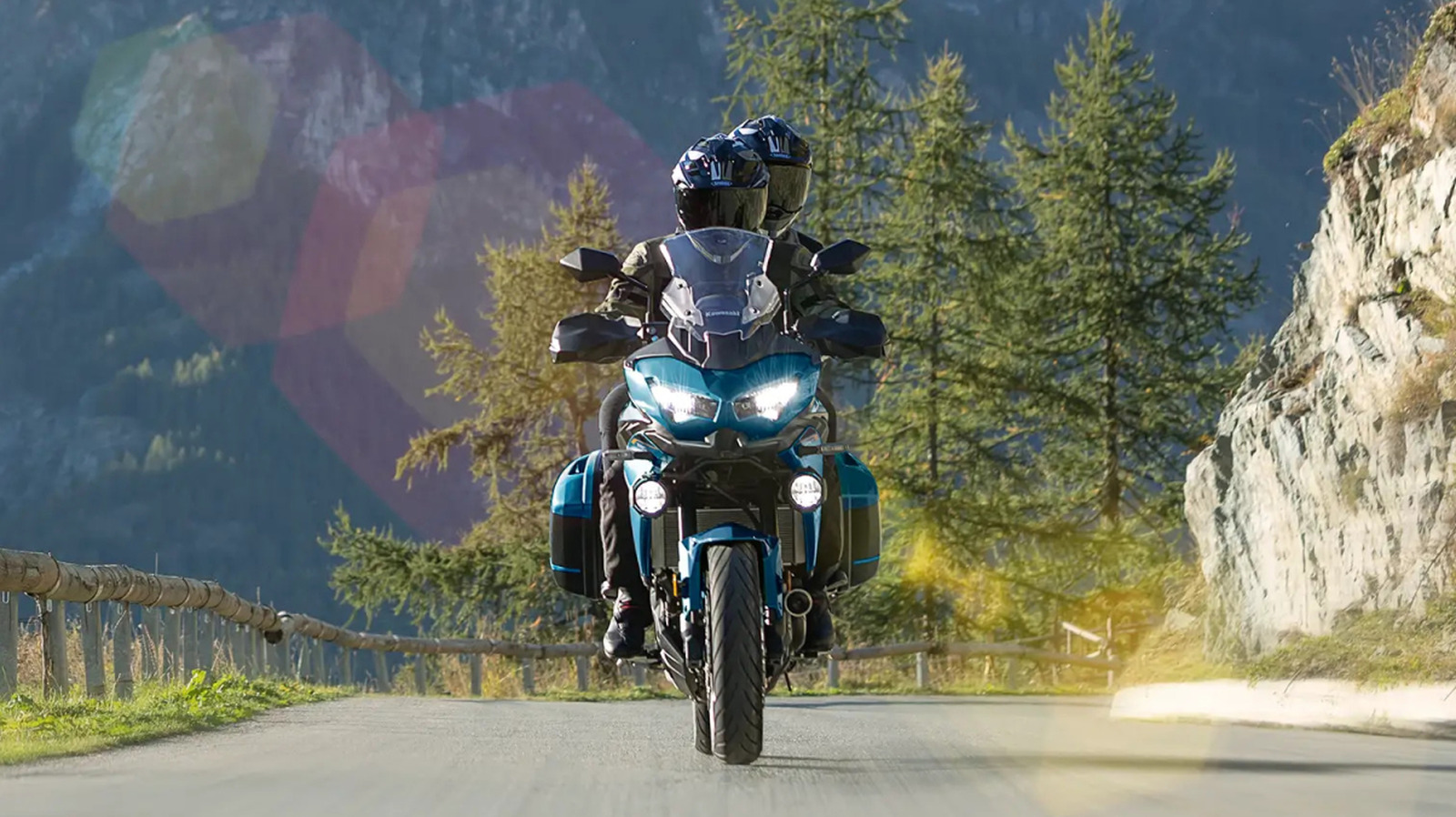
Kawasaki Versys 650
I spent a few months riding the big Kawasaki Versys 1100, and I thoroughly enjoyed it. It’s one of the best choices in its class — but it’s a bit too large to be called a middleweight. That’s where a more size-friendly bike like the Versys 650 comes in. The 650 has a lot of the same appeal, but with a smaller size and a much smaller price.
The Versys 650 weighs 482 lbs, small enough to be a middleweight for sure, and it’s powered by Kawasaki’s 649cc parallel-twin engine. Paired with a six-speed manual transmission, the 649cc engine produces 66 hp and 45 lb-ft of torque, which is a bit light for this class, but totally adequate for most riders. The 5.5-gallon fuel tank should be more than enough to get you over that next set of mountains standing between you and your destination, too.
With an MSRP of $10,399 (destination fee not included), the Versys 650 is one of the most affordable bikes in this class, but it doesn’t skimp on features. The 4.3-inch TFT display is easy to see in bright light, and it shows all the important data. It can also connect to Kawasaki’s Rideology app to help you access data from your bike and track riding logs. Options like factory-installed tank sliders and heated grips are available as well, so you can customize the Versys to provide even more adventure appeal.
Methodology
As previously mentioned, these bikes were picked based on a few simple criteria. First, they had to fall between 600 and 1,000ccs of displacement. Second, they had to cost less than $15,000. Why that size range and price cap? Under 600ccs, there aren’t very many options for well-equipped touring bikes, and the power might be lacking, especially once your bike is loaded up with gear. Above 1,000ccs and touring bikes tend to get expensive and a bit more difficult to manage. The middleweight size makes all these bikes approachable for riders who are transitioning from their first bike to something a bit bigger, and the power provided by these bikes means they’ll have no problem being entertaining.
I haven’t had a chance to ride all the bikes in this segment, but I’ve ridden several on this list, experienced the engines that power several others, poured over other professional reviews and owner reviews for all the motorcycles here, and these are the bikes I’d recommend to any close friend who’s looking for a top-notch touring experience on two wheels.

Stephan is the sports journalist for the Maple Grove Report.