
5 Off-Path Caribbean Destinations Everyone Should Visit At Least Once


Share The Article

When I am mapping out a Caribbean getaway, my absolute biggest nightmare is ending up on a beach where I have to fight 500 cruise ship passengers just to secure a plastic lounge chair.

For decades, the islands have been building massive mega-resorts and giant deep-water ports to pack in as many tourists as humanly possible. Finding a spot that actually feels wild, authentic, and untouched is getting harder every single year.

But if you are willing to put in a little extra effort—whether that means enduring a rough ferry crossing, hopping on a tiny commuter plane, or navigating a rugged coastline—there are still a handful of islands completely flying under the radar.

I am constantly digging for those raw, boots-on-the-ground experiences, and these 5 off-the-grid Caribbean frontiers have completely hijacked my travel list.

PLUS: I’ve built an interactive quiz for you at the end of this article to find your perfect match!

1. Sint Eustatius (Statia)
View of Saba and Statia (Sint Eustatius) in the Dutch Caribbean from the north coast of Saint Kitts

Tucked away in the northern Leeward Islands, this tiny Dutch municipality only has about 3,400 residents.

Because it famously has a super short airport runway and absolutely zero mega-cruise terminals, it has completely dodged the massive crowds that flock to neighboring islands like St. Maarten.

  • The Vibe: It is dripping with insane history. Back in the 1700s, this place was known as the “Golden Rock” and was one of the wealthiest, most chaotic trading hubs on earth. It is also famous for the “First Salute” in 1776, when it became the very first foreign power to formally recognize the newly independent United States.
  • The Ground Experience: Half of the 18th-century colonial city literally fell into the ocean centuries ago. Today, it operates as a submerged archaeological park where divers can swim through the ruins of ancient warehouses and hunt for legendary 17th-century blue glass trade beads. On land, you can spend your afternoon hiking straight into the crater of a 600-meter dormant stratovolcano called The Quill.
  • Getting There: You can grab a quick 20-minute commuter flight from St. Maarten, or jump on an 85-minute sea crossing on the local Makana Ferry.

2. Guanaja, Honduras

Guanaja Island, Honduras. Natura travel concept.

While everyone else is flocking to the massive dive schools and crowded bars on Roatán, its sister island Guanaja sits just 70 kilometers off the Honduran coast, remaining fiercely untamed and dramatically under-visited.

  • The Vibe: The absolute wildest part about Guanaja is that there are virtually no roads. The entire local economy relies completely on the water, meaning you take a water taxi through mangrove canals just to get around.
  • The Ground Experience: Because the massive cruise ships skip it entirely, the barrier reef here is incredibly healthy. It is a world-class hotspot for divers wanting to explore ancient caverns, and anglers who want to cast for bonefish on the shallow, hard-bottomed flats in total isolation.
  • Where to Stay: You want to book a spot at The End of the World Resort. It is completely off-the-grid, solar-powered, and only holds a maximum of ten guests in private cabanas built straight into the hillside.

3. Great Inagua, Bahamas
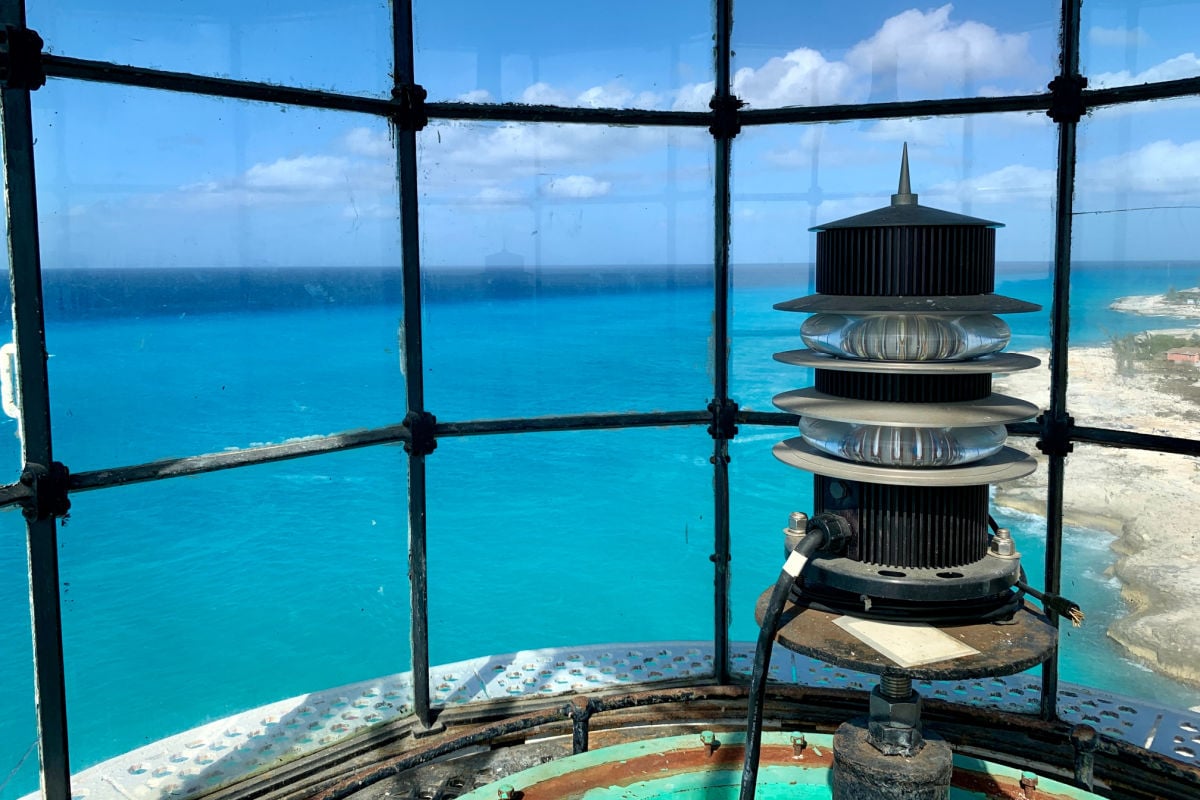
Scenic View from the Great Inagua Lighthouse

When you think of the Bahamas, you probably picture the bustling casinos of Nassau or the luxury resorts of the Exumas.

Great Inagua, sitting just 55 miles off the coast of Cuba, is an entirely different universe.

  • The Vibe: The economic heart of the island is actually a massive solar salt production facility run by Morton Salt. Instead of ruining the environment, the hyper-saline evaporation ponds accidentally created an explosive food source that sustains a massive breeding colony of over 80,000 pink flamingos.
  • The Ground Experience: This place is a sanctuary for serious naturalists and hardcore anglers. You share the island with wild donkeys, indigenous hummingbirds, and unpressured bonefish that will aggressively strike a fly line because they so rarely see human tourists.
  • Getting There: You have to carefully schedule your trip around the limited flights operated by Bahamasair, which usually only run twice a week from Nassau into the tiny settlement of Matthew Town.

4. Bahía de las Águilas, Dominican Republic
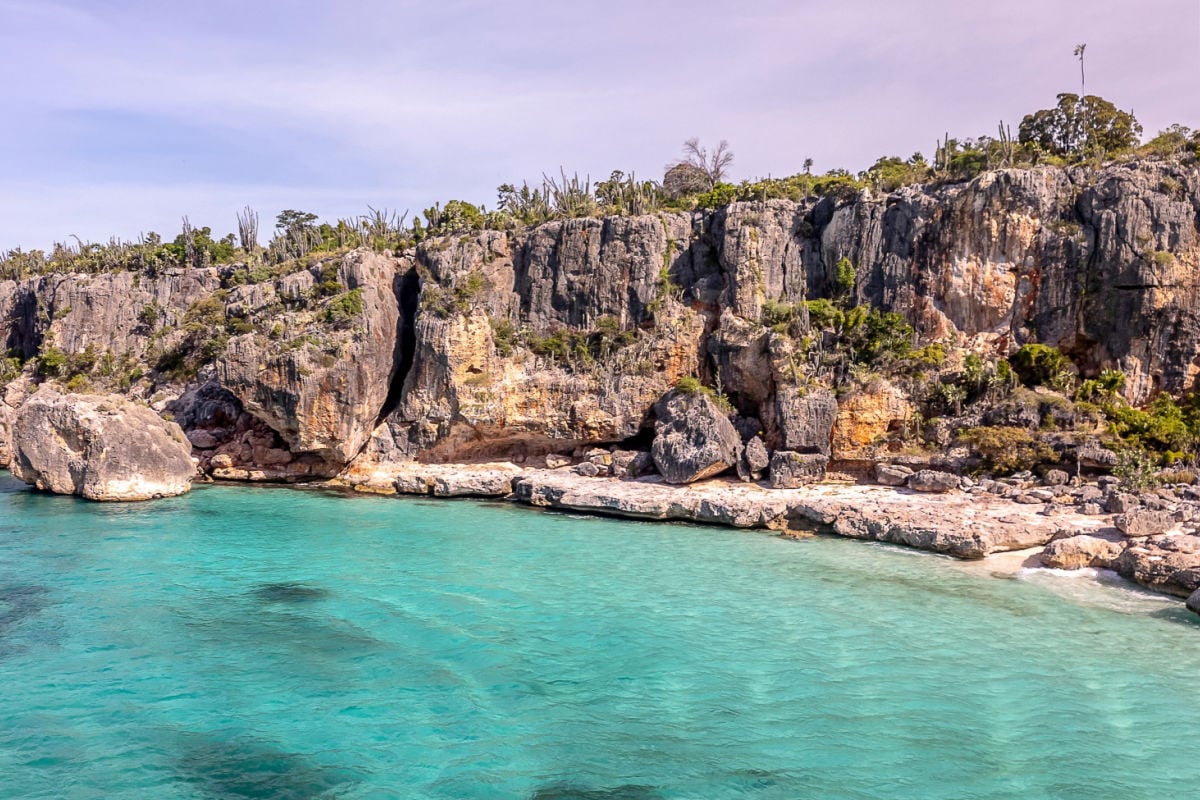
Bahía de las Águilas is an 8 km long beach along the southwestern coast of the Dominican Republic.

If you want to dodge the sprawling, manicured all-inclusive resorts of Punta Cana, you have to head to the extreme southwestern edge of the country, right near the Haitian border.

Bahía de las Águilas (Eagle’s Bay) is an eight-kilometer stretch of completely virgin, blindingly white sand.

  • The Vibe: It looks more like the Baja California peninsula than the Caribbean. The microclimate is severely arid, meaning the blindingly blue water is framed by towering limestone cliffs, giant cacti, and dry, sun-baked earth.
  • The Ground Experience: There are zero paved roads leading to the sand. You have to hire a small, open-air motorboat from local fishermen in a nearby settlement called La Cueva and ride through massive boulder formations just to reach the beach. Since permanent hotels are banned on the sand, a massive, upscale “glamping” culture has popped up nearby where you can sleep in luxury tents right on the water.
  • The Urgency: You have to go right now. The Dominican government just opened a new cruise port nearby and launched domestic flights to the area to bypass the grueling 5-hour drive from Santo Domingo. The era of absolute isolation here is rapidly coming to an end.

5. La Désirade, Guadeloupe
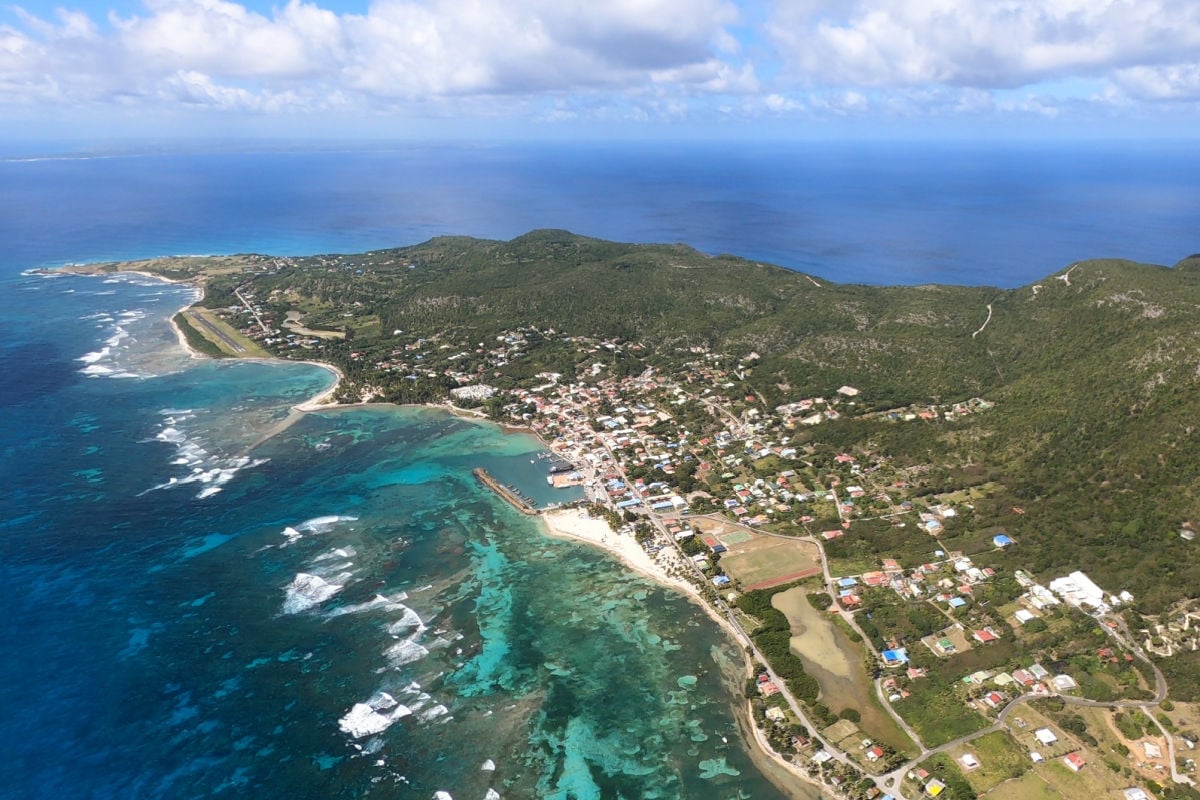
Aerial view of La Desirade Island, Guadeloupe, Lesser Antilles, Caribbean

Shaped like a massive, tabular limestone rock floating in the open Atlantic, La Désirade is a French overseas department that has stubbornly refused to join the modern Caribbean tourism machine.

  • The Vibe: The French crown historically used this isolated rock as a leper colony and a penal colony for rebellious aristocratic youths. Because it was never cleared for massive sugar plantations, it actually retains the oldest exposed geological formations in the entire Lesser Antilles.
  • The Ground Experience: The southern coast features a tranquil, shallow lagoon protected by a massive coral reef where the tiny local fishing community lives. The northern coast is totally uninhabited, featuring violent, wind-swept cliffs that plunge directly into the churning ocean—it honestly feels more like hiking in Ireland than the Caribbean.
  • Getting There: You have to endure a notoriously rough 45-minute ferry crossing across heavy Atlantic swells from the marina in Saint-François. That rough water acts as the ultimate natural barrier to keep the casual tourists away.

Now take this quiz to find your perfect match!


Step 1 of 3

What’s your ideal island vibe?


Step 2 of 3

What is your must-do activity?


Final Step

Which journey are you willing to endure?


🇳🇱

Sint Eustatius (Statia)

The Golden Rock

Tap to Reveal Details

Sint Eustatius

Why it’s a match: You love raw history and dramatic hikes! This tiny Dutch municipality has zero mega-cruise terminals and a deeply rich 18th-century past.

Must Do: Dive through the submerged ruins of ancient colonial warehouses or spend your afternoon hiking straight into the crater of The Quill, a 600-meter dormant stratovolcano.

🇭🇳

Guanaja

The Untamed Reef

Tap to Reveal Details

Guanaja, Honduras

Why it’s a match: You want a fiercely untamed experience entirely reliant on the water! This island sits off the Honduran coast and has virtually no roads—you get around entirely by water taxi.

Must Do: Dive the incredibly healthy barrier reef or cast for bonefish on the shallow flats in total isolation. Stay in off-the-grid, solar-powered cabanas!

🇧🇸

Great Inagua

The Naturalist’s Haven

Tap to Reveal Details

Great Inagua, Bahamas

Why it’s a match: Forget bustling casinos! You want a hardcore nature sanctuary. Sitting just 55 miles off the coast of Cuba, this is an entirely different Bahamian universe.

Must Do: Witness the massive breeding colony of over 80,000 pink flamingos, fueled by the hyper-saline evaporation ponds. Share the island with wild donkeys and unpressured bonefish!

🇩🇴

Bahia de las Aguilas

The Virgin Shore

Tap to Reveal Details

Bahia de las Aguilas

Why it’s a match: You want to dodge the sprawling resorts for a completely virgin, blindingly white beach framed by giant cacti and towering limestone cliffs.

Must Do: Hire a small motorboat to ride through massive boulder formations to reach the sand, then sleep in upscale luxury tents right on the water. Go now before the new cruise port changes everything!

🇫🇷

La Desirade

The Isolated Rock

Tap to Reveal Details

La Desirade, Guadeloupe

Why it’s a match: You want a rugged adventure that requires enduring a notoriously rough ferry crossing! This French overseas department has stubbornly refused the modern tourism machine.

Must Do: Explore the tranquil lagoon on the south coast, then hike the uninhabited northern coast where violent, wind-swept cliffs plunge into the ocean like a scene from Ireland.


Source link

Leave a Reply

Subscribe to Our Newsletter

Get our latest articles delivered straight to your inbox. No spam, we promise.

Recent Reviews


buynowkey-gettyimages-2270986884

JuSun/ iStock / Getty Images Plus via Getty Images

Follow ZDNET: Add us as a preferred source on Google.


ZDNET’s key takeaways

  • New Visa research says AI-accelerated scams are the “fastest growing source of consumer harm.”
  • Fraud is shifting from credential theft and account hijacking to social engineering tactics.
  • Visa outlines what consumers and businesses need to do to meet these threats. 

While AI’s vast potential to improve security, ramp up productivity, and reduce operational costs is being explored by countless companies, the technology is also being weaponized by cybercrooks involved in fraud and financial crime.  

Also: 5 security tactics your business can’t get wrong in the age of AI – and why they’re critical

A new report from Visa says AI is reshaping both cyberattack and defense tactics and, specifically, is compressing the fraud cycle, making it easier to dupe consumers into authorizing malicious transactions. 

AI accelerates ClickFix-like fraud

Remember ClickFix? It’s a social engineering technique, popularized in recent years, that bypasses traditional phishing defenses by exploiting psychological vulnerabilities. 

In ClickFix attacks, victims are lured into performing a malicious action themselves by being presented with a problem to solve — a problem that has an easy solution. For example, you may come across a fake malware alert on a website that urges you to open up a command prompt, copy and paste a code, and submit it to fix a PC “issue” in only a few steps. 

In reality, this “solution” leads you to execute malicious commands yourself, resulting in malware deployment, data theft, and more. 

Also: OpenAI’s new image watermarks make it easier to spot AI fakes – here’s how

Standard digital defenses can’t prevent us from performing malicious or destructive actions ourselves, which makes this social engineering tactic far more effective than basic drive-by downloads or standard phishing campaigns.

Apply this to finance, and the problem is this: If you authorize a transaction (fraudulent or otherwise), the responsibility lies with you — and you will most likely bear the financial cost. 

According to Visa’s Spring 2026 Biannual Threats Report, AI-enabled social engineering is becoming a serious issue for fraud prevention. 

How these scams work

Payment fraud can cost you dearly. Now that financial institutions are well aware of the risks posed to consumers by online scams, phishing, and social engineering, they often implement stringent security controls for large financial transactions. 

You may have to authorize payments before a payment request is accepted, such as by verifying yourself through an app, providing a one-time passcode, or clicking confirm.  

As a consequence, fraudsters are adopting AI and social engineering to “manipulate people into authorizing payments themselves,” according to the report, which includes using AI-generated scam content, voice impersonation, and deepfake media, to “increase both the reach and perceived credibility of scams when exploited by actors with malicious intent.”

In other words, AI is being used to generate sophisticated content that appears to come from a legitimate, trustworthy source — such as your bank — which is convincing enough for you to pay up and authorize a fraudulent transaction, thereby stripping yourself of the ID theft and banking crime guarantees that you are normally protected with by your financial provider. 

Visa says this is forcing a shift from “detect stolen credentials” to “detect and disrupt deception” for financial institutions; for the rest of us, it’s a behavioral and awareness issue that must be tackled. 

The red flags to watch out for

From July to December 2025, Visa detected nearly $1 billion in scam-related activity, including impersonation of trusted brands and companies, scams and phishing campaigns laced with financial urgency, and deception that led unwitting victims to complete transactions that appeared legitimate on the surface, but actually resulted in financial loss. 

We at ZDNET have monitored scam trends for years, and whether or not AI is involved, these are some common patterns and practices to watch out for: 

1. Cold calls

Scammers often pretend to work for trusted companies, such as your bank or wireless provider. They may try to lure you with a discount or free service in return for verification codes or account details, or they may request payment to resolve an “unpaid” bill. If you’re being cold-called, hang up. If you believe the call may be legitimate, use an official communication channel — such as the organization’s website — to confirm before you hand over a single dollar.

2. ClickFix-like tactics

ClickFix attacks are successful because they appeal to people’s problem-solving tendencies. They outline an issue and promise a quick fix with just a few steps. This can apply to financial fraud, too. Imagine you receive an email from your bank demanding an overdue payment and a discount if you act quickly — the message outlines three steps, including a link to pay or a QR code to scan, and one of the steps requires you to authorize a transaction. It causes panic and seems simple to fix, but it’s fake. Take a step back before you make any payments, think rationally, and verify through an official channel, such as your bank’s customer service line or support desk. 

Also: This cyberattack tricks you into hacking yourself. Here’s how to spot it

3. Romance scams

Financial fraud often tries to make you feel panic so you make irrational decisions, and, unfortunately, may also abuse you by engaging your emotions over the long-term. Romance scams often lead to investment and financial fraud. If someone you’ve never met asks you for money, simply say no.  

4. Nearly genuine appearance

One issue surrounding the AI is the sheer volume of AI-generated content, much of which is difficult to distinguish from real, legitimate content, including emails, images, audio, and video. If we can create images, photos, or even a more professional-sounding email using an AI assistant, remember that cybercriminals have the same tools at hand. 

Also: 5 ways to fortify your network against the new speed of AI attacks

Ever see a strange news report on social media and question its legitimacy, or suspect it might be “AI slop“? Apply that same skepticism. Even when an email looks genuine, if any financial change or payment is requested, go through an official channel to confirm it is what it appears to be.

The solution for organizations is speed

As Visa notes in its report, building advanced scam detection networks and adopting AI-backed solutions to detect and flag impersonation, social engineering, or unusual transactions can all boost fraud prevention, but speed is the key ingredient. 

Now that AI is being used for everything from social engineering to vulnerability discovery, reconnaissance, and network intrusion at a pace faster than we can defend against, businesses can’t rely on time-consuming, manual processes to handle their cybersecurity requirements or protect consumers. (Mandiant has also provided technical guidance on this topic recently.)

Also: Why AI-powered security tools are your secret weapon against tomorrow’s attacks

If AI is being weaponized, using automation — and potentially AI assistants, too — is the required shift to keep up. Automation can also take over time-consuming tasks, such as triage, freeing cybersecurity professionals to detect and respond to cyberattacks more effectively. Large language models and automated tools can complete tasks far more rapidly than humans can; as long as these tools are properly supervised, defenders can be better equipped to combat modern threats. 

“The rapid adoption of AI has fundamentally changed the economics of fraud,” says Michael Jabbara, SVP, Payment Ecosystem Risk and Control at Visa. “What once required deep technical skill can now be executed with a prompt. That reality makes intelligence-driven defenses and coordinated action across the ecosystem more critical than ever.” 

Acting quickly can help protect consumers from being scammed and may also give them the time they need to step back and consider whether they should OK that payment after all. 


Source link