5 Top-Rated Smart Plugs That Are Super Easy To Set Up


We may receive a commission on purchases made from links.

The smart home industry has steadily evolved over the years, and it’s now possible to equip your abode with smart lights, smart alarm clocks, and even smart refrigerators. But not everything has joined the Internet of Things yet. There are also the years- or decades-old appliances you may own that predate the smart home boom. In these cases, smart plugs can convert even the dumbest electrical products into wonders of 21st-century technology.

Smart plugs are, essentially, an extension of your wall outlets. Just plug one in, and then whatever used to go in that outlet can be plugged into the gadget, which serves as a middleman. Depending on which smart plug you get, you can then control the flow of electricity with a smartphone app or certain smart assistants like Google Assistant, Alexa, or Siri. By telling the plug to turn on or off, you can then control, say, a cherished old lamp from your childhood, just as you could a Philips Hue bulb.

Smart plugs have other uses too, such as cutting phantom power to energy-hungry appliances like smart TVs when not in use. Many feature timers and schedules that can automate the various things you plug into them, and some can monitor energy to give you a better sense of what’s jacking up your utility bill. Picking the right smart plug matters, and you don’t want to get stuck with ones that are a nightmare to set up. Physically, it might take just a second to attach one to your wall and appliance. Connecting it to your smart home infrastructure, however, can be a different story. Here are five top-rated smart plugs that are also super easy to install.

TP-Link/Kasa EP25 Smart Plug Slim

Some of the heavy hitters you’ll often come across while shopping for smart home products are TP-Link, Kasa, and Tapo. What you might not know is that all three are the same company, but with slightly different branding. That’s why The New York Times Wirecutter references TP-Link in its list of best smart plugs, where it names Kasa EP25 Smart Plug Slim as its top pick.

Among the reasons the Kasa EP25 Smart Plug Slim is one of the best smart plugs worth buying is that it’s super easy to set up, no matter what you plan on using to control it. As the Wirecutter explains, the EP25 is “quick to integrate with all major smart-home platforms and a breeze to set up and use with the Tapo app, where all of its functions are readily accessible.” The smart plug features voice control and is compatible with Google Home, Amazon Alexa, Apple Home, and Samsung SmartThings.

The EP25 has an energy-monitoring option that is a few bucks more, a feature that helps make smart plugs some of the best energy-saving tech for your home. Using the Tapo app, the plug can be grouped with other Kasa smart devices so that all can be controlled at once for more efficiency. Its compact design allows two plugs to be stacked in the same outlet. One drawback is that it’s only available in 2- and 4-packs, so you may have some surplus spares you don’t need. Then again, it’s such a highly regarded device that it’s kind of a “my lobster is too buttery” problem. The TP-Link/Kasa EP25 Smart Plug Slim Energy-Monitoring 4-Pack is currently available from Amazon for $43.

Govee Dual Smart Plug

Govee might currently be best known for its innovative smart light products, including an upcoming floor lamp that can create 281 trillion colors, but it makes other smart home products, too. This includes the Govee Dual Smart Plug, which CNET selected as an Editor’s Pick and named the Best Dual-Outlet model in its Best Smart Plugs of 2026 list. Not only does it connect appliances to the Internet of Things, but it conveniently turns one outlet into two.

Amazon users are also big fans of the Govee Dual Smart Plug and have scored it an overall 4.6 out of 5, based on over 6,200 reviews. One of the reasons owners like the device so much is how simple and “painless” it is to install. Unlike some smart home products, it doesn’t require a hub and can be used right out of the box once you’ve created a Govee Home account. Some reviewers cite how easy Govee’s companion app is to use, while CNET also praises the app’s design.

The Govee Dual Smart Plug is compatible with Alexa and Google Assistant. It’s also ETL-certified, meaning it meets North American safety standards for electronics. One drawback is that it doesn’t support 5 GHz Wi-Fi, though 2.4 GHz is usually all that you need for Internet of Things devices. Like some smart plugs from other brands, Govee’s Dual Smart Plug only comes in 2- and 4-packs, which means you can transform one standard wall fixture into four smart outlets. The Govee Dual Smart Plug 2-Pack (model H5082) is currently available from Amazon for about $25.

Amazon Smart Plug

In addition to being the world’s biggest retailer, Amazon also makes plenty of its own products, such as Amazon Basics batteries and Fire TVs. It also has its own highly rated smart plug, which is creatively named the Amazon Smart Plug. No physical hub is required to use the accessory — instead, it’s closely integrated with Alexa.

Naturally, the smart plug is very easy to incorporate into your larger Amazon ecosystem, just as other Amazon devices, like Kindles and Echoes, are. It uses information it already knows about you to quickly link the device to your account. That’s because, rather than using the dedicated smart home app that many other brands rely on, Amazon’s smart plug is controlled through the Alexa app. If you’re logged into your account when looking up the smart plug on Amazon’s website, the company will even tell you which registered devices you already own are compatible with it.

Because it uses the Alexa app, you can also incorporate appliances using the smart plug into automated routines alongside other devices. If your Wi-Fi cuts out or you lose power, the smart plug will also automatically reconnect to Alexa and resume its schedules, timers, and routines. This avoids a common issue some smart plugs have, where you need to set them up all over again after an outage. There are additional controls unlocked with Alexa+, though the service costs extra even if you have a Prime account. Another thing the accessory has in common with other first-party Amazon products is that you can often find it discounted during Amazon sales events, like Prime Day. The Amazon Smart Plug is listed on Amazon for $25, but is currently available for $20.

Ikea Grillplats

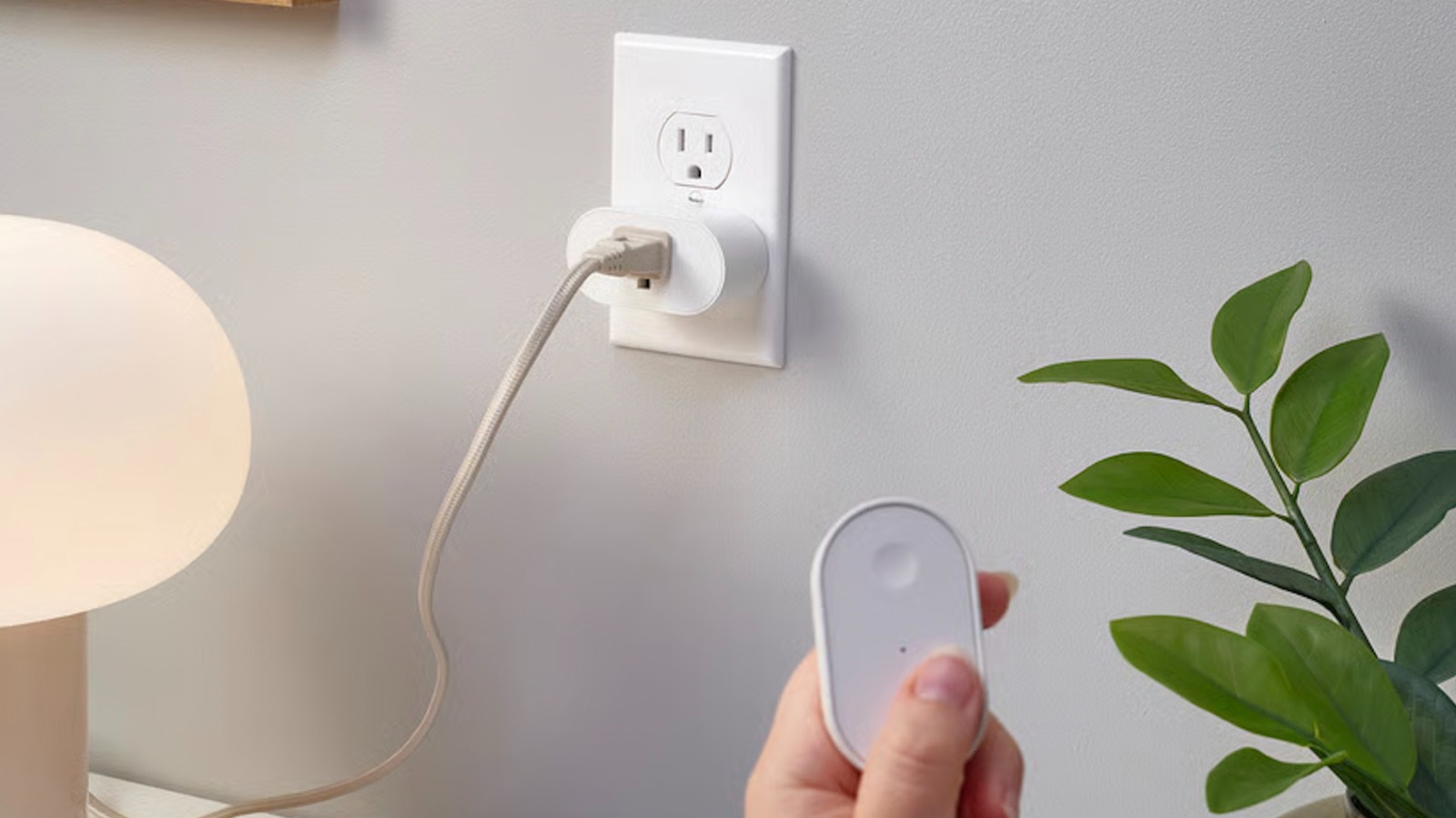
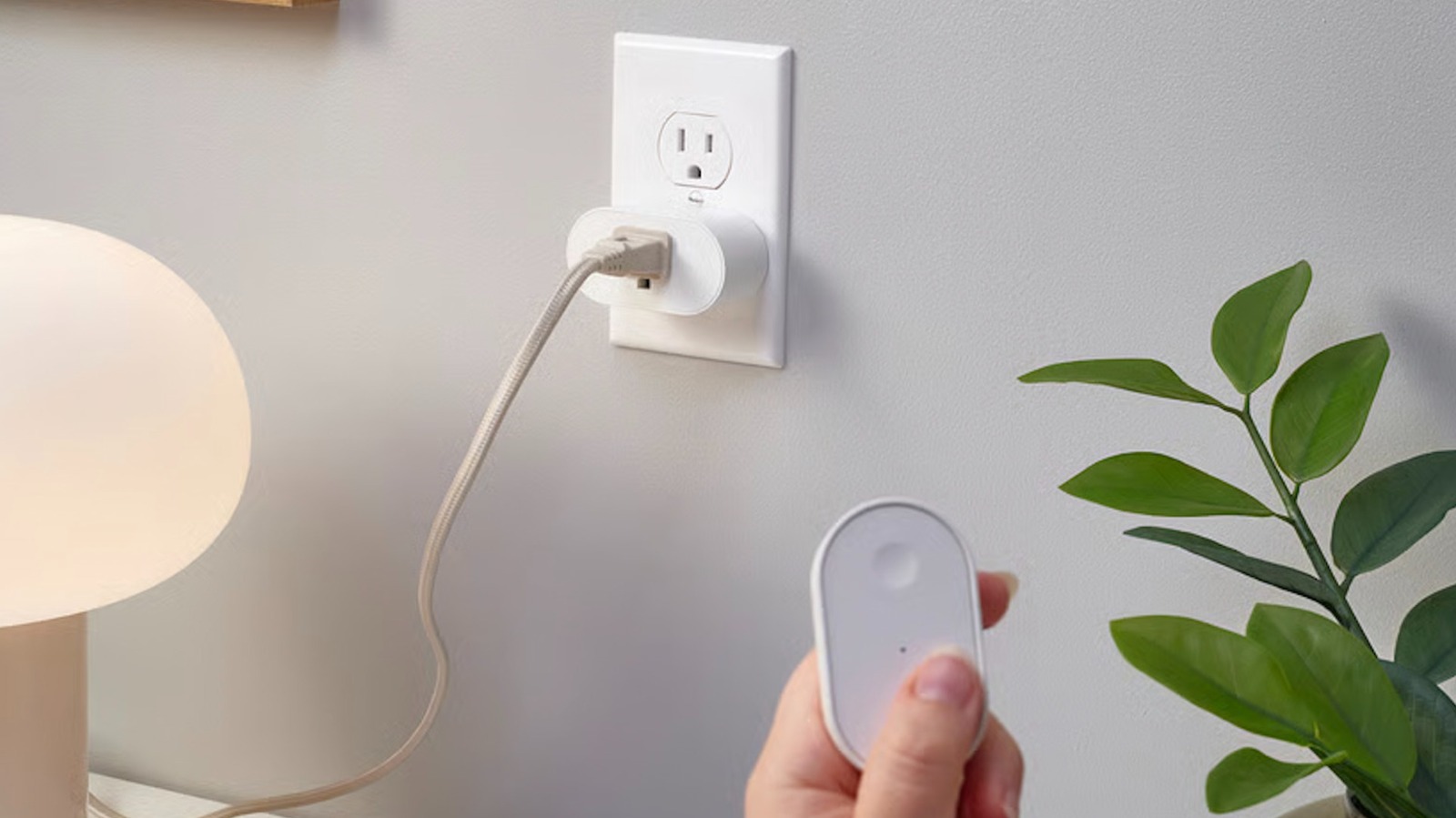
One of the cheapest smart plugs you can buy is also one of the easiest to set up — the Ikea Grillplats. It may seem surprising that the furniture giant makes a smart plug, but there are actually all kinds of mini gadgets you can find at Ikea. Many of these devices, like shower speakers and LED reading lights, help enhance the decor or functionality of a home, which is very much in line with the Swedish company’s brand. Ikea’s Grillplats can be used anywhere in your home with a grounded outlet and instantly upgrade whatever appliance you plug into it.

Ikea might have a reputation for furniture that’s complicated to build, but by many accounts, setting up its smart plug is a completely different experience. The Grillplats is even named as the “best smart plug for easy setup” by CNET, which tested several models from different brands before rendering its verdict. It’s not just cheap and simple to install, either — it’s also highly rated. When a poster on the r/HomeAssistant subreddit asked for a “smart power plug that just works,” many of the responses recommended Ikea’s smart plug.

The Grillplats works with Dirigera, Ikea’s proprietary smart home hub. Devices connected to the plug can be controlled using the Ikea Home app, as well as motion sensors or a physical remote control. Ten plugs can be connected to the same sensor or remote. The Grillplats uses the universal Matter standard and is compatible with Amazon Alexa, Apple Home, Google Home, Samsung SmartThings, and Homey. An energy-monitoring model is also available. The Ikea Grillplats is available from Ikea for $7.99.

TP-Link/Kasa EP40A Smart Outdoor Plug

Smart plugs aren’t just confined to the inside of your home. Outdoor smart plugs that are designed to withstand the elements and often have a stronger range to better reach your indoor Wi-Fi router are available, though not all of them are very easy to set up. One that is, though, is the TP-Link/Kasa EP40A Smart Outdoor Plug. Based on over 17,300 Amazon reviews, the accessory has a strong 4.6 out of 5 average customer rating.

Many of these positive reviews report how easy the EP40A is to set up. Some add that the app is also intuitive and setting up schedules is a simple process, especially when using a sunrise/sunset setting that keeps you from continually having to adjust times as the seasons progress. Adding to its simplicity is that it doesn’t require a hub. PCMag, which named the device its “best outdoor smart plug,” also cites its straightforward setup as a big asset, among others. The publication does note that the EP40A is pricier than some other outdoor plugs and lacks an energy-monitoring feature.

Despite these drawbacks, the TP-Link/Kasa EP40A Smart Outdoor Plug is highly rated due to several positive attributes, including its IP64 weather rating and dual Wi-Fi antenna for a maximum range of up to 300 feet. It’s compatible with Amazon Alexa, Google Assistant, Apple Home, and IFTTT. It turns one outlet into two and can transmit 1875 watts, which is helpful for heavier-duty equipment. Users report using it to control holiday lights or remotely shutting off inflatable decorations during heavy winds. The TP-Link/Kasa EP40A Smart Outdoor Plug is currently available from Amazon for $23.50.


Source link

Leave a Reply

Subscribe to Our Newsletter

Get our latest articles delivered straight to your inbox. No spam, we promise.

Recent Reviews


There are a ton of laptops on the market at any given moment and almost all of those models are available in multiple configurations to match your performance and budget needs. If you’re feeling overwhelmed with options when looking for a new laptop, it’s understandable. To help simplify things for you, here are the main things you should consider when you start looking.

Price

The search for a new laptop for most people starts with price. If the statistics that chipmaker Intel and PC manufacturers hurl at us are correct, you’ll be holding onto your next laptop for at least three years. If you can afford to stretch your budget a little to get better specs, do it. That stands whether you’re spending $500 or more than $1,000. In the past, you could get away with spending less upfront with an eye toward upgrading memory and storage in the future. Laptop makers are increasingly moving away from making components easily upgradable, so again, it’s best to get as much laptop as you can afford from the start.

Generally speaking, the more you spend, the better the laptop. That could mean better components for faster performance, a nicer display, sturdier build quality, a smaller or lighter design from higher-end materials or even a more comfortable keyboard. All of these things add to the cost of a laptop. I’d love to say $500 will get you a powerful gaming laptop, for example, but that’s not the case. Right now, the sweet spot for a reliable laptop that handles average work, home office or school tasks is between $700 and $800 and a reasonable model for creative work or gaming is upward of about $1,000. The key is to look for discounts on models in all price ranges so you can get more laptop capabilities for less.

Operating system

Choosing an operating system is part personal preference and part budget. For the most part, Microsoft Windows and Apple MacOS do the same things (save for gaming, where Windows is the winner), but they do them differently. Unless there’s an OS-specific application you need, get the one you feel most comfortable using. If you’re not sure which that is, head to an Apple store or a local electronics store and test them out. Or ask friends or family to let you test theirs for a bit. If you have an iPhone or iPad and like it, chances are you’ll like MacOS, too.

In price and variety (and PC gaming), Windows laptops win. If you want MacOS, you’re getting a MacBook. Apple’s MacBooks regularly top our best lists, the least expensive one is the M1 MacBook Air for $999. It is regularly discounted to $750 or $800, but if you want a cheaper MacBook, you’ll have to consider older refurbished ones.

Windows laptops can be found for as little as a couple of hundred dollars and come in all manner of sizes and designs. Granted, we’d be hard-pressed to find a $200 laptop we’d give a full-throated recommendation to but if you need a laptop for online shopping, email and word processing, they exist.

If you are on a tight budget, consider a Chromebook. ChromeOS is a different experience than Windows; make sure the applications you need have a Chrome, Android or Linux app before making the leap. If you spend most of your time roaming the web, writing, streaming video or using cloud-gaming services, they’re a good fit.

Size

Remember to consider whether having a lighter, thinner laptop or a touchscreen laptop with a good battery life will be important to you in the future. Size is primarily determined by the screen — hello, laws of physics — which in turn factors into battery size, laptop thickness, weight and price. Keep in mind other physics-related characteristics, such as an ultrathin laptop isn’t necessarily lighter than a thick one, you can’t expect a wide array of connections on a small or ultrathin model and so on.

Screen

When deciding on a screen, there are a myriad number of considerations, like how much you need to display (which is surprisingly more about resolution than screen size), what types of content you’ll be looking at and whether you’ll be using it for gaming or creative work.

You really want to optimize pixel density; that is, the number of pixels per inch the screen can display. Although other factors contribute to sharpness, a higher pixel density usually means a sharper rendering of text and interface elements. (You can easily calculate the pixel density of any screen at DPI Calculator if you don’t feel like doing the math, and you can also find out what math you need to do there.) I recommend a dot pitch of at least 100 pixels per inch as a rule of thumb.

Because of the way Windows and MacOS scale for the display, you’re frequently better off with a higher resolution than you’d think. You can always make things bigger on a high-resolution screen, but you can never make them smaller — to fit more content in the view — on a low-resolution screen. This is why a 4K, 14-inch screen may sound like unnecessary overkill but may not be if you need to, say, view a wide spreadsheet.

If you need a laptop with relatively accurate color that displays the most colors possible or that supports HDR, you can’t simply trust the specs — not because manufacturers lie, but because they usually fail to provide the necessary context to understand what the specs they quote mean. You can find a ton of detail about considerations for different types of screen uses in our monitor buying guides for general purpose monitors, creators, gamers and HDR viewing.

Processor

The processor, aka the CPU, is the brains of a laptop. Intel and AMD are the main CPU makers for Windows laptops, with Qualcomm as a new third option with its Arm-based Snapdragon X processors. Both Intel and AMD offer a staggering selection of mobile processors. Making things trickier, both manufacturers have chips designed for different laptop styles, like power-saving chips for ultraportables or faster processors for gaming laptops. Their naming conventions will let you know what type is used. You can head over to Intel or AMD for explanations so you get the performance you want. Generally speaking, the faster the processor speed and the more cores it has, the better the performance will be.

Apple makes its own chips for MacBooks, which makes things slightly more straightforward. Like Intel and AMD, you’ll still want to pay attention to the naming conventions to know what kind of performance to expect. Apple uses its M-series chipsets in Macs. The entry-level MacBook Air uses an M1 chip with an eight-core CPU and seven-core GPU. The current models have M2-series silicon that starts with an eight-core CPU and 10-core GPU and goes up to the M2 Max with a 12-core CPU and a 38-core GPU. Again, generally speaking, the more cores it has, the better the performance.

Battery life has less to do with the number of cores and more to do with CPU architecture, Arm versus x86. Apple’s Arm-based MacBooks and the first Arm-based Copilot Plus PCs we’ve tested offer better battery life than laptops based on x86 processors from Intel and AMD.

Graphics

The graphics processor handles all the work of driving the screen and generating what gets displayed, as well as speeding up a lot of graphics-related (and increasingly, AI-related) operations. For Windows laptops, there are two types of GPUs: integrated (iGPU) or discrete (dGPU). As the names imply, an iGPU is part of the CPU package, while a dGPU is a separate chip with dedicated memory (VRAM) that it communicates with directly, making it faster than sharing memory with the CPU.

Because the iGPU splits space, memory and power with the CPU, it’s constrained by the limits of those. It allows for smaller, lighter laptops, but doesn’t perform nearly as well as a dGPU. There are some games and creative software that won’t run unless they detect a dGPU or sufficient VRAM. Most productivity software, video streaming, web browsing and other nonspecialized apps will run fine on an iGPU.

For more power-hungry graphics needs, like video editing, gaming and streaming, design and so on, you’ll need a dGPU; there are only two real companies that make them, Nvidia and AMD, with Intel offering some based on the Xe-branded (or the older UHD Graphics branding) iGPU technology in its CPUs.

Memory

For memory, I highly recommend 16GB of RAM (8GB absolute minimum). RAM is where the operating system stores all the data for running applications and it can fill up fast. After that, it starts swapping between RAM and SSD, which is slower. A lot of sub-$500 laptops have 4GB or 8GB, which in conjunction with a slower disk can make for a frustratingly slow Windows laptop experience. Also, many laptops now have the memory soldered onto the motherboard. Most manufacturers disclose this but if the RAM type is LPDDR, assume it’s soldered and can’t be upgraded.

Some PC makers will solder memory on and also leave an empty internal slot for adding a stick of RAM. You may need to contact the laptop manufacturer or find the laptop’s full specs online to confirm. Check the web for user experiences because the slot may still be hard to get to, it may require nonstandard or hard-to-get memory or other pitfalls.

Storage

You’ll still find cheaper hard drives in budget laptops and larger hard drives in gaming laptops. Faster solid-state drives have all but replaced hard drives in laptops and can make a big difference in performance. Not all SSDs are equally speedy, and cheaper laptops typically have slower drives. If the laptop only comes with 4GB or 8GB of RAM, it may end up swapping to that drive and the system may slow down quickly while you’re working.

Get what you can afford and if you need to go with a smaller drive, you can always add an external drive or two down the road or use cloud storage to bolster a small internal drive. The exception is gaming laptops: I don’t recommend going with less than a 512GB SSD unless you really like uninstalling games every time you want to play a new game.


Source link