
We may receive a commission on purchases made from links.
It’s no secret that Ryobi primarily caters to DIY home repair enthusiasts. There are some tools the pros use and others that are more powerful than those from better-known competitors, but in general, Ryobi sells decent tools at a reasonable price and aims those products directly at people who prefer to do things themselves. Most of Ryobi’s tools are also fairly inexpensive, often costing much less than similar products from bigger competitors, making them an excellent value brand to shop for DIY home repair tools.
When you can get tools for less than competitors, the question is, how low do the prices go, and what tools can you get for that price? Ryobi’s product lineup is mostly cordless power tools, so there is a floor when it comes to cost. However, it turns out that Ryobi has a fairly healthy library of home repair tools under $50 if you know where and how to look. These less expensive tools can easily help bolster an existing library of Ryobi tools and give you more flexibility when tackling a project.
To temper expectations, you’re not going to find a miter saw or something like that on a list like this. Even Ryobi sells those for more than $50. In this range, you’ll find some useful power tools, though, and the list below will get you started on useful home improvement tools you can get from Ryobi for under $50.
Ryobi One+ 18V 1.5 Ah Battery
The first thing you should consider is a spare battery. Ryobi’s One+ 18V system has hundreds of tools, and they all take the same One+ 18V battery. In many cases, you get a battery when you buy a tool, and if you buy multiple tools, you’ll have multiple batteries. Even so, it’s not a terrible idea to pick up a spare battery in case the occasion calls for it, especially if you have a longer home improvement job planned.
If you shop at Home Depot, the smallest battery you can find there is the One+ 18V 2.0 Ah Ryobi battery, which goes for $90. These are an okay value, and 2.0 Ah lasts a decent while on most of the brand’s power tools. It turns out that Ryobi sells one slightly smaller at almost half the price directly from its website, and that’s the One+ 18V 1.5 Ah battery. This little guy is 75% of the size of the 2.0 Ah battery but comes in at 50% of the price at $45 when not on sale.
This serves quite well as a backup battery, with hundreds of customers agreeing that the battery is worth the price here. It charges on any regular One+ 18V charger, so you don’t need to buy anything else in order to use it if you already have a charger at home. Of course, you can always pick up a spare charger for around $35, allowing you to charge multiple batteries at once.
Ryobi 18V One+ Hand Vacuum
Ryobi has several cleaning tools in its arsenal, including some niche items like a pool vacuum, a carpet washer, and a patio scrubber. For this list, we think the Ryobi One+ 18V Hand Vacuum is the way to go. When performing home repairs, you’ll almost certainly make a mess. It could be drywalling dust, sawdust, or just general debris from whatever you’re working on. A hand vacuum that takes the same batteries as your power tools keeps your area clean, which matters quite a lot in terms of safety and health.
The vacuum itself is $35 for just the tool (no battery), and according to its numerous positive customer reviews, it does the job well enough. It excels at dry materials and surfaces, and there is a four-piece attachment kit (sold separately) that lets you clean more things more efficiently. This may not compete with the very best hand vacuums designed for cleaning houses but for cleaning up sawdust off your garage floor so you don’t slip on it, it does the job nicely.
There is a second vacuum in this price range that Ryobi calls the 30th Anniversary Performance Edition. The design is different and it appears to be larger overall. It also costs $50 on the nose, so you can decide if the extra $15 is worth it. Both models have excellent reviews overall, and keeping things cleaned up is a valuable part of the home repair process.
Ryobi One+ 18V LED Area Light
Lighting is also important when working on home repair or home improvement. The sun can only do so much, especially if your work is inside the house, so having a good light can make a lot of your tasks easier. Ryobi has several lights to choose from, but for general use, we think the Ryobi One+ 18V LED Area Light is the one to go for. This is a lantern style light that can stand on its own or be hung from a wall and be used like a lamp that disperses light across a wide area.
The specs are pretty good as well. It boasts up to 850 lumens of output across three light settings, which will certainly light up a small room. It also has a 2-amp USB charging port included so you can charge your phone or a USB-powered tool while also providing light. It also doesn’t weigh a lot, which lets you hang it from almost anything without worries about damaging or falls. It takes the same One+ 18V batteries as Ryobi’s other power tools. That means you don’t have to buy extra batteries or, if you do, those batteries will still work with your drill or other tools.
The area light costs $40, which keeps it under that $50 mark. However, nearly all of Ryobi’s lights are under $50, so if this one isn’t doing it for you, this One+ 18V Clamp Light or this light and magnifying glass combo may be more helpful, depending on what you need.
Ryobi USB Lithium Screwdriver
Ryobi doesn’t sell many hand tools, so you won’t find a bunch of wrenches, screwdrivers, or hammers on a list like this. Ryobi does sell electric versions of many of those tools, though, and that includes the Ryobi USB Lithium Screwdriver. This little guy is basically a screwdriver that does the turning for you. It comes with a rechargeable battery that charges over USB-C, so it’s not the same battery system as the One+ 18V collection, but it’s also much smaller and is compatible with Ryobi’s other USB Lithium products.
The tool includes two 1-inch bit holders, dual LEDs so you can see what you’re driving, and a battery indicator to let you see the charge level. In terms of usability, it doesn’t do too much that a regular, everyday screwdriver can’t do. It does carry the same benefits as every other electric screwdriver, in that it saves your wrist from having to manually twist in each screw. You may not see the benefit if you only need to use it on one or two screws, but if you’ve ever put a deck together, you already know how much work a little power tool like this can save you.
Ryobi sells its electric screwdriver for $50, which is a decent value since you get a battery and a charging cable with it. The ability for the screwdriver to twist into multiple shapes also gives it a leg up on some competitors.
Ryobi 18-inch Tool Bag
Tool bags are nice to have, even if you’re a DIYer. You can pack it up with your most commonly used tools and carry all of them together wherever they need to go instead of carrying armfuls of tools back and forth. As a DIYer myself, I can attest that having a bag is much better than not having a bag. Ryobi sells several tool bags, but the brand’s 18-inch Medium Tool Bag is arguably the best option of the bunch. It costs $50 but is a pretty big step up in terms of storage capacity and quality from its cheaper bags.
This particular tool bag comes with 18 total pockets, a main storage compartment, a carry handle, and a shoulder strap, which should take care of every possible way you would want to use the thing. There are also a tape measure clip and a dedicated level strap, so you don’t have to waste storage space on those two items. It’s one of the few Ryobi products with a limited lifetime warranty, which is always nice to have.
In short, this is a tool bag with few, if any, weaknesses, and customer reviews seem to reflect this, with nearly all of them being positive. People carry regular hand tools, power tools, batteries, and all sorts of other stuff in it. The inner pockets are a bit too small for power tool batteries, but otherwise, it’s about as good as a tool bag gets in this price range.
Ryobi 18V One+ ⅜-inch Cordless Drill
The power drill is one of the most useful and ubiquitous power tools on the market. It’s often among the first power tools a DIYer purchases, which includes me, and given how many things are held together with screws, you’ll find a use for it whether you know it or not. Ryobi has one of the best power drill deals on the market with its One+ 18V 3/8-inch Drill. For $50, you get a power drill, a battery, and a battery charger, and that price tag is also not on sale. This is the gateway into Ryobi’s tools. The cheap price doesn’t reflect low capability either, since Ryobi’s drills are just as good as many competitors.
I have owned one of these for a few years now. It has done everything I’ve ever needed it to do without much hassle. It struggled a bit drilling holes into solid wood shelving large enough to fit a Philips Hue Lightstrip, but to be fair to Ryobi, the wood was 2 inches thick and would’ve been rough for any drill. In any case, it fits standard 3/8-inch bits, so you can buy those from anywhere, and the variable speed trigger is helpful for not stripping screws or overdoing it when drilling holes.
Ryobi often sells this in combo kits with an impact driver for $100. When you take into account two batteries, a charger, a bag, and two tools, it averages out to $50 per tool and battery, which is a good deal.
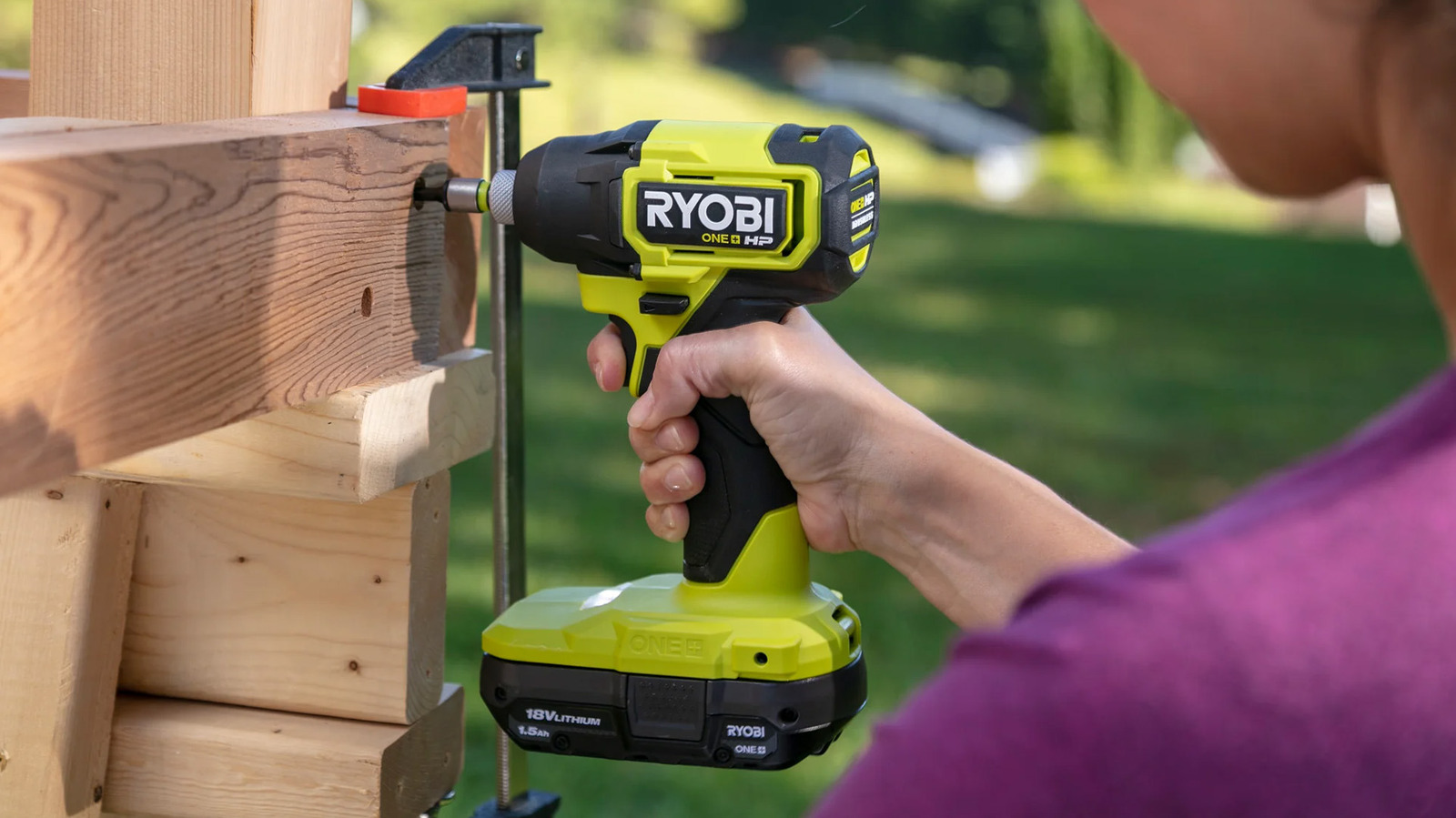
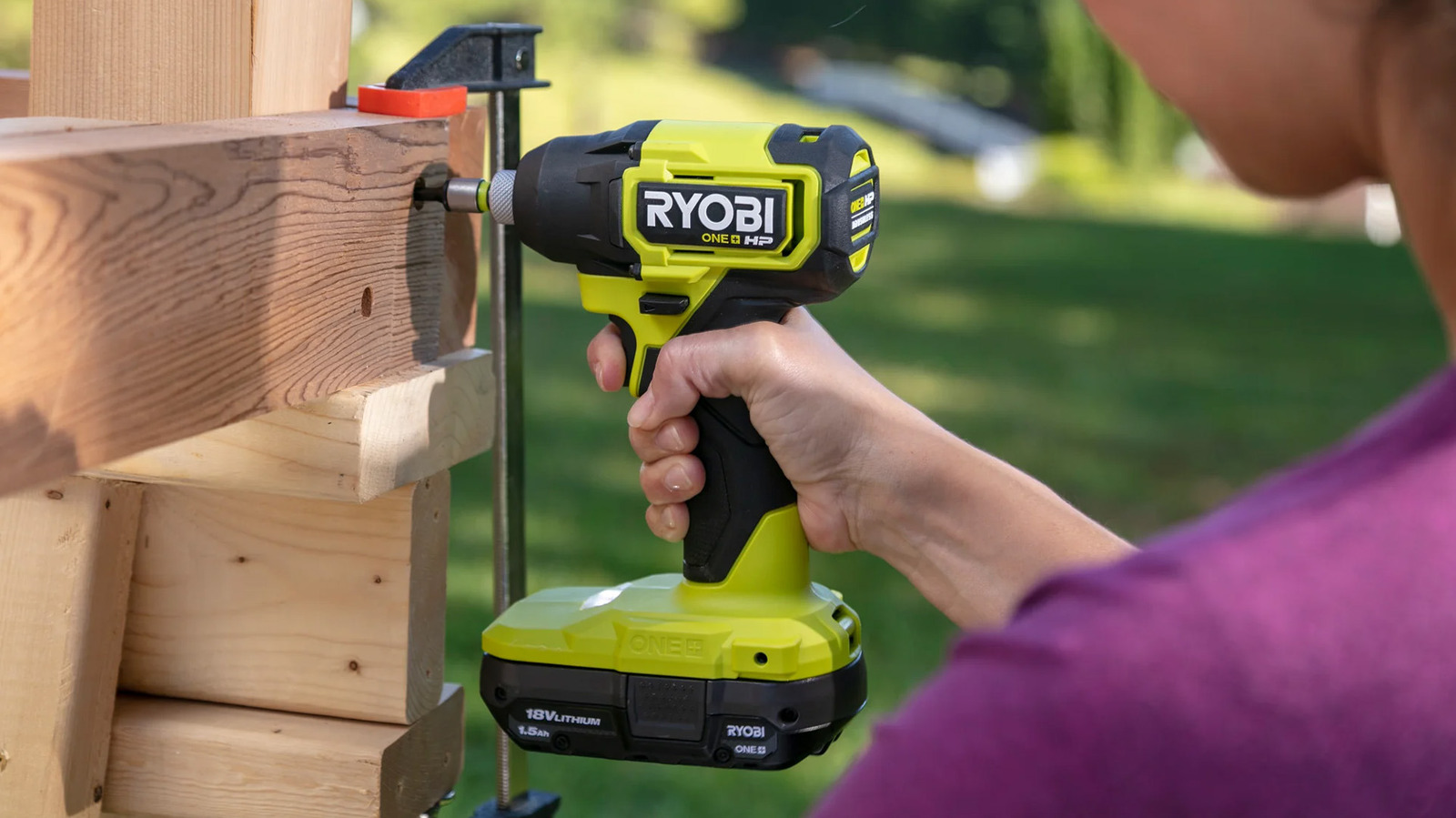
Ryobi 18V One+ ¼-inch Cordless Impact Driver
Beginners may get a little confused about the difference between an impact driver and power drill, and for good reason because they are similar. The biggest difference is that impact drivers have more torque and better contact with screw heads, making them superior for longer screws and harder materials like metal or concrete. Ryobi sells such an impact driver for under $50 with the One+ 18V 1/4-inch Impact Driver. It’s $59 at Home Depot, but you can buy it directly from Ryobi for $48.
This little guy provides 1,800 inch-pounds of torque at 2,800 RPM, which is faster than the 600 RPM of Ryobi’s 3/8-inch drill. Just that spec along gives you a pretty good idea what the difference is between a drill and an impact driver. These take 1/4-inch bits, and it is a universal fit, so any 1/4-inch bit set will do the trick here. It comes with a variable speed trigger and Ryobi’s standard three-year power tool warranty.
The only downside is that this is for just the tool, so you’ll need a battery on hand to use it. As mentioned previously, Ryobi likes to package these in combo kits with a drill for under $100, giving you two tools for roughly $50 each along with batteries. That’s a superior deal overall, but if you already have a drill and a battery, you can still get an impact driver for pretty cheap.
How we chose these Ryobi tools
Ryobi sells a ton of products for under $50, but the overwhelming majority of them are accessories like drill bit sets and replacement parts for power tools with wear items like saws. So, putting together a list of Ryobi tools for under $50 is pretty simple since you just filter out those accessories and replacement parts, and you’re left with power tools.
From there, we chose tools that are specifically good for DIY home repair and home improvement. You can get a Ryobi tire inflater for under $50, but it doesn’t really help you fix or build anything, so tools like that were left off of the list. We also kept the list to a single light, tool bag, and cleaning product. Those do help you repair or improve your home, but Ryobi has a bunch of those and saturating the list with what is essentially the same item over and over would’ve been low effort.
Finally, all products needed at least a 4.0-star rating across 100 reviews and over. Nearly every product on the list has high ratings and more numerous reviews than that, but there are some questionable Ryobi tools that we made sure to keep off of the list. We also made sure most tools were part of its main One+ 18V lineup, so if you did buy any of these, they’d be compatible with other Ryobi tools you might purchase in the future.

Stephan is the sports journalist for the Maple Grove Report.