The Average Lifespan Of A Garage Door Opener Depends On One Thing


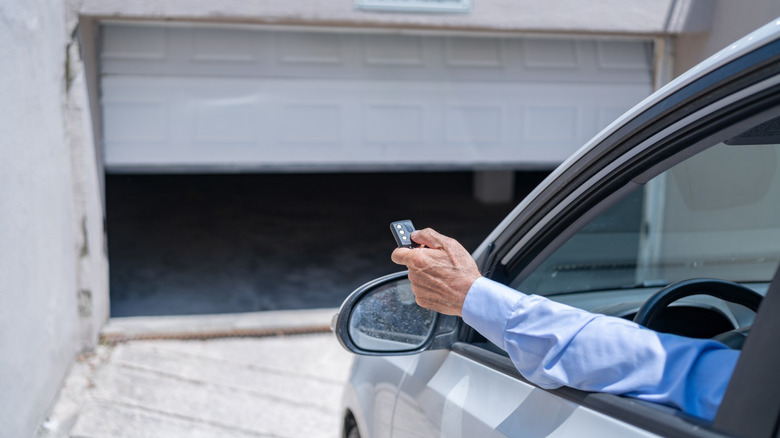
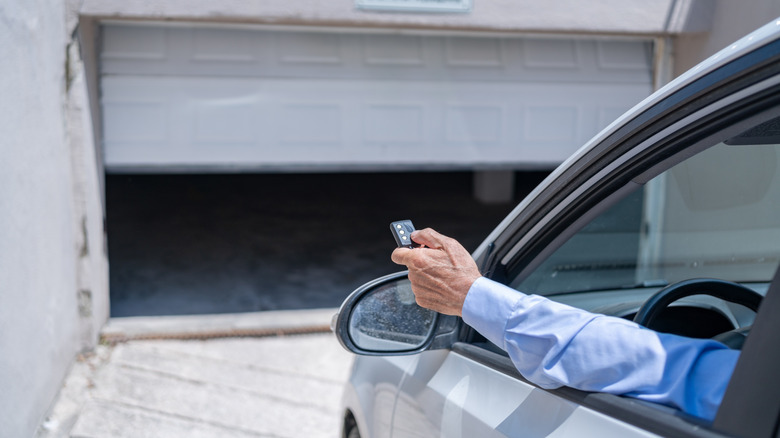
Garage door openers are a creature comfort for homeowners around the world. These devices can make life easier, even if you have to open the door manually when there’s no power. While there are some things you should know about getting the most life out of your garage door opener, it all comes down to how often you need it. The more you use it, the more you decrease its shelf life.

On the average, garage door openers last anywhere from 15 to 20 years. This includes Liftmaster and Genie, two of the industry’s top brands. But that can shrink to eight or less, depending on how often the opener is used. That’s because the device’s motor and electronic parts will inevitably suffer wear and tear as time goes on. So, if you live in a home where the garage door is opened several times a day without fail, month after month and year after year, the lifespan of your opener will likely be impacted.

It’s also important to note that there’s very little chance of any device reaching the maximum lifespan if it’s not kept in good condition. There are some common problems with garage doors, and a compromised device may not hit that 20-year mark. 

Garage door opener routine maintenance tips
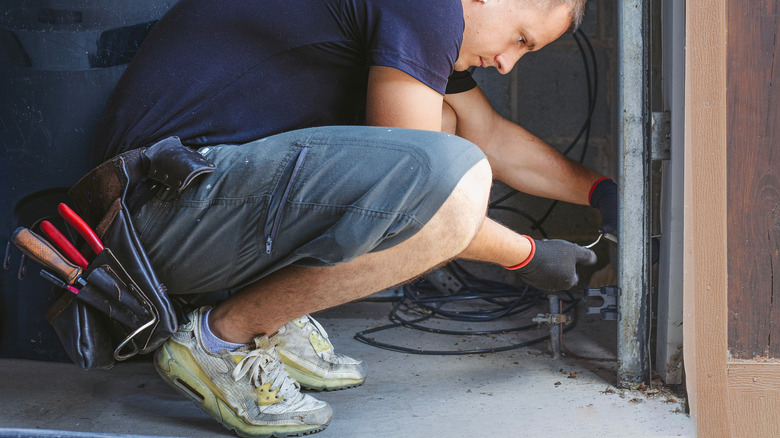
Getting the most life out of your garage door opener begins with routine maintenance. Consult your owner’s manual first, as it will give you some useful tips for your specific model. Always unplug your device before performing any checks or adjustments, and if your door is open during a check, use a clamp under one of the rollers to keep it from slipping down.

Check and lubricate the moving parts, including the rollers, hinges, and springs. This will help reduce friction, and keep the motor from overworking. Look at the drive chain, or belt, and adjust the tension if necessary, so there’s no undue strain on the device. Visually inspect all hardware and tighten wherever needed. This will not only decrease vibration but also reduce the chance of uneven loads. Replace your device’s light bulbs, as well as the backup batteries, and remote batteries, as needed. It’s important to note that the springs are an especially dangerous part of the opener and those should only ever be adjusted by a professional.

But even with a routine maintenance schedule, it’s important to be aware of how your device is working. Watch for a blinking light on your garage door opener, and if you hear any odd sounds, or detect a wobbly motion during operation, that will need to be investigated. Refer to your owner’s manual or visit the manufacturer’s website for troubleshooting tips. If you’ve done everything you can and your door just isn’t quite right, it might be time to contact a professional to take a look. 


Source link

Leave a Reply

Subscribe to Our Newsletter

Get our latest articles delivered straight to your inbox. No spam, we promise.

Recent Reviews


A new class-action lawsuit, filed on Monday by three teenage girls and their guardians, alleges that Elon Musk’s xAI created and distributed child sexual abuse material featuring their faces and likenesses with its Grok AI tech.

“Their lives have been shattered by the devastating loss of privacy, dignity, and personal safety that the production and dissemination of this CSAM have caused,” the filing says. “xAI’s financial gain through the increased use of its image- and video-making product came at their expense and well-being.”

From December to early January, Grok allowed many AI and X social media users to create AI-generated nonconsensual intimate images, sometimes known as deepfake porn. Reports estimate that Grok users made 4.4 million “undressed” or “nudified” images, 41% of the total number of images created, over a period of nine days. 

X, xAI and its safety and child safety divisions did not immediately respond to a request for comment.

The wave of “undressed” images stirred outrage around the world. The European Commission quickly launched an investigation, while Malaysia and Indonesia banned X within their borders. Some US government representatives called on Apple and Google to remove the app from their app stores for violating their policies, but no federal investigation into X or xAI has been opened. A similar, separate class-action lawsuit was filed (PDF) by a South Carolina woman in late January.

The dehumanizing trend highlighted just how capable modern AI image tools are at creating content that seems realistic. The new complaint compares Grok’s self-proclaimed “spicy AI” generation to the “dark arts” with its ease of subjecting children to “any pose, however sick, however fetishized, however unlawful.”

“To the viewer, the resulting video appears entirely real. For the child, her identifying features will now forever be attached to a video depicting her own child sexual abuse,” the complaint reads.

AI Atlas

The complaint says xAI is at fault because it did not employ industry-standard guardrails that would prevent abusers from making this content. It says xAI licensed use of its tech to third-party companies abroad, which sold subscriptions that led abusers to make child sexual abuse images featuring the faces and likenesses of the victims. The requests ran through xAI’s servers, which makes the company liable, the complaint argues.

The lawsuit was filed by three Jane Does, pseudonyms given to the teens to protect their identities. Jane Doe 1 was first alerted to the fact that abusive, AI-generated sexual material of her was circulating on the web by an anonymous Instagram message in early December. The filing says she was told about a Discord server by the anonymous Instagram user, where the material was shared. That led Jane Doe 1 and her family, and eventually law enforcement, to find and arrest one perpetrator.

Ongoing investigations led the families of Jane Does 2 and 3 to learn their children’s images had been transformed with xAI tech into abusive material.


Source link