Skip Starbucks to save gas? There are better strategies


If you put more faith in predictions from the International Energy Agency than President Donald Trump’s haphazard assurances, we’re looking at years of restricted fossil fuel supplies. Thanks to the war in the Persian Gulf, expect gas price discussions to dominate political and water cooler conversations. For example, U.S. Senate candidate Michelle Tafoya recently suggested Minnesotans could “take one less trip to Starbucks.”

Here is some other advice about how to reduce your consumption of gasoline and cope with the turbulent economic state of the world. 

1. Walk more

A fun fact: Half of U.S. trips are under three miles, about the distance you can walk in an hour. Believe it nor not, a long walk can be a pleasant experience, and in some countries is relatively common. If you’re trying to use less gas, try walking to a grocery store or other nearby destination instead of driving. You have to change your shopping habits, chaining trips or buying smaller amounts of food more frequently. But it can be a more engaged way to shop, meal-by-meal, even if it does not fit well with a Costco membership. Stop and smell the flowers. Look for migrating birds, more of whom are arriving every day. 

(If you do this, report back to me what your walk was like.)

People often focus only on their commute to work, but it’s the other trips that might be more flexible. For example, instead of driving across town to a restaurant, make a list of restaurants in your neighborhood and start spending more time at those places. The most fun way to do this is to take out a map and draw a circle with a one- or two-mile radius. A brisk walk is a great way to digest a meal.

This is age-old wisdom, easy to talk about but harder to drum up the courage to walk into the world. The reward waiting at the end is a rich vein: not just less gas, but better personal health and more intimate knowledge of your neighborhood and community.

2. Take transit 

If you can, swap out trips for transit. Twin Cities transit remains a great deal, an affordable $2 with free transfers for up to two-and-a-half hours. Compared to many other U.S. cities, that’s a bargain. If you’re a senior, low-income or under 12 years old, you qualify for a half-price fare, an almost negligible $1. If you happen to be in either city’s “downtown zone,” fares drop to only .50. 

The only wrinkle is getting used to the payment and schedule process. Metro Transit will eventually be rolling up a new fare technology that will allow anyone to use a credit card on any vehicle, but for now the best thing to do is get the Metro Transit app – you simply show it to the bus operator – or a GoTo card. These are available at many grocery stores or Metro Transit offices.

The main cost here is time. Almost without exception, transit travel times are longer than driving, often double the minutes to your destination. (My commute to work is a rare exception, which is why I often feel privileged.) Ride times vary greatly depending on your geography. Some parts of the city are much more suited to transit than others, but if you find yourself living within a half-mile of one of Metro Transit’s high frequency routes, try to use it more often.

Bring a book and your favorite earbuds, and transit can be pleasant. You’ll have to be a bit more comfortable being around other people, and get used to adhering to a schedule. The life hack here is to use the Transit App, which makes transit schedules seamlessly visible. 

3. Bike more

If you’re like most people in the Twin Cities, you have a bike in your garage or basement but don’t ride it all that often. This is a great time of year to get out there and give it a try. Just stay on the lookout for accumulated grit and gravel, or the omnipresent potholes. 

(The St. Paul asphalt plant opened last week, but it’s going to take Public Works crews a while to get them filled in.) 

There’s also a wonderful hack to this: Get an e-bike. Research shows e-bikes boost people’s activity marvelously. Try out an e-cargo bike from the Minneapolis bike library, a great hack for shopping or parenting. Springtime in Minnesota is the perfect time to get back in the saddle, no matter how long you’ve let the bicycle gather dust.

The goal of all of this is to drive less. If you succeed, you might even consider selling an internal-combustion engine car. A used EV remains a great deal, with minimal maintenance costs. Or if you live in their region (the central Twin Cities), try out the Evie car share program. It’s an all-electric shared car fleet that cuts out fossil fuels and relieves anxiety about transit and active transportation, knowing you have a car waiting for you as a backup plan. 

Recalling the 1970s energy crisis

It’s worth remembering that this has happened before. The 1973 OPEC oil embargo and the subsequent gas shortage upended U.S. transportation patterns 50 years ago. There were picnics on the (unused portions) of interstate highways. Bicycles took off in an unprecedented “bike boom” that reshaped the industry. And in U.S. vehicular policy, we got highly conflicting approaches. On the one hand, federal guidelines set speed limits at 55 mph to save money and energy. (Folks called this the ol’ “double nickel.”) 

Meanwhile, regulators legalized right-turn-on-red, allowing this nationally in order to save fuel and reduce congestion. Tens of thousands of people died from this new policy, which remains standard around the country in all but a few urban areas. In most other parts of the world, turning right on a red light has always been verboten.

The U.S. response to the 70s oil crisis was a mostly depressing mixed bag. It’s painful to dream about what might have happened if we had gone a different direction and embraced electrification and mass transportation. Other countries pivoted when faced with high oil prices, for example by investing in high-speed rail in places like France or Japan, or doubling down on transit and car-free spaces in the Netherlands. 

In the U.S., many of the decisions driven by “energy independence” have been walked back or backfired, to the detriment of our energy flexibility. For example, we raised speed limits on freeways up to 80 mph in many places. The light truck loophole opened the door for big increases in vehicle sizes, as SUVs have become almost the only passenger vehicles available from American manufacturers today. Bicycle investments were waylaid by poor engineering and an intransigent “vehicular cycling” lobby. That left the country ill prepared for energy problems in 2026.

But individually, there’s hope. In case of emergencies like this, try embracing some useful tactics. Walk more. Bike more. Take transit. Get rid of a fossil-fueled car, if you can.

I’m not saying you should take one less trip to Starbucks; I’m suggesting you walk to Starbucks because I savor a good latté. These are tricks that will make your world, and your bank account, more resilient during what looks to be a turbulent year.


Source link

Leave a Reply

Subscribe to Our Newsletter

Get our latest articles delivered straight to your inbox. No spam, we promise.

Recent Reviews


We may receive a commission on purchases made from links.

Michelin is a French multinational company that many consumers consider to be one of the most satisfying major tire brands. This firm makes several tire models that offer comfort, performance, all-terrain prowess, and everything in between — including cutting-edge products like the $42,000-per-set Michelin Pilot Sport PAX that it developed specifically for the Bugatti Veyron. Aside from its own tires, Michelin also owns other tire brands that you might be familiar with, including BFGoodrich, Achilles, and Corsa.

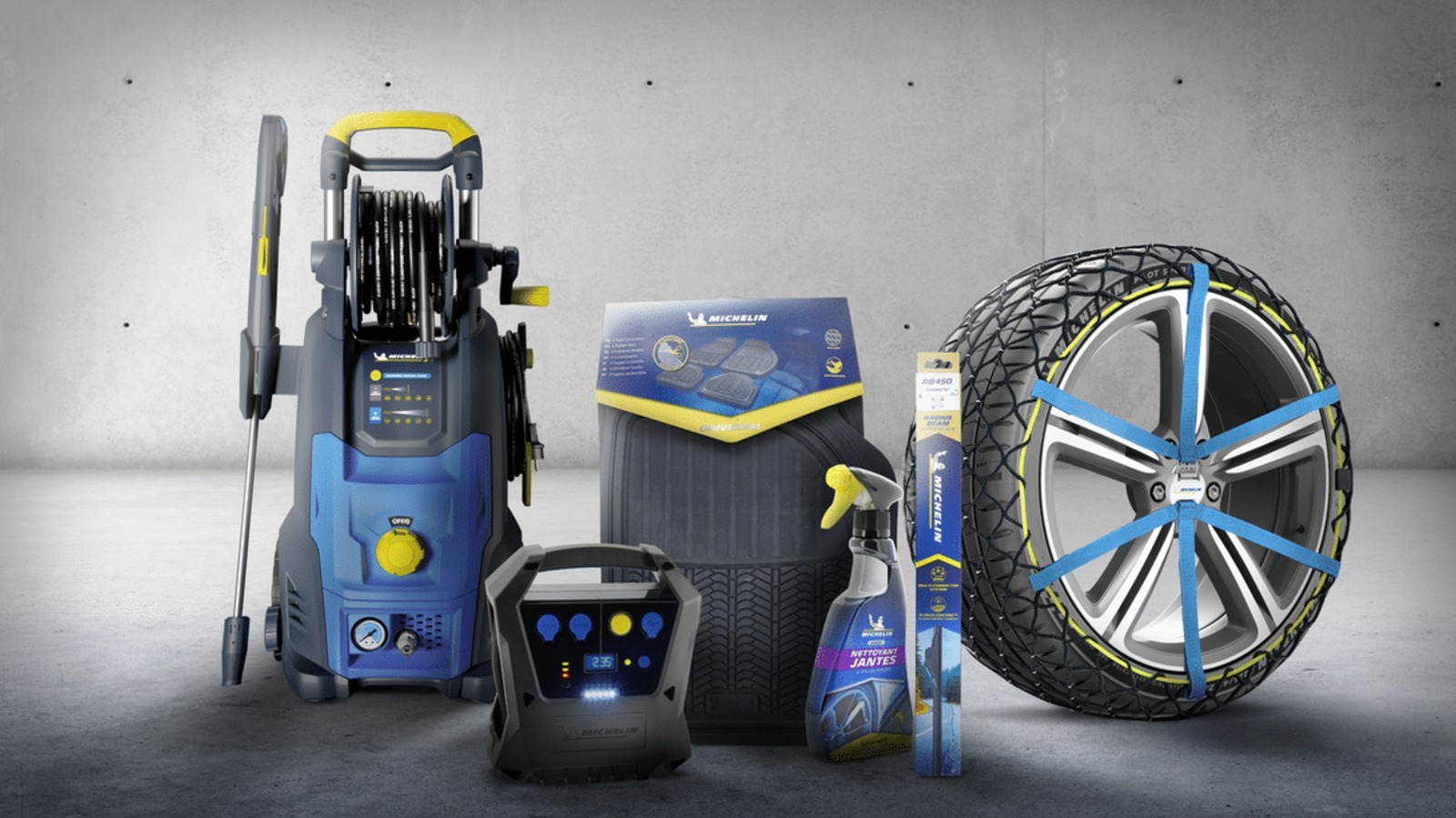
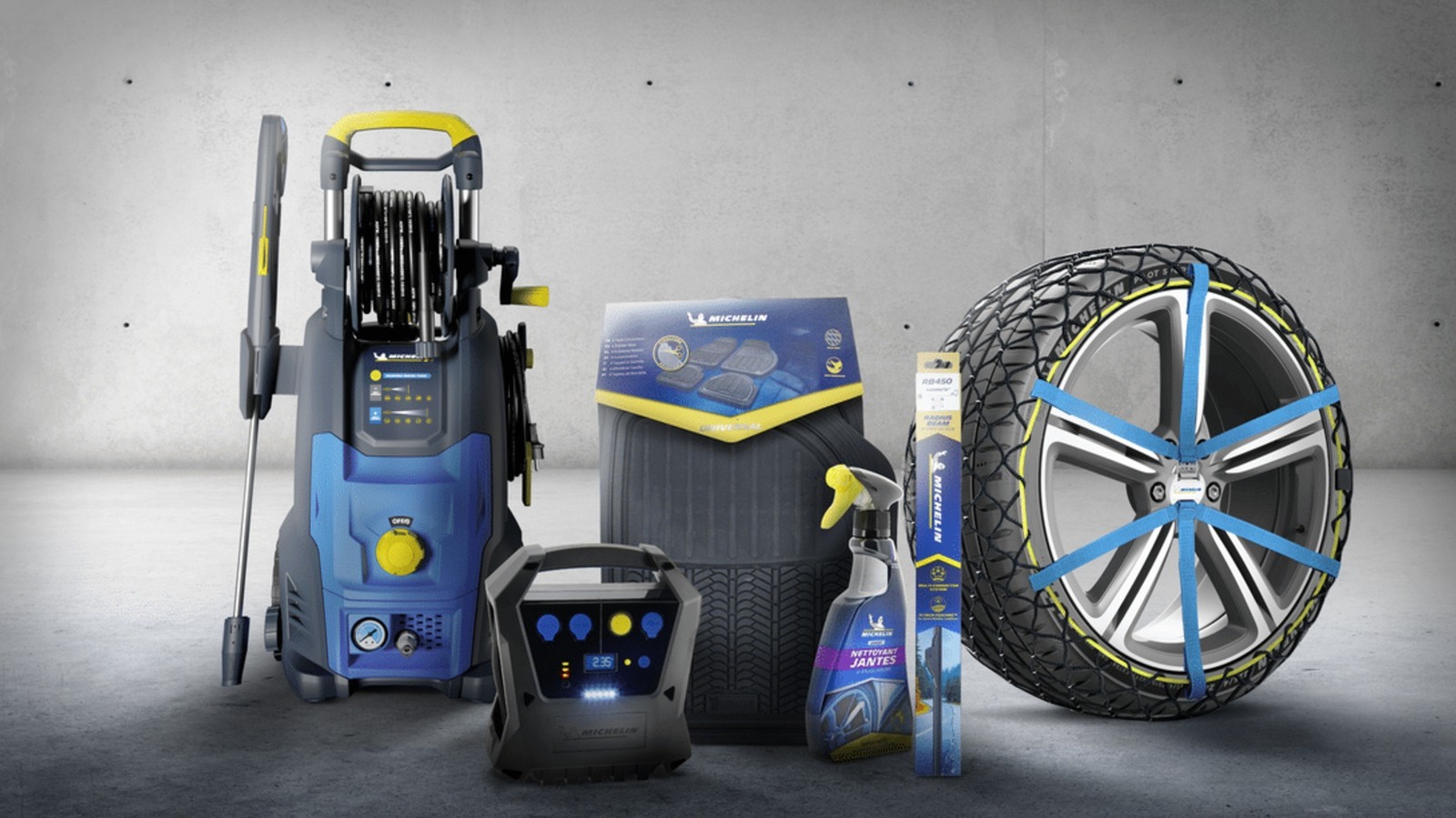
While tires are what Michelin is known for, the company has put its name to more than the rubber that wraps around your car’s rims. In fact, the company sells several other products that aren’t tires. So, we’re listing a few Michelin-branded items that you can buy online and in retail stores. While they might not all be made of rubber or even related to vehicles, these tools and accessories can come in handy when keeping your car — and even yourself — in good shape.

Michelin tire inflator

Since Michelin is primarily known for its tires, it makes sense for the company to sell a Michelin-branded tire inflator as well. That way, if you get a flat on one of the Michelin tires on your car or want to regularly top up your car’s tire pressure to maintain optimum performance, you can use a Michelin-branded pump to fill up your tires. The company actually sells several types of inflators on its Amazon page, but it only offers a single motorized unit — the Michelin Micro Tyre Inflator, which is available on Amazon for $98.99.

This little device is only slightly wider than an iPhone 17 and weighs about 400 grams, or 14 ounces. This means it’s easy to store in your car and to move to whichever tire needs topping up. More importantly, it takes power from a 12-volt socket, allowing you to run it using your car’s battery. It also has a USB port for charging your phone (or any other USB device) in case of an emergency.

Some users say that the device is slow, taking about 12 minutes to bring a tire from 10 to 32 PSI, but that’s not unexpected given its small size. Still, it should be good enough for regular weekly maintenance if you know your car’s proper tire pressure, or in case of an emergency. Its biggest downside is that you need a power source to run it, but having a dead battery and a flat tire simultaneously is likely a rare occurrence in many modern cars.

Michelin mini fridge

Taking a road trip during the summer can get you thirsty, and there’s no better way to quench that thirst than by drinking a cool can of soda (or your beverage of choice). If you want to ensure that you’ll always have a cold drink ready while you’re driving on the freeway, Michelin’s mini fridge will help you with that. This nifty little refrigerator is available on Amazon for just $99.99 and can be connected to either 110V AC or 12V DC power, ensuring that it will work on both your desk and in your car.

The mini fridge measures 6.9 x 9.45 x 10 inches (17.5 x 24 x 25.4 cm), meaning it can easily fit on a garage shelf or office desk. It should also be small enough to put on the floor of your car. Despite that relatively small size, it’s large enough to fit six 350-ml cans or four 500-ml bottles, and it will keep these items at a chilly 32 degrees Fahrenheit or 18 degrees Celsius. It also has an LED light on the door, so it can double as a night light if necessary.

Aside from keeping your drinks (and other food items) below room temperature, it also has a few other creature comforts. These include a removable shelf and door basket for flexibility and easy cleaning, as well as a retractable carry handle and a self-locking door to make transportation easier.

Michelin car floor mats

Heavy-duty car floor mats are often made from rubber for durability and water resistance, and since Michelin is in the business of rubber, it makes sense for the company to offer exactly that. So, if you want to protect your vehicle’s floor from dirt, dust, and mud, the company can help you with its Michelin all-weather car floor mats. This four-piece package is available on Amazon for $49.99 and comes in either black or tan.

The surface of these floor mats is specially designed to trap debris, snow, and water, preventing them from ruining the carpet on your vehicle. The mats have a cleat backing that grips your car’s floor and prevents them from slipping. The front row mats also come with what Michelin calls a Gripclip Retention System, allowing them to clip into your vehicle’s safety clips and adding even more reassurance that they won’t accidentally slip while you’re driving and pose a hazard to your safety.

These mats are universal and will work in most vehicles. However, they’re also easy to customize: If you find them a bit too large for the footwell of your tiny hatchback, you can use a pair of scissors to trim the edges for a perfect fit.

Michelin Stealth Ultra wiper blades

While Michelin’s Stealth Ultra wiper blades aren’t generally considered among the best windshield wipers, they appear to be a pretty good choice given their four-star rating on Amazon. These wipers cost $49.99 and are available in various size combinations for all sorts of cars. This ensures that no matter what vehicle you’re driving, you can probably find a set that will fit your needs.

These Michelin wipers are curved to conform to the shape of your windscreen for a clean, streak-free wipe. The company’s Amazon listing claims that these are designed to “withstand rain, wind, snow, mud, dust, or any other debris that might hamper your windshield’s visibility.” While you might think that windshield wipers are pretty simple items, and that you can just purchase any generic wipers off the internet, you must remember that they’re essential so that you have the best visibility possible during inclement weather. So, for your safety, consider investing in a set from a reputable brand like Michelin.

Michelin work boots

Michelin is known for making rubber tires to put on your car’s “feet,” but did you know it also makes shoes for the driver’s feet? The company makes sports & outdoor footwear, as well as shoes for work and safety. For this example, we have the Michelin HydroEdge Steel Toe waterproof work boot, listed for $210 on Amazon and at Georgia Boot. This shoe is available in U.S. sizes from 7.5 up to 14, ensuring that no matter what size you wear, you can get a Michelin work boot for yourself.

As the name suggests, this pair of shoes has steel toes to protect your feet from accidental impacts and is fully waterproof to help keep your feet dry, even in supposedly severe conditions. It also meets ASTM F2413 standards for electrical protection, meaning it has fully insulating soles to protect you from electrical hazards at work. Michelin also added what it calls an Advanced Rear Suspension system to its heel, ensuring proper shock absorption when you walk.


Source link