Ford Changed Its Tune After Initially Refusing To Replace A Recalled Engine


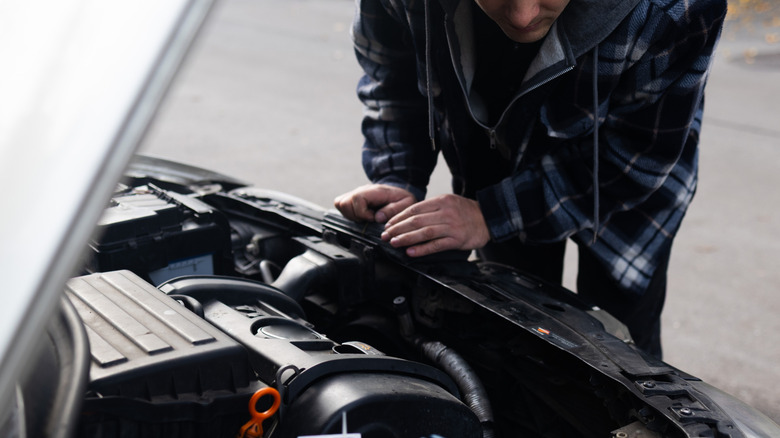
Two years after hitting her with a no, Ford Motor Company did a rare about-face and agreed to replace an Illinois woman’s recalled engine. Back in March 2024, Tanya Washington learned her Ford Focus’s engine was filled with metal flakes and other debris. When the dealership tried to see if a recent recall would cover the work that needed to be done, the company tried to play the blame game instead. Ford denied her claim, then pointed fingers. They told her the junk in her engine was a result of poor maintenance, not a factory defect. She was left to pay the $3,800 bill out of pocket.

But the engine repair didn’t even end up fixing the problem. Lo and behold, the vehicle’s check engine light eventually came back on. Washington went back to the dealership, they ran another diagnosis, and this time, Ford came to a different conclusion: the vehicle did, in fact, qualify for the recall after all. (The same exact one she’d previously been denied for.) Two years after she’d filed her original claim, Washington got the full engine replacement she’d needed to begin with.

A free engine replacement sounds pretty nice, but Washington said the whole thing is more bittersweet than anything. After all, receiving free work the second time doesn’t totally make up for the financial strain of the first repair.

Why it still feels like too little too late
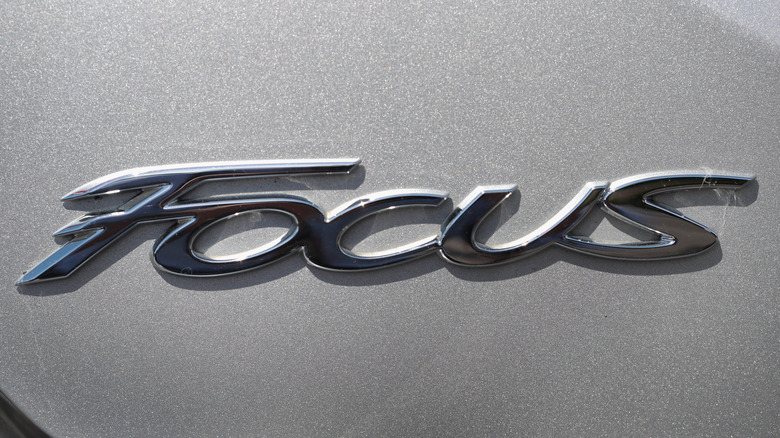
Ford could have spared Washington from the entire ordeal if the company had just approved the repair the first time. (The company has had numerous recalls in 2026 so far, so it’s not like it’s some foreign concept.) The discrepancy between the original assessment and the later approval certainly raises some questions about recall eligibility and how it’s even determined. How could there be such a drastic change of tune between the first assessment and the second? What are you supposed to do when your car gets recalled? Who’s in charge of making these decisions, and who’s responsible for revisiting them when symptoms persist, even after repairs? It sounds like a complete mess.

Still, Washington’s glad not to have to shell out even more for the full engine replacement. Those can range from $6,000 to $15,000 on average. It does make you wonder, though: Is there anyone out there who wasn’t so lucky? Anyone who had to cover the cost of that replacement when the first fix didn’t work and the recall claim got denied? Even though the Ford Focus has been discontinued, Washington can’t be the only one still driving one. Unfortunately, Ford didn’t respond to a local news outlet’s request for comment, which is ironic, considering this whole thing seems to be about miscommunication and lack of clarity.


Source link

Leave a Reply

Subscribe to Our Newsletter

Get our latest articles delivered straight to your inbox. No spam, we promise.

Recent Reviews


A new class-action lawsuit, filed on Monday by three teenage girls and their guardians, alleges that Elon Musk’s xAI created and distributed child sexual abuse material featuring their faces and likenesses with its Grok AI tech.

“Their lives have been shattered by the devastating loss of privacy, dignity, and personal safety that the production and dissemination of this CSAM have caused,” the filing says. “xAI’s financial gain through the increased use of its image- and video-making product came at their expense and well-being.”

From December to early January, Grok allowed many AI and X social media users to create AI-generated nonconsensual intimate images, sometimes known as deepfake porn. Reports estimate that Grok users made 4.4 million “undressed” or “nudified” images, 41% of the total number of images created, over a period of nine days. 

X, xAI and its safety and child safety divisions did not immediately respond to a request for comment.

The wave of “undressed” images stirred outrage around the world. The European Commission quickly launched an investigation, while Malaysia and Indonesia banned X within their borders. Some US government representatives called on Apple and Google to remove the app from their app stores for violating their policies, but no federal investigation into X or xAI has been opened. A similar, separate class-action lawsuit was filed (PDF) by a South Carolina woman in late January.

The dehumanizing trend highlighted just how capable modern AI image tools are at creating content that seems realistic. The new complaint compares Grok’s self-proclaimed “spicy AI” generation to the “dark arts” with its ease of subjecting children to “any pose, however sick, however fetishized, however unlawful.”

“To the viewer, the resulting video appears entirely real. For the child, her identifying features will now forever be attached to a video depicting her own child sexual abuse,” the complaint reads.

AI Atlas

The complaint says xAI is at fault because it did not employ industry-standard guardrails that would prevent abusers from making this content. It says xAI licensed use of its tech to third-party companies abroad, which sold subscriptions that led abusers to make child sexual abuse images featuring the faces and likenesses of the victims. The requests ran through xAI’s servers, which makes the company liable, the complaint argues.

The lawsuit was filed by three Jane Does, pseudonyms given to the teens to protect their identities. Jane Doe 1 was first alerted to the fact that abusive, AI-generated sexual material of her was circulating on the web by an anonymous Instagram message in early December. The filing says she was told about a Discord server by the anonymous Instagram user, where the material was shared. That led Jane Doe 1 and her family, and eventually law enforcement, to find and arrest one perpetrator.

Ongoing investigations led the families of Jane Does 2 and 3 to learn their children’s images had been transformed with xAI tech into abusive material.


Source link