
If the average U.S. consumer were asked about the most popular and reliable home appliance brands, the names that would usually come to mind would include the likes of LG, Samsung, Whirlpool, and GE. This segment, which primarily includes categories like washing machines, refrigerators, dishwashers, and microwave ovens, is currently dominated by GE and LG, with these companies roughly holding 21% and 18% of the market, respectively.
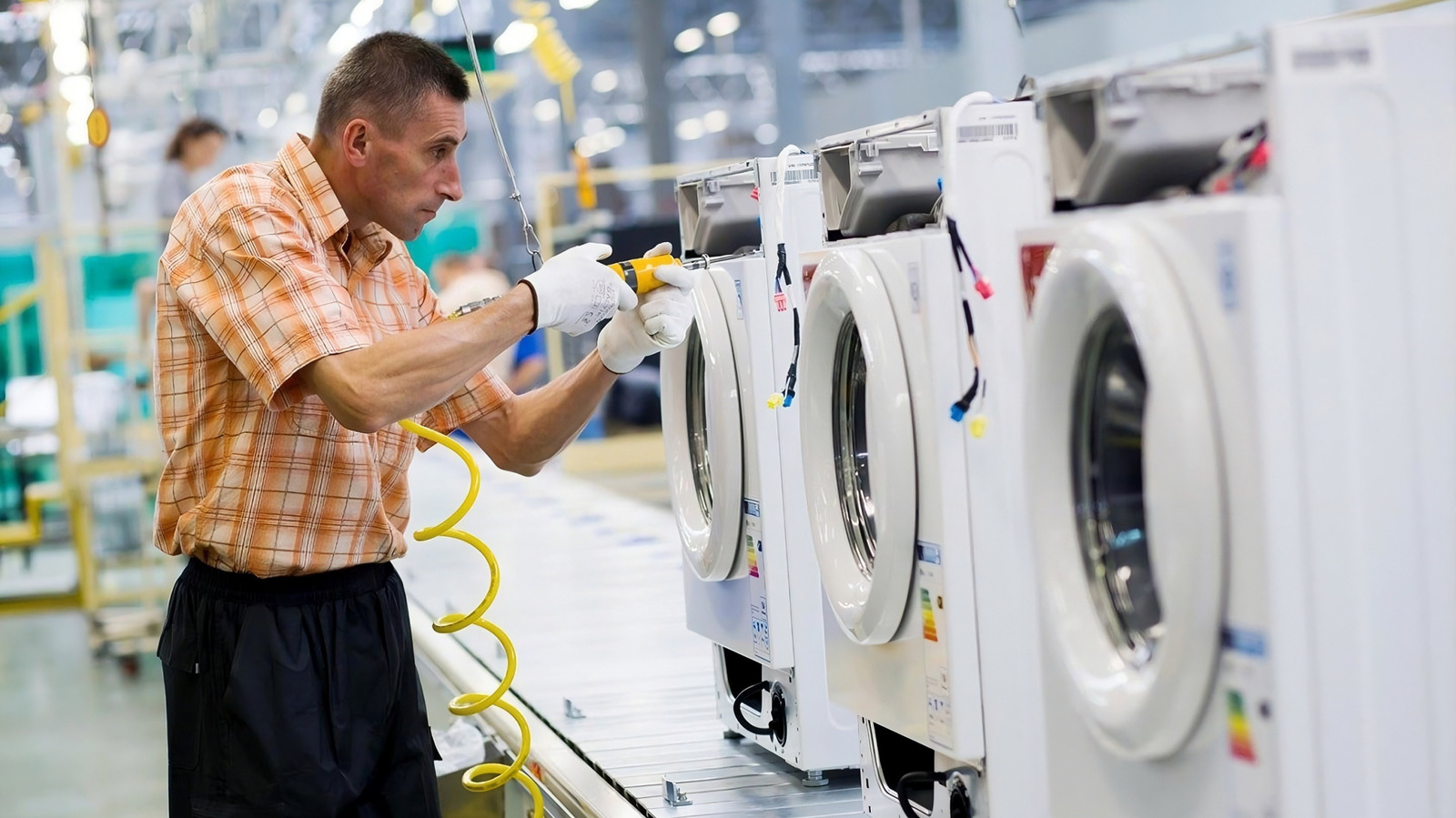
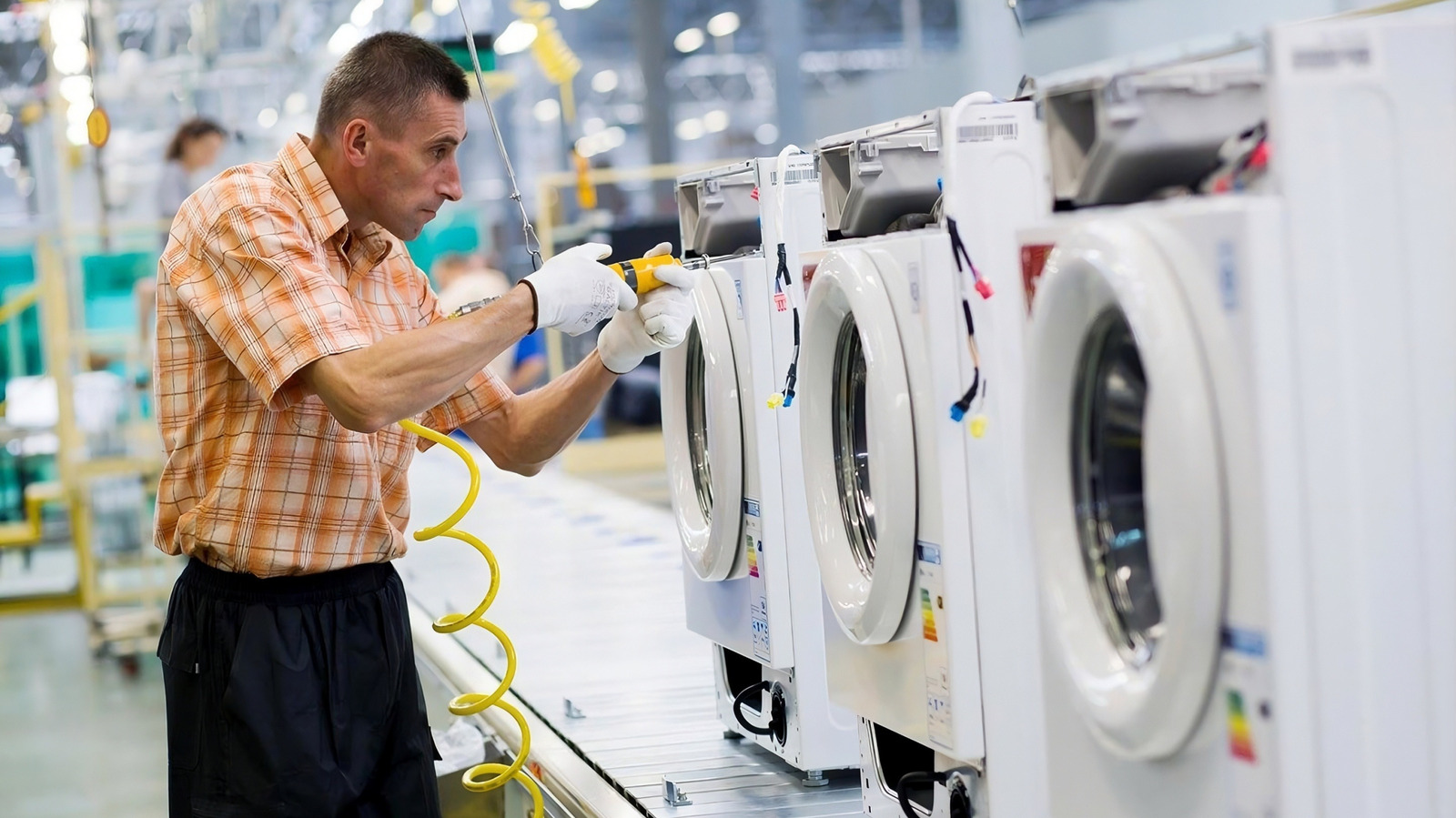
LG (which was known as Lucky Goldstar in the past) has traditionally manufactured its products at its own facilities. This explains why the company has over 60 major production facilities spread across 40 countries. In the recent past, however, increased competition from China forced LG to enter into partnerships with Chinese companies like Skyworth and AUCMA to manufacture some of its entry-level washing machines and refrigerators. That being said, the majority of LG appliances continues to be manufactured in-house at its own production facilities worldwide, as evident from the sheer number of production facilities LG owns and operates as subsidiaries.
As for home appliances sold in the U.S., many of LG’s washers and dryers are manufactured at the company’s 1-million-square-foot facility located in Clarksville, Tennessee. This plant has been operational since 2018 and has an annual production capacity of 1.2 million washers and 600,000 dryers. In early 2025, LG revealed that this plant would be further expanded to add a refrigerator manufacturing facility. Currently, refrigerators and cooking appliances made by LG for the U.S. market are imported from its Monterrey plant in Mexico. LG USA also imports some of its appliances directly from Korea.
A glance at LG’s global manufacturing footprint
LG Electronics has over 175 subsidiaries under its aegis, and operates joint ventures with 21 partners across the globe. Several of these subsidiaries are dedicated production facilities for various products made by LG. The company’s home country of South Korea alone has several production-focused subsidiaries, although only a handful of them deal with appliance manufacturing. China operates a total of seven production sites, with four of them — the Taizhou HS Factory, the Nanjing HS Factory, the Qingdao ES Factory, and the Tianjin ES Factory — dealing with appliances.
In Southeast Asia, LG operates appliance-focused production sites in Indonesia (Tangerang factory), Thailand (Rayong factory), and Vietnam (Haiphong factory). The facility in Vietnam also deals with automotive equipment, besides several home appliances. In India, LG operates two production sites: in Noida and Pune, with both chiefly focused on catering to India’s massive domestic market. LG also has two facilities in the Middle East: an air conditioner factory in Riyadh, Saudi Arabia, and another facility in Egypt, where it makes several electronic goods, including TVs and washing machines.
LG uses Poland as its base for the European market. The company operates two facilities there, with the Wroclaw plant specializing in home appliances and the Mlawa plant in TVs. Aside from these nations, LG also has a major presence in Manaus, Brazil, which serves as the production base for LG’s sales in South America.

Stephan is the sports journalist for the Maple Grove Report.