Your Neighborhood’s Mini-Traffic Circles Actually Serve An Important Purpose


“The more things change, the more they stay the same.” At least, that’s what the old adage tells us. Back in 1849, the French writer Jean-Baptiste Alphonse Karr wrote that saying about how people and social mores remain unflinching in the face of a constantly evolving world. That includes traffic enforcement: As technology has gotten more advanced and autonomous robotaxis now roam the streets, the basic function of traffic laws — to keep traffic flowing and people safe — remains unchanged.

This has always been the idea behind the traffic circle as well. However, the first traffic circles introduced in the country in the early 20th century actually led to more accidents, and most went the way of the dinosaur during the mid-1950s. Like a phoenix from the ashes, however, they were brought back by the United Kingdom in the 1960s, with the first “modern” roundabout appearing in the U.S. in Nevada in 1990. These days, some U.S. drivers still find roundabouts confusing, while turbo roundabouts with multiple lanes are getting more popular in Europe.

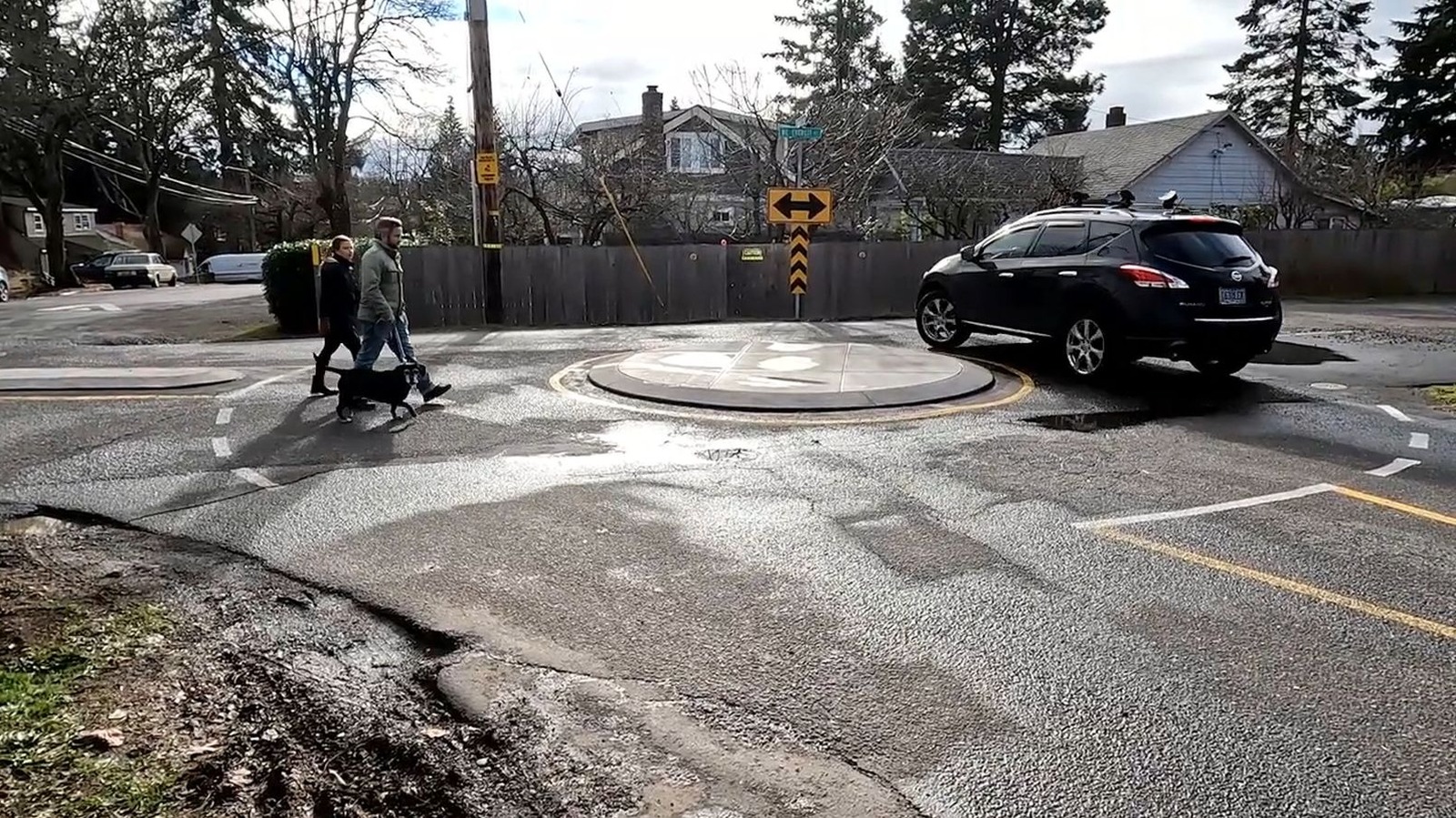
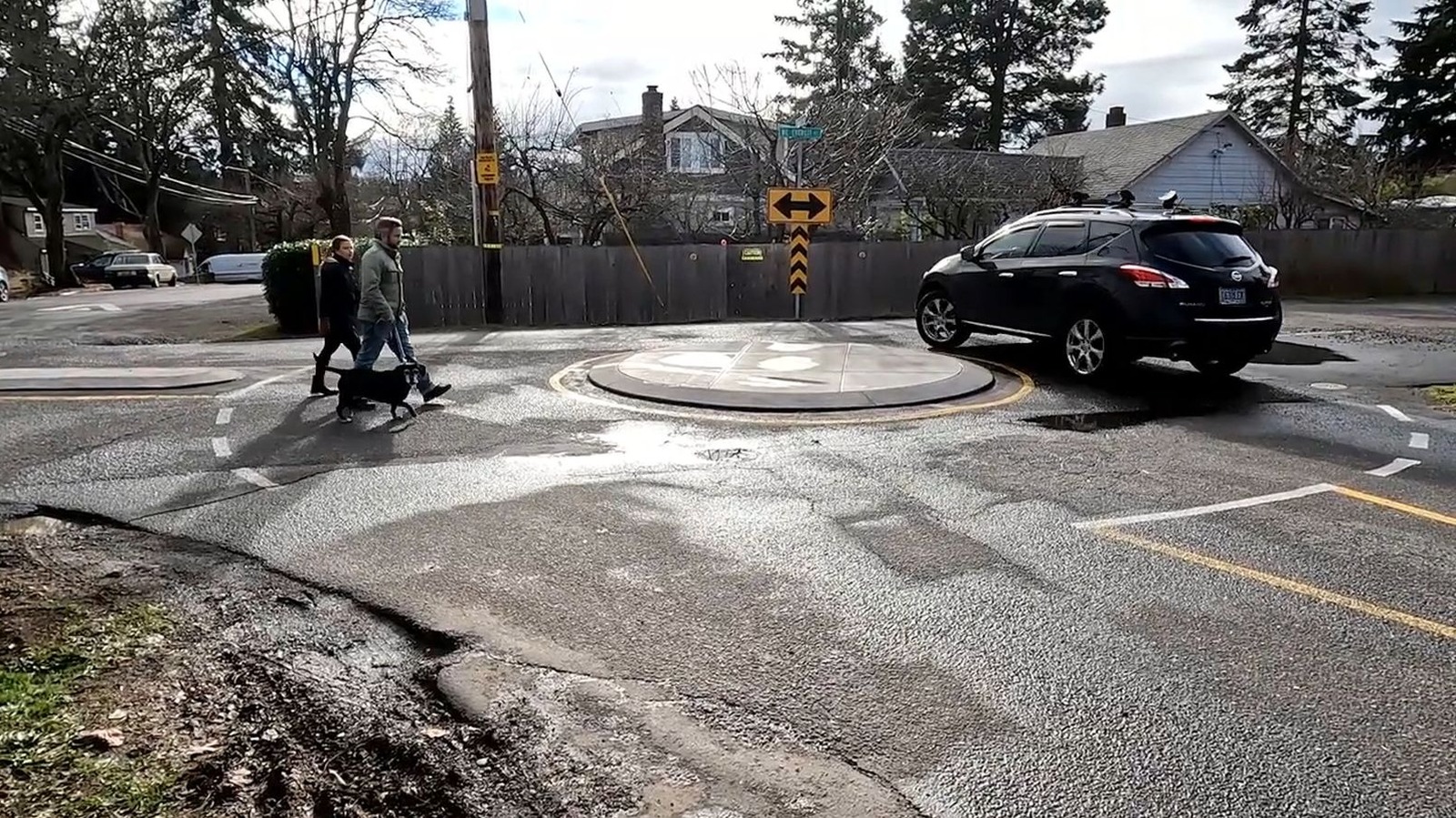
Here in the U.S., we now have mini-roundabouts, which are the next evolutionary step in calming traffic. Unlike their bigger brothers, these “baby” traffic circles are meant for much narrower, less-traveled neighborhood streets lined with houses. Instead of using stop signs or signalized intersections, which can raise their own set of safety concerns, mini-roundabouts are designed to help reduce speeding while maintaining traffic flow.

Mini-roundabouts not only improve safety but allow for better traffic flow

Mini-traffic circles are gaining popularity around the country as city and state leaders take a more localized approach to regulating traffic and enforcing driving laws by working directly with residents. The primary difference between mini traffic circles and standard ones boils down to their respective inner circle. The smaller versions have what’s known as an inscribed circle with a traversable island that, in a pinch, can actually be driven onto and over.

Say a large truck needs to make a delivery somewhere in the neighborhood, but the roads are too narrow for it to navigate a roundabout nestled amidst a tightly confined street. The center area of most traffic circles is usually barricaded to prevent a vehicle from driving up and over them. These neighborhood versions are built so they can do just that, without creating a hair-pulling barrier for other traffic. Otherwise, they work on the same principles — yield controls at all entry points, with traffic moving counterclockwise around a central island.

Compared to traditional roundabouts, compact roundabouts are much cheaper to build and offer aesthetics more suited to a neighborhood setting. While they can be designed for new housing developments, they’re small and flexible enough to fit into pre-existing areas while still providing enough space to navigate safely. These mini versions have proven to work in England, reducing crashes by up to 30% compared to signalized intersections. Overall, roundabouts can reduce speeds by as much as 20 mph and severe crashes by nearly 80%.


Source link

Leave a Reply

Subscribe to Our Newsletter

Get our latest articles delivered straight to your inbox. No spam, we promise.

Recent Reviews


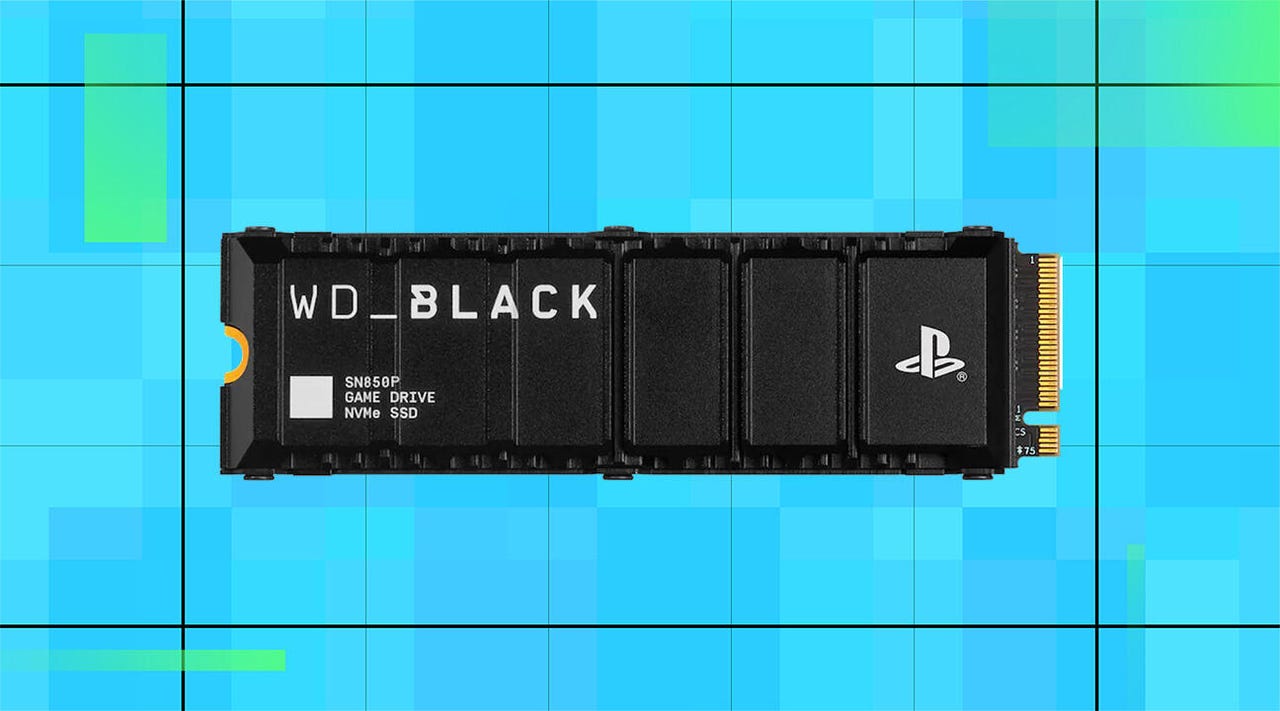
A WD Black SN850P SSD on a blue background

WD/ZDNET

High SSD prices got you down? Right now during Best Buy’s Tech Fest sale, you can save up to $2,800 on the WD Black SN850P storage drive. And while it’s officially licensed for use with PlayStation 5 consoles, it’s easy to reconfigure for use in gaming laptops and desktops for a boost in storage capacity. 

Also: The best Amazon Spring Sale deals: Save on streaming, Apple, Samsung, and more

Available in capacities from 1TB to 8TB, the WD Black SN850P can double, or even quadruple, your available storage space, giving you plenty of room for large game downloads, save files, screenshots, highlight reels, and more. With read and write speeds up to 7300 and 6600 MB/s, respectively, you’ll get much faster loading times than traditional HDDs as well as quicker access to your favorite apps, games, and programs.

Also: SSD vs HDD: What’s the difference, and which should you buy?

The integrated heatsink helps keep everything running at optimal temperatures to prevent data loss or corruption due to overheating. It can also be removed for easier installation in smaller PCs. 

By using flash memory rather than traditional mechanical platters, the WD Black SN850P can provide you with years of reliable data access with much less risk of internal damage due to shocks and bumps.

How I rated this deal 

Prices for RAM and SSD storage drives have skyrocketed as AI companies buy up available stock to power LLMs. And while this particular model is licensed for use with the PS5, you can quickly reconfigure it for use in laptops and desktop PCs. The 2TB model is marked down to $400, bringing it closer to pre-AI pricing, and the 8TB version is almost $2,800 off. While it’s still very expensive, it’s the lowest price I’ve seen on a high-end SSD in a long time. That’s why I gave this deal a 5/5 Editor’s rating.

Deals are subject to sell out or expire anytime, though ZDNET remains committed to finding, sharing, and updating the best product deals for you to score the best savings. Our team of experts regularly checks in on the deals we share to ensure they are still live and obtainable. We’re sorry if you’ve missed out on this deal, but don’t fret — we’re constantly finding new chances to save and sharing them with you at ZDNET.com


Show more

We aim to deliver the most accurate advice to help you shop smarter. ZDNET offers 33 years of experience, 30 hands-on product reviewers, and 10,000 square feet of lab space to ensure we bring you the best of tech. 

In 2025, we refined our approach to deals, developing a measurable system for sharing savings with readers like you. Our editor’s deal rating badges are affixed to most of our deal content, making it easy to interpret our expertise to help you make the best purchase decision.

At the core of this approach is a percentage-off-based system to classify savings offered on top-tech products, combined with a sliding-scale system based on our team members’ expertise and several factors like frequency, brand or product recognition, and more. The result? Hand-crafted deals chosen specifically for ZDNET readers like you, fully backed by our experts. 

Also: How we rate deals at ZDNET in 2026


Show more


Source link