
“The more things change, the more they stay the same.” At least, that’s what the old adage tells us. Back in 1849, the French writer Jean-Baptiste Alphonse Karr wrote that saying about how people and social mores remain unflinching in the face of a constantly evolving world. That includes traffic enforcement: As technology has gotten more advanced and autonomous robotaxis now roam the streets, the basic function of traffic laws — to keep traffic flowing and people safe — remains unchanged.
This has always been the idea behind the traffic circle as well. However, the first traffic circles introduced in the country in the early 20th century actually led to more accidents, and most went the way of the dinosaur during the mid-1950s. Like a phoenix from the ashes, however, they were brought back by the United Kingdom in the 1960s, with the first “modern” roundabout appearing in the U.S. in Nevada in 1990. These days, some U.S. drivers still find roundabouts confusing, while turbo roundabouts with multiple lanes are getting more popular in Europe.
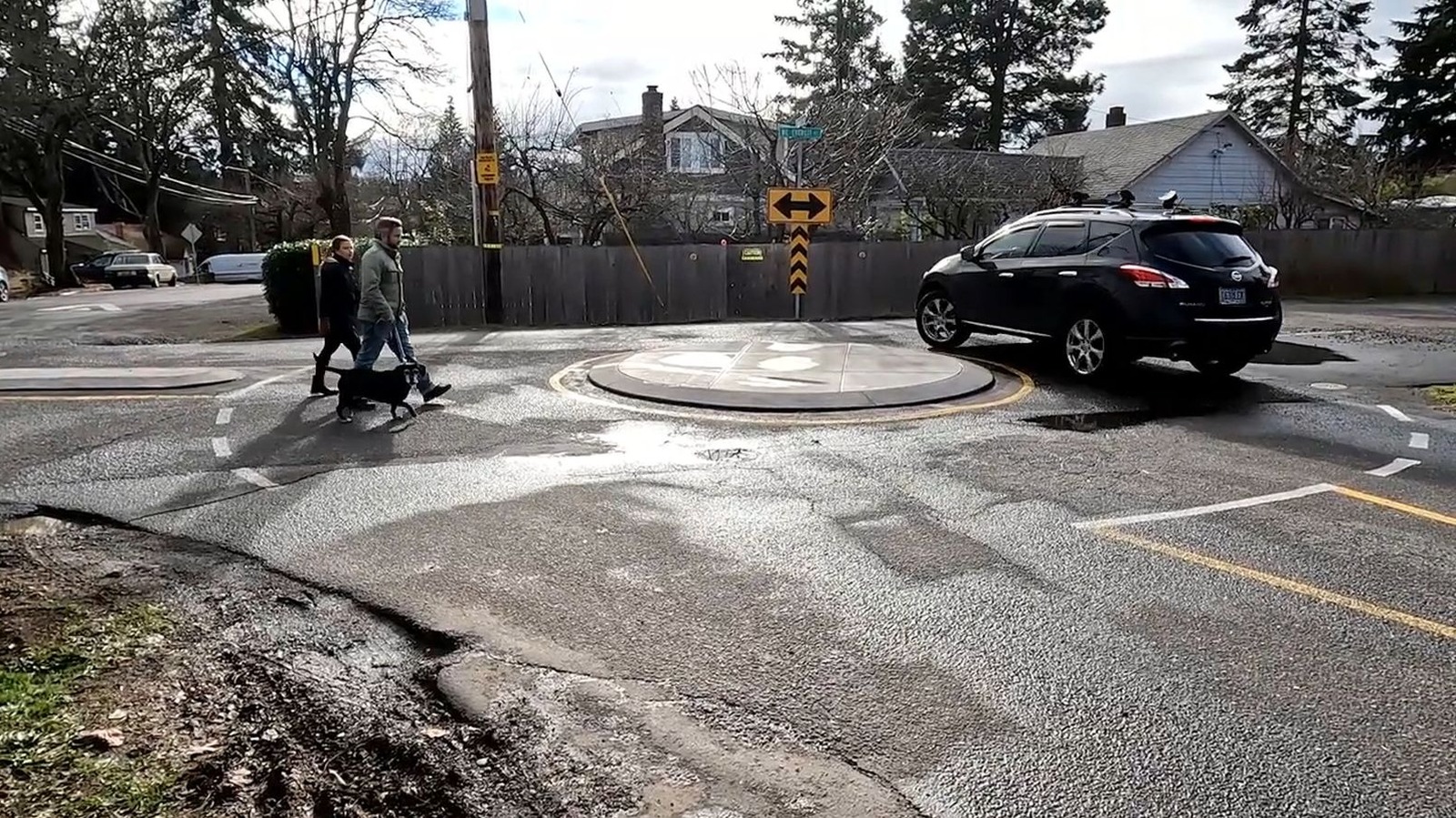
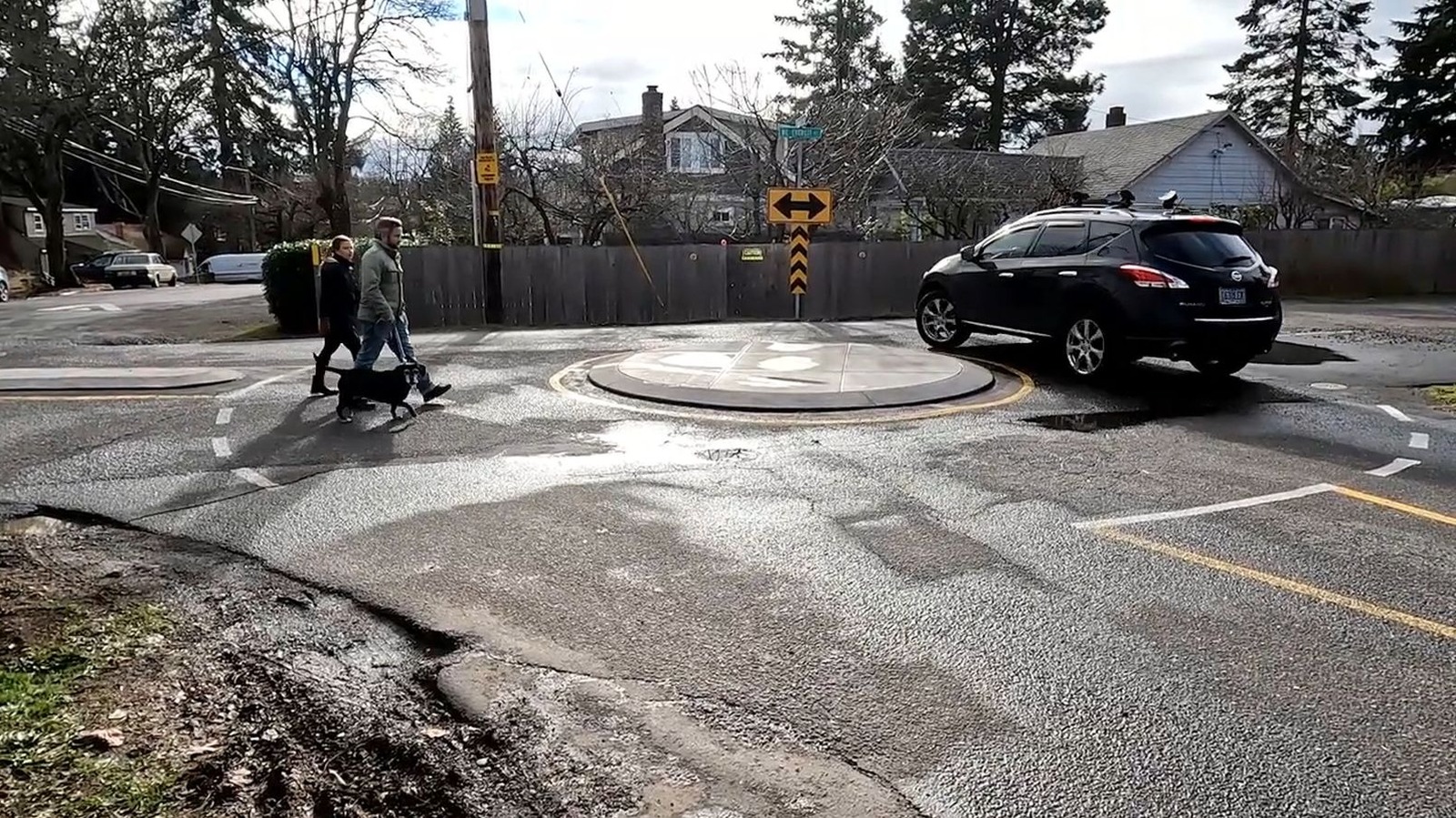
Here in the U.S., we now have mini-roundabouts, which are the next evolutionary step in calming traffic. Unlike their bigger brothers, these “baby” traffic circles are meant for much narrower, less-traveled neighborhood streets lined with houses. Instead of using stop signs or signalized intersections, which can raise their own set of safety concerns, mini-roundabouts are designed to help reduce speeding while maintaining traffic flow.
Mini-roundabouts not only improve safety but allow for better traffic flow
Mini-traffic circles are gaining popularity around the country as city and state leaders take a more localized approach to regulating traffic and enforcing driving laws by working directly with residents. The primary difference between mini traffic circles and standard ones boils down to their respective inner circle. The smaller versions have what’s known as an inscribed circle with a traversable island that, in a pinch, can actually be driven onto and over.
Say a large truck needs to make a delivery somewhere in the neighborhood, but the roads are too narrow for it to navigate a roundabout nestled amidst a tightly confined street. The center area of most traffic circles is usually barricaded to prevent a vehicle from driving up and over them. These neighborhood versions are built so they can do just that, without creating a hair-pulling barrier for other traffic. Otherwise, they work on the same principles — yield controls at all entry points, with traffic moving counterclockwise around a central island.
Compared to traditional roundabouts, compact roundabouts are much cheaper to build and offer aesthetics more suited to a neighborhood setting. While they can be designed for new housing developments, they’re small and flexible enough to fit into pre-existing areas while still providing enough space to navigate safely. These mini versions have proven to work in England, reducing crashes by up to 30% compared to signalized intersections. Overall, roundabouts can reduce speeds by as much as 20 mph and severe crashes by nearly 80%.

Stephan is the sports journalist for the Maple Grove Report.