
I’ve been doing European summers since as long as I can remember. I’m based in Paris, the heart of Europe, and whether it’s the pebbly shores of Croatia, the paradisiacal islands of Greece, or the hidden corners of Southern Italy, bliss is always a 2–3 hour flight away from me.
It’s not like I usually keep tabs on this kind of stuff, but looking at a map of our beloved ancient basin this week, I noticed I’ve tallied over 40 Mediterranean islands. 43, to be precise.
Let’s just say I have a soft spot for pistacchio gelato on a stone pier, pastel-colored houses lining picturesque harbors, and early-evening swims ahead of that month’s best pasta dinner of your life. As I like to say, a summer away from the Med is not a summer well-spent.
And listen, I do love them all, whether it’s Santorini with its iconic blue domes (even with the insane crowds), Sicily’s mix of inland Baroque and coastal charm, or the sun-soaked white sands of Djerba, over in Tunisia, on the lesser-explored African side of the Mediterranean.
But as with any collection of favorites, I was bound to have my standouts.
In other words, there’s 5 paradise islands in the Mediterranean that completely stole my heart, all for different reasons, and that will likely steal yours too:
Smaller crowds, turquoise seas, and unmatched bliss: here’s my Mediterranean power quintet for peak Eurosummer vibes:
Folegandros, Greece

Out of those 40+ Med islands I’ve been to, a good 20-something were Greek. From the turquoise bays of the Ionian, to the sandy beaches of the Saronics, to the Turkey-neighboring Dodecanese, I’ve seen all the major highlights, but there’s one offbeat gem that stuck with me.
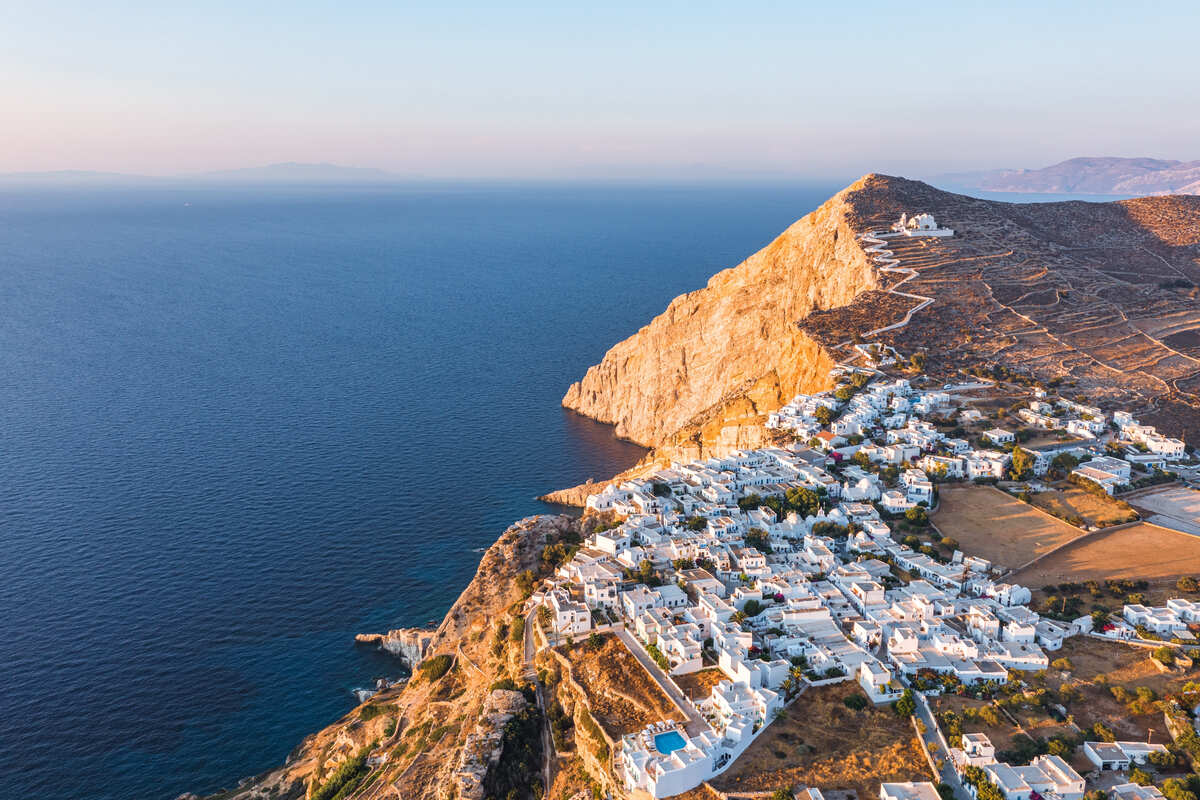
Folegandros may be in the heart of the Cyclades, a short 45 minute ferry hop from a world-famous Santorini, but it feels like it exists in a universe of its own.
Out with the flashy boutique shops, Insta-perfect caldera viewpoints, and pricey tavernas that are anything but authentic. In with a quaint hilltop capital with a whitewashed, mazey Old Town, lying at the foot of a Byzantine monastery, virtually-deserted white-pebble beaches, and welcoming ouzo bars.

The sunset views atop the said monastery are truly out of this world, and down in town, Piatsa Restaurant is hands down my favorite traditional eatery in all of the Cyclades, with outdoor tables occupying the entire main square, and the best matsata you’ll ever try.
Folegandros is teeny-tiny—if you don’t mind the leg work, you can walk the full length of the island in about 5 hours—and the vibe here is far more chill than in your average Cycladic hotspot, not to say rural, so beware:
If it’s Mykonos-style beach clubs you’re after, you can give it a miss.
Formentera, Spain
I wasn’t exactly impressed by Ibiza and its beer buff hordes when I visited five years ago, and I almost pulled out of a weekend escape to the neighboring Formentera out of fear it would just be more of the same endless daytime boozing, except on a smaller island with less amenities.
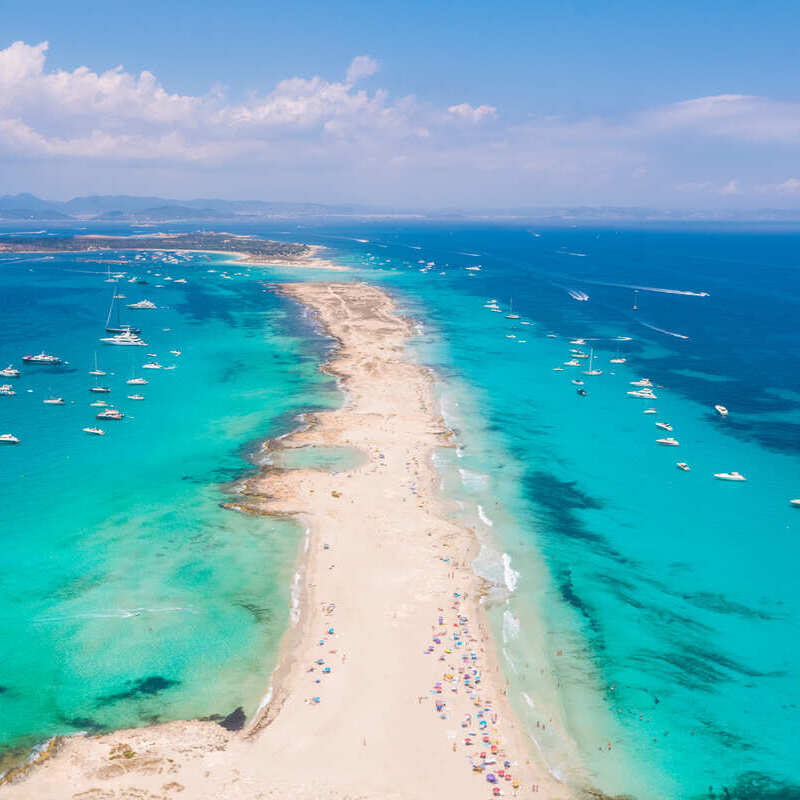
Formentera is the closest you get to a Caribbean island in the Mediterranean. None of the hard-on-your-soles pebbly strips, cramped beach bars, or overcrowded sunbathing spots: it’s all virgin-white, powdery sand hugged by teal-colored seas.

And the best part? The Ibiza party monsters are still blissfully asleep on it, even though they’re separated by a 30-minute ferry crossing.
The minute you set foot on Formentera, you’ll instantly notice the difference:
Villages like Sant Francesc Xavier feel quieter, more family-oriented, and the biking paths everywhere, cutting through a vineyard-dotted hinterland on the way to paradisiacal calas, backed by the odd solitary windmill in ruins, only add to the island’s rustic charm.
In fact, the biggest nightlife here is a 900m-long beachside hub known as Es Pujols, and even then, it’s very low-key compared to Ibiza. No Ushuaïas or Café Mambos, if you know what I mean.
Spain will be soon changing its entry requirements. Make sure you keep an eye on the Entry Requirements page to avoid any unpleasant surprises at the airports.
Gozo, Malta

Up next, I decided to sneak in Formentera’s spiritual sister. We all know Malta for the buzzing party scene of St Julian’s and the souvenir-shop-lined streets of Valletta, but what if I told you it has a smaller sister nearby that most Brit and German weekenders completely miss?
Welcome to Gozo, the tiny slice of heaven where time seems to slow to a standstill. No joke, the local capital Victoria (or Rabat) feels even more atmospheric than Malta’s famous ‘Silent City’ Mdina:
As fewer tourists hit up Gozo on any average summer day, the citadel feels actually peaceful and ancient-like, with ocher-colored buildings and restaurant terraces lining quaint stone-paved lanes, and that monumental Baroque cathedral to top it off.

If you’re a culture aficionado like me, you can’t skip the Ġgantija Temples, near Xagħra: built by a Neolithic civilization based in Gozo, they’re older than the Egyptian pyramids, and some remain in an impressive state of preservation.
Gozo’s top natural gem, however, has to be Dwejra Bay: listen, I was quite impressed by the Blue Lagoon’s insane range of blue, but there’s something about Gozo’s ‘Inland Sea’, and the gentle waves that crash against the sheltered natural beaches that make it that much more magical.
Oh, and the smaller crowds, of course.
The best part about Gozo, or Malta in general? There are usually no pickpockets or thugs around to bother in that deserted beach spot. Don’t believe us? Check out the latest real-time Traveler Safety Score:
Ischia, Italy
For most tourists, Italian summers are synonymous with scenic (yet chaotic) drives down the winding roads of Amalfi, sunset dinners in Positano costing upwards of $80 per person, and of course, exclusive beach clubs in whatever tiny, crammed stretch of volcanic pebbles Capri calls a spiaggia.
No, thanks. If I were to pick any Italian island to escape to, that would be Ischia.
Not exactly a hidden gem, and rather-touristy, actually, but larger, with more space, things to see, and an abundance of cultural heritage that actually warrants a longer stay. Maybe even a full week of beach-hopping sightseeing, and that’s what most tourists sadly get wrong.

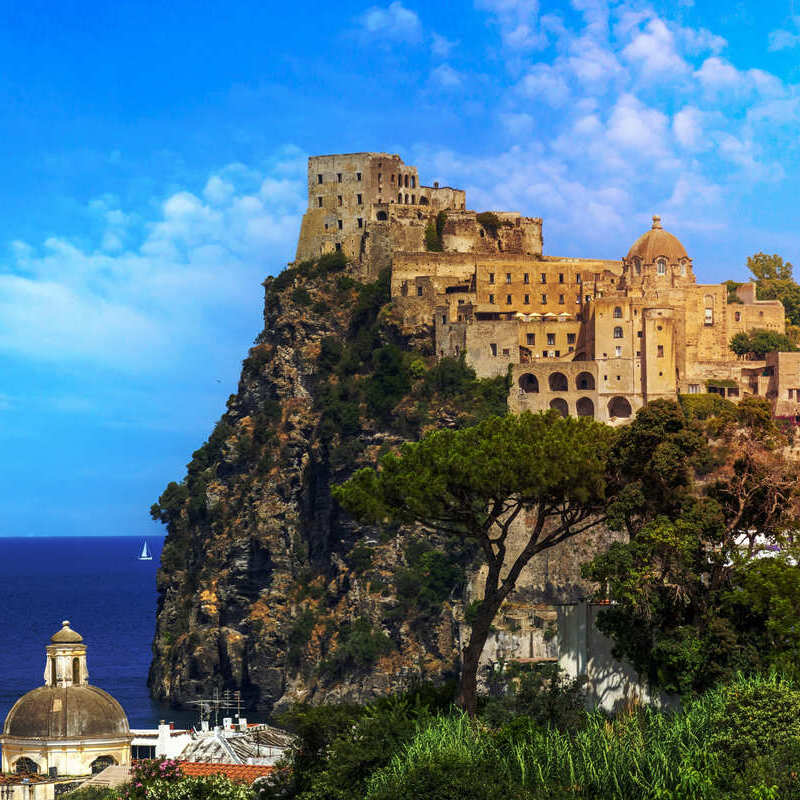
They pull up to Ischia Porto, wander the pastel-hue port for a couple hours, splurge on a bog-standard lunch in the first seaside trattoria they walk by, maybe climb up to the Aragonese Castle time permitting, and call it a day before catching the ferry back to Naples.
I go to Ischia for smaller, more laid-back towns like Forio, on the less-glamorous west side of the island, where traditional fishermen houses and quiet piazze await, the soft, golden sands of Maronti Beach, largely ignored by the cruise visitors, and relaxed, low-light dinners at Farm Mediterranean Garden.
It’s not on the tourist-dominated waterfront, and that’s why locals love it (other than the fact they always serve organic-leaning, fresh meals, and high-quality Ischian wine).
Brač, Croatia

I know it’s been getting some flak lately for being just as gentrified and touristy as Dubrovnik, but I actually love Split? As in, Split, Croatia. The fact it literally grew out of the walls of an Ancient Roman palace, the scenic, palm tree-lined coastal promenade, and just the Mediterranean flair of it all: it’s absolute heaven.
Whenever I’m in Split, though, and the crowding gets a little intense, especially after midday, I tend to find myself on the next ferry out to Brač, an island only 7.5 miles away by boat from the mainland, yet an absolute breath of fresh air in the midst of the summer chaos.
It’s best known for its white-pebble Zlatni Rat, or Golden Cape, near the lively coastal town of Bol, but that’s where all the day-trippers usually flock to.

Find me instead in Supetar and the other quieter beaches in the vicinity. It’s the island’s main town, unfolding along a horseshoe-shaped bay, and despite being the main entry point for Split arrivals, it feels surprisingly laid-back and peaceful.
For the local secret that tourists are yet to catch onto, look no further than Pučišća: nestled in a deep cove bathed by a crystal-clear sea, this cluster of stone buildings with Dalmatia’s signature green shutters offers family-owned taverns right on the water, and seriously dreamy swims.
Wondering how safe Croatia is this season? How about… very. safe. See it for yourself:
Let us know how your island-hopping adventure around Europe goes this summer!


Stacie Harris is a local resident and reporter of the Maple Grove area. Stacie reports on medicine and science for the Maple Grove Report.